Khan-Plov at Home. Video
On Thursdays, it is customary in many Kyrgyz families to prepare pilaf, boorsoks, and say prayers for the deceased. The brand chef of the NAVAT chain, Anvar Babajanov, shares and demonstrates how to cook Khan pilaf at home.
How to easily and quickly prepare national dishes at home. Kyrgyz-style stew with boiled diamond-shaped dough and vegetables. Chef Sanjar Shakiev from the ethnocomplex "Supara" demonstrates how to cook the stew.
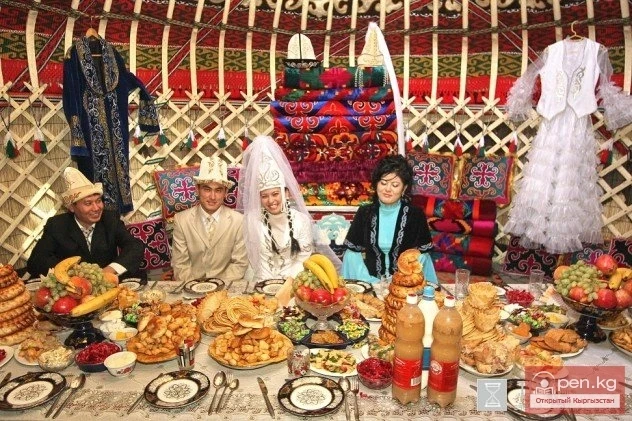
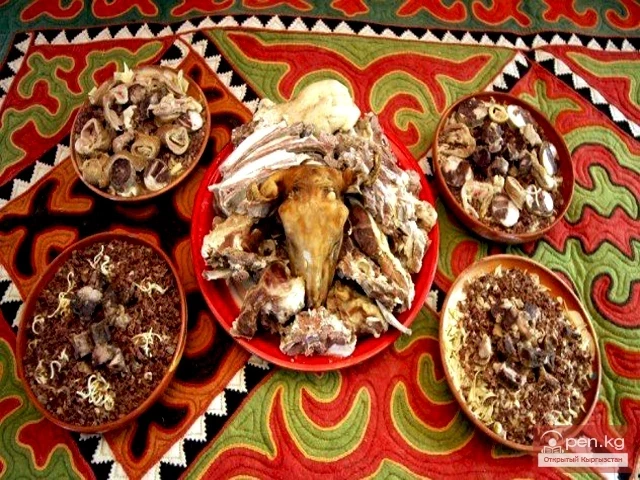
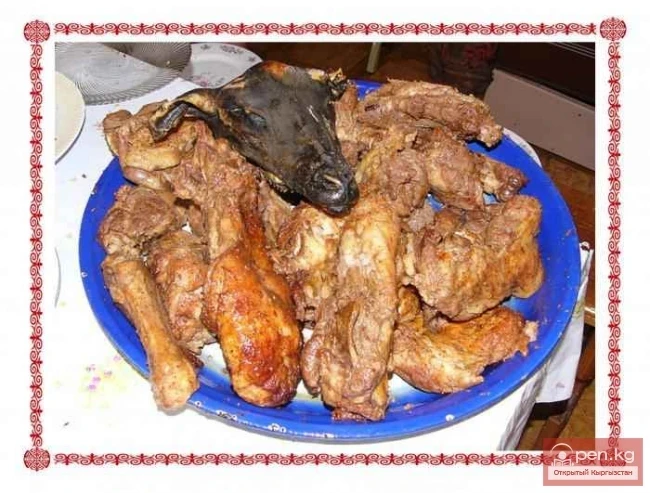
Since ancient times, Kyrgyz people have placed great importance on the presentation of meat. If served incorrectly or in violation of hierarchy, it could destroy the relationships between tribes and even turn them into irreconcilable enemies. These traditions pertain not only to the culture of serving food but also to the culture of relationships between elders and juniors, women and men, relatives and close ones. Therefore, we believe it is important for modern youth to know the rules of
Kyrgyz people have been preparing kumys and highly valuing its nutritional and healing properties since ancient times.
Revived Kyrgyz Cheese In Kyrgyzstan, teacher Suleiman Kayipov has restored the ancient recipe for making traditional Kyrgyz cheese. “Despite the fact that in ancient times this product was part of the diet of the Kyrgyz, today the methods of its preparation have been completely forgotten in Kyrgyzstan. However, the recipe for this cheese product was restored by Kyrgyzstan citizen S. Kayipov.” S. Kayipov named the cheese made according to the restored recipes “Bekzhan.”
Kumis – a fermented milk drink. It is made from mare's milk, and less frequently from cow or camel milk. In its finished form, kumis is a fizzy liquid with the smell and taste of alcohol. The history of kumis
Well, who doesn’t know what chuchuk is? Foreigners, having tried this national delicacy just once — a divine harmony of finely combined fat and horse meat — prefer it over all our other dishes. At the most stylish receptions, one can observe the scene where satiated VIP guests, with joyful exclamations of “Oh, it is my favorite chuchuk!” completely ignore sandwiches with red caviar and shrimp. Truly, its unique taste will please even the most refined gourmet. As for your correspondent, until
No vodka or vinegar It is a well-known fact that Kyrgyz people are very fond of meat. They don't need bread, as long as there is meat on the table. A lot of meat. There is a popular saying about this: do not tell the host that you have slaughtered a whole ram until you bring the ram's head to the dastarkhan (a traditional table). And the descendants of Manas the Generous consumed this protein-rich product in immeasurable quantities, I must say, not in a banal way. With feeling, with
Broth (shorpo) from hedgehog is considered a medicinal remedy for many ailments among the Kyrgyz population in various regions. For example, in the Aksy district of the Jalal-Abad region, hedgehog shorpo is used to treat brucellosis (especially its recurrence), pneumonia, tuberculosis, and all diseases related to the lungs. In the Alabukinsky district of the same region, it is used for severe inflammatory processes and colds as an effective diaphoretic. The healing broth is also widely popular
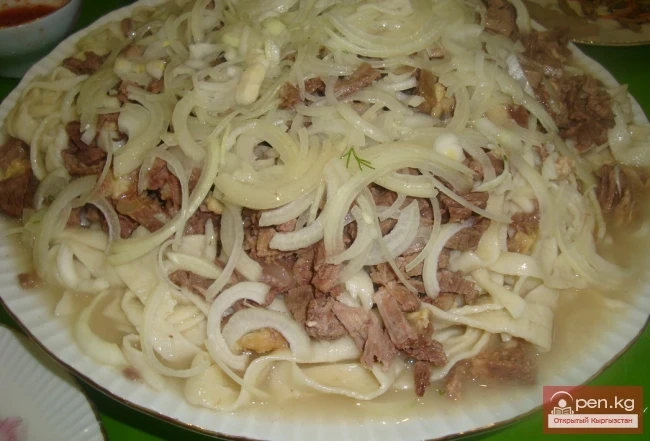
Kyrgyz Dishes. In folk tales and songs, as well as in epics, there are often mentions of this. The base of naryn is finely chopped meat. Mountain onions, garlic, and broth were also added to it. All of this was thoroughly mixed and served without a side dish. Later, the Kyrgyz supplemented this dish with noodles. As a result, it acquired a humorous name - beshbarmak (which literally translates to "five fingers," as it was eaten with hands). Kyrgyz national cuisine is unique and
The food culture of the Kyrgyz has a deep history. The formation of its main ethno-cultural features occurred in parallel with the development of the entire culture of the Kyrgyz people over several millennia and is closely linked to the general processes of the establishment and development of the nomadic civilization of Eurasia. The traditional food system of the Kyrgyz represents a variant of the general Turkic-Mongolian food system based on the economic and cultural type of nomadic animal
In the material culture of any ethnic group, there is a distinctive cuisine. It is no coincidence that experienced ethnographers and scholars recommend starting any study of unfamiliar lifestyles with the typical meals—both everyday and festive.