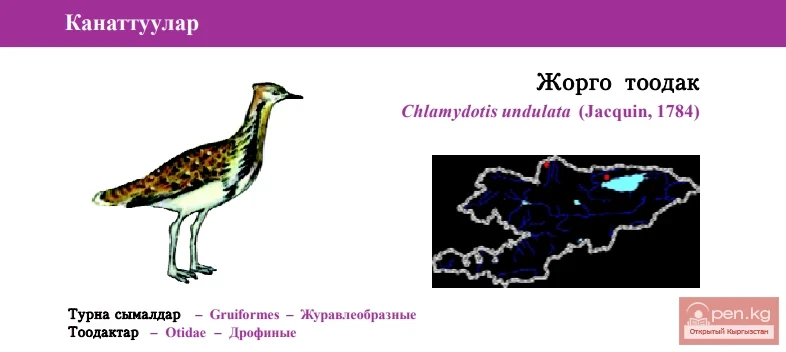
Houbara Bustard / Gorgeous Bustard / Houbara Bustard
Houbara Bustard
Status: III category, Critically Endangered, CR: R, A1. The subspecies Chlamydotis undulata macqueenii (J.E. Gray, 1832) is found in Kyrgyzstan.
Distribution in general and in the country. Northern Africa south to the northern tropic, Sinai Peninsula, the islands of Wentewentura and Lanzarote. Eurasia from the eastern part of Asia Minor, Syria, Palestine east to Inner Mongolia. It nests and is encountered during migration in the southern half of Kazakhstan, north to the sands of Taisugan and the lower reaches of the Irgiz River. Northern Pribalhashia and the Zaysan basin [7, 43]. It nests in Balochistan, winters in Pakistan, Rajasthan, and Gujarat in India, and is found in Kashmir and around Delhi [19]. In Kyrgyzstan, it has been mainly observed in the Issyk-Kul basin [2].
Habitat. Stony deserts and semi-deserts, degraded foothills of mountain ranges, occasionally found in autumn and winter on stubble fields where grain crops were sown.
Population. Currently, the population of the Houbara Bustard has decreased, making it an extremely rare bird. Mainly solitary individuals are found in the Issyk-Kul basin. In 1988, a single bird was observed for a month outside the reserve near the village of Toru-Aigyr in the Issyk-Kul region. At the same time, in 1988, 5 individuals were seen in a barley field in Toru-Aigyr. In 1991, a solitary bird was observed in the area of Toru-Aigyr on stubble.
Life style (life cycles). Prefers open habitats, is inactive during dark night hours and at noon, prefers to feed at night under the moonlight. In case of disturbance, it camouflages its head, as the coloration of its body helps it blend into the surrounding environment. It is omnivorous but prefers plant food, wheat ears, berries, and does not ignore ants, beetles, grasshoppers, lizards, and small snakes. Very silent. The nest is a simple depression in sand or gravel under existing vegetation. The nest contains 3-4 eggs, brown in color with speckles.
Limiting factors. The impact of anthropogenic factors leads to a decrease in the population of this species, including the plowing of suitable habitats and illegal shooting. Low organization of nature protection and awareness.
Breeding (keeping in captivity). Not studied in Kyrgyzstan.
Existing conservation measures. None have been undertaken.
Recommended conservation measures. Create a nature reserve in areas where populations of this species still exist, identified either during migration and nesting or during wintering. Identify such wintering and nesting sites. Conduct detailed studies of the habitats and distribution of the species in the Kyrgyz Republic.
Houbara Bustard
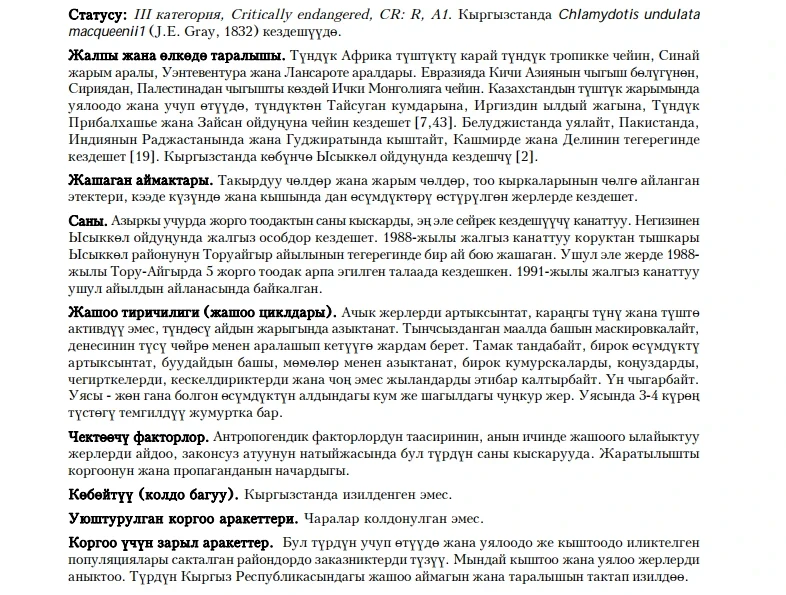
Houbara Bustard
Chlamydotis undulata (Jacquin, 1784), ssp. macqueenii (J.E. Gray, 1832)
Status: III category, Critically Endangered, CR: R, A1. Prefers deserts and semi-deserts of Issyk-Kul oblast during migration and winter time. Data on numbers are irregular and scarce. A single bird was recorded feeding for a month near Toru-Aigyr village in 1988; another group consisting of 5 birds was seen not far from that place in the agricultural fields. One Houbara Bustard was recorded in the place in 1991. Uses for food field crops, cherries, can eat ants, beetles, lizards, etc. Nest is a depression in sand or stones under existing scarce vegetation. Lays 3-4 eggs. Limiting factors are ploughing up desert and semi-desert habitats, illegal poaching, low quality of protection management, and low public awareness. No captivity holding is known. There were no special protection measures in Kyrgyzstan. It is recommended to establish protected areas in the natural habitats with high concentration of the species populations.
Read also:
Great Bustard
Great Bustard Status: III, Critically Endangered, CR: R, A1. The nominative subspecies Otis tarda...
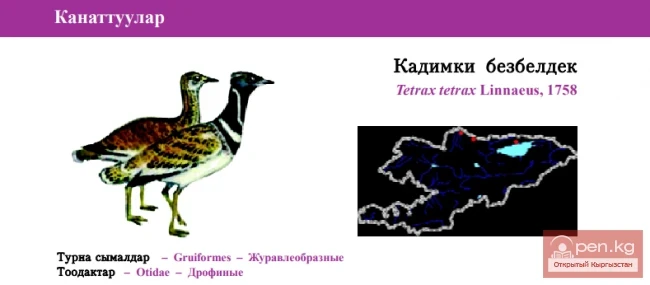
The title translates to: "Little Bustard / Kadimki bezbeldik / Striped"
Little Bustard Status: VI category, Near Threatened, NT. It has apparently not bred in Kyrgyzstan...
Spotted or Diadem, Rat Snake / Charala Soilok / Diadem, or Clifford’s Rat Snake
Spotted or Diadem Snake Status: Critically Endangered (category CR C2b). One of the 4 known...
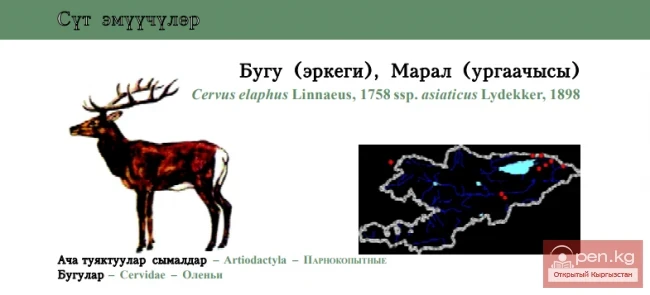
Noble Deer (Tien Shan subspecies), Maral / Bugu (male), Maral (female) / Asiatic Red Deer, Tien Shan Maral, Tien Shan stag
Noble deer (Tien Shan subspecies), Maral Status: Category IV, Endangered, EN C2a(i): R. A sharply...
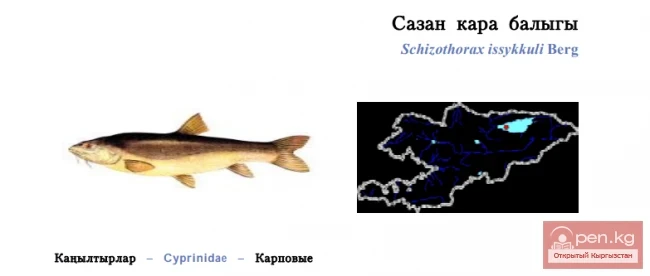
Issyk-Kul Marinka / Carp Fish / Issyk-Kul Marinka
Issyk-Kul Marinka Status: 2 [EN: D]. A rare taxon inhabiting Lake Issyk-Kul. Its...
The Beautiful Country Known as Kyrgyzstan
Kyrgyzstan is a small country bordering Uzbekistan, Kazakhstan, and Russia. The main attractions...
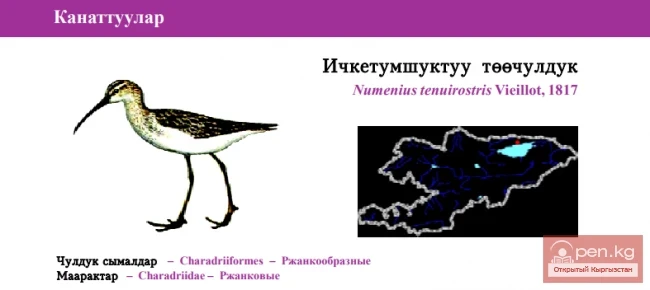
Slender-billed Curlew
Slender-billed Curlew Status: III category, Critically Endangered, CR, C2a(ii); D. One of 3...
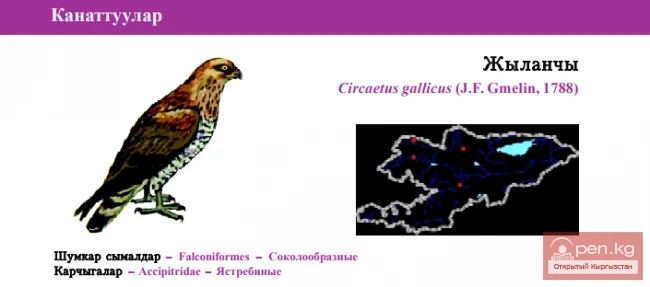
Snake Eagle \ Short-toed Eagle
Short-toed Eagle Status: V category, Vulnerable, VU: R. The only representative of the genus in...
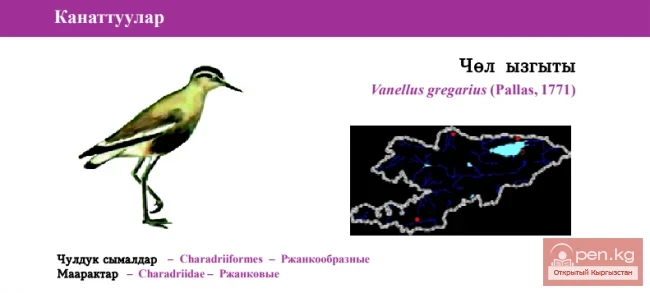
Krechetka / Cheł yzyty / Sociable Plover
Sociable Plover Status: III category, Critically Endangered, CR, A3bc. Endemic to Kazakhstan and...
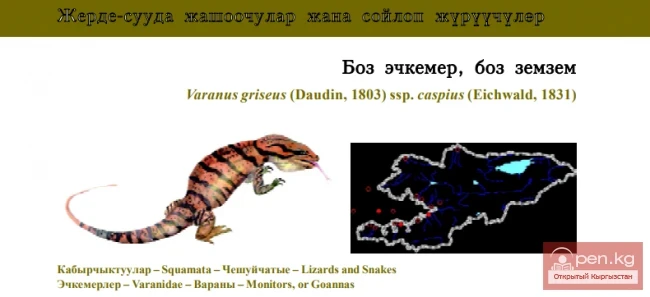
Gray Monitor / Boz Echkemer, Boz Zemzem / Transcaspian Desert Monitor
Gray Monitor Status: Category CR A4bc; E. In Kyrgyzstan - fragmented populations of the declining...
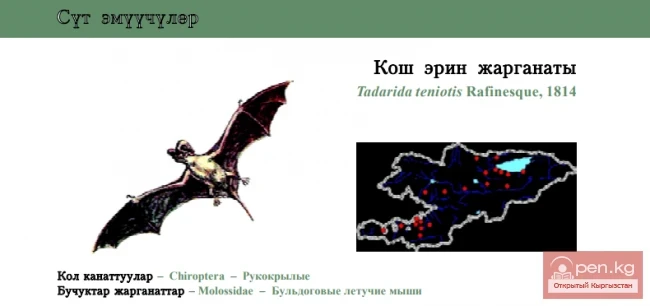
Broad-eared bat / Erin's bat / European Free-tailed bat
Broad-eared bat Status: Category VII, Lower Risk/least concerned, LR/lc....
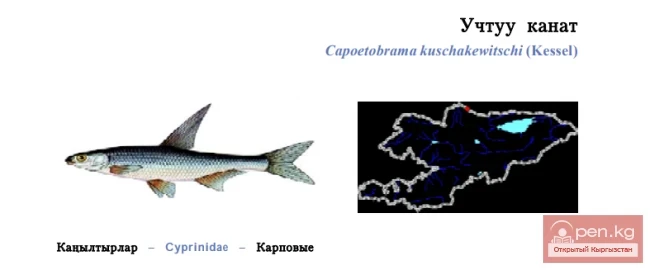
Chuya Sharp-wing / Uchtoo Kanat / Eastern Ostroluchka
Chuy Ostroluchka Status: 2 [CR: C]. Possibly already extinct in Kyrgyzstan, an endemic...
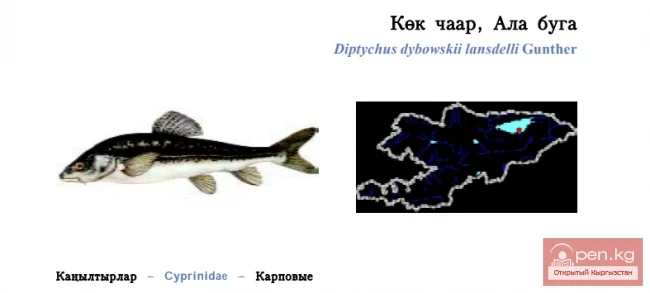
Issyk-Kul Scaleless Osman / Kök Chaar, Ala Buga
Issyk-Kul Scaleless Osman Status: 2 [CR: D]. Lake form, very rare, critically endangered....
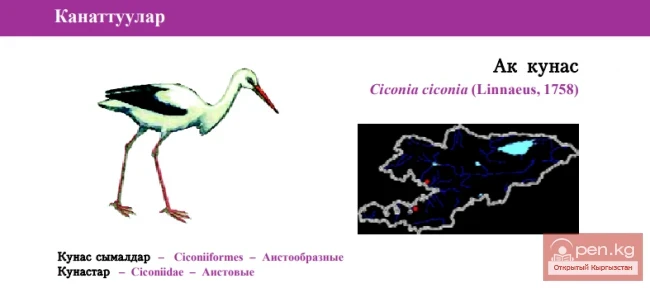
White Stork / Ak Kunash / Белый аист
White Stork Status: IV category, Endangered, EN: R. One of the 2 species of the genus found in...
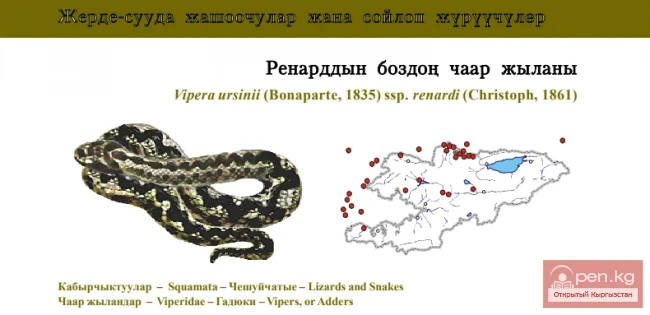
Renard's Meadow Viper
Renard’s Meadow Viper Status: Category VUA4bc. A subspecies of the south-west Palaearctic species,...
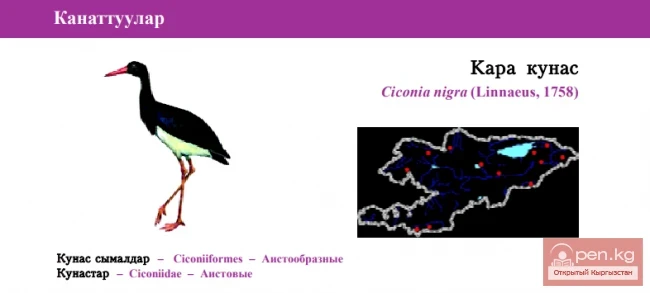
Black Stork
Black Stork Status: VI category, Near Threatened, NT: R. One of two species of the genus in the...
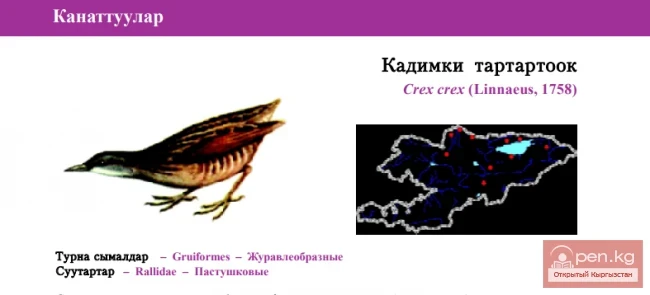
Corncrake / Kadimki tartartook / Corncrake
Corncrake Status: Category VI, Near Threatened, NT. The only representative of the genus in the...
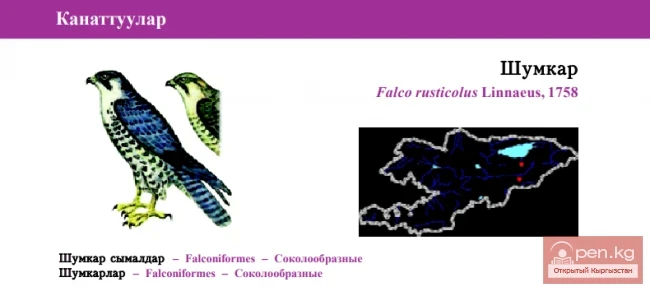
Krechet / Shumkar / Gyrfalcon
Gyrfalcon Status: Category VII, Least Concern. One of 10 species of the genus in the fauna of...
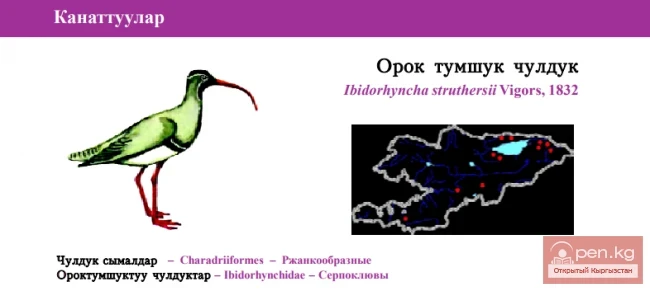
Curlew Sandpiper / Orok Tumshuk Chuldak / Ibisbill
Ibisbill Status: V category, Vulnerable, VU: R, D1. A small number of stenobiont species, at risk...
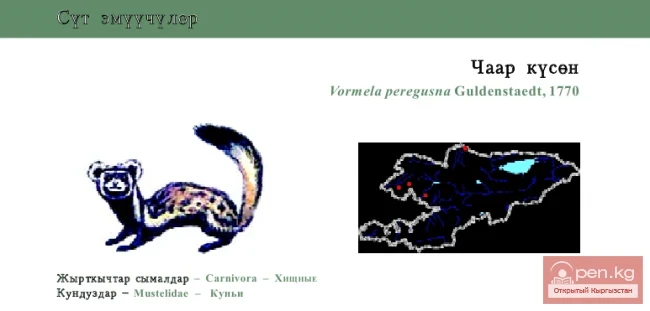
Dressing / Chaar Kusen / Marbled Polecat
Marbled Polecat Status: III category, Critically Endangered, CR: R, Cl. Close to extinction. The...
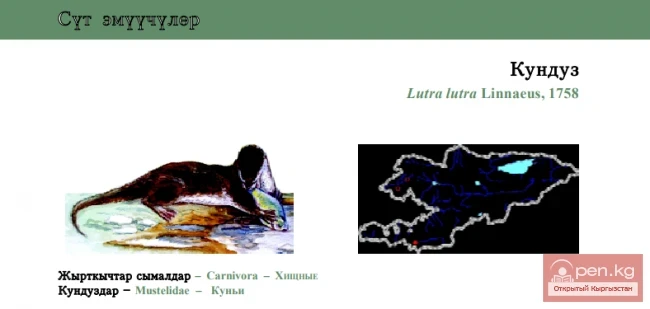
Central Asian otter / Kunduz / Common otter
Central Asian otter Status: III category Critically Endangered, CR: R, Cl. The subspecies Lutra...
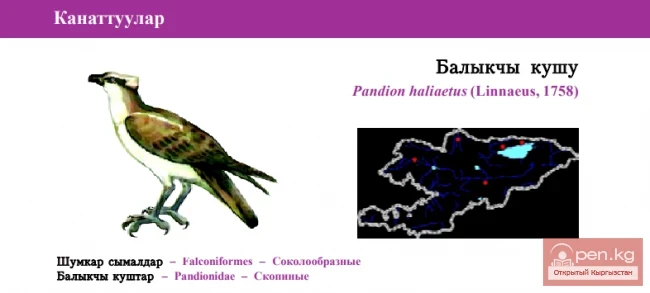
Sakpa / Balıkçı Kushu / Osprey
Osprey Status: Category VII, Least Concern, LC. A representative of a monotypic family and genus...
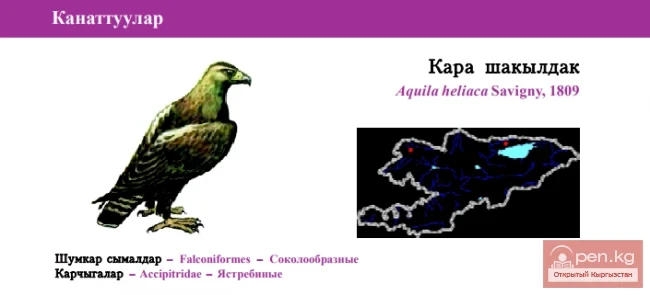
Graveyard \ Kara Shakıldak / Eastern Imperial Eagle
Griffon Vulture Status: V category, Vulnerable, VU, C1. A rare species whose population is...
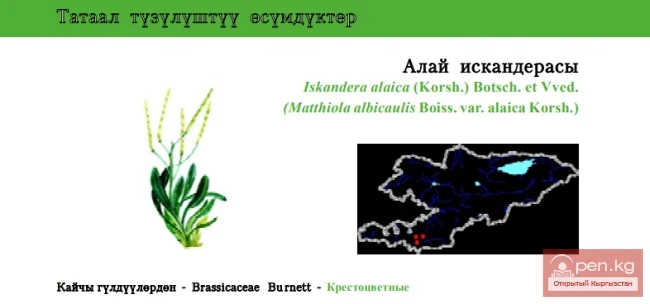
Iskander of Alai / Alai Iskander / Alai Iskander
Iskandera Alai Status: VU. A very rare narrow endemic species. There is only one species of this...
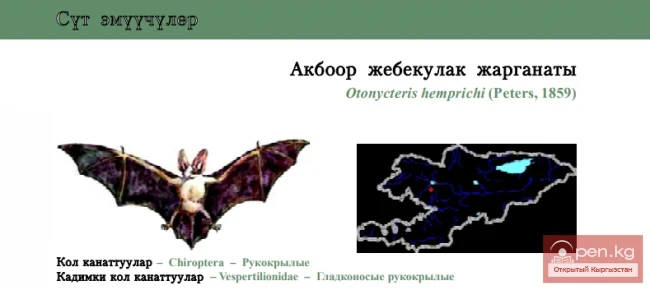
White-bellied Long-eared / Akboor Jebekulak Bat / Desert Long-eared, or Hemprich’s Arrow-eared, Bat
Desert Long-eared Bat Status: Category VII, Lower Risk - Least Concern, LR/lc....
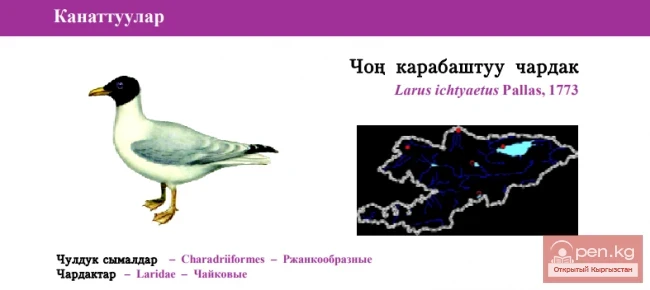
Black-headed Gull / Great Black-headed Gull
Great Black-headed Gull Status: VI, Near Threatened, NT: R. One of 6 species of the genus in the...
Greater Spotted Eagle \ Chaar Burkut \ Spotted Eagle
Greater Spotted Eagle Status: Category VI, Near Threatened, NT. One of 4 representatives of the...
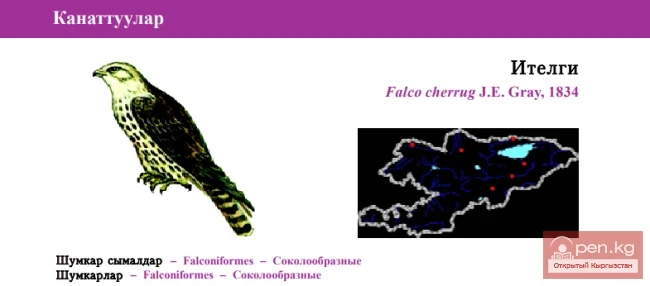
Baloban / Itelgi / Saker Falcon
Saker Falcon Status: IV category, Endangered, EN, A2bcd+3bcd. The population of the species in...
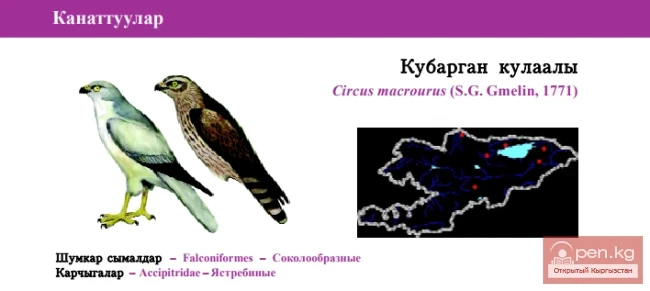
Steppe Harrier \ Kubargan Kulaaly \ Pallid Harrier
Steppe Harrier Status: Category VI, Near Threatened, NT. One of 4 representatives of the genus in...
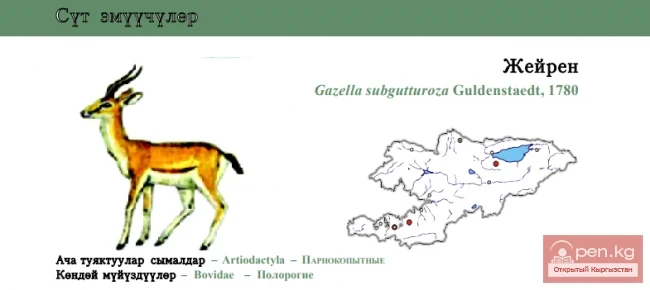
Jayran / Zheiren / Goitered gazelle
Dzhayran Status: Category III, Critically Endangered, CR: R, Cl. An endangered or possibly extinct...
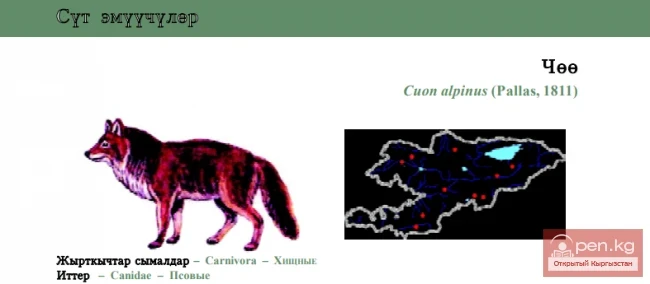
Red Wolf \ Chёё / Asiatic Wild Dog
Red Wolf Status: III category Critically Endangered, CR: R. There have been no confirmed sightings...
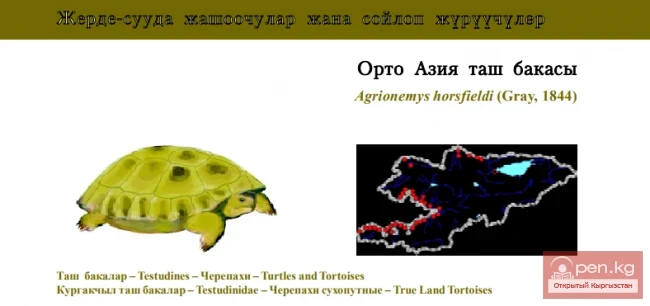
Central Asian Tortoise \ Orto Asia Tortoise / Steppe, or Afghan, Tortoise
Central Asian Tortoise Status: VU Blab (ii, iii, v); Cl. A representative of a monotypic genus,...
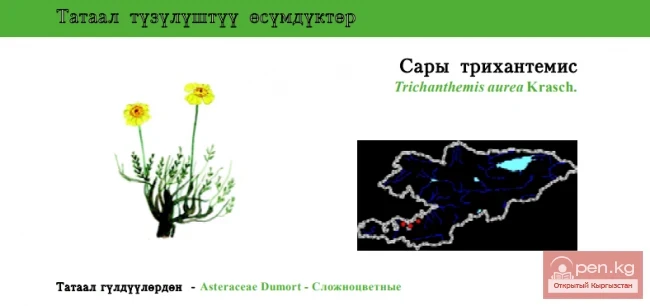
Hairy Flowering Golden / Yellow Trichanthemis / Golden Trichanthemis Centaury
Golden Trichanthemis Centaury Status: VU. A rare narrowly endemic species of the Alai Ridge, an...
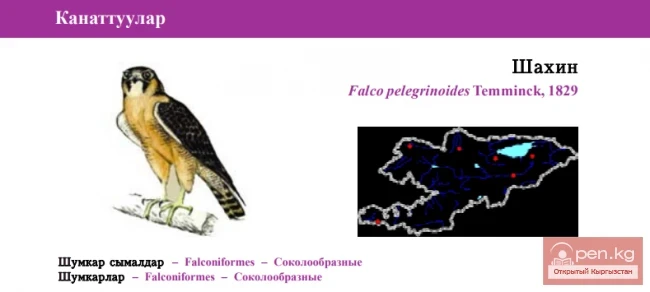
Red-headed Falcon / Shaheen / Barbary Falcon
Barbary Falcon Status: Category III, Critically Endangered, CR: R. Kyrgyz ornithologists believe...
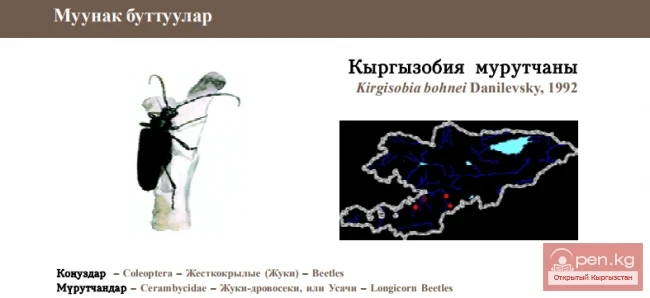
Kirghizobia Longicorn Beetle
Kirghizobia Longicorn Beetle Status: I category (ENA4bc; B1a+2ab(i,ii,iii,iv)). A narrowly...
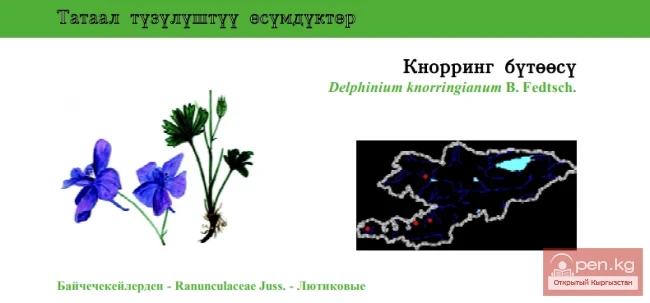
Knorring's Larkspur
Knorring’s Larkspur Status: VU. A rare ornamental relic species with a disjunctive range, endemic...
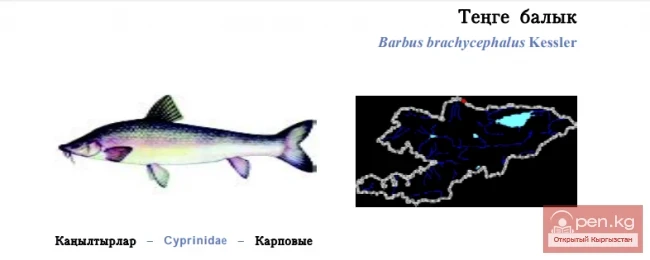
Aral Catfish / Tenge Fish / Aral Barbel
Aral Barbel Status: 2 [CR: C]. Species extinct in Kyrgyzstan....
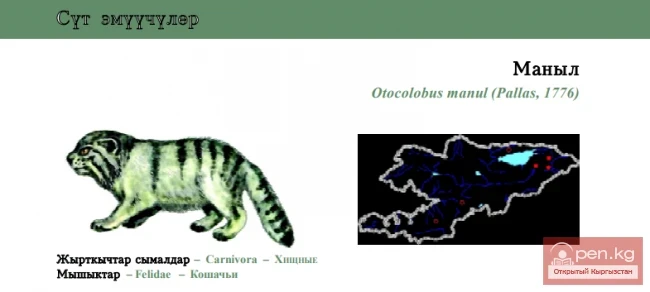
Pallas's cat
Manul Status: VI category, Near Threatened, NT. Rare species throughout its range....
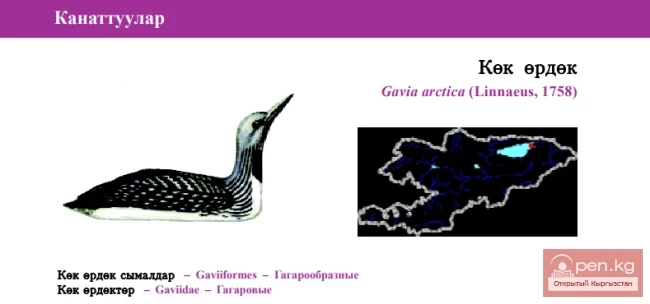
Black-throated Loon
Black-throated Loon Status: Category III, Critically Endangered, CR: R. Close to extinction in the...
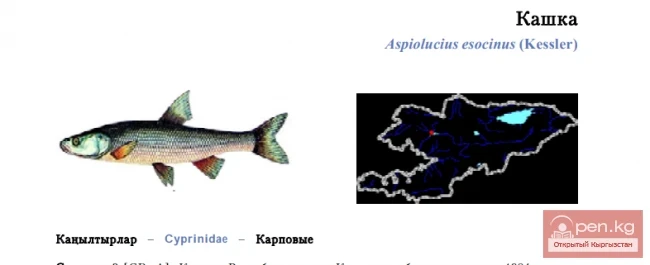
Pike Asp / Kashka / Pike Asp
Pike Asp Status: 2 [CR: A]. Listed in the Red Book of the Kyrgyz SSR in 1984. A rare...
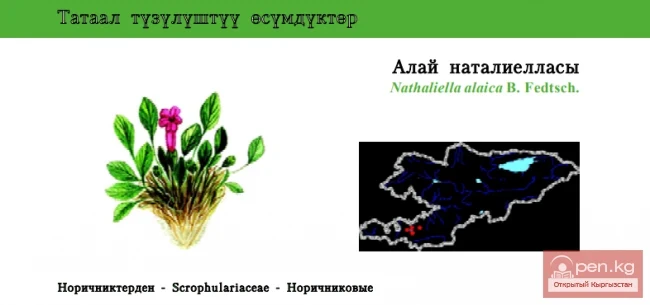
Nathaliella Alai / Alai Nathaliella / Nathaliella
Nathaliella alaica Status: CR B2ab(iii). A rare, endemic species of a monotypic genus of Himalayan...
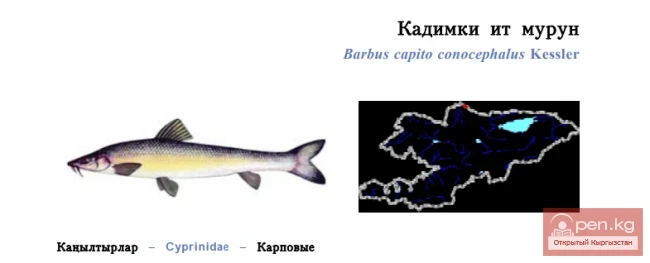
Turkestan Barbel / Kadimki It Murun / Turkestan Barbel
Turkestan Barbel Status: 2 [VU: D]. A subspecies that is endangered in Kyrgyzstan. One of...
Ecosystems and Protected Areas of Kyrgyzstan
Protected Natural Areas of the Kyrgyz Republic “We, the people, will lose part of our essence if...