Curly Pelican / Tarmal Birqazan \ Dalmatian Pelican
Dalmatian Pelican Status: V category, Vulnerable, VU, A2c+3c. One of 2 species of the genus, rarely migrating through the territory of Kyrgyzstan. Monotypic species.
Eurasian Spoonbill Status: VI category, Near Threatened, NT: R. The only representative of the genus in Kyrgyzstan. The nominal subspecies Platalea leucorodia leucorodia Linnaeus, 1758 migrates through the region.
Pink Pelican Status: VI category, Near Threatened, NT: R. One of 2 species of the genus, rarely migrating through the territory of Kyrgyzstan. Monotypic species.
White Stork Status: IV category, Endangered, EN: R. One of the 2 species of the genus found in Kyrgyzstan. The subspecies inhabiting the region is Ciconia ciconia asiatica Severtzov, 1873.
Black Stork Status: VI category, Near Threatened, NT: R. One of two species of the genus in the avifauna of the Kyrgyz Republic. Monotypic species.
Common Flamingo Status: VI category, Nearly Threatened, NT: R. The only species of the flamingo family in Kyrgyzstan.
Stone marten or beech marten Status: VII category, Lower Risk/least concerned, LR/lc. A rare species with a low population.
Black-throated Loon Status: Category III, Critically Endangered, CR: R. Close to extinction in the territory of Kyrgyzstan. The nominal subspecies is found. The bird is the size of a domestic duck.
Renard’s Meadow Viper Status: Category VUA4bc. A subspecies of the south-west Palaearctic species, mosaic distribution in the Black Sea-North Turan region; in Kyrgyzstan - sporadically encountered, with a decreasing population. It is kept in serpentariums for venom extraction - pharmaceutical raw material. The species is included in the IUCN RLTS with the category EN A1c+2c [27] and in the Red Book of Uzbekistan [13], and European populations are listed in Appendix I of CITES
Spotted or Diadem Snake Status: Critically Endangered (category CR C2b). One of the 4 known subspecies of the south-west Palaearctic species, with a southern Turanian distribution; in Kyrgyzstan - 1-3 isolated critically low populations (possibly already extinct) at the edge of the species range, in areas of anthropogenic impact on habitats.
Eastern Sand Boa Status: Near Threatened (NT). One of 10 species of the genus, which includes small representatives of the family, all species of which are included in CITES Appendix II [4 and others]. In Kyrgyzstan, it is a rare species, with its habitat decreasing; the species is listed in the Red Books of Turkmenistan, where it is local and rare [4] (category III), and Tajikistan (category 2) [13].
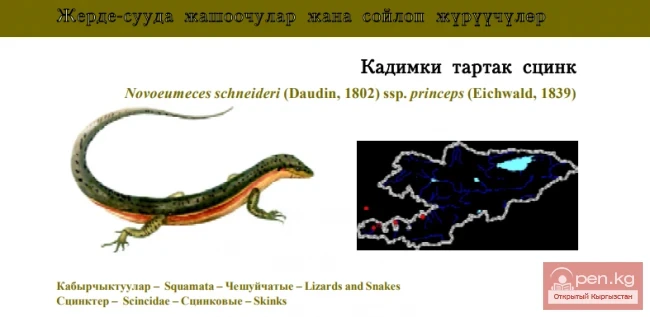
Schneider’s Gold Skink Status: Category ENB1ab(iii). A sporadically distributed south-Turanian subspecies of a south-west Palaearctic species, represented in Kyrgyzstan by scattered very small populations [19, 20], vulnerable at the periphery of the species' range; included in the Red Data Book of Tajikistan (category 2) [12].
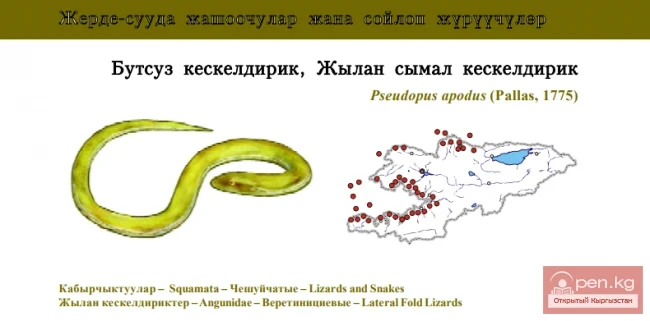
Sheltopusik Status: Near Threatened (category NT). A rare widely distributed representative of a monotypic genus, with decreasing populations and habitat range in Kyrgyzstan. Listed in the Red Data Book of Kazakhstan [10]. Its distribution is general and within the country. The range extends from the Balkan Peninsula and Crimea through Asia Minor, the Caucasus, Iraq, Iran, Afghanistan to Western Pakistan, Badakhshan, Central Asia, and Southern Pri Balkhash [1, 2, 10, 15]. In
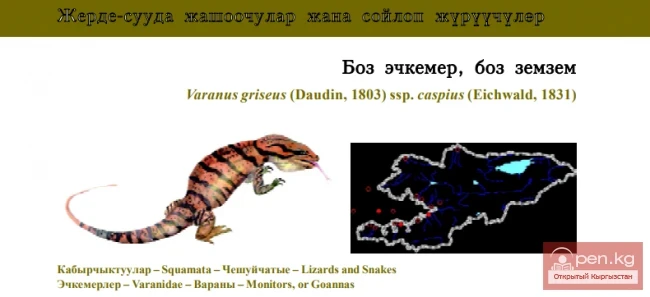
Gray Monitor Status: Category CR A4bc; E. In Kyrgyzstan - fragmented populations of the declining [1, 11, 12] South-Turanian subspecies of the southwestern Palaearctic species, at the periphery of its range; the only representative of the family in the region. The subspecies is included in CITES Appendix I, in the Red Books of the USSR (category III) [14], Kazakhstan (II, VU) [10], and all Central Asian states [1, 4, 9, 11, 12, 13], and according to some data
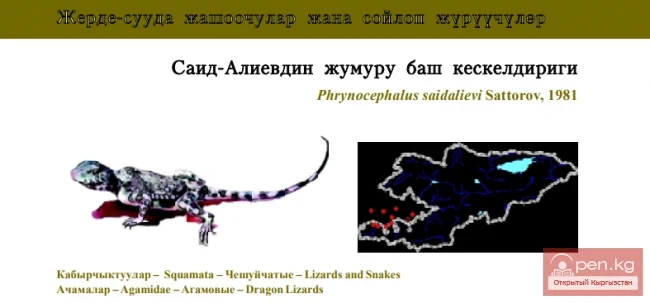
Said-Aliev’s Toad Agama Status: Vulnerable (category VUBlab(iii)). A narrowly distributed relic species, endemic to the foothills of the western part of the Fergana Valley [23, 7], whose numbers are declining. It is listed in the Red Books of Tajikistan (category 2) [12] and Uzbekistan (category EN 1ab(i-v)) [13].
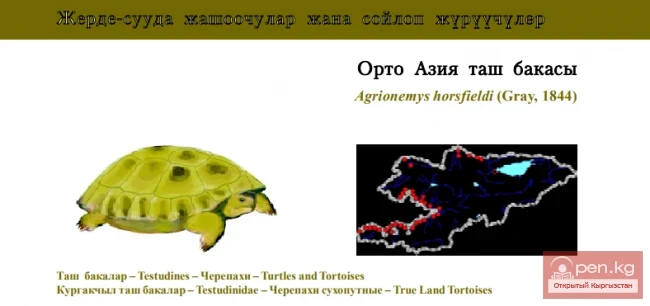
Central Asian Tortoise Status: VU Blab (ii, iii, v); Cl. A representative of a monotypic genus, decreasing in number, listed in IUCN RLTS (VU A2d) [27] and in Appendix II of CITES [4 and others]; in Kyrgyzstan, it is endangered due to habitat change and capture.
Central Asian Frog Status: Category VUB1ab(iv). A mosaic-distributed species with a disjunct and comparatively narrow range, whose population and habitat area are decreasing. The conservation of nearly half of the known populations in Kyrgyzstan seems impossible without special measures. A natural bioindicator of water pollution [20], listed in the Red Book of Kazakhstan [10].
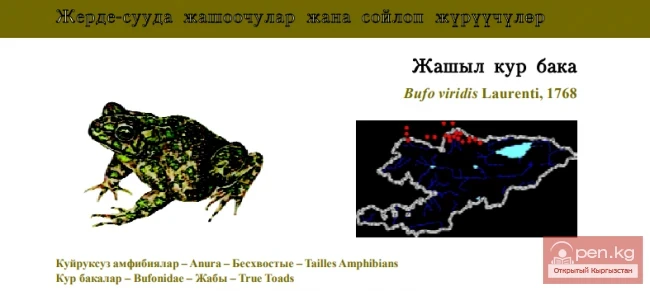
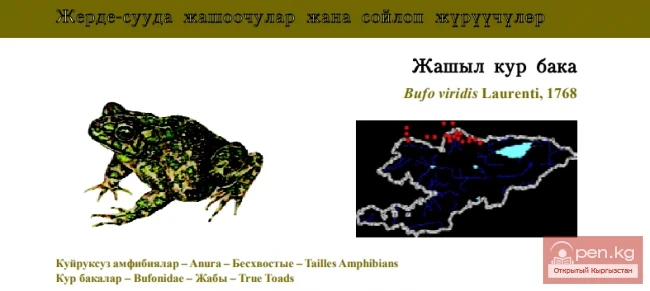
Green Toad Status: VU category B2ab(ii,iii,iv); D2. A rare species in Kyrgyzstan, with a sharp decline in population density in recent times. Insufficiently studied taxonomically [28], it is significant as an object of evolutionary research and in terms of preserving the regional gene pool, being one of two representatives of the Bufonidae family in the fauna of the Republic.
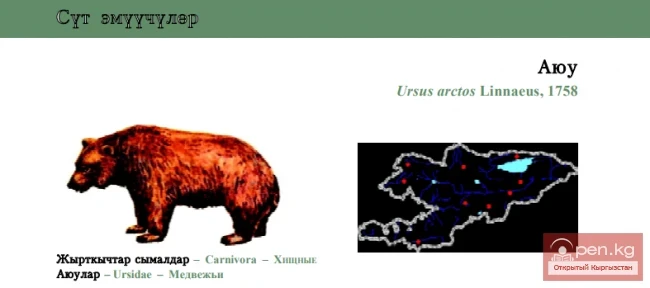
Brown Bear Status: VII category, Lower Risk/least concerned, LR/lc. A rare subspecies of bear Ursus arctos isabellinus Horsfeld, 1826 inhabits the territory of the republic.
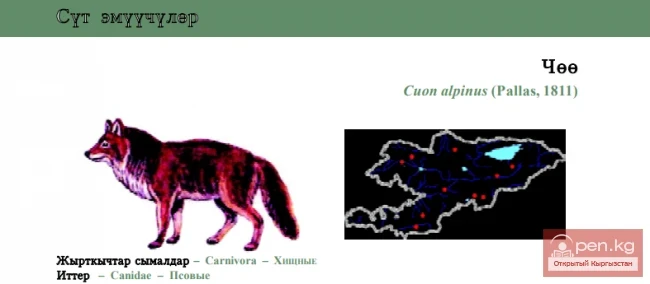
Red Wolf Status: III category Critically Endangered, CR: R. There have been no confirmed sightings in Kyrgyzstan over the past 50 years. The only representative of the genus in the fauna of Kyrgyzstan and the CIS.
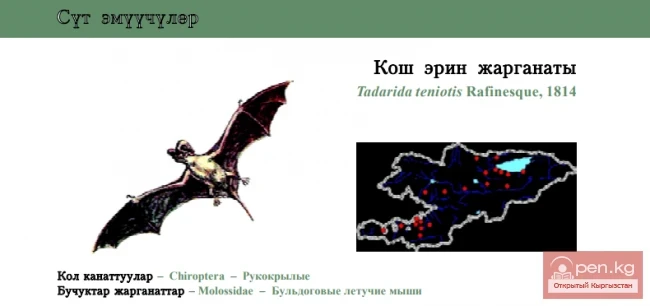
Broad-eared bat Status: Category VII, Lower Risk/least concerned, LR/lc.
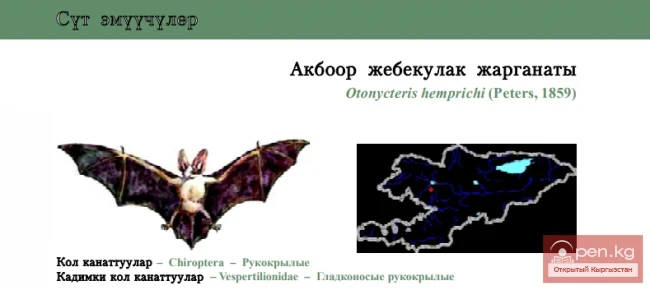
Desert Long-eared Bat Status: Category VII, Lower Risk - Least Concern, LR/lc.
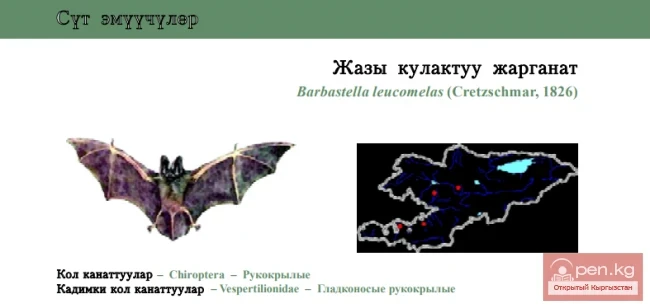
Asian Barbastelle Status: VI category, Near Threatened, NT: R.
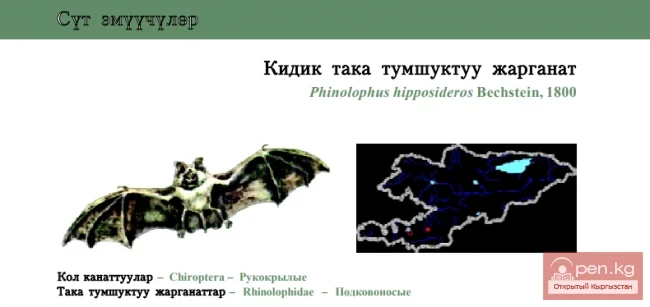
Lesser Horseshoe Bat Status: Category VI, Near Threatened, NT: R. A species with a declining population [3].
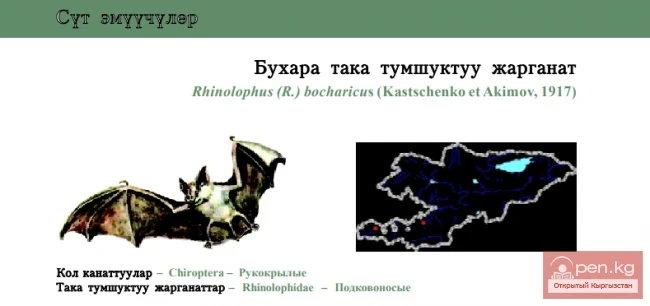
Bokhara Horseshoe Bat Status: Category VI, Near Threatened, NT: R. A rare species for Kyrgyzstan, found at the peripheral part of its range.
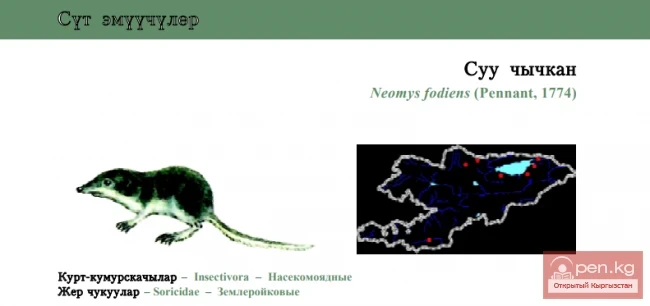
Common Water Shrew Status: Category VI, Near Threatened, NT: R. A rare species for Kyrgyzstan, found on the periphery of its range. The only representative of the genus in Kyrgyzstan.
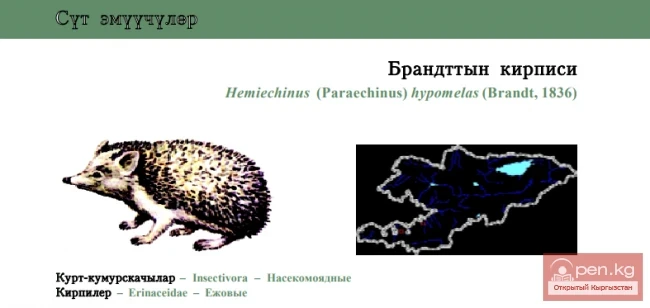
Long-eared Hedgehog Status: VIII category, Data Deficit, DD: R. Rare, vulnerable species, single occurrences known in southern Kyrgyzstan. In 1990, Prucha Kaler captured one specimen at an altitude of 1400 m above sea level in southern Kyrgyzstan and found remains of a skull in the pellets of an owl, which he attributed to the dark-eared hedgehog - Paraechinum hypomelas (more accurate name: Hemiechinus (Paraechinus) hypomelas Brandt, 1836 - long-eared hedgehog).
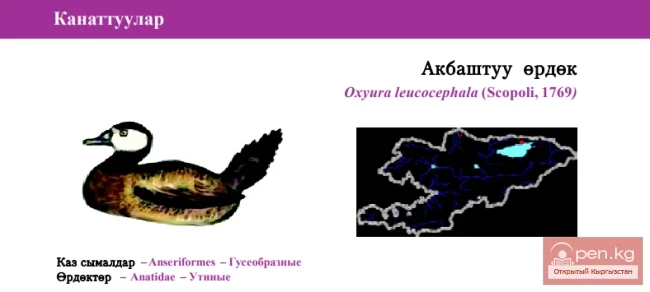
Savka Status: IV category, Endangered, EN, 2bcde. Monotypic species.
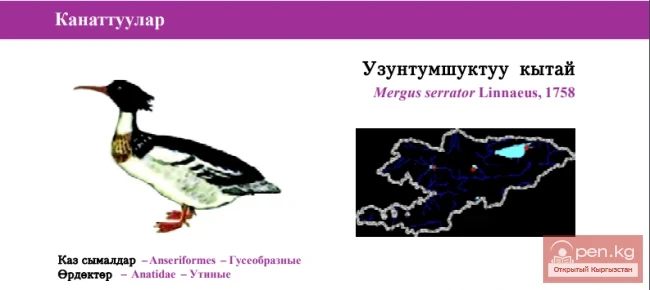
Red-breasted Merganser Status: Category VII, Least Concern, LC. Monotypic species.
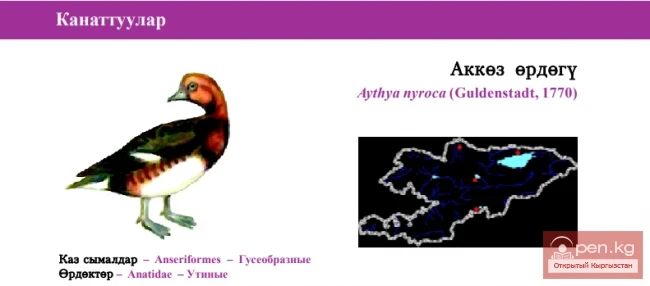
Ferruginous Duck Status: VI category, Near Threatened, NT. Monotypic species. One of four species of the genus in the avifauna of the Kyrgyz Republic.
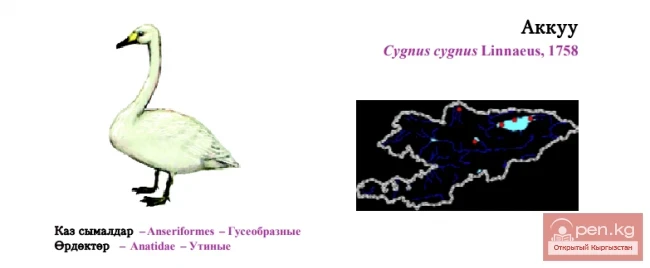
Whooper Swan Status: Category VII, Least Concern, LC. Rare breeding species. One of seven species of the genus in the global fauna and one of three in the fauna of Kyrgyzstan. Monotypic species.
Bar-headed Goose Status: Category VI, Near Threatened: R. A representative of the Tibetan species complex. A monotypic species.
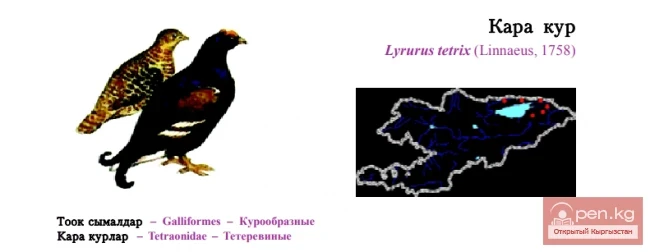
Black Grouse Status: Category VI, Near Threatened: R. The subspecies L. t. mongolicus (Lonnberg, 1904) inhabits the Tian Shan mountains.
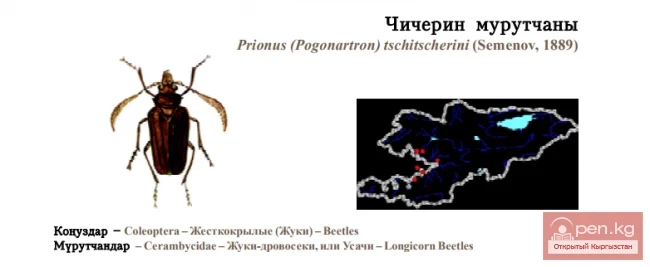
Tschitscherin’s Root Borer Status: Category II (VUB2ab(iii)). A narrowly distributed rare species, sporadically inhabiting areas of economic activity [11]. It belongs to a relict genus represented in the fauna of the republic by five species [12], and has aesthetic and scientific significance in the aspects of zoogeography and genetic conservation.
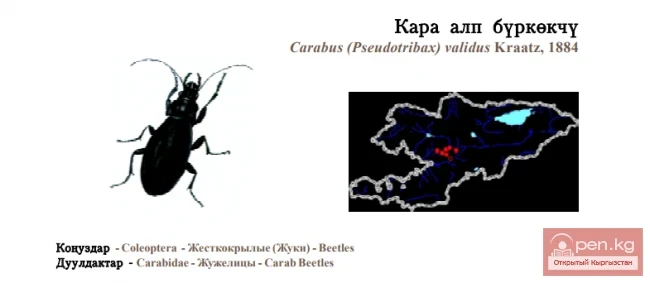
Vigorous Ground Beetle Status: Category II (VUBlb(iii)+2b(iii,iv); C2b). A narrowly distributed rare species, sporadically inhabiting areas of economic activity [11], entomophagous. One of two species of a relict oligotypic subgenus, endemic to the Fergana Mountain system [30], has scientific significance in terms of zoogeography and conservation of genetic resources.
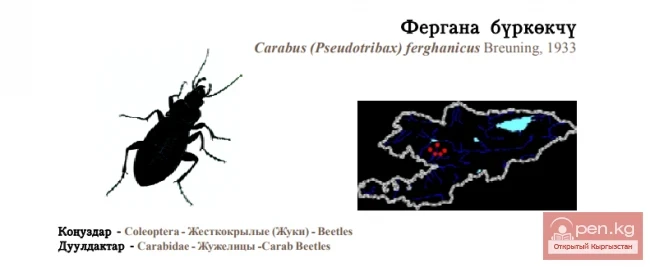
Fergana Ground Beetle Status: Category II (VUB1ab(iii)+2ab(iii)c(iii,iv); C2b). A narrowly distributed rare species, sporadically inhabiting areas of economic activity [11], entomophagous. One of two species of the relict oligotypic subgenus, endemic to the Fergana Mountain Range [30], it has scientific significance in terms of zoogeography and genetic conservation.
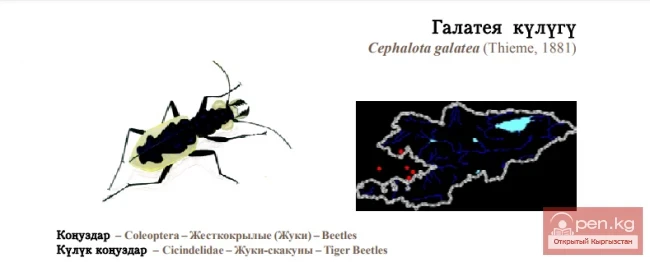
Galatea Tiger Beetle Status: Category I (EN B1ab(iv)+2ab(iii,iv)). A narrowly endemic species with a fragmented distribution and decreasing population due to habitat destruction. The taxon has scientific significance in the aspects of zoogeography [31] and conservation of genetic diversity. An entomophage, it has aesthetic value; it is the only representative of the genus in the republic. Listed in the Red Book of Uzbekistan (category VUr D2) [23].
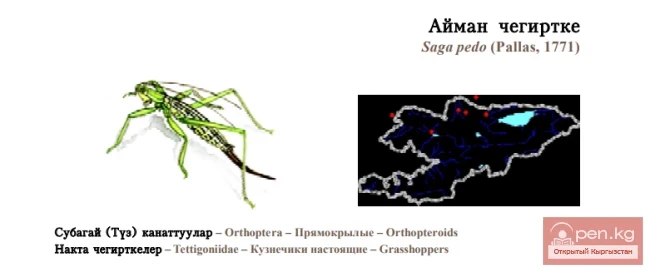
Steppe Katydid Status: Category II (VU Alc; B2ab(iii,iv); D1+2). A relic steppe species with decreasing numbers; included in the Red Book of the USSR in 1984 (Category II) [26], in IUCN RLTS (Category VU B1+2bd based on an assessment conducted in 1996) [76], and in the Red Book of the Republic of Uzbekistan (Category EN D) [23]. The only one of 12 species of the genus that extends beyond the Mediterranean region.
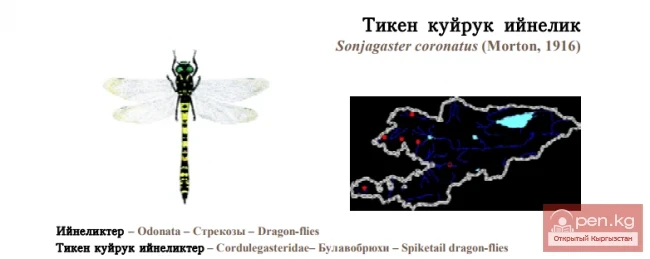
Coronate Spiketail Status: Category II (VUA4bc; B2b(iii,iv); D2). A locally occurring species with a declining population trend. All populations of the subspecies are fragmented, small, and vulnerable. It is of interest for zoogeography, study, and conservation of the regional gene pool. S. coronatus was previously considered a subspecies of ^rdulegaster insignis (Schneider, 1852) [12, 26, etc.], which was included in the Red Book of the USSR in 1984 (Category III) [26]. An
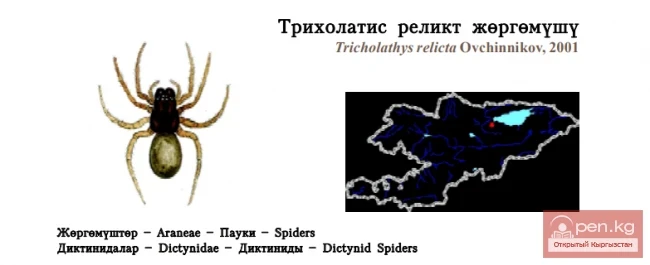
Tricholathys relicta Status: Category II (VU B2ac(iii); C2b). A very rare, narrowly localized endemic species. It has significant scientific importance due to its unique morphological and distribution characteristics. The absence of a functional cribellum and calamistrum is unique within the subfamily Tricholathysinae [83]. In the Eastern Hemisphere, it is the only representative of the genus, while other species are found in the western regions of the USA [83].
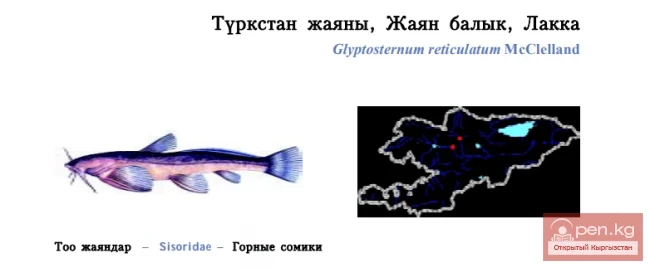
html Turkestan Catfish Status: 2 [VU: E]. The only representative of the genus in Kyrgyzstan.
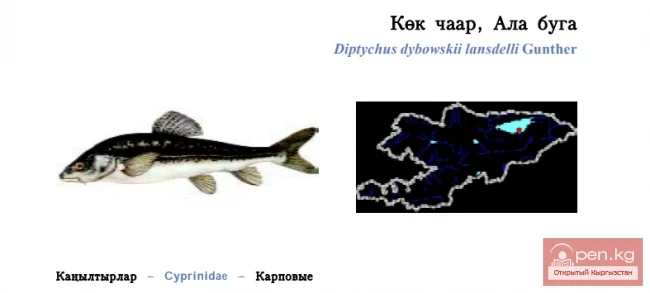
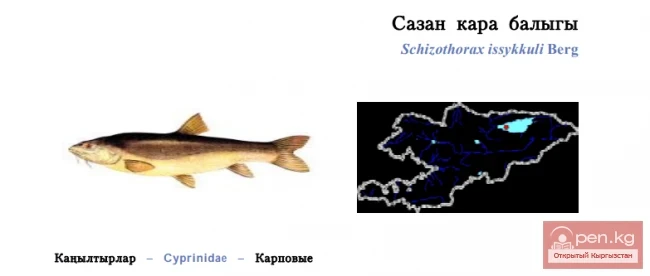
Issyk-Kul Scaleless Osman Status: 2 [CR: D]. Lake form, very rare, critically endangered. Endemic, has higher growth rates compared to other forms.
Issyk-Kul Marinka Status: 2 [EN: D]. A rare taxon inhabiting Lake Issyk-Kul. Its independent species status was established in 1953 [10]. An endemic species with declining numbers, it has commercial significance.
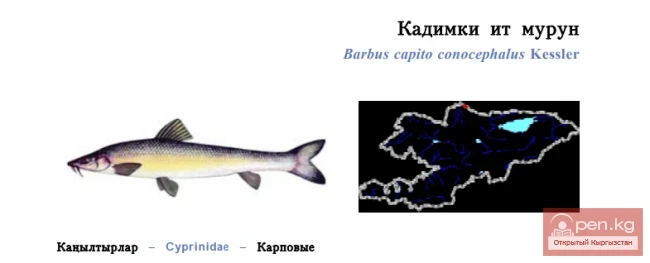
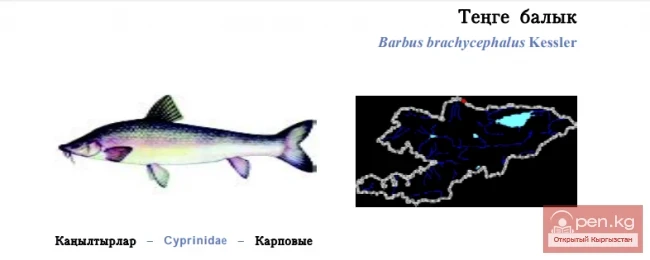
Turkestan Barbel Status: 2 [VU: D]. A subspecies that is endangered in Kyrgyzstan. One of the representatives of the genus Barbus in Kyrgyzstan.
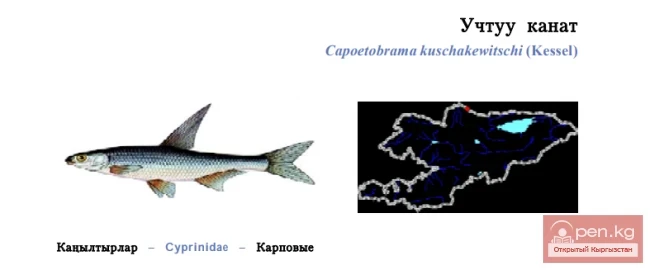
Aral Barbel Status: 2 [CR: C]. Species extinct in Kyrgyzstan.
Chuy Ostroluchka Status: 2 [CR: C]. Possibly already extinct in Kyrgyzstan, an endemic subspecies [10].
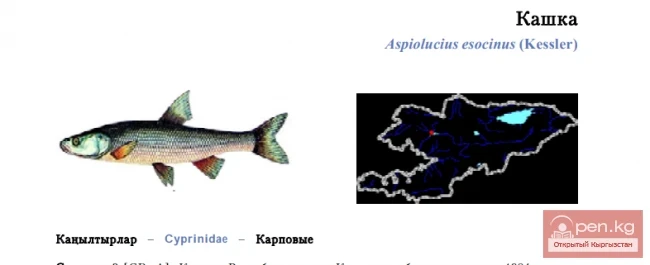
Pike Asp Status: 2 [CR: A]. Listed in the Red Book of the Kyrgyz SSR in 1984. A rare species inhabiting the basins of the Amudarya and Syrdarya rivers. In Kyrgyzstan, there have been no recorded catches in recent years. It may already be extinct. An endemic species of Central Asia with commercial significance.
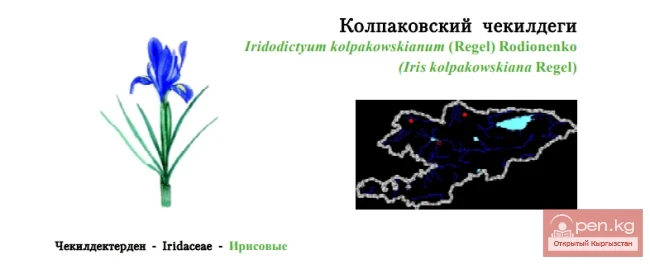
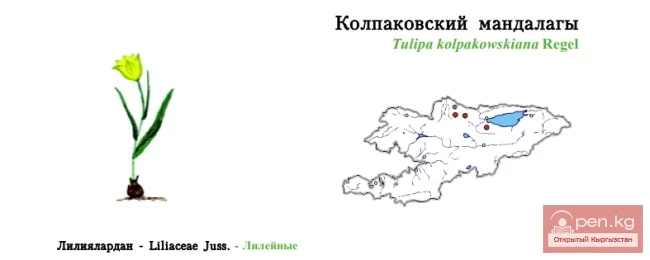
Iridodictyum Kolpakovski Status: VU. A species with a reducing range and population. It deserves attention as an early-flowering plant for squares and parks that does not require watering.