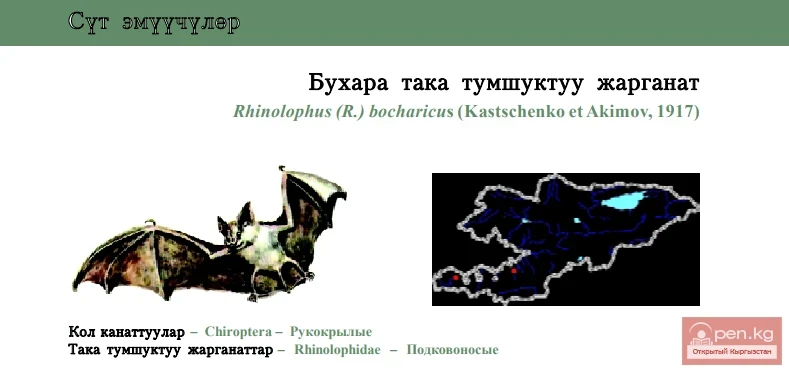
Bukhara Horseshoe Bat
Bokhara Horseshoe Bat
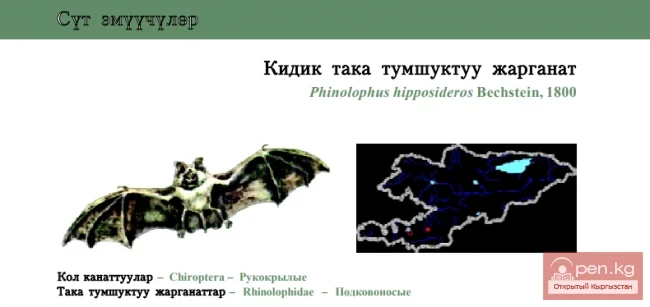
Status: Category VI, Near Threatened, NT: R. A rare species for Kyrgyzstan, found at the peripheral part of its range.
Distribution overall and in the country. The range covers the southern part of the temperate zone and subtropics of the Palaearctic, including almost all of Western Europe, Asia Minor, North Africa, Western Ukraine, Moldova, Southern Crimea, the Caucasus, northern Afghanistan, Southern Kazakhstan, China, Nepal, and the Japanese islands. In Central Asia, it inhabits Southern Turkmenistan, Southern Kazakhstan (the northernmost findings are known in Kara-Tau), Western Tajikistan, and the eastern part of Uzbekistan. In Kyrgyzstan, it is found in the foothills of the northern macro slopes of the Alai (Keklik-Too) and Turkestan ranges.
Habitat. Low foothills with a dry climate, desert and semi-desert vegetation on the slopes of mountains, and oasis agriculture in the valleys. It uses caves as shelters, often with other species (the lesser horseshoe bat, the greater horseshoe bat, and the Asian big-eared bat). Prefers warm (18-25 °C) and humid (up to 100% relative humidity) caves.
Population. The population is small, with individual clusters usually reaching several dozen individuals.
Life style (life cycles). Found year-round in Southern Kyrgyzstan, but shows a tendency for constant migrations. Appears in wintering grounds in November and leaves starting from late February [3]. It leads a nocturnal lifestyle, spending daytime in shelters. Two flights from shelters are noted: evening (lasting up to 3 hours) and a brief pre-dawn flight. The activity radius is up to 1.5 km. The diet mainly consists of insects with soft coverings: dipterans, moths, beetles, and wasps. It hunts over fields, riverbanks, above water surfaces, and channels, at heights ranging from 0.2 to 15 m. Settlements are located near rivers and channels, as the bats actively consume water, especially females during the rearing of young. The breeding period occurs from late May to early June.
Limiting factors. Leaves caves after human visits.
Breeding (keeping in captivity). Not bred.
Existing conservation measures. None.
Recommended conservation measures. Protection of habitats and shelters from uncontrolled human visits.
Bokhara Horseshoe Bat
Rhinolophus (R.) bocharicus (Kastschenko et Akimov, 1917)
Status: Category VI, Near Threatened, NT: R. This south-Palaearctic (from Western Europe up to Japan) species is a rare bat species in Kyrgyzstan, inhabiting at the edge of its specific area, where it is recorded in the northern piedmonts of the Turkestan and Alai Mountains. This is a comparatively small bat species, with a body length of 52-60 mm. The species occurs in habitats year-round while these bats permanently migrate. It populates warm humid caves in different rocky low-montane landscapes (together with other bat species) and is active from the end of February to November. Bats catch delicate insects and need water near their roosting place (the radius of activity is 1.5 km). The period of reproduction begins in May - June. The population is insignificant, with the largest aggregations not exceeding several dozen individuals. Limiting factors include disturbances in retreats caused by humans (disturbed bats leave caves). It is not kept in captivity in Kyrgyzstan, and special protection measures have not been undertaken, although several caves in the specific area of occupancy have Nature Sanctuary status since 1975 (Kan-i-Gut and Jidalik Caves in Batken Province, Barytes, Ajidaar-Unkur, Tchil-Ustun, Tchil-Mairam, and Surot-Tash Caves in Osh Province). To conserve the species, it is necessary to limit human visits to caves in the area of occupancy.
Read also:
Asian Barbastelle / Asiatic Wide-eared Bat
Asian Barbastelle Status: VI category, Near Threatened, NT: R....
Lesser Horseshoe Bat / Kidik Taka Tumshuktyu Jarganat / Малый подковонос
Lesser Horseshoe Bat Status: Category VI, Near Threatened, NT: R. A species with a declining...
Great Spotted Woodpecker
Great Spotted Woodpecker Status: VI, Near Threatened, NT: R. Kyrgyzstan is home to Dendrocopos...
Black-bellied Sandgrouse
Black-bellied Sandgrouse Status: VI category, Near Threatened, NT. A species with low numbers,...
Common Water Shrew / Eurasian Water Shrew
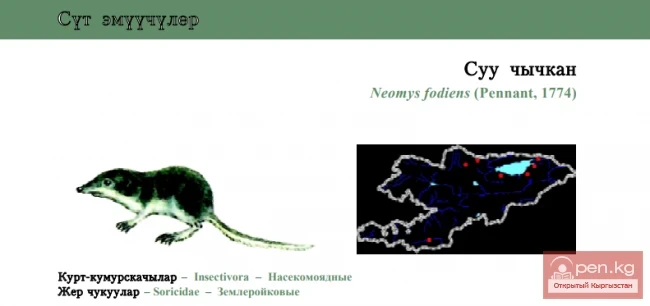
Common Water Shrew Status: Category VI, Near Threatened, NT: R. A rare species for Kyrgyzstan,...
Black-throated Loon
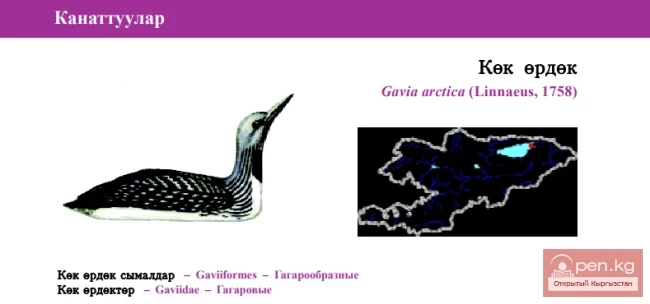
Black-throated Loon Status: Category III, Critically Endangered, CR: R. Close to extinction in the...
Said-Aliev's Round-Headed Agama / Said-Aliev's Toad Agama / Said-Aliev’s Sunwatcher
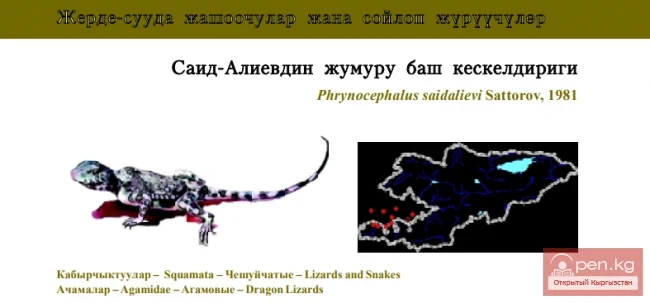
Said-Aliev’s Toad Agama Status: Vulnerable (category VUBlab(iii)). A narrowly distributed relic...
Lynx / Sulyoyosun / Eurasian Lynx
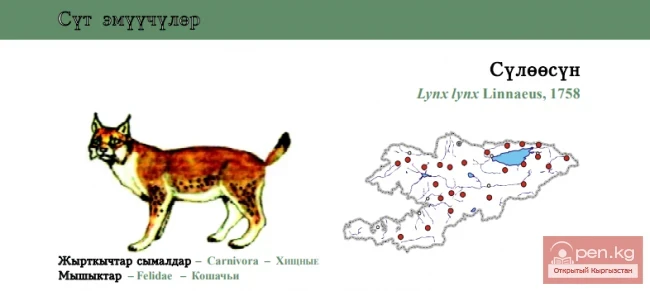
Lynx Status: V! category, Nearly Threatened, NT. A rare subspecies Lynx lynx isabellinus Blyth,...
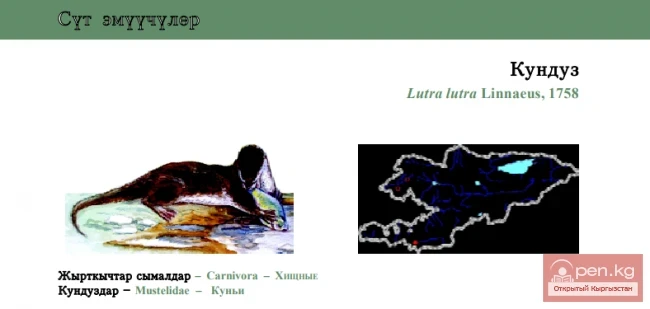
Central Asian otter / Kunduz / Common otter
Central Asian otter Status: III category Critically Endangered, CR: R, Cl. The subspecies Lutra...
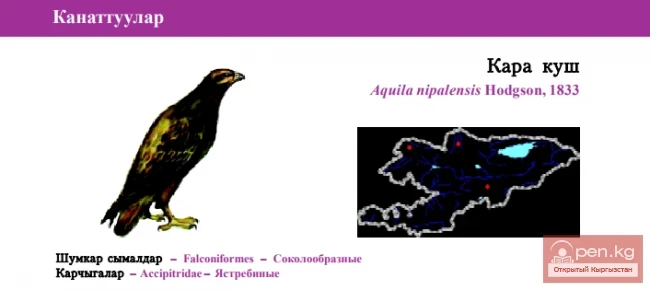
Steppe Eagle \ Kara Kush \ Steppe Eagle
Steppe Eagle Status: VI category, Near Threatened, NT: R. One of four species of the genus in the...
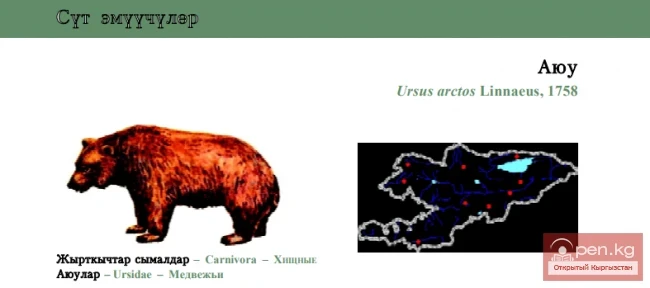
Brown Bear \ Ayyu / Brown Bear
Brown Bear Status: VII category, Lower Risk/least concerned, LR/lc. A rare subspecies of bear...
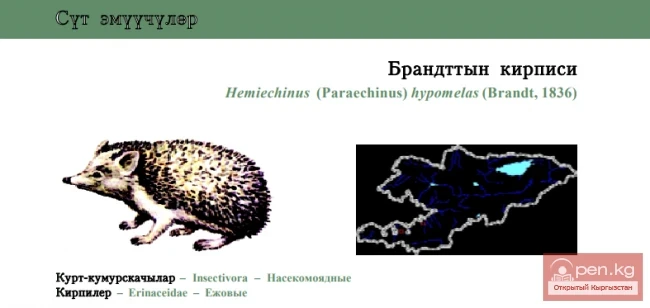
Long-eared Hedgehog / Brandt's Hedgehog / Brandt’s Hedgehog
Long-eared Hedgehog Status: VIII category, Data Deficit, DD: R. Rare, vulnerable species, single...
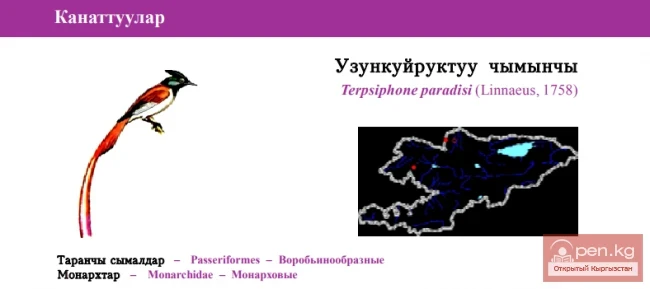
The title translates to: "Long-tailed Flycatcher / Asian Paradise Flycatcher."
Asian Paradise Flycatcher Status: VI, Near Threatened: NT: R. One species of the Monarchidae...
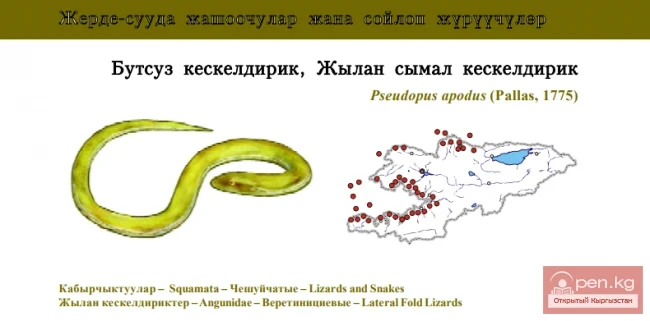
Yellow-bellied Skink / Butsuz Glass Lizard, Snake-like Glass Lizard / Sheltopusik, or Armour Glass Lizard
Sheltopusik Status: Near Threatened (category NT). A rare widely distributed representative of a...
Spotted or Diadem, Rat Snake / Charala Soilok / Diadem, or Clifford’s Rat Snake
Spotted or Diadem Snake Status: Critically Endangered (category CR C2b). One of the 4 known...
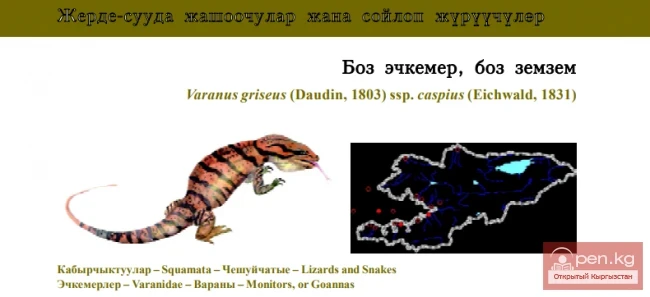
Gray Monitor / Boz Echkemer, Boz Zemzem / Transcaspian Desert Monitor
Gray Monitor Status: Category CR A4bc; E. In Kyrgyzstan - fragmented populations of the declining...
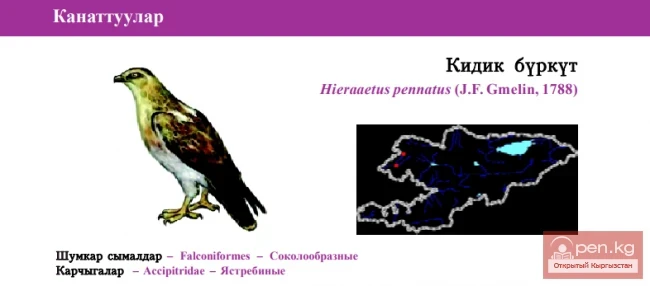
Dwarf Eagle / Kidik Burkut / Booted Eagle
Booted Eagle Status: VI category, Near Threatened, NT: R. Monotypic species [47]. A rare...
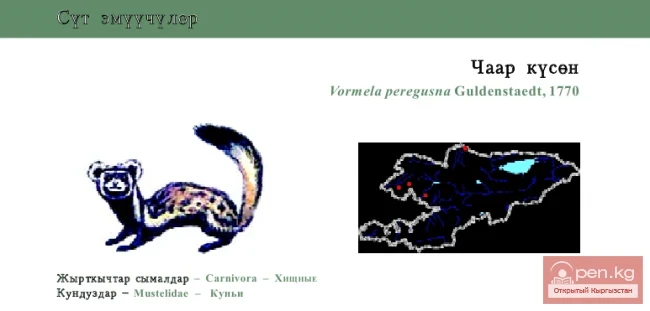
Dressing / Chaar Kusen / Marbled Polecat
Marbled Polecat Status: III category, Critically Endangered, CR: R, Cl. Close to extinction. The...
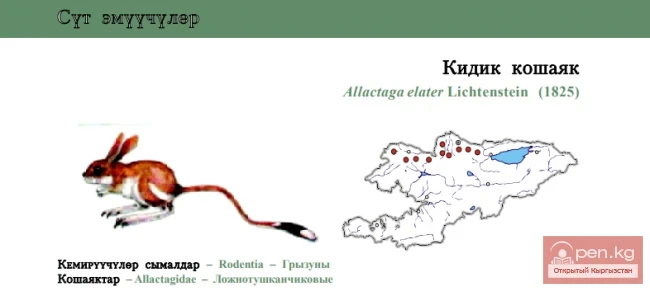
Small Jerboa / Kidik Koshayak / Small Five-toed Jerboa
Small Five-toed Jerboa Status: VII category, Lower Risk/least concerned, LR/lc....
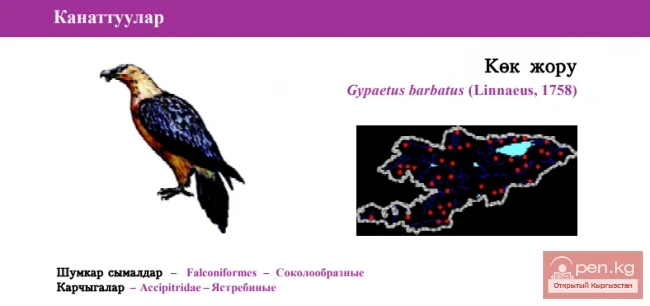
Bearded Vulture \ Kёk жору \ Lammergeier
Bearded Vulture Status: Category VI, Near Threatened, NT: R. The only representative of the genus...
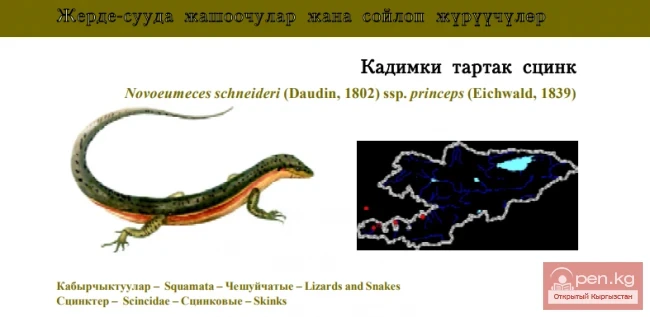
Schneider's Gold Skink / Kadimka Tartak Skink
Schneider’s Gold Skink Status: Category ENB1ab(iii). A sporadically distributed south-Turanian...
Pallas's cat
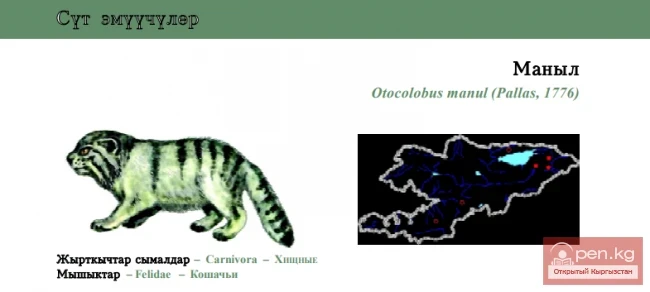
Manul Status: VI category, Near Threatened, NT. Rare species throughout its range....
Black Grouse
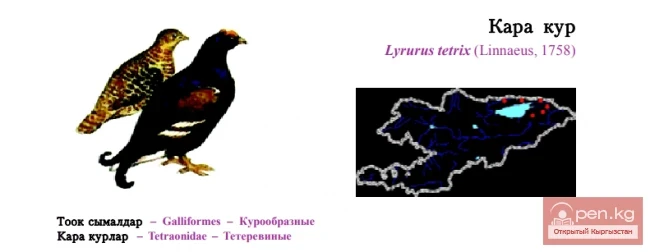
Black Grouse Status: Category VI, Near Threatened: R. The subspecies L. t. mongolicus (Lonnberg,...
Jayran / Zheiren / Goitered gazelle
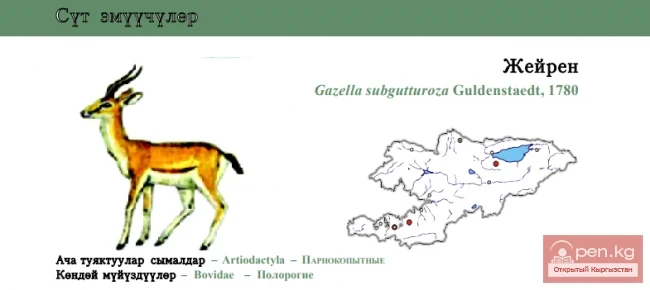
Dzhayran Status: Category III, Critically Endangered, CR: R, Cl. An endangered or possibly extinct...
Severtzov’s Jerboa
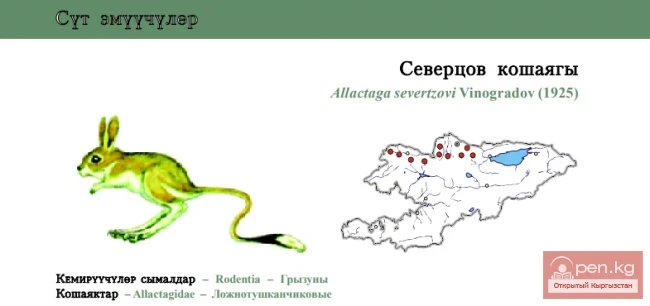
Severtzov’s Jerboa Status: VII category, Lower Risk/least concerned, C^//rare, poorly studied...
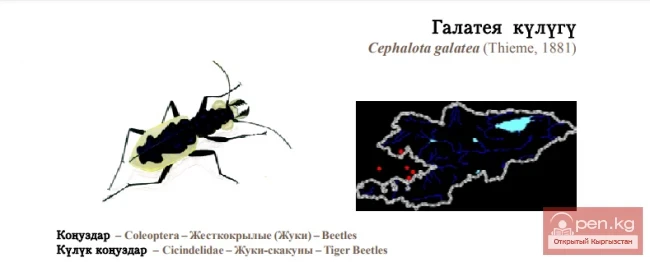
Galatea Steed / Galatea Bug / Galatea Tiger Beetle
Galatea Tiger Beetle Status: Category I (EN B1ab(iv)+2ab(iii,iv)). A narrowly endemic species with...
Mountain Goose / Too Kazy / Bar-headed Goose
Bar-headed Goose Status: Category VI, Near Threatened: R. A representative of the Tibetan species...
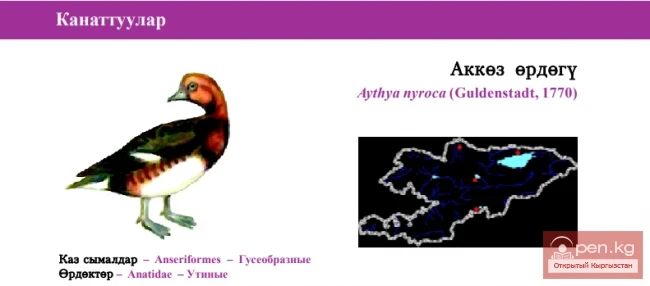
The title translates to: "White-eyed Pochard / Aккоз ордогу / Ferruginous Duck."
Ferruginous Duck Status: VI category, Near Threatened, NT. Monotypic species. One of four species...
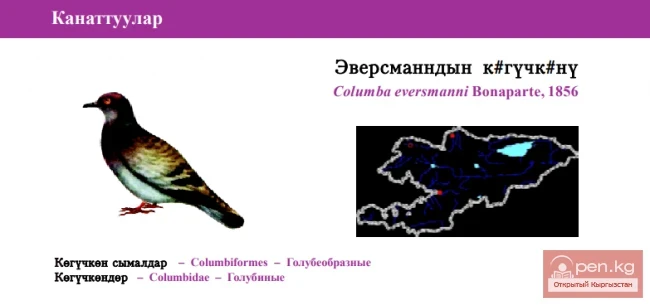
Brown Dove / Eversmann's Dove / Pale-backed Pigeon, Yellow-eyed Pigeon
Brown Pigeon Status: V category, Vulnerable, VU, A2bcd+3bcd. Vulnerable. One of six species in the...
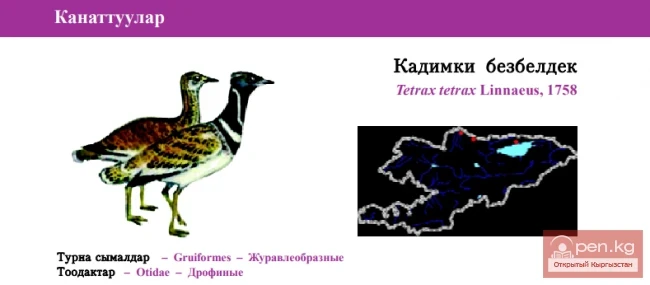
The title translates to: "Little Bustard / Kadimki bezbeldik / Striped"
Little Bustard Status: VI category, Near Threatened, NT. It has apparently not bred in Kyrgyzstan...
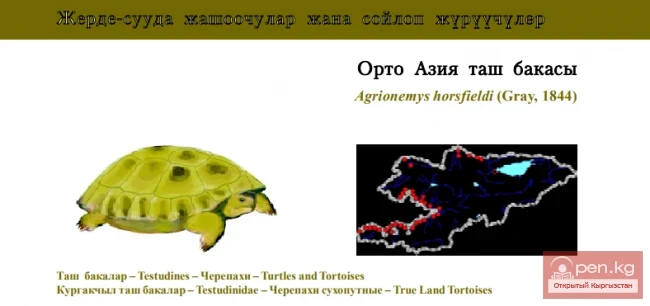
Central Asian Tortoise \ Orto Asia Tortoise / Steppe, or Afghan, Tortoise
Central Asian Tortoise Status: VU Blab (ii, iii, v); Cl. A representative of a monotypic genus,...
White-headed Vulture \ Aк кaжыр / Eurasian Griffon
Eurasian Griffon Status: Category VI, Near Threatened, NT: R. One of two species of this genus in...
Houbara Bustard / Gorgeous Bustard / Houbara Bustard
Houbara Bustard Status: III category, Critically Endangered, CR: R, A1. The subspecies Chlamydotis...
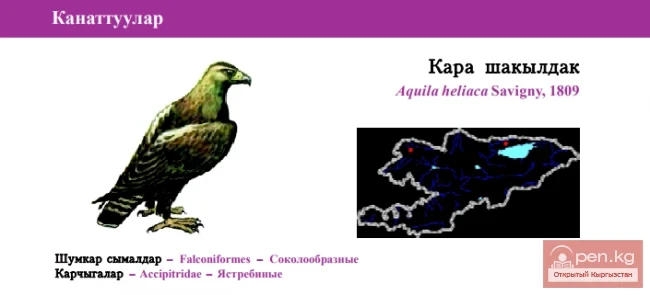
Graveyard \ Kara Shakıldak / Eastern Imperial Eagle
Griffon Vulture Status: V category, Vulnerable, VU, C1. A rare species whose population is...
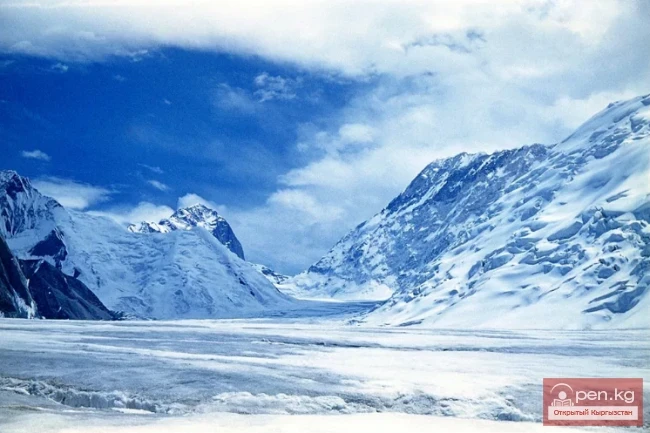
Glacier Starlet
Zvezdochka The Zvezdochka Glacier flows into the Inylchek Glacier, 40 km from the tongue of the...
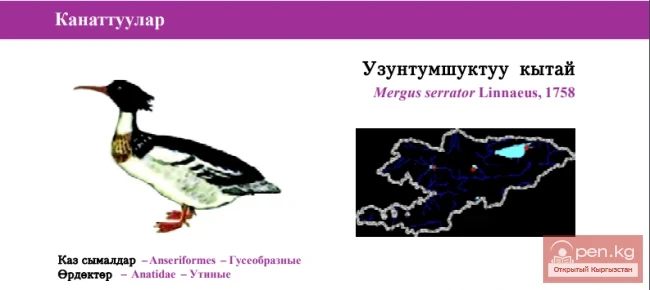
Long-nosed Merganser / Uzuntumshukty Chinese / Red-breasted Merganser
Red-breasted Merganser Status: Category VII, Least Concern, LC. Monotypic species....
Southern Shore of Issyk-Kul
Photo by Yulia Sh....
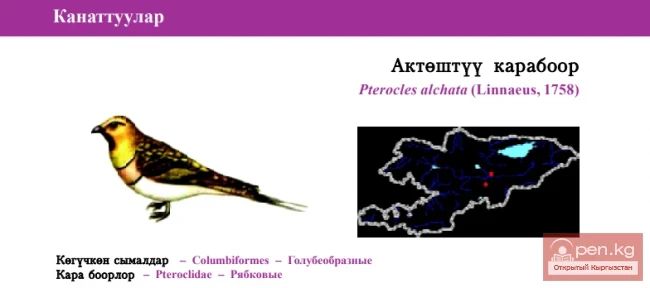
White-bellied Sandgrouse / Actor Black-headed / Pin-tailed Sandgrouse
Pin-tailed Sandgrouse Status: VI category, Near Threatened, NT: R. A species with low numbers,...
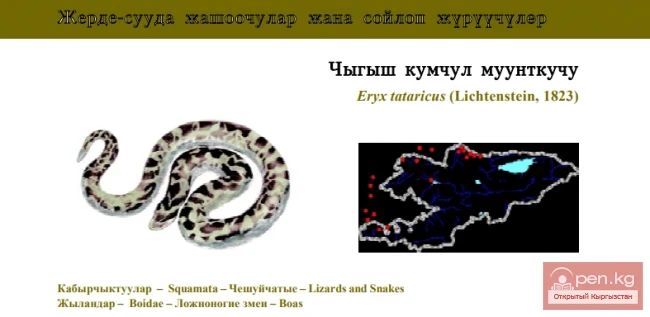
Eastern Sand Boa / Chygys Kumchul Muuntkuchu / Tatary Sand Boa
Eastern Sand Boa Status: Near Threatened (NT). One of 10 species of the genus, which includes...
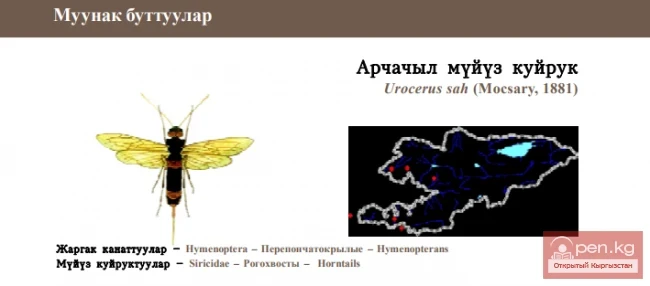
Arch's Hornet / Archachyl Muyuuz Kuyruk / Juniper Horntail
Juniper Horntail Status: Category III (LR-nt). A naturally rare species with a tendency to habitat...
Pink Pelican / Kyzgylt Birqazan / Great White Pelican
Pink Pelican Status: VI category, Near Threatened, NT: R. One of 2 species of the genus, rarely...
Vulture \ Jurtchu, tarpych \ Egyptian Vulture
Egyptian Vulture Status: Category V, Vulnerable, VU: R. The only representative of the genus in...
Narrow Yurt or Spacious? (A Parable)
A very sad young man approached the wise elder. - Help me, elder. I have a yurt, but my family is...