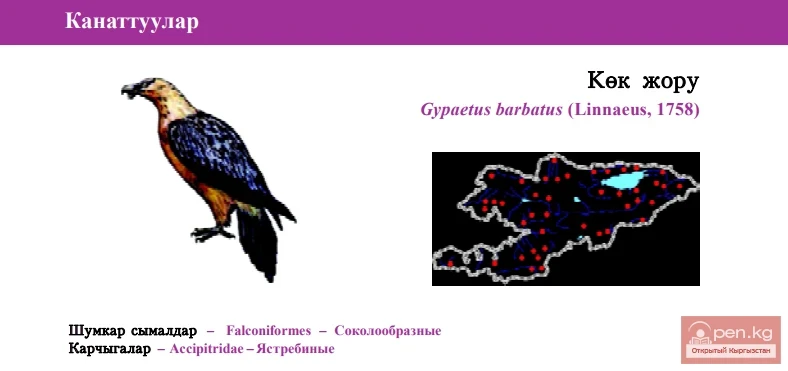
Bearded Vulture \ Kёk жору \ Lammergeier
Bearded Vulture
Status: Category VI, Near Threatened, NT: R. The only representative of the genus in the fauna of the Kyrgyz Republic. Inhabits the subspecies G.b. aureus (Hablizl, 1783).
Distribution general and in the country. The range is fragmented. Mountain areas of North Africa, south to the Drakensberg. The Pyrenees in Europe. In the past, it nested in the Alps and Sicily. In Asia, from Asia Minor and Yemen in the west to the Sino-Tibetan mountains in the east, north to the high mountains of the southern Palearctic, Afghanistan, the southern slopes of the Himalayas, to the northern part of Yunnan [7, 15, 64]. In the Kyrgyz Republic, it is found in all major ridges of the Western, Northern, Central, and Inner Tien Shan, as well as Pamir-Alai [2, 3, 42].
Habitat. Prefers high-altitude and mid-mountain areas of the Tien Shan mountain country and Pamir-Alai, adhering to fragmented terrain, less often in plains inhabited by wild ungulates, as well as areas of pastoral livestock farming.
Population. No specific counts of Bearded Vultures have been conducted; however, recent observations confirm that the Bearded Vulture is a common resident bird of the highlands. Its population is higher in the southern part of the country. While in the north, 1-2 birds are observed along the accounting route (0.01-0.4 individuals/km²), in the south, groups of 3-5 individuals are not uncommon, and in the Mazar Say area of the Nookat district, up to 12 Bearded Vultures were simultaneously observed on September 27-28, of which 5 were adults. Overall, during observations from August to October 1992, at least 34 Bearded Vultures were recorded across the republic, of which 21 were adults, 12 individuals were 1-3 years old, and only one individual was a fledgling of that year [31, 42].
Life style (life cycles). A sedentary species. The first clutches appear in winter, incubation lasts up to 2 months [23]. The nest may contain 1-2 eggs, but usually only one chick survives to fledging. Fledglings can be observed in August-September. Judging by the observed age structure of the Bearded Vulture population in the Kyrgyz Republic, it is evident that adult Bearded Vultures do not breed every year [16, 65].
Limiting factors. Reduction of the food base due to the decline in wild ungulate populations. At the same time, the increase in private livestock populations positively affects its numbers, as fallen livestock is often not utilized [16, 31]. Less frequently - direct extermination by humans.
Breeding (keeping in captivity). Successfully bred in zoos. Not kept in captivity in the Kyrgyz Republic.
Existing conservation measures. Listed in the Red Book of Kyrgyzstan [3]. Hunting of this species has been prohibited in the republic since 1968.
Recommended conservation measures. It is necessary to protect nesting sites, including through funds obtained from organizing observations of Bearded Vultures as part of the ecological tourism industry, in places of artificial feeding. Local community residents should be engaged as potential organizers of such eco-tours and suppliers of fallen domestic livestock to specially arranged feeding sites. Conduct precise mapping of nesting sites. Carry out an information campaign based on research results among the local population regarding the conservation of this species.
Kёk жору
Lammergeier
Gypaetus barbatus (Linnaeus, 1758), ssp. aureus (Hablizl, 1783)
Status: VI category, Near Threatened, NT: R. Occurs in all major ridges of Western, Northern, Central, Inner Tien Shan, as well as in Pamir-Alai Mountains. Prefers highlands of Tien Shan and Pamir-Alai Mountainous Systems, next to wild goats and sheep. Lammergeier is one of the usual resident birds of prey in highlands. The density of it in the north of the country is 0.01-0.4 individuals per km². There were bigger flocks recorded in the south, altogether 34 Lammergeiers were observed for August-September, 1992. Out of those, 21 were adults, 12 - 1-3 years old and only one - juvenile of this year. Starts to nest quite early in winter time, lays 1-2 eggs but only one chick usually survives. Juveniles are seen in August-September. Feeds on carcasses, occasionally hunts after marmots, hares, and other appropriate prey. Limiting factors are reduction of wild sheep and goats stocks. Lammergeier is not held in captivity in Kyrgyzstan. Included in Kyrgyz Red Book of 1985. Hunting of it has been prohibited in Kyrgyzstan since 1968. It is recommended to protect breeding colonies, organize ecological tourism by making hides near sites with artificial feeding. It is necessary to obtain exact figures on numbers of Lammergeier populations in Kyrgyzstan.
Read also:
White-headed Vulture \ Aк кaжыр / Eurasian Griffon
Eurasian Griffon Status: Category VI, Near Threatened, NT: R. One of two species of this genus in...
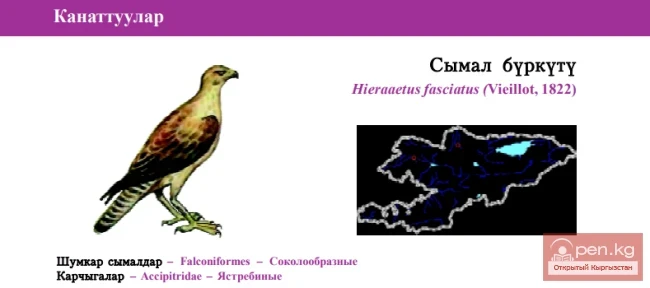
Hawk Eagle / Simal Burkutu / Bonelli’s Eagle
Bonelli’s Eagle Status: VI category, Near Threatened, NT: R. One of two species of the genus in...
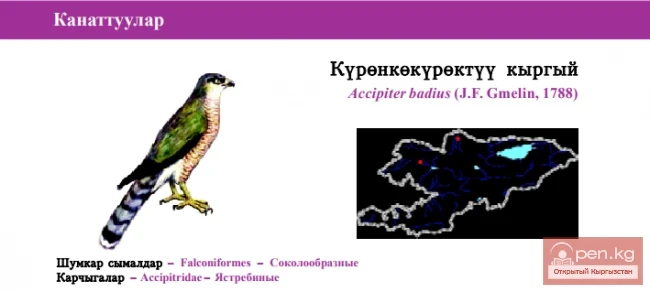
Turkestan Tuvik \ Kuryonkyokuryktuu Kyguy / Shikra
Turkestan Shikra Status: VI category Near Threatened, NT: R. One of ten species of the genus in...
Vulture \ Jurtchu, tarpych \ Egyptian Vulture
Egyptian Vulture Status: Category V, Vulnerable, VU: R. The only representative of the genus in...
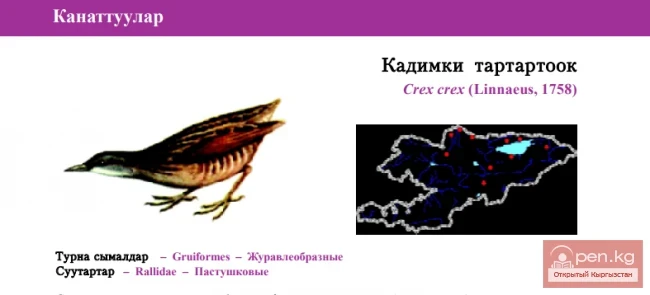
Corncrake / Kadimki tartartook / Corncrake
Corncrake Status: Category VI, Near Threatened, NT. The only representative of the genus in the...
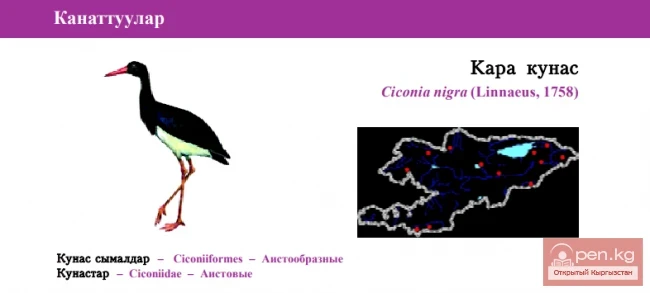
Black Stork
Black Stork Status: VI category, Near Threatened, NT: R. One of two species of the genus in the...
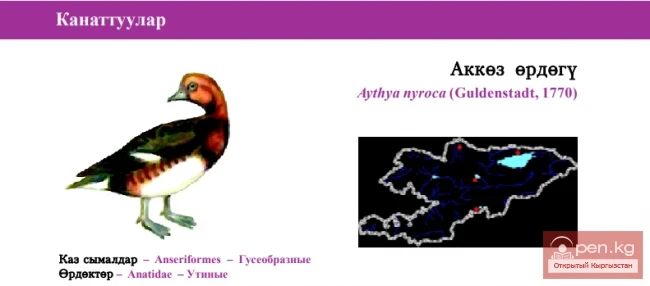
The title translates to: "White-eyed Pochard / Aккоз ордогу / Ferruginous Duck."
Ferruginous Duck Status: VI category, Near Threatened, NT. Monotypic species. One of four species...
Greater Spotted Eagle \ Chaar Burkut \ Spotted Eagle
Greater Spotted Eagle Status: Category VI, Near Threatened, NT. One of 4 representatives of the...
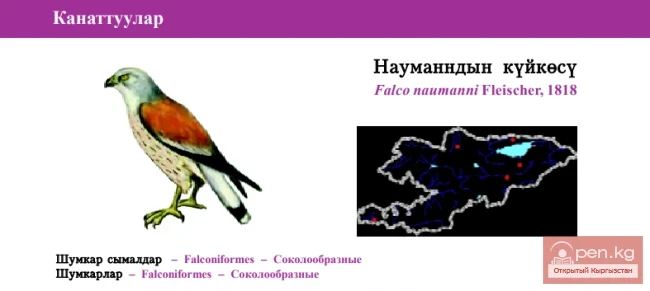
Steppe Kestrel / Naumann's Kestrel / Lesser Kestrel
Steppe Kestrel Status: V category, Vulnerable, VU, Cl. One of ten species of the genus in the...
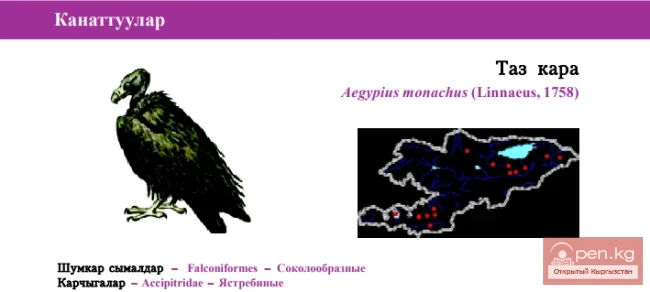
Black Vulture \ Tazkara \ Cinereous Vulture
Cinereous Vulture Status: VI, Near Threatened, NT. The only representative of the genus in the...
Himalayan Griffon \ Kumai / Himalayan Griffon
Himalayan Griffon Status: Category VII, Least Concern, LC. The only species of the genus in the...
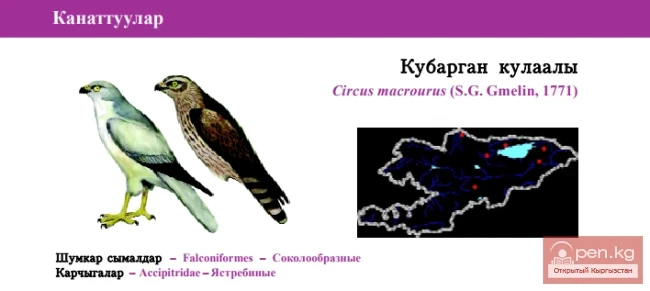
Steppe Harrier \ Kubargan Kulaaly \ Pallid Harrier
Steppe Harrier Status: Category VI, Near Threatened, NT. One of 4 representatives of the genus in...
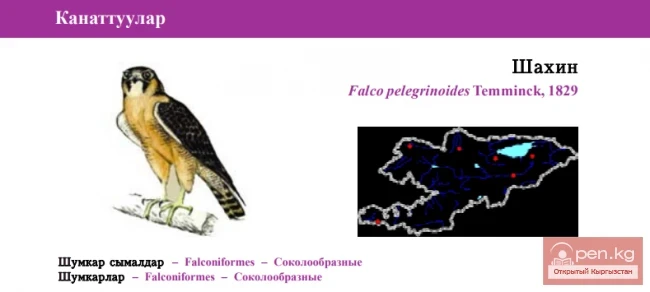
Red-headed Falcon / Shaheen / Barbary Falcon
Barbary Falcon Status: Category III, Critically Endangered, CR: R. Kyrgyz ornithologists believe...
Great Bustard
Great Bustard Status: III, Critically Endangered, CR: R, A1. The nominative subspecies Otis tarda...
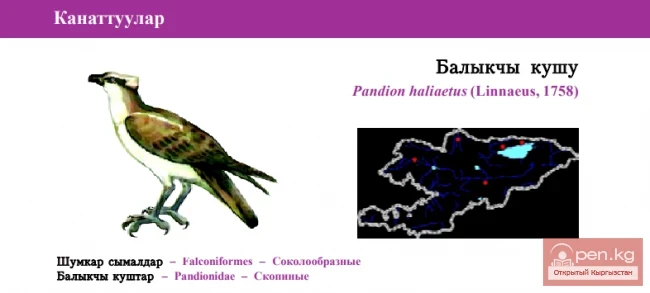
Sakpa / Balıkçı Kushu / Osprey
Osprey Status: Category VII, Least Concern, LC. A representative of a monotypic family and genus...
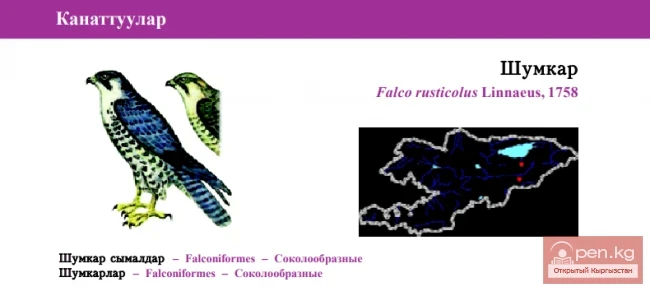
Krechet / Shumkar / Gyrfalcon
Gyrfalcon Status: Category VII, Least Concern. One of 10 species of the genus in the fauna of...
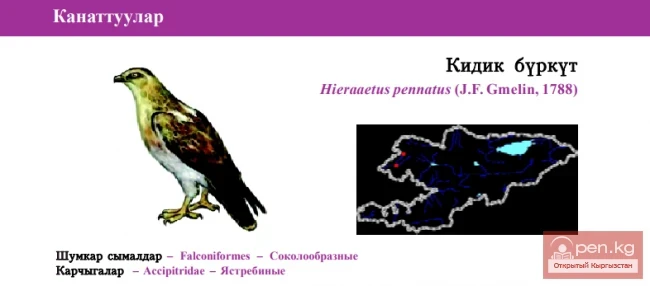
Dwarf Eagle / Kidik Burkut / Booted Eagle
Booted Eagle Status: VI category, Near Threatened, NT: R. Monotypic species [47]. A rare...
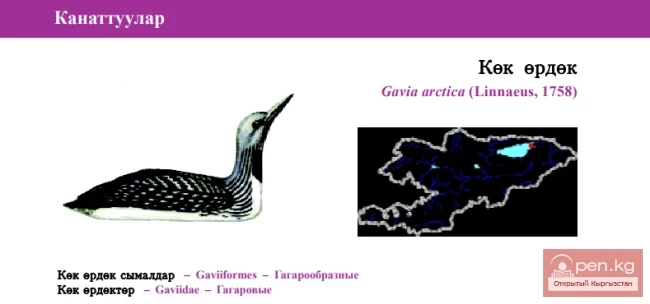
Black-throated Loon
Black-throated Loon Status: Category III, Critically Endangered, CR: R. Close to extinction in the...
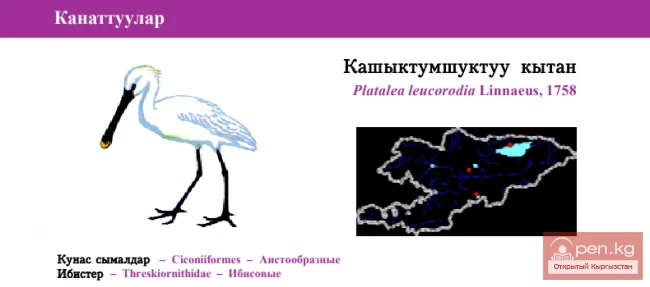
Kolpitsa / Kashyktumshuktuk Kytan / Eurasian Spoonbill
Eurasian Spoonbill Status: VI category, Near Threatened, NT: R. The only representative of the...
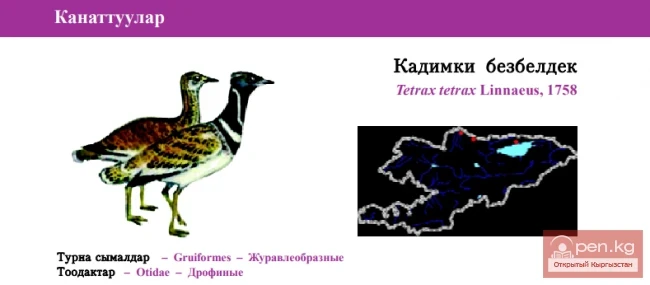
The title translates to: "Little Bustard / Kadimki bezbeldik / Striped"
Little Bustard Status: VI category, Near Threatened, NT. It has apparently not bred in Kyrgyzstan...
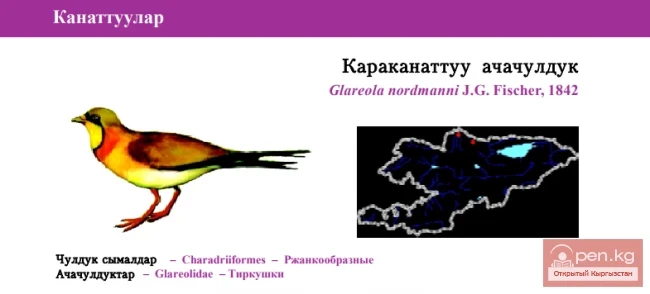
Steppe Pratincole / Karakanattoo Achachuldik / Black-winged Pratincole
Steppe Pratincole Status: Category VIII, Data Deficient, DD. One of two species of the genus in...
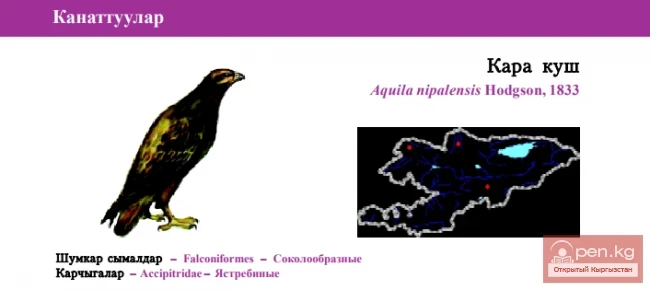
Steppe Eagle \ Kara Kush \ Steppe Eagle
Steppe Eagle Status: VI category, Near Threatened, NT: R. One of four species of the genus in the...
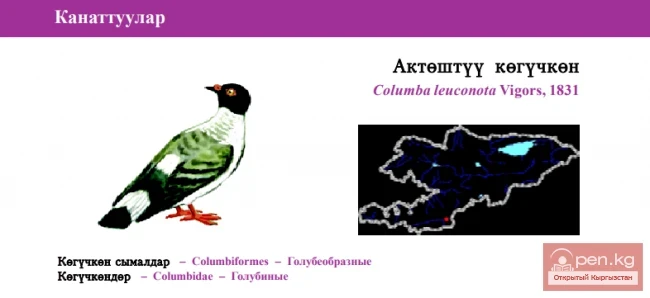
White-throated Dove / Actor's Pigeon / Snow Pigeon
Snow Pigeon Status: VII, Least Concern, LC. One of six species in the genus found in the fauna of...
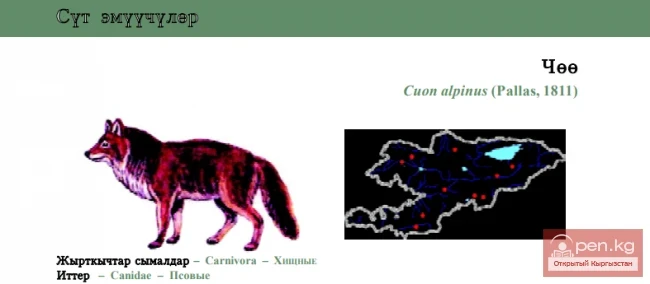
Red Wolf \ Chёё / Asiatic Wild Dog
Red Wolf Status: III category Critically Endangered, CR: R. There have been no confirmed sightings...
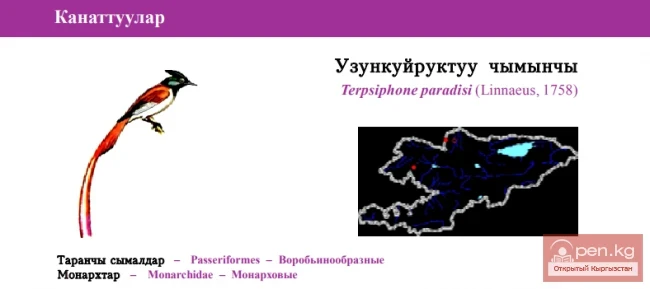
The title translates to: "Long-tailed Flycatcher / Asian Paradise Flycatcher."
Asian Paradise Flycatcher Status: VI, Near Threatened: NT: R. One species of the Monarchidae...
Crane Beauty / Karkyra / Demoiselle - Crane
Demoiselle Crane Status: Category VI, Near Threatened, NT: R. One of two species of the genus in...
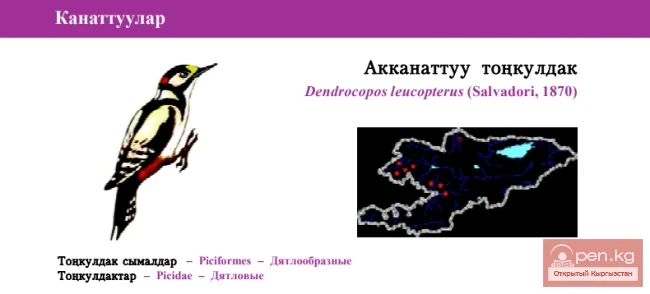
White-winged Woodpecker
White-winged Woodpecker Status: VII, Least Concern, LC. [47]. Monotypic species...
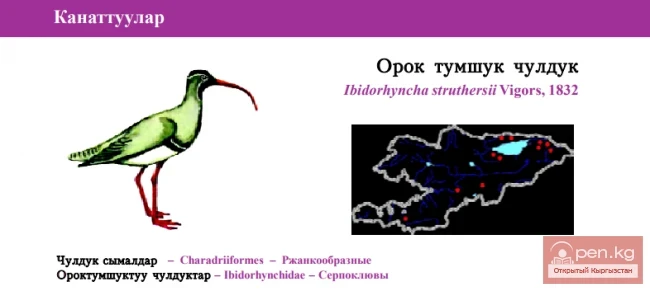
Curlew Sandpiper / Orok Tumshuk Chuldak / Ibisbill
Ibisbill Status: V category, Vulnerable, VU: R, D1. A small number of stenobiont species, at risk...
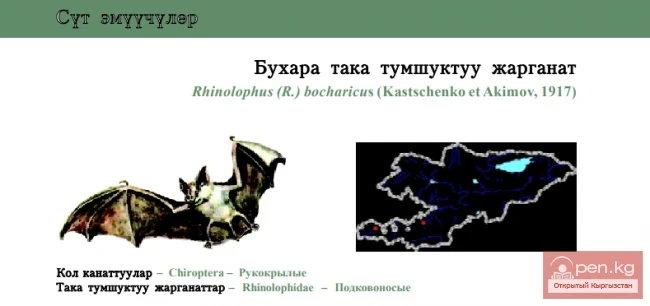
Bukhara Horseshoe Bat
Bokhara Horseshoe Bat Status: Category VI, Near Threatened, NT: R. A rare species for Kyrgyzstan,...
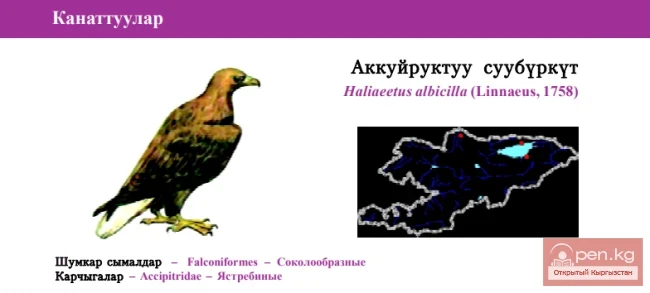
White-tailed Eagle \ Aquila chrysaetos
White-tailed Eagle Status: Category VI, Nearly Threatened, NT. A rare bird with a declining...
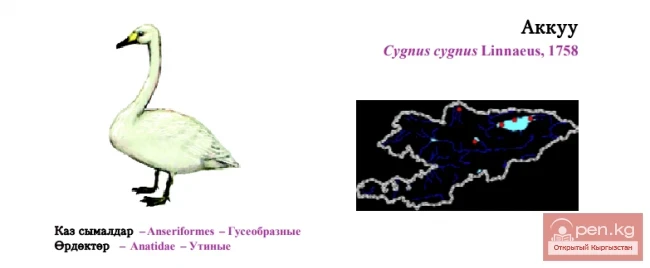
Whooper Swan
Whooper Swan Status: Category VII, Least Concern, LC. Rare breeding species. One of seven species...
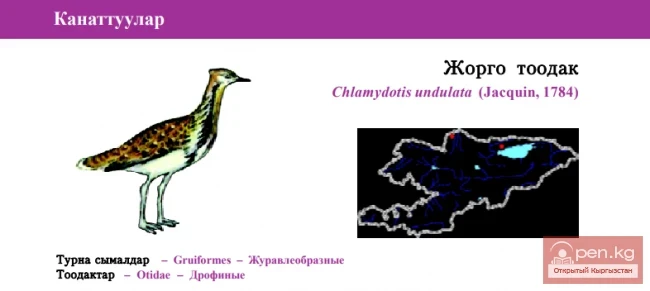
Houbara Bustard / Gorgeous Bustard / Houbara Bustard
Houbara Bustard Status: III category, Critically Endangered, CR: R, A1. The subspecies Chlamydotis...
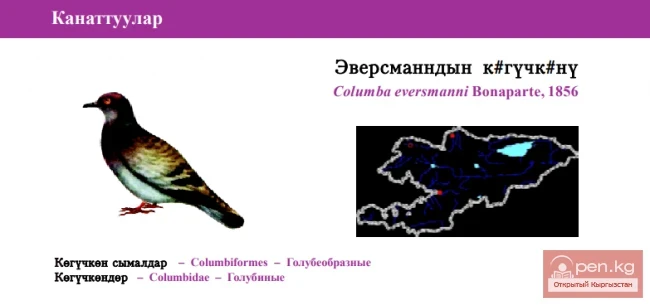
Brown Dove / Eversmann's Dove / Pale-backed Pigeon, Yellow-eyed Pigeon
Brown Pigeon Status: V category, Vulnerable, VU, A2bcd+3bcd. Vulnerable. One of six species in the...
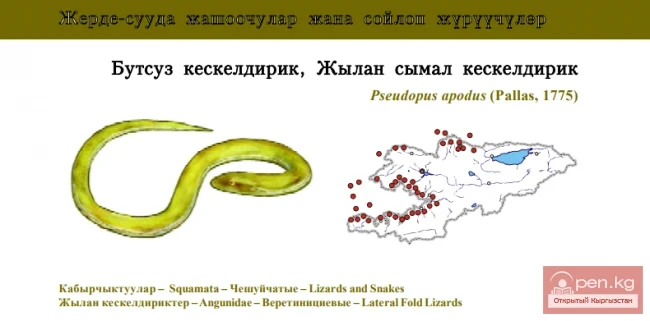
Yellow-bellied Skink / Butsuz Glass Lizard, Snake-like Glass Lizard / Sheltopusik, or Armour Glass Lizard
Sheltopusik Status: Near Threatened (category NT). A rare widely distributed representative of a...
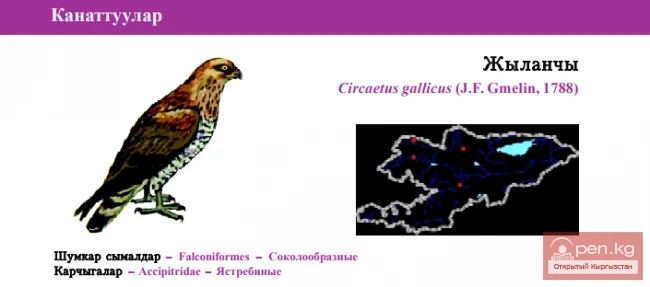
Snake Eagle \ Short-toed Eagle
Short-toed Eagle Status: V category, Vulnerable, VU: R. The only representative of the genus in...
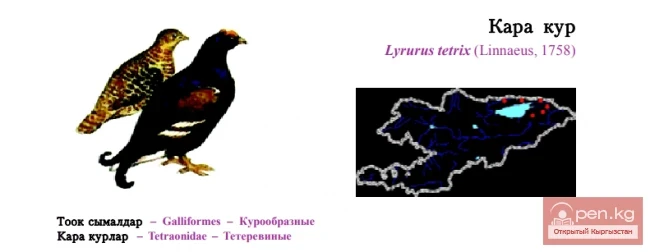
Black Grouse
Black Grouse Status: Category VI, Near Threatened: R. The subspecies L. t. mongolicus (Lonnberg,...
Common Flamingo / Pink Flamingo / Greater Flamingo
Common Flamingo Status: VI category, Nearly Threatened, NT: R. The only species of the flamingo...
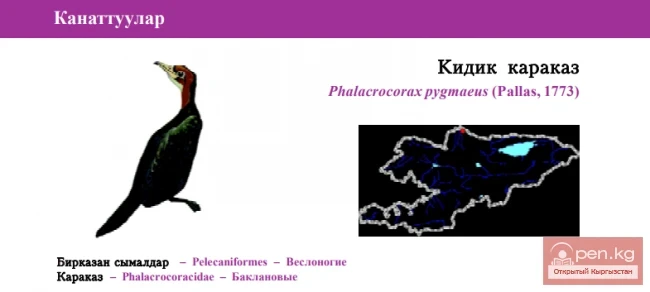
Little Cormorant / Kidik Karakaz / Pygmy Cormorant
Pygmy Cormorant Status: Category VI, Near Threatened. One of 2 representatives of the genus in the...
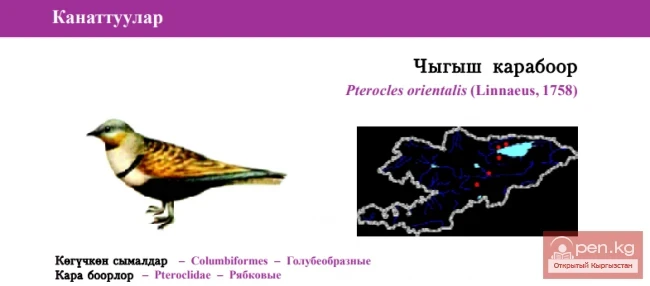
Black-bellied Sandgrouse
Black-bellied Sandgrouse Status: VI category, Near Threatened, NT. A species with low numbers,...
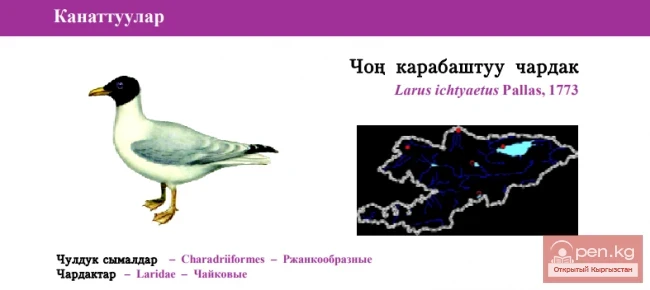
Black-headed Gull / Great Black-headed Gull
Great Black-headed Gull Status: VI, Near Threatened, NT: R. One of 6 species of the genus in the...
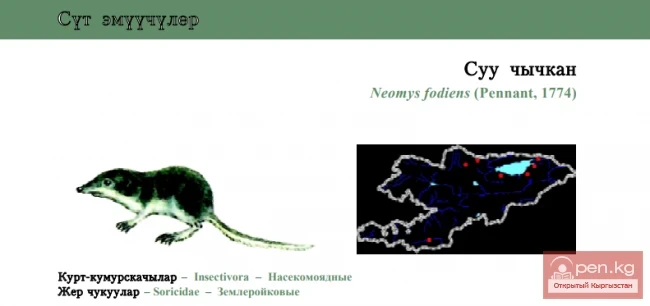
Common Water Shrew / Eurasian Water Shrew
Common Water Shrew Status: Category VI, Near Threatened, NT: R. A rare species for Kyrgyzstan,...
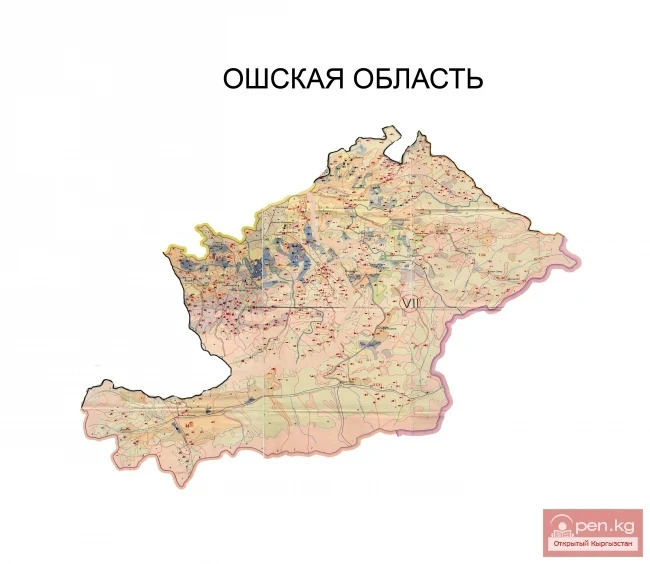
Osh Region
The Osh Region was established on November 21, 1939, replacing the former district. After numerous...
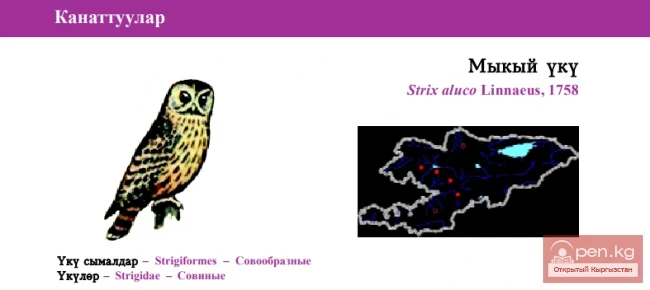
Gray Owl / Mykyy Uku / Tawny Owl
Tawny Owl Status: VII, Least Concern, LC. In Kyrgyzstan, Strix aluco harmsi (Zarudny, 1911) is...