At the recent round table dedicated to global trends in Central Asia, participants concluded that under the current geopolitical instability, international law has ceased to be an effective tool for restraint. The event, titled "Global Trends in Central Asia: From Ensuring Security to Extracting Critical Minerals," gathered experts discussing pressing issues in the region.
Igor Shestakov, director of the Center for Expert Initiatives and a political scientist, noted that the beginning of 2026 was marked by significant events: "The abduction of Venezuelan President Nicolás Maduro by American military forces is a new foreign policy move by the Trump administration. This clearly demonstrates that international law has become merely a subject of theoretical study. The use of force to overthrow Maduro, carried out in collusion with local elites, has allowed the U.S. to control the world's largest oil and gas reserves without the use of military force and major investments."
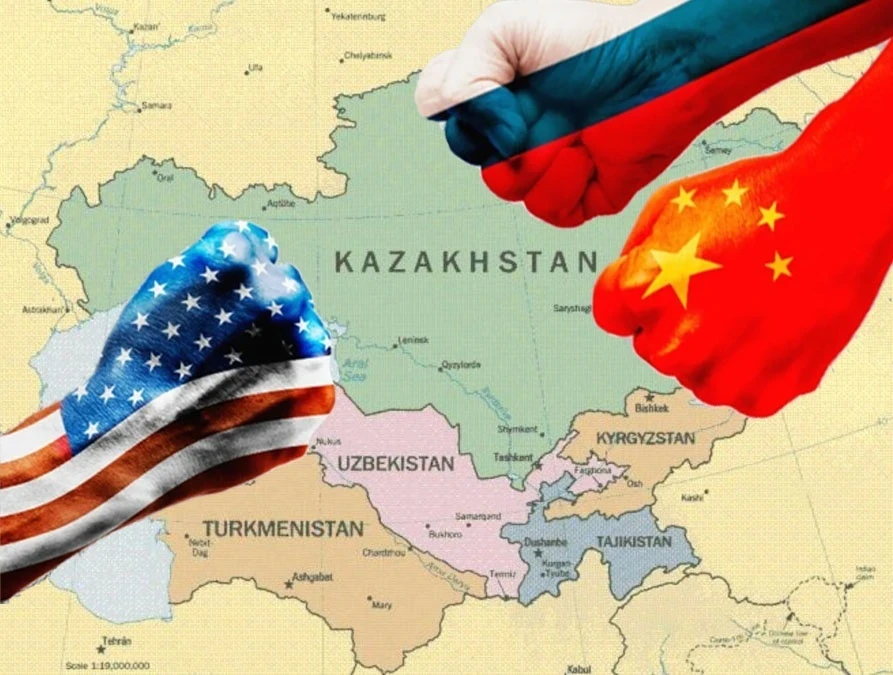
The expert expressed doubts regarding the fate of investments from China ($50 billion) and Russia ($15 billion) in the Venezuelan economy, pointing out that control over resources is now in the hands of the U.S. This situation poses a serious problem for Central Asia, where Moscow and Beijing remain the main partners. "We have repeatedly predicted that U.S.-China confrontation would affect our region. The U.S. cannot maintain its leadership while remaining dependent on China for critical raw materials. Therefore, the government and the Jogorku Kenesh must develop norms that ensure direct benefits for our country, not for Washington," emphasized Shestakov.
Murad Musabaev, a systems analyst, supported the view that there is a need to analyze current trends in light of the global redistribution of property. "The U.S. seems to be turning into the 'United States of the World.' Against the backdrop of a possible stock market crash in 2029, investment funds are eager to convert their virtual assets into real ones: gold, land, and resources. The initiative always comes from their side—they know perfectly well what they need from us and act by imposing their conditions," he clarified.
Musabaev also pointed out that the scenarios involving Venezuela, Greenland, and Ukraine are parts of a unified plan by transnational funds to seize natural resources. "Soon this 'iceberg' may crack, and when forming macroeconomic zones, we need to be clear about whom we should cooperate with. Clearly not with Washington and not with London," noted the analyst.
Anara Dautalieva, head of the Public Association "Taza Tabigat," also raised the issue of resource sovereignty, reminding that according to legislation, subsoil resources belong to the people. "The slogan of Kyrgyzstan should be the preservation of resources for future generations. In the future, safer technologies will emerge. It is impossible to completely shut down mining, but our resources should benefit the people, not serve the interests of foreign investors," she stated.
As an example of negative experience, Dautalieva cited the situation with "Kumtor," where a foreign company long neglected environmental standards and did not pay royalties. "Royalties translate as 'tribute to the king.' The paradox is that ordinary citizens pay this tax even for drinking water, while the company Centerra, which made huge profits, has not paid a single tyiyn," she exclaimed.
Arkadi Rogalsky, executive director of the Kyrgyz Society of Mineral Experts, noted that information about the industry's income is becoming more accessible; however, the state must ensure greater transparency in the expenditure of regional development funds. He emphasized the need for waste management. "A lot of resources are concentrated not in primary deposits but in tailings. In our country, the Ministry of Emergency Situations has 123 hazardous sites and about 400 unregulated dumps. When discussing critical materials, we need to start with an inventory and processing of tailings," Rogalsky believes.
Almaz Nasirov, director of the Institute for Strategic Analysis and Forecasting at KRSU, added that the new resource race is transforming Central Asia from a peripheral region into a key player on the world stage. "This is no longer just an economic issue, but a geopolitical one. The transition to 'green' energy has significantly increased demand for our minerals. However, for small countries like Kyrgyzstan, there are objective limitations in technology. We need to develop a quality investment model to avoid situations where projects do not initially work in the country's interests. Having resources is good, but it is important to understand how ready we are to integrate into the global chain and what benefits we can derive," Nasirov summarized.
The event was organized by the Center for Expert Initiatives "Oiy Ordo" in collaboration with the Council for Sustainable Development in the context of climate change under the speaker of the Jogorku Kenesh of the KR.