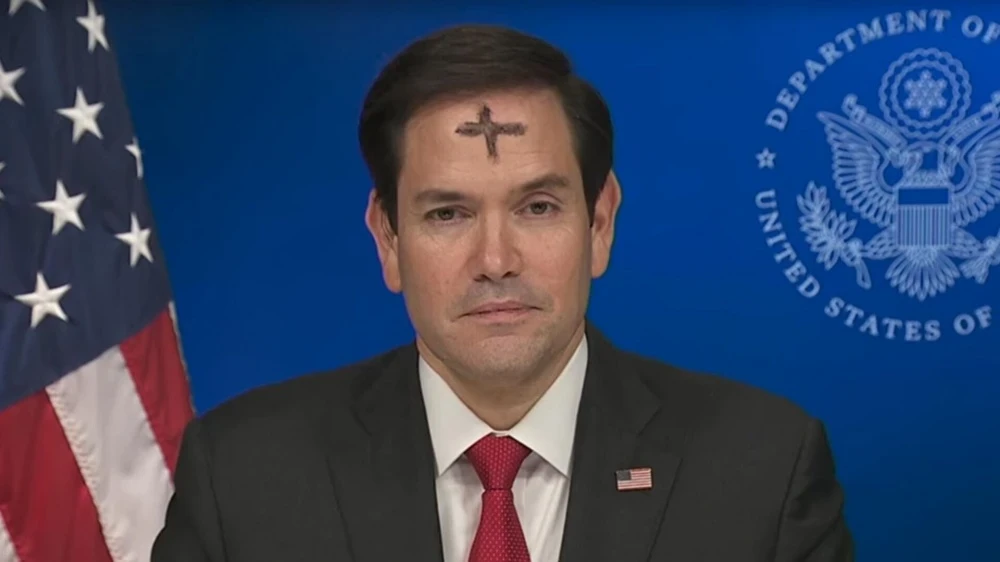
At the conference, Rubio presented not just a critique of foreign policy decisions from recent years, but an entire ideological shift. He noted that the West has been under the influence of dangerous delusions for the past thirty years, for which it has paid a high price.
The criticism was primarily directed at Francis Fukuyama's well-known theory of the "end of history." After the Cold War, Western leaders concluded that liberal democracy had achieved final victory, and the concept of borders and national interests would become obsolete. They believed that economics and trade could replace national identity, turning people into faceless "global citizens."
According to Rubio, such hopes are misguided and contradict both human nature and the centuries-old history of civilizations. He emphasized that the attempt to replace the real interests of nations with global approaches was a fatal mistake.
The Secretary of State questioned the foundations of Western strategy. It was previously thought that each country would eventually "ripen" to accept Western values, but now Washington realizes that national interests, borders, and identity remain unchanged. Ideology cannot override natural human instincts.
This report by Rubio changes the game. It clearly indicates that the U.S. is no longer willing to wait for the entire world to become a unified liberal community. History is returning to its roots — the struggle for influence, the protection of sovereignty, and the acknowledgment of conflict as a natural engine of progress.
The West is essentially emerging from its "museum of history," where it attempted to hide behind trade graphs. Rubio's main message is simple: in the real world, only those who are ready to defend their borders and identity survive. The era of naivety is over, and the U.S. is openly returning to a tough policy of national realism.