European countries emphasize the importance of dialogue with the United States
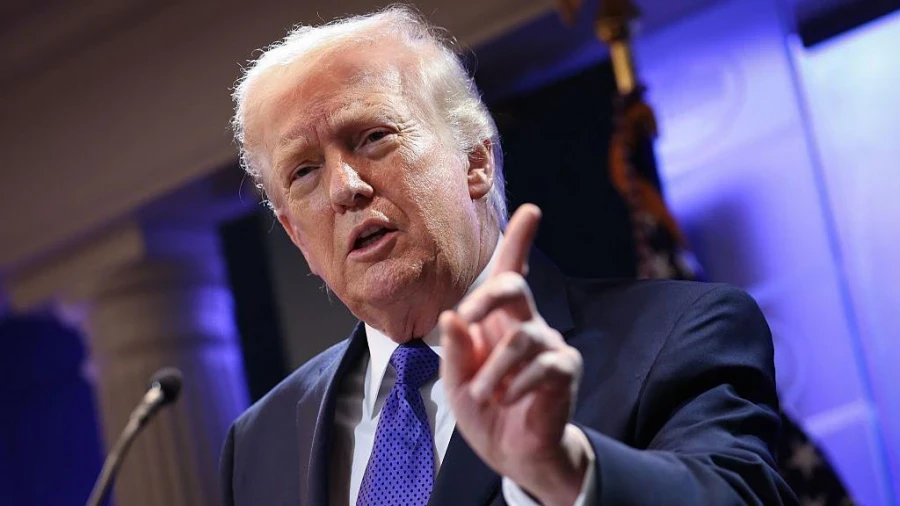
As a result of a recent decision by the U.S. Supreme Court, President Donald Trump announced an increase in tariffs to 15% for all countries. This decision followed the recognition by many that the tariffs imposed by his administration were illegal. Trump announced this on February 21 through his page on the social network Truth Social.
He stated: "I am immediately increasing tariffs from 10% to 15% for all countries, many of which have been 'stealing' from the U.S. for decades without consequences (until I came to power!)." Trump also added that in the coming months his team would develop new legally justified tariffs, as reported by DW.
Recall that on February 20, the U.S. Supreme Court ruled that the president exceeded his authority by imposing large-scale tariffs against trading partners, including EU countries, citing the International Emergency Economic Powers Act (IEEPA) of 1977. Most tariffs, including 25% on goods from Canada, Mexico, and China, were deemed illegal.
At a press conference, Trump characterized the court's decision as "deeply disappointing." He stated that the judges are "a disgrace to the nation," as he believes they "submitted to foreign interests."
The new tariffs, which will take effect on February 24 and will last for 150 days, require Congressional approval for extension.
German Chancellor Friedrich Merz expressed hope on February 21, before the tariff increase, for a reduction in tariff pressure on the German economy following the U.S. Supreme Court's decision. "This is an interesting decision that many were expecting <...>," he commented in an interview with the ARD television channel, as reported by Handelsblatt.
Merz emphasized the need for negotiations with the U.S. so that "German companies can recover billions." "We will form a unified European position on this issue, as tariff policy is a matter for the European Union, not individual states. I plan to travel to Washington in early March with a coordinated position," the chancellor stated, as reported by Reuters.
Germany's Finance Minister and Vice Chancellor Lars Klingbeil also commented on the Supreme Court's decision. "Despite the ruling, sectoral tariffs remain in key areas such as automotive and metallurgy. Trump has already announced new tariffs, which creates significant uncertainty," the politician noted in an interview with Frankfurter Allgemeine Zeitung.
Klingbeil added that tariffs negatively affect both the German and U.S. economies, but primarily American citizens suffer.
Photo www