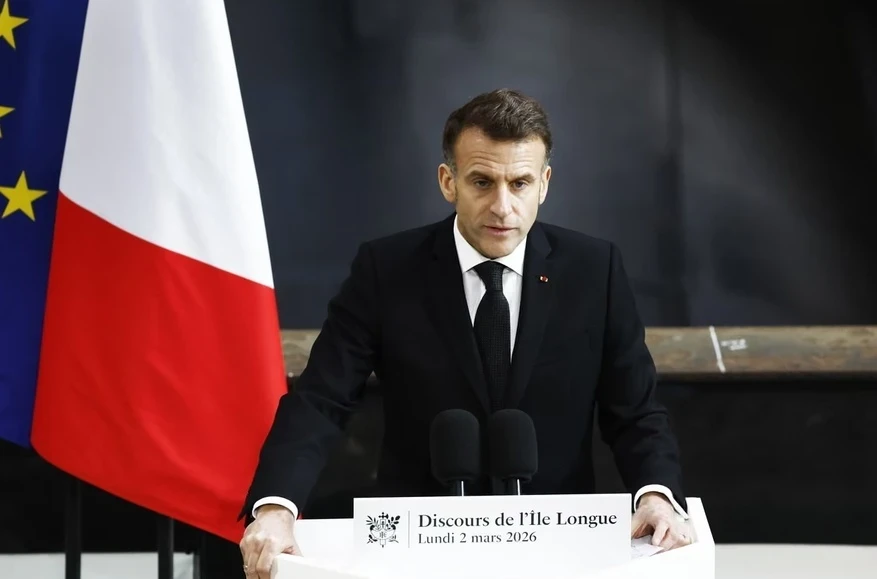
Speaking before the leadership of the Navy, Macron noted that the upcoming five-year period will be an "era of nuclear weapons." He also announced the cessation of the policy of transparency regarding nuclear stockpiles, meaning that information about the quantity and composition of the arsenal will now be classified. Currently, AFP experts estimate France's stockpile at 290 units, placing the country fourth in the world, behind only Russia, the USA, and China.
One of the most significant changes is the introduction of the concept of "forward deterrence." France intends to deploy its strategic air forces in eight allied countries, including Poland, Germany, the United Kingdom, Sweden, Belgium, the Netherlands, Denmark, and Greece. This measure, according to the Élysée Palace, aims to complicate strategic calculations for potential adversaries. Polish Prime Minister Donald Tusk expressed his support for this initiative on social media platform X, emphasizing that joint armament with allies is the best way to prevent aggression.
A key aspect of the modernization will be the launch in 2036 of a new nuclear submarine of the SSBN class, named Invincible. Additionally, Paris, Berlin, and London have agreed on the joint development of long-range missiles. Macron and German Chancellor Friedrich Merz confirmed the establishment of a permanent steering group on nuclear issues, which is an important step towards strengthening defense cooperation between the two countries.
The revision of the nuclear doctrine is taking place against a backdrop of growing distrust in Europe regarding the reliability of the "American umbrella." Donald Trump's statements about concessions in the Ukrainian conflict and his tough stance on NATO are prompting European capitals to seek alternative security options. Macron summarized: "Europe must become an independent geopolitical power."
Despite the expansion of military cooperation, France maintains full sovereignty over its nuclear arsenal. According to the constitution, the right to make decisions regarding a nuclear strike rests solely with the president. Paris does not provide its allies with guarantees of automatic protection, maintaining strategic ambiguity in defining its "vital interests." The primary goal remains unchanged: any aggressor must understand that the cost of attacking France or its key interests in Europe will be catastrophic.