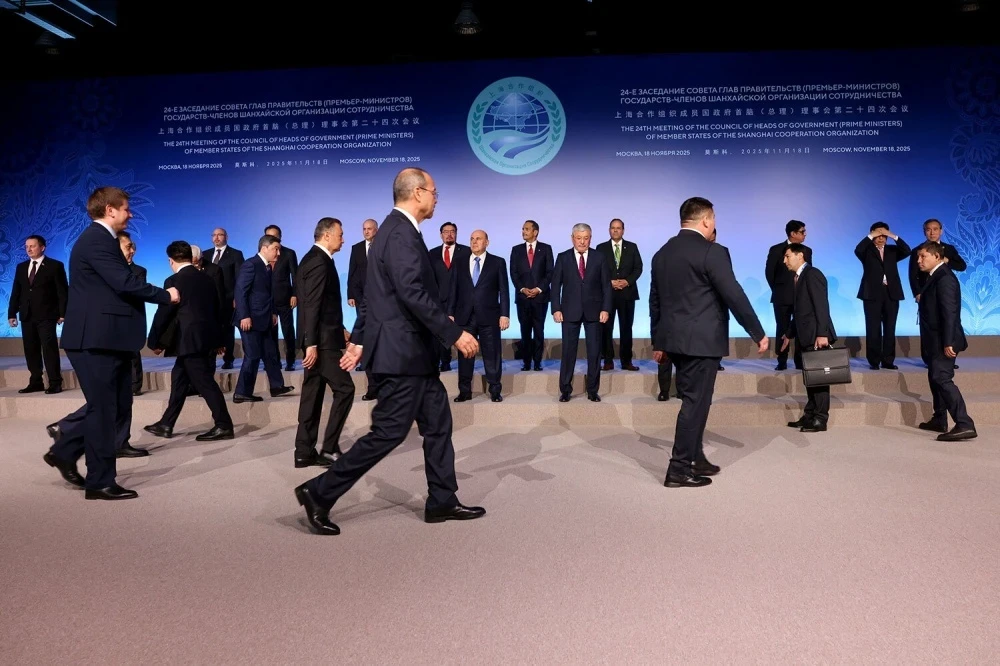
As of today, among the ten countries that are part of the Shanghai Cooperation Organization (SCO), four are participants in international conflicts. Russia and Belarus are involved in the events in Ukraine, Iran is in confrontation with the USA and Israel, while Pakistan is in conflict with Afghanistan. This information was presented by Natalia Kreck, Deputy Director of the "Oi Ordo" Economic Research Center, during a roundtable dedicated to security issues in the SCO area of responsibility.
Kreck noted that since the beginning of 2026, the situation in the world has become increasingly complex.
“First, American military forces kidnapped the President of Venezuela, and then the USA declared war on Iran, launching missile strikes. The attacks were based on the assumption that Iran possessed nuclear weapons. However, the IAEA refuted this, stating that Iran is not developing or producing nuclear weapons, but Washington ignored these facts. A similar situation was observed in Iraq when NATO invaded based on unverified information about chemical weapons. This underscores that the goals declared by the American leadership to prevent global threats actually serve as a cover for fighting against Russia and China and striving for world hegemony, which would allow the USA to control transport corridors and energy resources,” the expert emphasized.
At the same time, according to Kreck, Washington ignores international law, and Donald Trump openly bets on force.
“Currently, during the conflict with Iran, the USA is also trying to impose its order in Cuba. This is not just a hypothetical threat, but real actions by the American side. While protests are taking place in Havana, which were likely initiated by the USA, Washington demands the resignation of the government of this country, interfering in the internal affairs of a sovereign state. Any country could find itself in such a situation. In the context of rising threats, security issues for Central Asia become particularly relevant. This involves numerous threats, including a possible invasion of terrorists from Afghanistan. This situation could also lead to an influx of refugees, which, in turn, creates risks for food, energy, and biological security. If the flow of refugees increases, it will be extremely difficult to control the epidemiological situation. It cannot be ruled out that some forces may use this to spread biological weapons, considering the presence of Pentagon biolabs in both Afghanistan and Uzbekistan and Kazakhstan,” she added.
Kreck is convinced that the actions of the current US administration should prompt Central Asian countries to consider the need to strengthen collective security; otherwise, the region risks becoming another conflict zone.
“If geopolitical or economic interests of the Americans require it, our region may come under pressure from the USA, as is happening with Cuba, Panama, and Denmark regarding Greenland. It is extremely difficult to oppose Washington alone. Therefore, the only effective approach to ensuring security and preserving sovereignty is to unite with neighboring countries and engage in more active security cooperation within the framework of the SCO and CSTO. The CSTO remains an important protective structure for Central Asian countries, despite criticism from its opponents. In the context of escalating global confrontation between the West and Russia, disinformation is spreading about the CSTO's inability to respond to new challenges. Western countries have achieved certain successes in the case of Armenia, and in this regard, it is important to unite the efforts of member states, including countering external disinformation influence,” she noted.
However, countries in the region should not seek alternatives to the CSTO. It is much more effective to optimize its work in conditions of growing instability.
“It is also necessary to accelerate the exchange of experience between the armed forces and special services of CSTO countries, considering the new skills and technologies acquired by Russia in the field of combat operations. The priority set by the Russian presidency for the global rearmament of the organization in accordance with modern requirements provides members with the opportunity to genuinely strengthen their defense capabilities. It is also important to note that one of the key topics on the agenda for Central Asia is the creation of transport corridors and ensuring the security of goods transit. The region has great potential in this direction. However, countries need to be aware of the risks associated with a possible attempt by the USA, EU, and Turkey to deploy their military contingents or bases, as is currently happening with Armenia – a CSTO member, through which the 'Trump route' passes. It is clear that the introduction of Western and Turkish troops could become a source of destabilization and negatively affect Central Asia's relations with both Russia and China,” Kreck concluded.