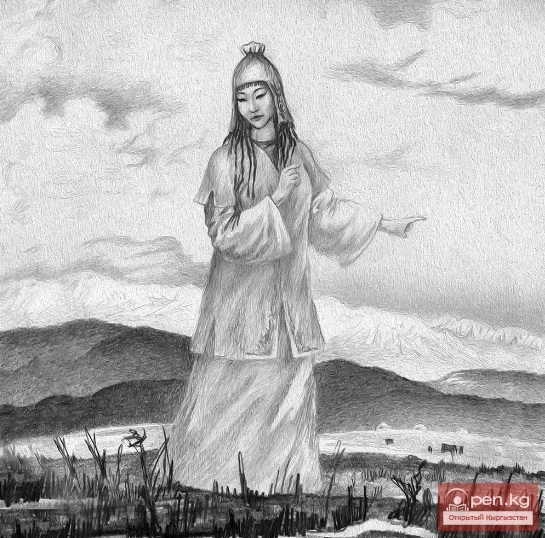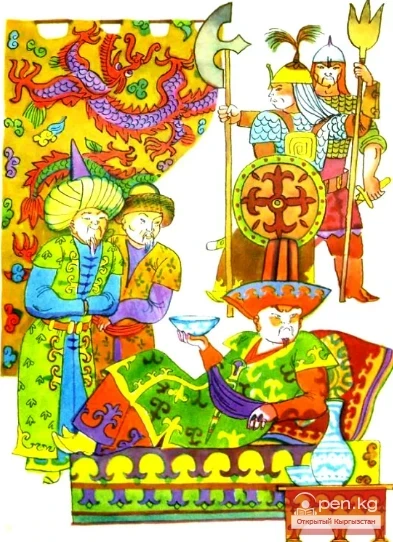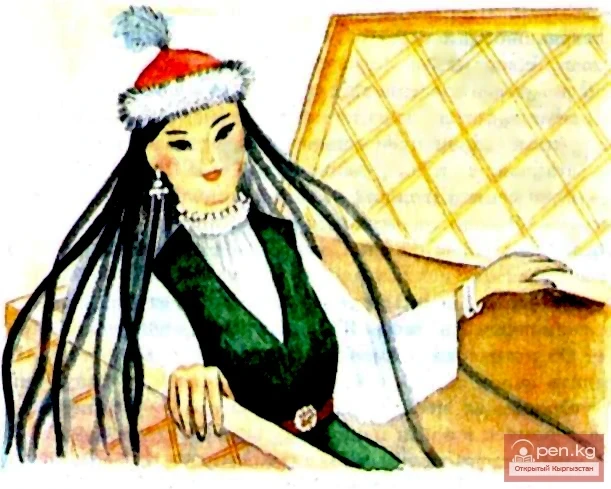
THE KHAN, THE TWINS, AND THE EVIL WIVES In ancient times, there lived a certain khan. This khan had forty wives, but he had no children. One day, the khan was traveling with his entourage and met three sisters on the road. — What can each of you do? — asked the khan.
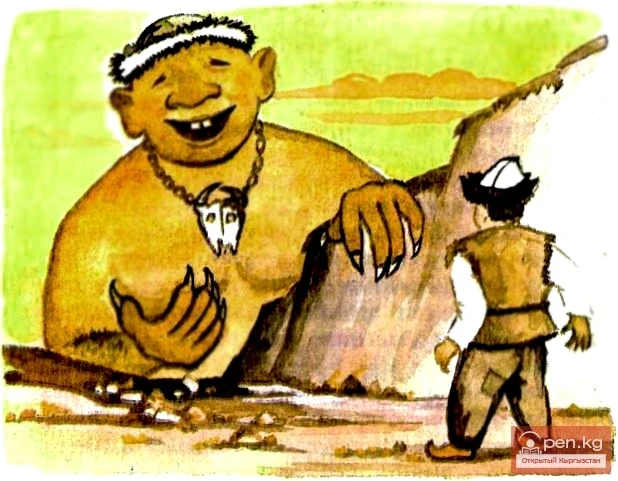
DIYKANBAI AND THE DEV Once upon a time, there lived a brave hunter named Dıykanbay. He had no livestock in his pens and lived solely on what he hunted. Dıykanbay was not only brave and strong but also a resourceful man. One day, Dıykanbay, along with another hunter, set out to track down some roe deer. They went into the mountains and stumbled upon a huge dev. The dev's nose was the size of a wineskin, and his legs were like a pair of tree trunks. When the dev saw the two hunters, he
WISDOM, HAPPINESS, WEALTH Once upon a time, Wealth, Happiness, and Wisdom were walking together down the road and argued about who was the strongest of all. Wisdom boasted to Wealth and Happiness: — I am the strongest. If a person has no wisdom, they will have neither wealth nor happiness! — If there is no happiness, then wisdom and wealth are of no use to a person! — said Happiness.
THE SEVEN SONS OF THE OLD WOMAN Once upon a time, there lived a poor old woman who had seven sons. Each of her sons learned a special, wondrous skill. One day, the old woman said to her children: — My children, your father left behind a single bow as inheritance, and I will give it to the one of you whose skill is the best and most needed! One by one, the sons began to tell what they could do.
BEKZHAL AND THE BIRD ZYMYRYK In ancient times, a khan had a wonderful bird named Zymyryk. Every morning, the bird would tell the khan what was happening on earth. One day, the bird Zymyryk disappeared. The khan was very sad and sent his horsemen in all directions to search for the marvelous bird. But the horsemen could not find it. Then the khan gathered the people and announced: — Whoever finds the bird Zymyryk will receive half of my wealth.
Makmut In ancient times, there lived a man named Makmut. Makmut was not foolish, but he was weak and frail. He and his wife lived in poverty. They only had goats. Every day, Makmut would take his goats to pasture. His wife would send him off with a jug of sour milk. But as soon as Makmut reached the pasture, a fox would appear. With a swipe of its tail, the fox would knock Makmut to the ground and drink the sour milk from the jug. Following the fox, a wolf would come and attack the goats.
THE GOOD MAN AND THE ENVIOUS MAN Once upon a time, a good man and an envious man set off together on a long journey. They traveled and traveled, and soon ran out of food. Then the envious man said to the good man: — Kill your horse, and the next time I need to, I will kill mine.
THE LEGACY OF SULAYMANBAY Once upon a time, there lived a man named Sulaymanbay. He had one and only son, Mamyr. The father wanted his son to grow up wise and happy. He taught his son wisdom, but the stubborn Mamyr did not listen. When the son grew up, Sulaymanbay said to him: — My son, I am old now, and I have little time left to live. While I am alive, you should marry, but be careful in choosing a bride; do not chase after beauty, choose a girl who is smart and has a good, kind nature. But
KOYLUBAI Once upon a time, there lived a peasant named Koylubai. He was a brave and resourceful man, but very poor. He had little land and no livestock at all. The wealthy landowners always tried to oppress him. Right next to Koylubai lived four rich peasants, brothers who were greedy and cruel, earning them the nickname "Four Wolves." One day, the brothers sowed wheat on the slope of a mountain, while Koylubai sowed millet lower down.
ZAR AND MEER Once upon a time, it is said, there lived a king. This king lost his vizier, and he appointed his favorite servant, a dashing young man, in his place. One day, the king went falcon hunting with his new vizier. The king said to the vizier: — If I have a son and you have a daughter, you will marry her to my son. If you have a son and I have a daughter, I will marry my daughter to your son. And if we both have sons or daughters, let them be friends for life.
THE CLEVER FARMER There lived a khan. One day he decided to amuse himself and ordered his loyal horsemen — Asan and Usen — to find and bring him a foolish person. The horsemen set off to fulfill the khan's command.
HOW THE BOY SAVED HIS CITY In ancient times, there lived a warlike khan named Zhanibek. He became famous for his brutal raids on neighboring khanates. One day, the countless armies of Khan Zhanibek besieged the city of Khan Sultanmamyt. The inhabitants of the besieged city were told by the enemies: — If you do not surrender within three days, we will destroy your city!
ZHÉERENCHÉ-CHÉCHEN AND KARACHACH In ancient times, there lived a man named Zhéerenché-chéchen. Chéchen means "eloquent." He was nicknamed this because he was wise and resourceful in conversation. He had a son named Telemyrza, about whom the wise Zhéerenché heard every day from the people: "He is such a deceiver, such a liar; he has never spoken a single word of truth in his life." Telemyrza would kill a crow and boast that he had killed a gazelle. In reality, he could do
THE FOOLISH KHAN In ancient times, there lived a rich khan. He had plenty of livestock, but not much wisdom. One day, this khan called his son to him and said: — My son, I have heard that there lives a wise old woman in the neighboring aul. I want to hear her advice. You go and invite her to me, but do not tell anyone about this. The son agreed, but immediately told his companions about his father's request and ordered them to bring the old woman. The khan's son met her.
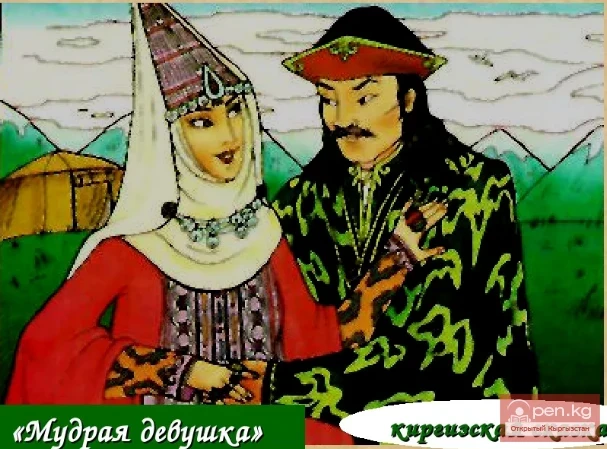
The Wise Girl In ancient times, there lived a khan named Sarybay. One day he gathered his people and said to them: — For forty years I have been your khan and have seen much during this time; I have drunk and eaten as much as was destined for me. Now I have only to die, but I have no children to whom I can pass on the khanate. Choose for yourselves a new khan. And Sarybay's people replied: — You appoint us a new khan!
HAWK AND OWL Once upon a time, there was an owl. One day, she fell seriously ill and could not fly out of her nest for food. Then the owl turned to the hawk: — Hawk, my hero, do a good deed — help me. The hawk agreed. He began to feed the sick owl and take care of her. The owl got better.
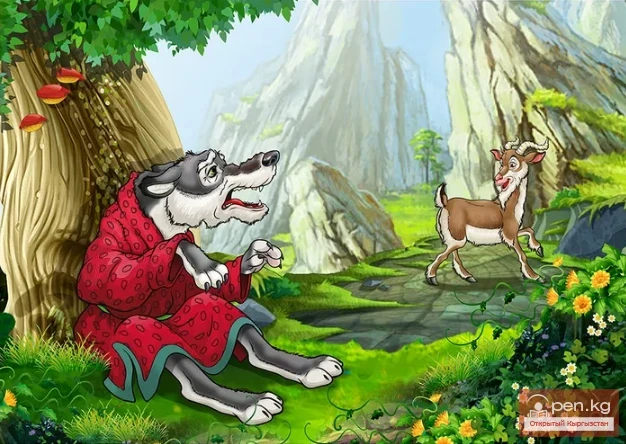
THE INSATIABLE GLUTTON DIES OF HUNGER In ancient times, there lived a wolf. And this wolf was very rich — he owned a lot of land. The wolf was rich, but very greedy and insatiable. He often roamed in search of prey. One day, the wolf came across a piece of kazy — horse sausage — on the road. The wolf was delighted.
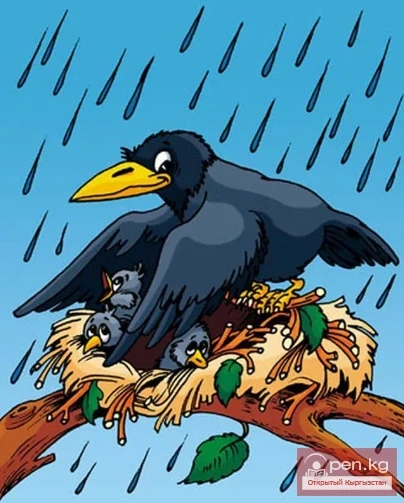
THE GREEDY CROW Once, a crow decided to hatch some chicks. She laid eggs, but it seemed to her that there weren't enough. When she saw that her neighbor—the hawk—had flown away, she sneaked into his nest and stole 2 hawk eggs. She brought them back, placed them with her own eggs, and began to incubate them. The chicks hatched. The crow started to feed them. Soon, the young crows grew up, got their feathers, became strong, and began to leave the nest.
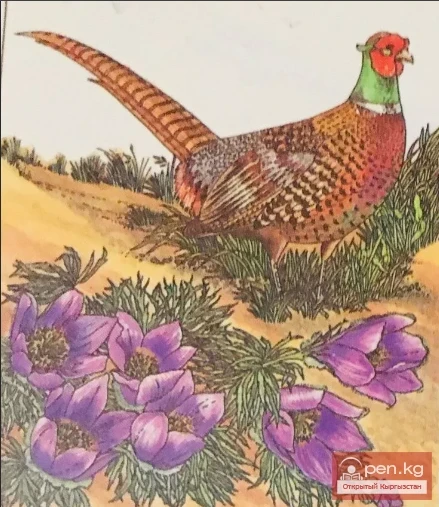
WHO IS STRONGER? Once upon a time, a colorful Pheasant was running about his business when he unexpectedly slipped on the ice and fell. "Who knocked me onto my back?" he thought in confusion. — Ice, Ice, did you do this? — asked the frightened Pheasant. — Where do you get such strength?
SEVEN MONTHS UNDERGROUND. Part 3 Seven long months behind, How the hero lives underground. He set off on a distant journey, To bring back his little sister, And he did not know that here He would be mining lead and mercury. He learned to forge stone, To knead it like clay, and to mold, To cast heavy metal, He learned many useful secrets. Every day the attentive brother, He is glad to see his sister, They discuss their affairs And encourage each other with words. It has become easier for Maktym
CONVERSATION IN THE YURT. Part 2 Olokon rises, He heads towards the yurt, Gripping the horse firmly by the bridle. And leads it by the reins, He passes the wide meadow — Who is there in the yurt — an enemy or a friend? He shouted loudly: “Who is here? A man or an evil demon? I swear — and honor is my pledge. I will see you now. If you are a simple man, I want to ask for directions. If you are a shaitan or an abrek, Then a fight is no trouble for a batyr. For thirty days misfortune chased me
Dzhanar and Olokon SONG OF INTRODUCTION The path of the akyn is shrouded in fog... A torrent of feelings and thoughts swirls, But will it flow into the dastan Or dissipate like mist? Whatever it may be — believe in good. Cast away doubts — forward, pen! The poet begins the tale, And the soul, agitated, burns, Perhaps the sound of the poem and light Will illuminate someone’s heart. Intoxicated by inspiration, He is under the sway of his dreams... And perhaps tomorrow he will Re-read, tear the
Hunter Bagysh (based on a Kyrgyz folk tale) “Long, whether poor or rich, Once upon a time, there lived on earth” - Thus, tales usually begin. About Bagysh, believing in the tale sacredly, I will tell you in a new way.
The Tale of the Bright Night. Part 3. Chapter 3. And the next day before the crowd A fight on the peaks, a fierce fight, Two brave men have begun — Fiery hearts, And, giving blows to each other, Crushing each other's chests to blood, Both heroes fell! ...And the archers hear the call! They aim to strike — the jambe, The strings ring out loudly. And they spare neither arrows nor strength... Here Chorten invited Chilten To try to obtain the jambe... Chilten was glad to test his fate. He
The Dream of Aikokul. Part 3. Chapter 1 What frightened and confused Aikokul as she awoke from her sleep? But an invisible point Suddenly pierced her heart. Or will someone close to her Be struck by a cruel fate? Or are her dearest ones Now ambushed by an enemy? A delusion — Three days ago A dream brought a haze: With fire-like eyes, spotted and striped, A wild goat appeared to her. It bent down, preparing to leap, And brave Chilten was on guard — He grabbed its fur, mounted up... And the
What the Stone Mirror Revealed Part 2. Chapters 4-5 Beyond the sands— the blooming grasses... The edge of meadows and cool oak groves. Here the heroes set up camp, Resting, unsaddling their horses. And they run to bathe on the shore. ...They have lived here many days. And Chilten, as before, was gloomy, Gazing at the deep blue. Sometimes he spoke with the cuckoo, Sometimes he stroked the grass by the shore. Enthralled by the beauty Of the noble brave man, To the light With a song, rose the
In the Captivity of the King of Jackals Chapter 3 The travelers ride through the forests. Bees gather honey here, The voices of springs Entice the thirsty with the splash of water. And they reached the chain, Like beads, of even mountains, And arrived at the lakes, Painting the blue heights. Here flowers are more numerous than stars, And the grass is human height Hiding large game, And it’s impossible to catch prey in the meadows. Herds run here, Like the furious wind of deserts, And, as if
Duels with the Flat-Foot. Part 1. Chapter 3 The rider rode along the rocky ledges, Galloping to his native camp For forty days and forty nights... But wherever he turns his eyes, Everywhere is a military camp... But whose? And some strange speech, And faces that are not right. Braids fall to their shoulders, Eyes shine in the dark... Flags flutter among the tips of spears... And any animal here Is ready to be turned into shashlik in an instant. Here on the spears — a tethered horse, And
INTRODUCTION This tale my father Told me in full, from beginning to end, Saying at the end, from himself, That he learned it from his father. It was sweet for me to listen to the song. It sang to me, as I sing now, This tale from my grandmother's mother, Remembering her great-grandmother... Like sailing ships, Cutting through the mirrors of the seas, Parting the spaces of the earth, This tale has passed through time. And in the dust of caravan paths It walked through storms and eras, And
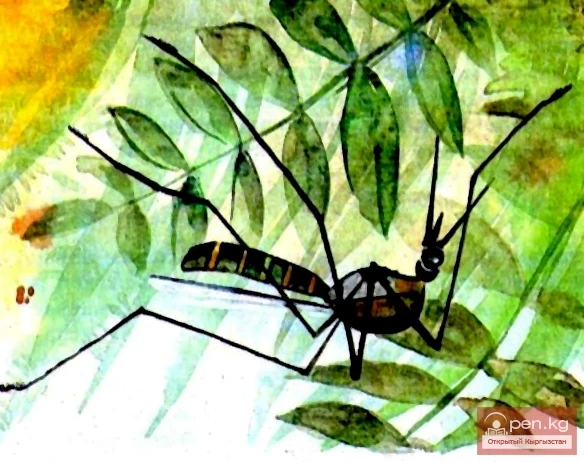
In ancient times, mosquitoes appeared on Earth along with other living creatures. No one really knows why Mother Nature created mosquitoes. But they have a very high opinion of themselves, even though they are capable of only one thing — flying up with a buzz to a living being, quietly landing on a bare, and thus the most vulnerable, spot, and making... a little prick. You won't feel the mosquito's sting right away, but later, when a bump appears and a terrible itch arises — you
In ancient times, there lived a simple man named Edil. He was so fearful that everyone called him nothing but "Cowardly Edil." Even at night, he would go outside for the smallest need accompanied by his wife.
Once upon a time, there lived two famous hunters in the Kyrgyz mountains. One was named Adyl-mergen, and the other — Edil-mergen. They had heard good things about each other, but they had never met.
The story took place when khans, kings, and viziers had already appeared on earth, in other words — rulers, when wise fathers had already begun to test what their sons were capable of. There lived a certain Shamir, and he had a single son named Mamyr.
Even in ancient times, the necks of tricksters were long, and male pheasants wore an astonishingly bright red-gold outfit. Even then, some people were luckier in life than others; some accomplished their deeds through strength, while others did so through wit.
And there was a time like that. In the eastern part of the Chui Valley, at the foot of the mountains, lived a man named Kochkor with his wife Chynar. They had one and only son, whom they named Akkoen at birth, which translates to White Hare.
It was a long time ago, when rivers flowed clear and full, when magpies were not thieves, and when people had just begun to divide into the rich and the poor. During this time, there lived a poor man named Erdene. He lost his parents as a teenager, and he had to earn his bread early. Since he only knew how to take care of livestock, he lived by working for the wealthy as a shepherd.
The Tale of the Wise Boy On one of those fine, sunny days, the khan, accompanied by his six closest viziers, went hunting. It was Friday, a day when Muslims work less and pray more to God. This time, the hunting route passed through a small aiyl called Zhatakchy. Due to the lack of livestock in the summer, they do not migrate to the mountains but remain on the plain, growing wheat, barley, or millet.