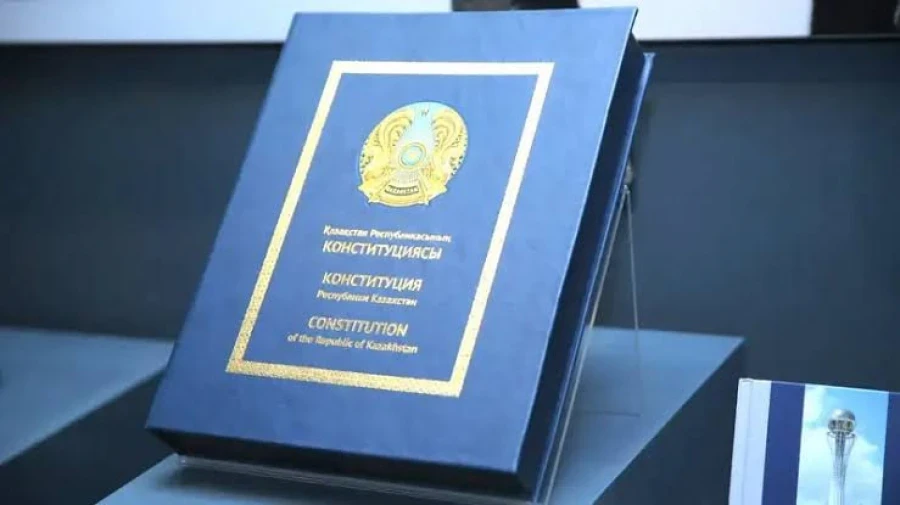
The project was presented by the commission responsible for constitutional reforms.
A draft of the new Constitution of Kazakhstan has appeared on the website gov.kz.
The development of the fundamental law was based on the analysis of proposals received from citizens, political parties, public organizations, and experts, as well as the result of open discussions and careful elaboration of new norms.
The idea of constitutional reform was initiated by President Kassym-Jomart Tokayev, who proposed creating a unicameral parliament in his annual address on September 8, 2025. This was aimed at a complete renewal of the political system and a positive impact on the socio-economic development of the country in the era of artificial intelligence.
Shortly thereafter, on October 8, an order was signed to create a working group for parliamentary reform, which included renowned legal scholars, experts, and representatives of various political parties and organizations.
Citizens also actively participated in the discussions, sending their opinions and proposals through the e-Otinish and eGov platforms.
For about six months, intensive discussions on the new reform took place, during which the working group processed more than 2,000 proposals from the public.
At the V session of the National Kurultai in January 2026, the president summarized the work, presenting his vision for future changes.
Tokayev noted that at the initial stage, it was expected that the amendments would affect about 40 articles of the Constitution; however, during the work, it became clear that there would be significantly more changes, covering many aspects of political and social life.
On January 21, a constitutional commission was formed, consisting of 130 members, including representatives of the national kurultai, well-known legal scholars, officials, media leaders, and experts from various fields. This allowed for the consideration of the interests of all social groups and regions of the country.
The commission was headed by Elvira Azimova, the chair of the Constitutional Court, with her deputies being Erlan Karin, the state advisor, and Aida Balayeva, the deputy prime minister and minister of culture and information.
All commission meetings were held openly and broadcast live, ensuring wide media coverage of the work.
Opinions, comments, and proposals were expressed by lawyers, human rights defenders, deputies, political scientists, and other experts.
During its work, the commission thoroughly examined proposals concerning all sections and 77 articles of the Constitution, which constitutes 84% of the entire text. This provided grounds for supporting the idea of the necessity of creating a new Constitution for Kazakhstan.
The conceptual changes of the new fundamental law are aimed at improving the human-centeredness of the state, reflecting the current values and principles of the people of Kazakhstan, as well as enhancing the effectiveness of the political institutions of the republic.
The collection of proposals continues through the e-Otinish and eGov platforms.
The citizens of Kazakhstan will make the final decision on the new Constitution in a nationwide referendum.
Photo www