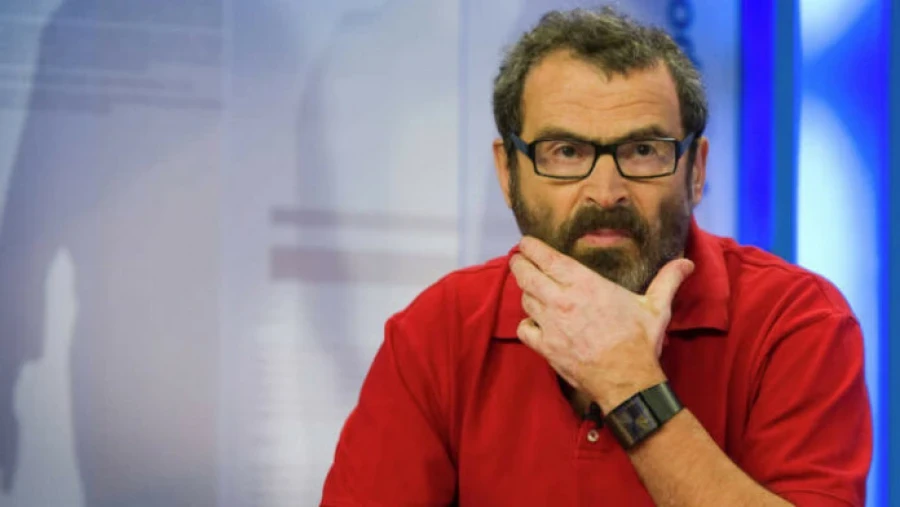
The political scientist expressed his version of the reasons for the conflicts at the top of power
Arkadiy Dubnov, a political scientist, commented on the recent events in Kyrgyzstan that occurred on February 10, emphasizing that structural changes in the State Committee for National Security (SCNS) and the resignation of its leadership strengthen the position of President Sadyr Japarov. He noted that the president dismissed the head of the SCNS, Kamchybek Tashiev, after which three of his deputies also left, along with a reorganization of the structure, including the transfer of the border service out of the SCNS's jurisdiction and the creation of a State Security Service similar to the Russian one. This service will report directly to the president. New leaders were appointed to various SCNS divisions, completely changing the sphere of national security in the country and leaving Tashiev without support in key positions.
Dubnov also pointed out that Tashiev learned of his dismissal while in a clinic in Munich, where he goes every two years for a medical check-up following heart surgery.
According to information obtained from sources in Bishkek, the reason for Japarov's decision may have been a phone conversation with Tashiev that took place shortly before the resignation and was conducted in a tense atmosphere. The political scientist recalled the statement of the president's press secretary, Askat Alagozov, who noted that the main goal of this decision was to prevent a split in society and strengthen unity among state structures.
At the same time, Alagozov clarified that the split in society was not created by Tashiev himself, but by some of his close associates, who were calling deputies and urging them to take various actions. President Japarov explained that these individuals were calling for a switch to the side of the general and the signing of certain documents, thereby creating a threat to stability within state structures.
Dubnov emphasized that the phrase "switch to the side of the general" could be perceived as a call to rebellion. However, one of Tashiev's associates, Bekbolot Talgarbekov, claimed that it was a request to the deputies to initiate new presidential elections. This document was signed by 75 people, including scholars, former prime ministers, and public figures concerned about the uncertainty that arose after the adoption of the new constitution of Kyrgyzstan, which establishes two five-year terms for the president.
Talgarbekov also noted that the current disputes regarding the presidential term limits could lead to instability, which opens opportunities for other political forces. In his opinion, the authorities should take the initiative and schedule elections for June-July.
It is possible that these disagreements among associates were the reason for Tashiev's resignation. How will the former second-in-command of the country now react to the actions of the first? Will he return from Germany and participate in the upcoming presidential elections on January 24, 2027?
Felix Kulov, a well-known political figure and former vice president, stated in an interview with Vesti.kg that Tashiev's future depends on his own decisions. He noted that if Tashiev does not confront the authorities, then discussions about his arrest have no basis. However, it should be remembered that none of the five presidents of Kyrgyzstan, except for the interim president Roza Otunbayeva, left office voluntarily and on time. The question remains open as to whether this trend will be overcome in the future.
Photo www