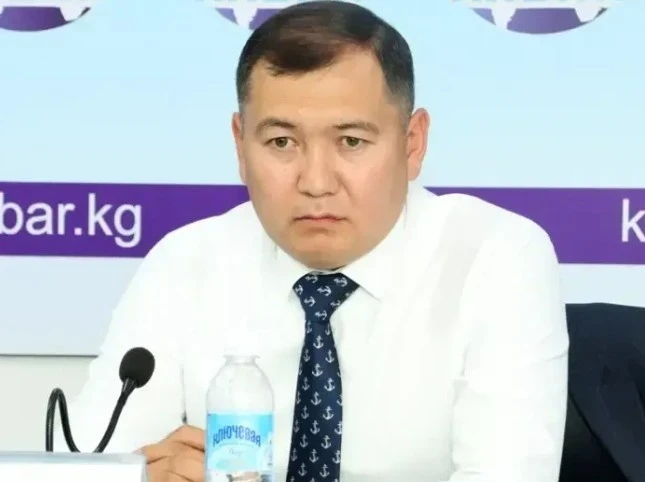
Since 2025, mandatory insurance in Kyrgyzstan has become obligatory: an OSAGO policy is required for every driver, and housing insurance is no longer just a formality, but a real tool for protection in emergency situations. In an exclusive interview, the Deputy Chairman of the Board of the State Insurance Organization (GSO), Salavat Sadyrakunov, discussed why many vehicle owners remain uninsured, why city residents are less likely to insure their homes compared to rural residents, and when farmers will be able to insure their crops against adverse weather conditions.
- The OSAGO policy became mandatory in 2025. How many vehicle owners are already insured, and how many remain "in the shadows"?
- As of July 1, 2025, the OSAGO policy is mandatory for all vehicle owners. By the end of 2025, more than 1,114,300 vehicle owners had obtained policies from various insurance companies, including the GSO. This accounts for 60-70% of the country's vehicle fleet, leaving about 30-40% of vehicles without insurance coverage. Of these, approximately 19.8% chose our company. The coverage level is increasing due to greater public awareness and enhanced enforcement of legislation.
- There have been proposals in social networks and the parliament to postpone fines. How is GSO handling the influx of requests, and are there risks of a shortage of forms during mass inspections?
- The GSO has the necessary material and technical base and human resources to service the current flow of clients. Our branch network covers all regions of the country, ensuring coordinated operations. The OSAGO policy can be obtained remotely through mobile applications, the "Tunduk" platform, and the gso.kg website, which reduces the burden on offices and minimizes the likelihood of queues. Currently, we have insured more than 357,000 vehicles, and there are no signs of a shortage of forms.
- Some deputies claimed that "the budget is simply replenished through OSAGO." What is the structure of the distribution of insurance premiums?
- It is important to note that the insurance premium for OSAGO is not a tax. The funds from insurance contributions form the company's reserves, which are strictly used for payouts, forming mandatory reserves, and ensuring financial stability. Payments to victims of traffic accidents are made within established limits, and part of the funds goes to cover the costs of conducting insurance activities. Thus, insurance premiums serve to financially protect citizens, not to replenish the budget.
- What is the average payout period for OSAGO or housing insurance after an incident? Is there a transition to digital loss settlement?
On average, payouts for OSAGO or housing insurance take 2-3 weeks after all necessary documents are submitted. An important factor is the confirmation of the insurance event and the assessment of damages. For traffic accidents, materials from the State Traffic Safety Department are required; for fires, a certificate from the competent authority and documents confirming the extent of the damage are needed. The faster the documents are provided, the quicker a decision will be made and the payout processed. The insurance system is moving towards digitalization, and some processes are already automated, reducing the need for personal visits.
- According to last year's data, less than 17% of housing in Bishkek is insured, while in the regions this figure exceeds 30%. Why are city residents so passive on this issue?
- The difference in indicators is due to the perception of risks and lifestyle. In the regions, people more frequently encounter natural threats, which fosters an understanding of the need for insurance protection. In large cities, including Bishkek, some homeowners feel protected, especially in apartment buildings, and do not perceive housing insurance as a means of financial protection. We do not associate this with distrust in the system, but rather with the need to raise public awareness about the importance of insurance.
- Many Kyrgyz citizens consider mandatory housing insurance (600 soms in rural areas, 1200 in cities) a hidden tax. What assistance do those affected by natural disasters receive in 2025?
- Insurance is a mechanism for mutual protection, not a tax. The insurance premium is 600 soms per year for rural residents and 1200 soms for urban residents. Insurance payouts can reach up to 500,000 soms in rural areas and up to 1,000,000 soms for urban housing, depending on the damages. In the first two months of 2026 alone, more than 65,000,000 soms were paid to victims of fires and natural disasters, allowing families who lost their homes to begin recovery without debt obligations.
- The government has mandated civil servants to insure their homes under threat of sanctions. What effect has this had, and will there be fines for ordinary citizens for lacking insurance?
- Measures aimed at civil servants help to increase discipline and set an example for everyone. According to preliminary data, the level of insurance among this category has indeed increased. As for the possible introduction of fines for citizens, the current focus is on informing and understanding the importance of insurance. The main goal is to enhance the protection of the population.
- A "common insurance pool" has recently been created to protect housing. How will this affect citizens and the reliability of the company?
- The common insurance pool combines the financial capabilities of insurance companies to cover large risks. This will enhance the resilience of the entire insurance system, especially in the event of natural disasters, and allow for better risk distribution. Ultimately, this will increase the guarantees of insurance payouts and strengthen trust in the system.
- In February 2026, the parliament will discuss agricultural insurance. Will GSO insure crops against drought and frost, and what will be the cost for farmers?
- Agricultural insurance is actively being developed. For Kyrgyzstan, where agriculture plays an important role, this is a strategically significant direction. A mechanism for insuring crops against natural risks is being considered. Our goal is to create an effective system that will truly work in the interests of farmers. GSO is ready to participate in the implementation of the program provided there are clear rules, transparent tariffs, and a balanced risk distribution model.
- Is GSO studying the experience of other countries, such as neighboring Kazakhstan, Uzbekistan, or China?
- The GSO is actively studying international experience, including practices from neighboring countries. Special attention is given to digitalization, automation of loss settlement processes, and reserve formation. Any foreign practices are adapted considering our legislation and market specifics to implement the best solutions for enhancing the reliability and convenience of insurance services for the citizens of Kyrgyzstan.