In 2026, Kyrgyzstan will chair the Shanghai Cooperation Organization (SCO), highlighting the growing significance of regional associations in the context of current global changes. Against the backdrop of shifts in political and economic spheres, the SCO continues to be an important platform for discussing security, economic, and humanitarian issues.
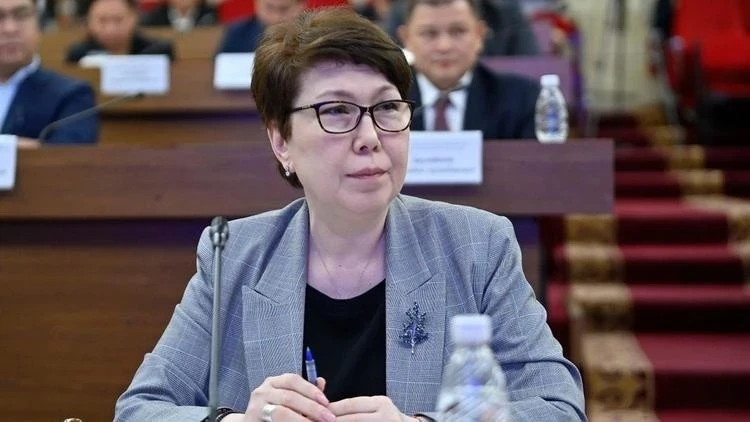
The SCO unites leading countries of Eurasia, and experts are increasingly questioning how the influence of this organization will develop. Gulya Kozhokulova, a deputy of the Jogorku Kenesh of the Kyrgyz Republic, shared her thoughts on the future of the SCO, Kyrgyzstan's role in this process, and possible changes in international relations.
- How do you see the changing role of the SCO in the current political situation?
- I am convinced that the political influence of the SCO will only grow. This is becoming evident against the backdrop of recent global events. Kyrgyzstan's chairmanship this year carries immense responsibility and significance, both for the country's image and for strengthening its position on the international stage. I am confident that the SCO will expand, and the number of countries interested in cooperation will increase.
- Which countries might show interest in joining the organization?
- I believe that a number of countries in the Middle East may become active in this direction. Many states are seeking new avenues for cooperation.
- Will China's influence within the SCO increase?
- China's influence is already noticeable and should not be disregarded. China is actively demonstrating its readiness to take on the role of a peacemaker in the new conditions of international relations. However, it is worth noting that the peacekeeping function is not limited to China; Russia also plays a significant role in this area. All major powers involved in the SCO are interested in stability, as economic development directly depends on a peaceful environment, while wars only weaken countries.
For Kyrgyzstan, this aspect is particularly important, given our proximity and active economic cooperation with China.
- How might the global economic crisis affect the status of the SCO?
- I believe that, on the contrary, the role of the SCO is likely to strengthen. We are witnessing a redistribution of global power, and many previously less noticeable organizations are beginning to gain strength. Asian countries and even small island states are showing increasing interest in cooperation.
- How do you assess Kyrgyzstan's potential for joining BRICS in the future?
- The potential certainly exists. The question is how necessary it will be. I think discussions about Kyrgyzstan's possible accession to BRICS could take place within the framework of the SCO when the appropriate conditions arise. BRICS is a significant association, and in the current conditions, it is important for countries to unite.
- How important is cooperation between states today?
- It is extremely important. No state can exist in isolation. We are in interdependent relationships, and interaction is necessary for prosperity. Many underestimate the significance of this process. An example is the European Union, which removed internal borders and created a single currency, allowing countries to act as a whole.
History shows that unification has its advantages, as was the case in the Soviet Union, which provided effective management of the economy and social processes. After its collapse, countries erected borders, which weakened their interaction. Looking back, we understand that it is necessary to seek new forms of cooperation.
It is important to remember that no country, even the strongest, should interfere in the internal affairs of others. Cooperation and parity contribute to stability. For example, our relations with Russia have always been built on mutual assistance without pressure.
We must respect historical memory and take into account the lessons of the past to develop existing ties. Our peoples are connected by cultural and blood ties, and this unity must be preserved.
- You mentioned the importance of historical memory.
- Yes, this is an extremely important aspect. Chinghiz Aitmatov emphasized that memory shapes society. It is important to read classical literature and return to philosophical reflections. Unfortunately, young people are reading less and less, which affects their vocabulary and memory. We need to pay more attention to culture and education.
- What are the key aspects in the current international situation?
- In the context of global changes, it is important to remain humane, respect each other, and strive for cooperation. This is the only way to ensure stability and development for countries.
Interviewed by Sofia Berezovskaya