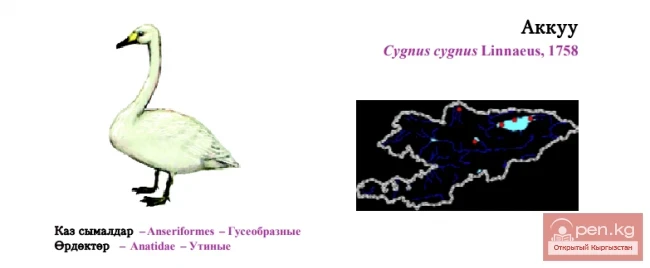
Whooper Swan
Whooper Swan Status: Category VII, Least Concern, LC. Rare breeding species. One of seven species of the genus in the global fauna and one of three in the fauna of Kyrgyzstan. Monotypic species.
Bar-headed Goose Status: Category VI, Near Threatened: R. A representative of the Tibetan species complex. A monotypic species.
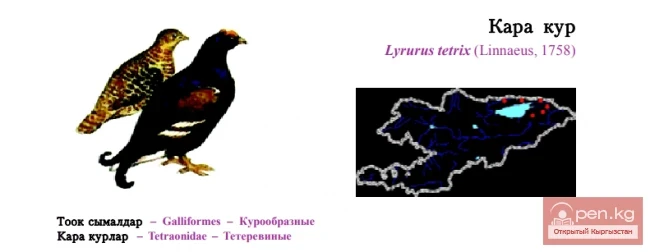
Black Grouse Status: Category VI, Near Threatened: R. The subspecies L. t. mongolicus (Lonnberg, 1904) inhabits the Tian Shan mountains.
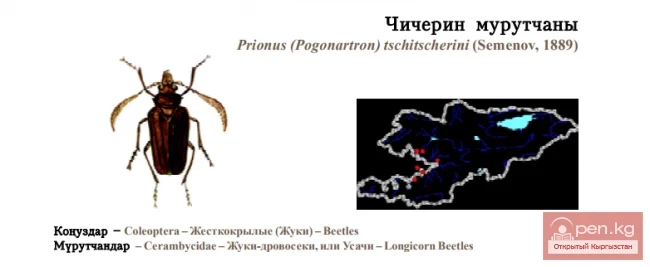
Tschitscherin’s Root Borer Status: Category II (VUB2ab(iii)). A narrowly distributed rare species, sporadically inhabiting areas of economic activity [11]. It belongs to a relict genus represented in the fauna of the republic by five species [12], and has aesthetic and scientific significance in the aspects of zoogeography and genetic conservation.
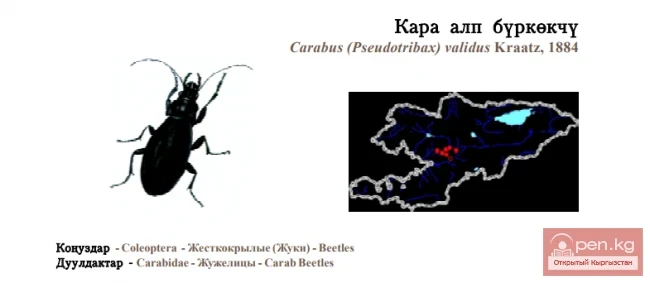
Vigorous Ground Beetle Status: Category II (VUBlb(iii)+2b(iii,iv); C2b). A narrowly distributed rare species, sporadically inhabiting areas of economic activity [11], entomophagous. One of two species of a relict oligotypic subgenus, endemic to the Fergana Mountain system [30], has scientific significance in terms of zoogeography and conservation of genetic resources.
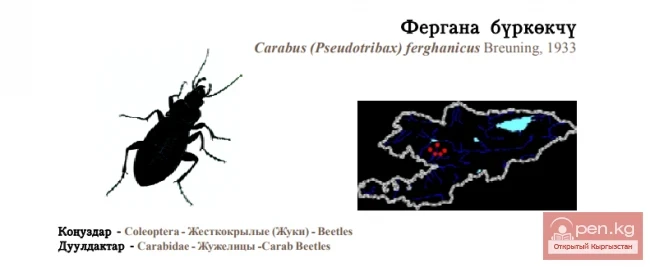
Fergana Ground Beetle Status: Category II (VUB1ab(iii)+2ab(iii)c(iii,iv); C2b). A narrowly distributed rare species, sporadically inhabiting areas of economic activity [11], entomophagous. One of two species of the relict oligotypic subgenus, endemic to the Fergana Mountain Range [30], it has scientific significance in terms of zoogeography and genetic conservation.
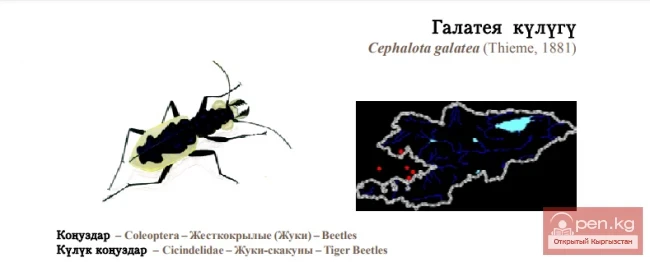
Galatea Tiger Beetle Status: Category I (EN B1ab(iv)+2ab(iii,iv)). A narrowly endemic species with a fragmented distribution and decreasing population due to habitat destruction. The taxon has scientific significance in the aspects of zoogeography [31] and conservation of genetic diversity. An entomophage, it has aesthetic value; it is the only representative of the genus in the republic. Listed in the Red Book of Uzbekistan (category VUr D2) [23].
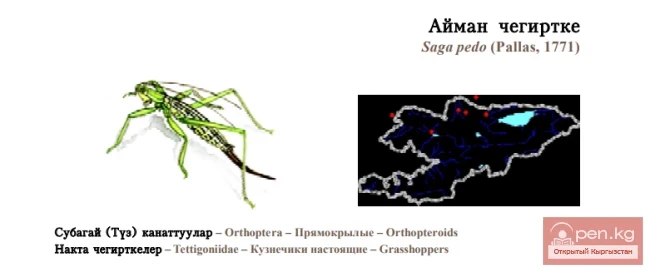
Steppe Katydid Status: Category II (VU Alc; B2ab(iii,iv); D1+2). A relic steppe species with decreasing numbers; included in the Red Book of the USSR in 1984 (Category II) [26], in IUCN RLTS (Category VU B1+2bd based on an assessment conducted in 1996) [76], and in the Red Book of the Republic of Uzbekistan (Category EN D) [23]. The only one of 12 species of the genus that extends beyond the Mediterranean region.
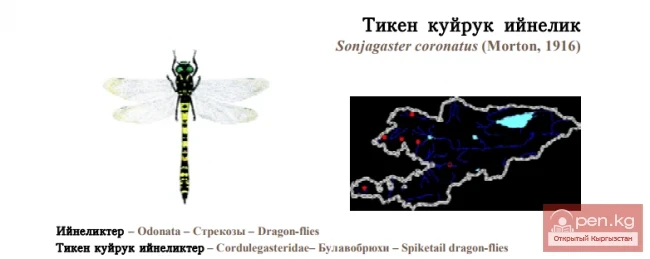
Coronate Spiketail Status: Category II (VUA4bc; B2b(iii,iv); D2). A locally occurring species with a declining population trend. All populations of the subspecies are fragmented, small, and vulnerable. It is of interest for zoogeography, study, and conservation of the regional gene pool. S. coronatus was previously considered a subspecies of ^rdulegaster insignis (Schneider, 1852) [12, 26, etc.], which was included in the Red Book of the USSR in 1984 (Category III) [26]. An
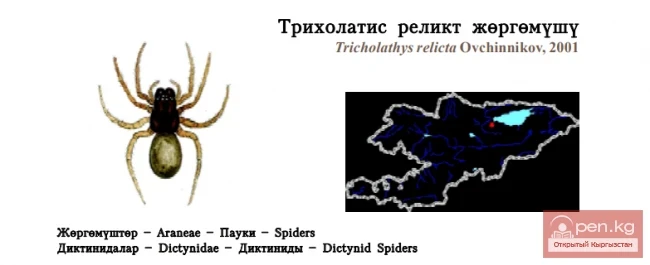
Tricholathys relicta Status: Category II (VU B2ac(iii); C2b). A very rare, narrowly localized endemic species. It has significant scientific importance due to its unique morphological and distribution characteristics. The absence of a functional cribellum and calamistrum is unique within the subfamily Tricholathysinae [83]. In the Eastern Hemisphere, it is the only representative of the genus, while other species are found in the western regions of the USA [83].
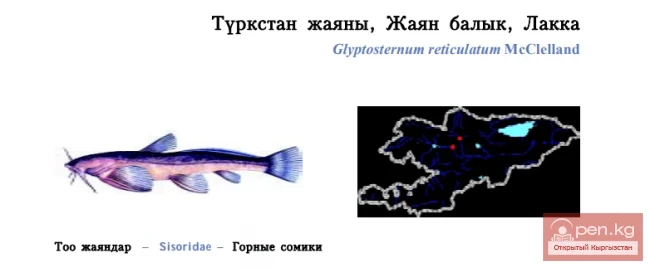
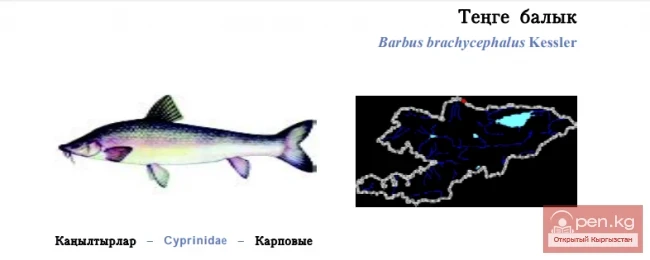
html Turkestan Catfish Status: 2 [VU: E]. The only representative of the genus in Kyrgyzstan.
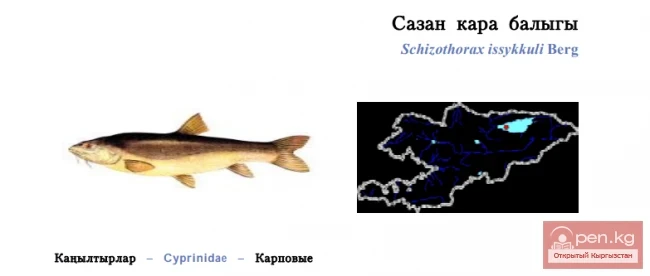
Issyk-Kul Scaleless Osman Status: 2 [CR: D]. Lake form, very rare, critically endangered. Endemic, has higher growth rates compared to other forms.
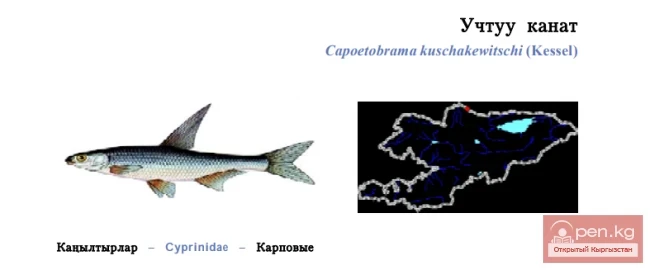
Issyk-Kul Marinka Status: 2 [EN: D]. A rare taxon inhabiting Lake Issyk-Kul. Its independent species status was established in 1953 [10]. An endemic species with declining numbers, it has commercial significance.
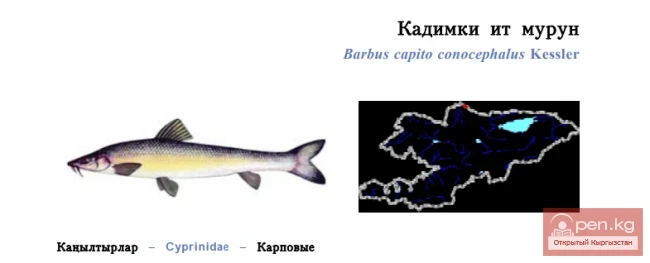
Turkestan Barbel Status: 2 [VU: D]. A subspecies that is endangered in Kyrgyzstan. One of the representatives of the genus Barbus in Kyrgyzstan.
Aral Barbel Status: 2 [CR: C]. Species extinct in Kyrgyzstan.
Chuy Ostroluchka Status: 2 [CR: C]. Possibly already extinct in Kyrgyzstan, an endemic subspecies [10].
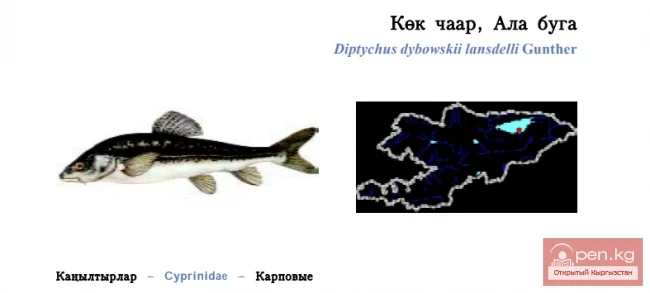
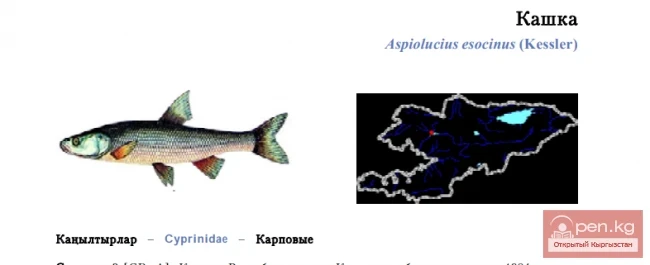
Pike Asp Status: 2 [CR: A]. Listed in the Red Book of the Kyrgyz SSR in 1984. A rare species inhabiting the basins of the Amudarya and Syrdarya rivers. In Kyrgyzstan, there have been no recorded catches in recent years. It may already be extinct. An endemic species of Central Asia with commercial significance.
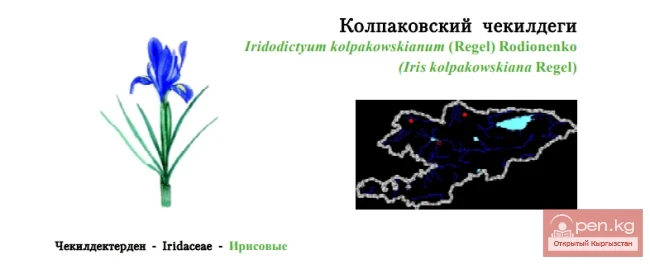
Iridodictyum Kolpakovski Status: VU. A species with a reducing range and population. It deserves attention as an early-flowering plant for squares and parks that does not require watering.
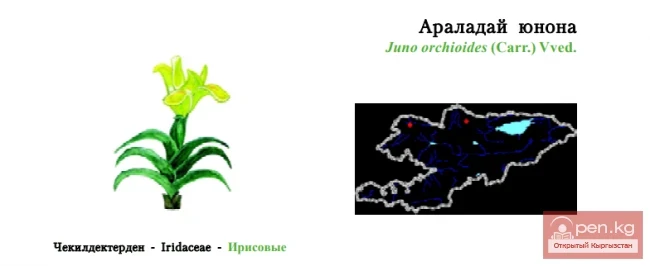
Orchid-like Juno Status: VU. Endemic to the Western and Northern Tien Shan.
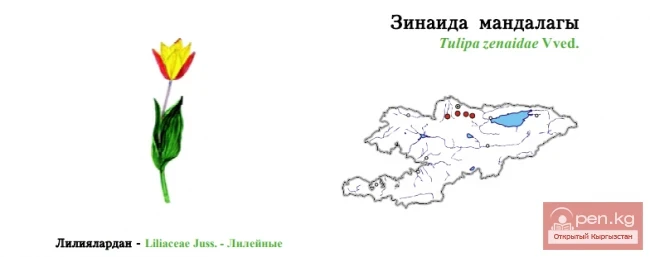
Zenaida’s Tulip Status: VU. A narrowly endemic species of the Kyrgyz Ridge, at risk of rapidly disappearing due to limited habitat area.
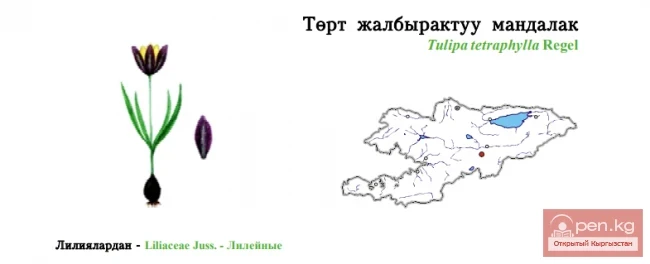
Quadrifolious Tulip Status: VU. Endemic to the Inner Tien Shan.
Pink Tulip Status: EN. A narrowly endemic species of the foothills of the Turkestan Range, sharply declining in numbers. The species is on the brink of extinction; its further existence is impossible without urgent conservation measures.
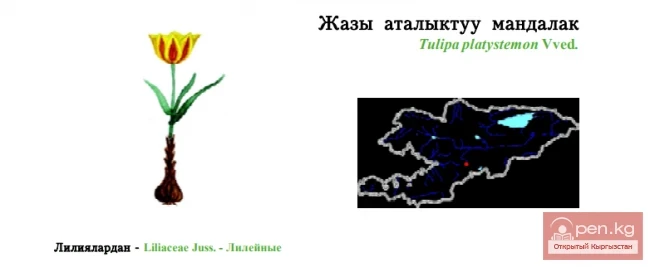
Broad-stamened Tulip Status: VU. A narrow endemic of the Alai Ridge.
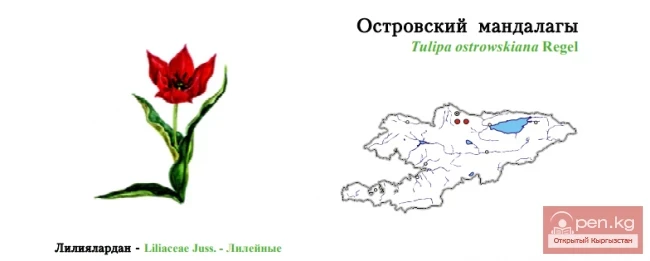
Ostrovski’s Tulip Status: VU. A narrowly endemic species of the Kyrgyz and Zailiysky ranges. It deserves attention as a highly decorative plant and as a material for breeding.
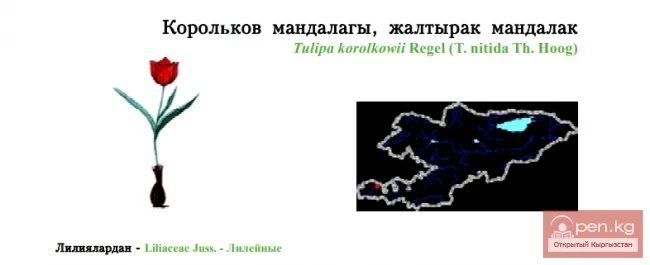
Korolkov’s Tulip, shiny Status: VU. Endemic to Central Asia, primarily found in Uzbekistan and Tajikistan (Western Tien Shan, Pamir-Alai). A rare, highly decorative plant.
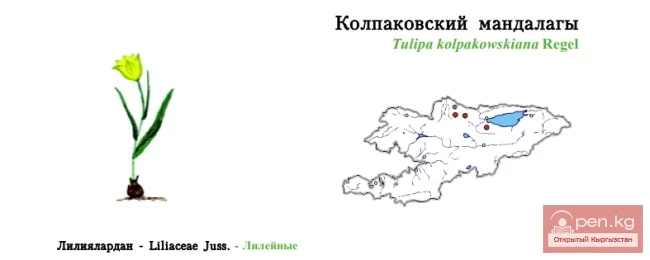
Kolpakovski’s Tulip Status: VU. An endemic of the Northern Tien Shan with a decreasing population. An early-flowering tulip, distinguished by the beauty of its flower.
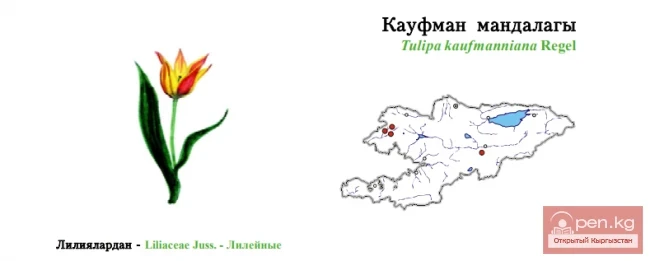
Kaufmann’s Tulip Status: VU. An endemic species of the Western Tien Shan. Highly decorative: the most beautiful, early-flowering tulip of Kyrgyzstan. Characterized by high intraspecific variability. Widely used in breeding.
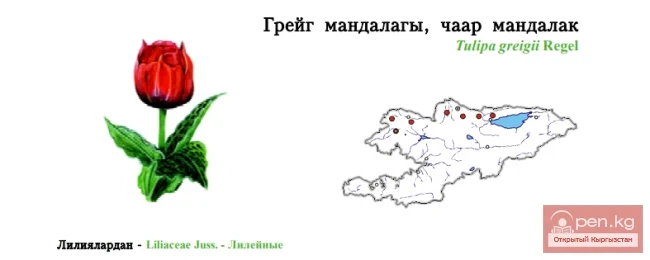
Greig’s Tulip / Тюльпан Греига, тюльпан пестролистный Status: EN. A species with declining numbers and shrinking range. Central Asian endemic. A plant of high ornamental value, it is of exceptional importance for green construction, floriculture, and the breeding of new varieties of cultivated tulips.
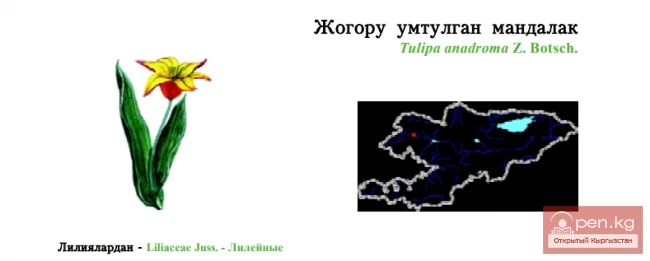
Chatkal Yellow Tulip Status: VU. An endemic species of the Chatkal Ridge with a decreasing population. The most beautiful of the yellow-flowered tulips in Kyrgyzstan. Promising for cultivation.
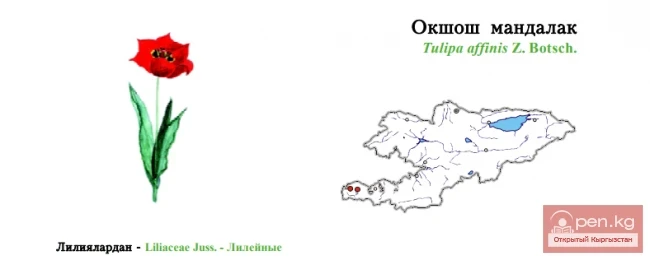
Related Tulip Status: VU. Endemic species of the northern Pamir-Alai. The species is at risk of complete extinction.
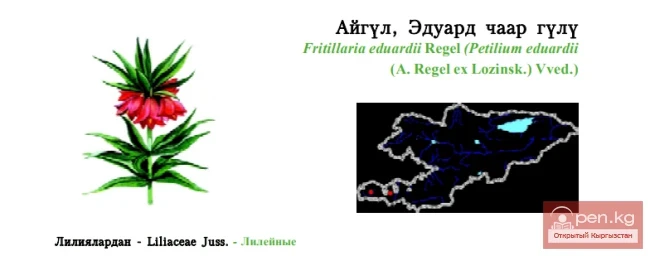
Eduard’s Imperial Crown Status: EN B1ab(i,ii,iv,v). In Kyrgyzstan - the only one of three very locally distributed species of the genus, at the northern limit of distribution, detached from the main range. As a highly decorative species with a decreasing range and population due to anthropogenic factors, it is included in several regional red books.
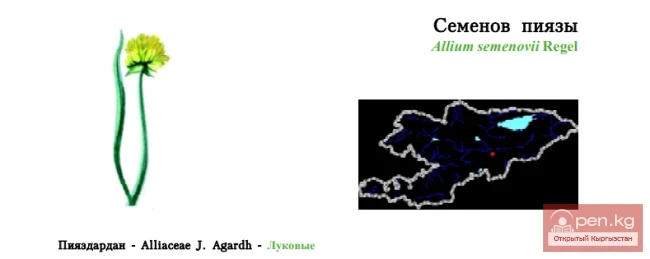
Semenov’s Onion Status: VU. Endemic to the Inner Tien Shan.
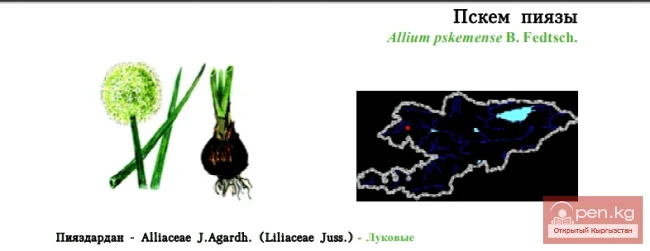
Pskem Onion Status: EN. A very rare species with a shrinking range in the Western Tien Shan. Description. A perennial plant reaching 40 - 80 cm in height. Bulbs are found in groups on a short rhizome, 4 - 5 cm thick, covered externally with black-brown and internally with red-brown tunics. The stem is swollen. Leaves are tubular, cylindrical, in number 3, shorter than the stem. The umbel is spherical, with the spathe nearly equal to the umbel. Flowers are white, about 6 mm long. It differs
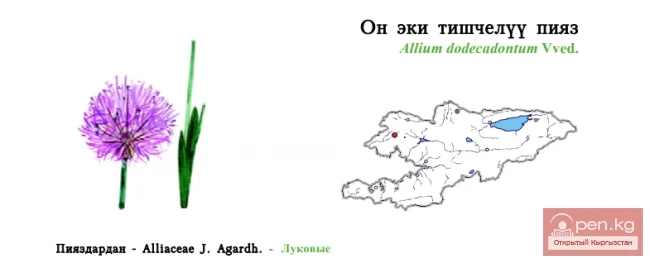
Twelve-dentate Onion Status: VU. A narrowly endemic species of the Chatkal Ridge. Description. A perennial herbaceous bulbous plant, geophyte, xeromesophyte. Bulbs are solitary, round, 8-10 (12) mm in diameter, with gray paper-like tunics. Bulbils are solitary, smooth. Stems are 60 - 80 cm tall, 1.5 - 5 mm in diameter, ribbed, covered at the base with leaf sheaths. There are 2 leaves, flat, 2.5 - 6 mm wide, rough-edged. The inflorescence is hemispherical or nearly round, dense, multi-flowered.
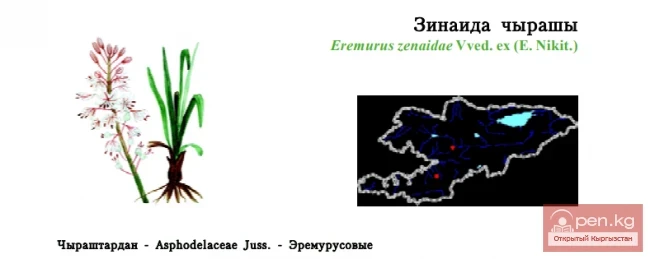
Eremurus Zenaidae Status: VU. Endemic to the lower and middle belts of the Fergana and Alai mountain ranges.
Eremurus zoae Status: VU. A narrowly endemic species of the Kyrgyz Range.
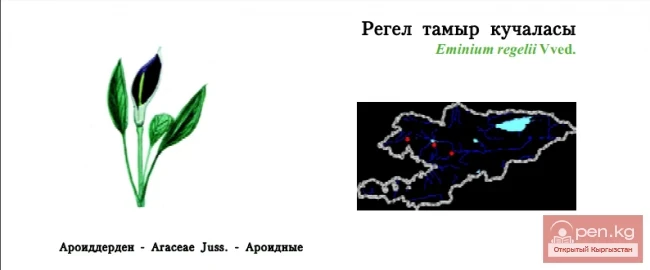
Regel’s Eminium Status: VU. A rare endemic species of the Western Tien Shan.
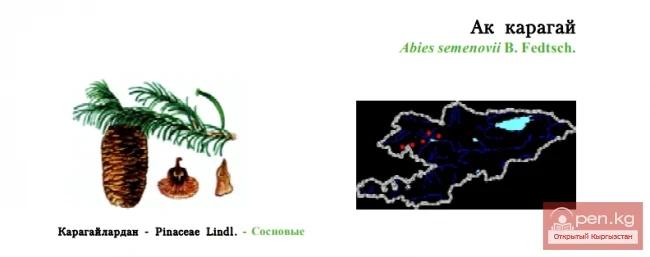
Semenov’s Fir-tree Status: VU. A relic endemic of the Western Tien Shan. Ornamental.
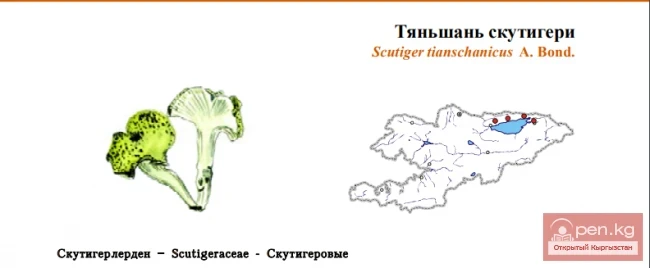
Tien Shan Scutiger Scutiger tianschanicus A. Bond. Status: CR. Very rare, almost endemic species.
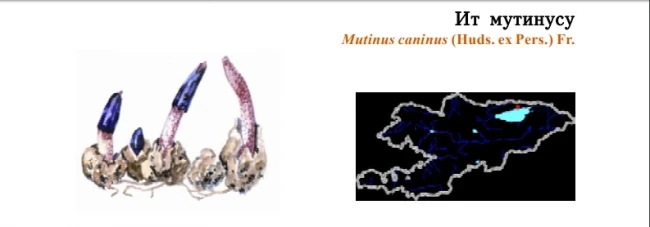
Dog Stinkhorn Mutinus caninus (Huds. ex Pers.) Fr. Status: EN. A decorative species, used in folk medicine.
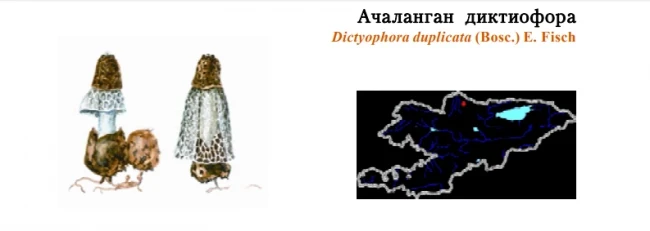
Doubled Netted Stinkhorn Dictyophora duplicata (Bosc.) E. Fisch Status: EN. Rare species. The only representative of the genus Dictyophora in the CIS territory. Used in traditional medicine.
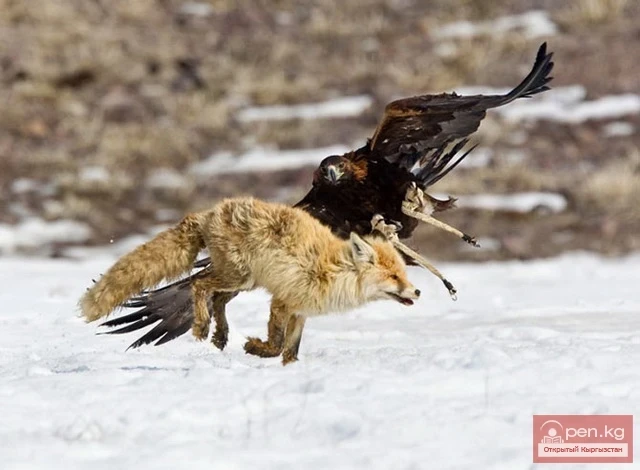
Kyrgyz hunters distinguished 13 species of birds of prey — the gyrfalcon: baybaktuu shunkar — gyrfalcon with noticeable hairs on its legs, kuiko shunkar (this is a very valuable bird — in ancient times, the winner of a competition was gifted 9 birds of prey, and this nine was led by the kuiko shunkar), kazy shunkar — true gyrfalcon, kara shunkar — gyrfalcon with black plumage (very difficult to train), taza shunkar — pure gyrfalcon without admixture, moynoktyu shunkar — gyrfalcon with a light
The foundations of the herding system for livestock grazing, widely recommended by modern botany, were established and used by the Kyrgyz for a long time. They had a good understanding of the qualities of pasture grasses and their usefulness for livestock. For example, regarding sedge grass, the Kyrgyz said: "Until a horse grazes on sedge pastures, it does not gain fat."
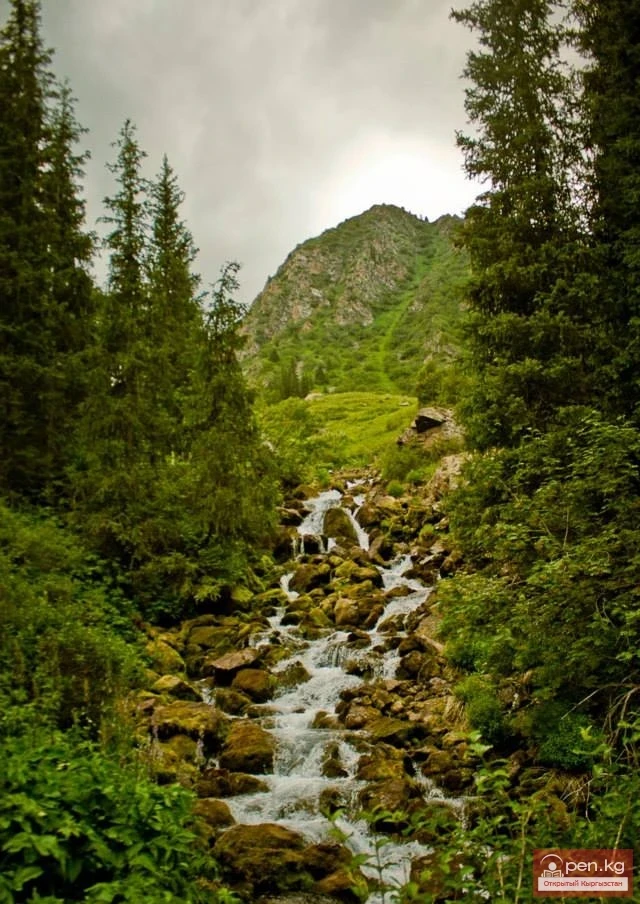
Another one of the most beautiful gorges in Kyrgyzstan, Kegety Gorge is located on the northern side of the Kyrgyz Ridge, 90 kilometers from the city of Bishkek. Its picturesque nature makes it very interesting and attractive for tourists. A turbulent river with the same name flows through Kegety Gorge, which has many tributaries. The largest of them is the right tributary Köl-Tor, which forms a very beautiful independent gorge, at the headwaters of which there is a lake with turquoise water.
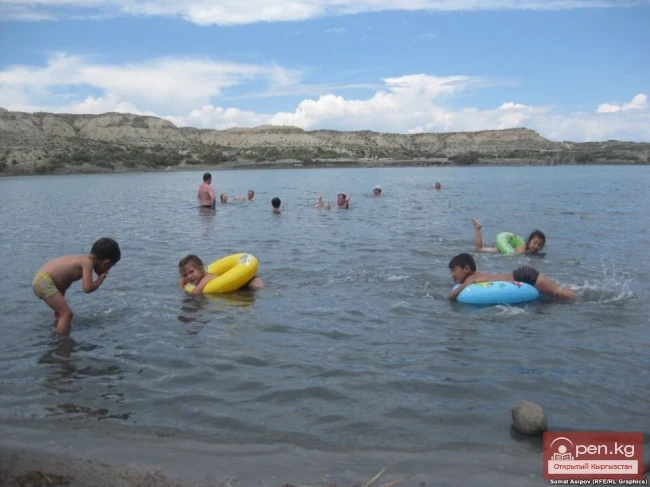
The Salt Lake, also known as the Dead Lake, is located in the territory of the Kunchyghysh rural district of the Ton district. It is 12 kilometers from the central highway. This season, it is visited by an average of 300-500 people per day. According to the staff of the tourist complex, the number of people wishing to visit the Dead Lake has decreased compared to previous years. Tourists began to visit the Salt Lake in 2000. Prior to this, academician Usen Mamyrов of the National Academy of
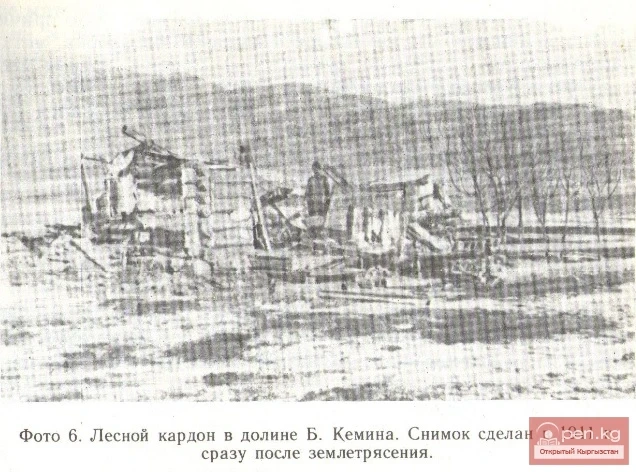
In certain areas of the Earth, strong underground tremors sometimes occur, a rumble is heard, and ground vibrations cover significant areas, sometimes the entire Earth—this is an earthquake. In its epicenter, strong changes occur: deep and long cracks appear on the surface, landslides are observed, buildings are destroyed, etc.
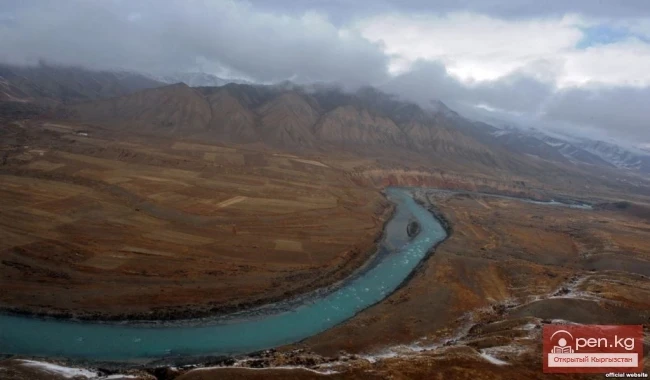
The "Upper Naryn Zone" includes the upper part of the Naryn River basin from the vicinity of the village of Karakolka to the headwaters of its two main tributaries — Taragay and Kara-Say, which originate in the ridge area at the northern and southern ends of the Ak-Shiyrak range. The zone is located east of the city of Naryn, approximately 110 km by road to the village of Karakolka. You can reach the zone from the Issyk-Kul region via the highway from the city of Przhevalsk — to the
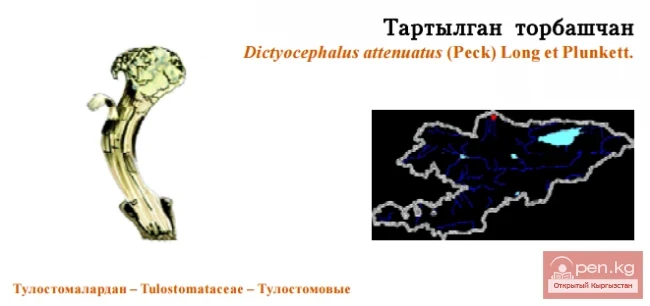
Tapered Net-cap (Dictyocephalus attenuatus (Peck) Long et Plunkett). Status: VU. A very rare Paleogene relic. The only species of the genus Dictyocephalus in the world.