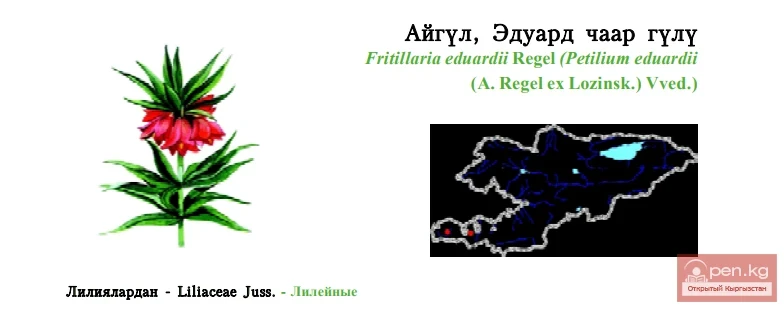
Eduard's Imperial Crown
Eduard’s Imperial Crown
Status: EN B1ab(i,ii,iv,v). In Kyrgyzstan - the only one of three very locally distributed species of the genus, at the northern limit of distribution, detached from the main range. As a highly decorative species with a decreasing range and population due to anthropogenic factors, it is included in several regional red books.
Description. Bulbous polycarpic. The bulb has four scales, is odorless, oval-spherical, 4-9 cm in diameter (up to 1 kg in weight in cultivation). The stem is straight, ribbed, glabrous, 37-95 (up to 150) cm tall, stem leaves are bright green, elongated-lanceolate, semi-stem-embracing, pointed, lower leaves 10-15 (up to 22.5) cm long and 5-12 cm wide. The inflorescence has up to 15 flowers (more often 4-5); flowers on bent short pedicels, drooping by the end of flowering [34]. The perianth is bright red (with purple-brown veins), broadly bell-shaped, 4.5-6.5 cm long. The fruit is a dry capsule 6-7 cm long, with small brown seeds.
Biological features. An ephemeral, sprouts appear shortly after the snow melts; does not flower with excessive moisture. Flowers from early March to late May, depending on specific growing conditions, the duration of flowering of individuals is up to 15 days; the aroma of the flowers is weak, the sugar concentration in the nectar is low, but insects of 13 species have been noted on the flowers [34]; tits also participate in pollination [90, 34]. Fruiting occurs in May-June, above-ground parts die off by mid-summer. It grows in groups, sometimes almost solid meadows, less often singly. In nature, renewal is almost exclusively by seeds (replacement bulbs form inside the mother bulbs, at a depth of 15-30 cm), seed germination is less than 60% [2], seedlings flower in the 7th-9th year of life [25, 37].
General distribution and in the country. Tajikistan, Uzbekistan, Northern Afghanistan, Kashmir [25, 37], Kyrgyzstan [34]. In the Central Asian part of the range, it is sporadically found on the Hissar (southern macro-slope), Karategin, Vakhsh, Darvaz (west), Peter the First (west), Gazimaylik, Babatag, Buritau, Sanglok, Alai (northwestern foothills, [27, 25, 37: "Sokh River basin"]), as well as Khozratisho and Turkestan (northeast) [34]. In Kyrgyzstan - two localities in the Turkestan Range: on the northern slopes of the Aigul-Tash (Silam-Tash), Kozulan-Tash and Ptoo (Pytavu) (southeast of Batken, Isfara River basin), and along the left bank of the Laili-Mazar River gorge (near the village of Baul, Lailak River basin) [34, 35]. Reports of other locations [34] require verification.
Habitat. On drained carbonate soils, on moist large-block limestone taluses in the black forest zone, on slopes with outcrops of gypsum among shrubs, less often on open sloping grassy surfaces, under rocks (usually on the western side), in the middle mountain belt, at altitudes of 700-2500 m above sea level (in Kyrgyzstan - 1550-2000 m above sea level, on steep northern slopes) [34].
Population. Overall, it is low and continues to decrease; in Kyrgyzstan, the density in local aggregations reaches 100 individuals (genetic individuals make up about half) on surveyed plots of 10x10 m [1,34].
Limiting factors. Overgrazing, low level of actual reproduction, habitat degradation due to intensive anthropogenic pressure (grazing, shrub cutting, recreation [34]) and possibly regional climate changes (especially precipitation patterns), direct extraction (collection of bulbs and especially flowers for bouquets). The impact of natural pests is insignificant [34], it has no pharmaceutical significance in Kyrgyzstan. Cultivation. Successfully carried out in several botanical gardens around the world, probably for more than 150 years [34, 2]. It is absent in the collection of the Botanical Garden of the National Academy of Sciences of the Kyrgyz Republic (in Bishkek), but is cultivated by local residents of the Batken region for decorative purposes [1,34].
Existing conservation measures. Populations in Kyrgyzstan are outside protected areas, but in habitats, grazing and flower collection for bouquets are regulated at the initiative of local residents [1,34]. The species is included in the Red Book of Uzbekistan [27], and in Tajikistan, it is protected in the Ramit and Dashti-Jum reserves [18].
Recommended conservation measures. Support for local community initiatives, granting the species' habitats the status of a National Park, promoting species conservation. Prohibit the collection of bulbs and grazing, introduce it into cultivation in botanical gardens. It is also proposed to create conditions for natural snow retention and shading [34].
Aigul, Eduard’s Imperial Crown
Eduard’s Imperial Crown
Fritillaria eduardii Regel (Petilium eduardii (A. Regel ex Lozinsk.) Vved.)
Status: Endangered (EN B1 ab(i,ii,iv,v)), sporadically distributed Hissar - Hindu Kush species at the northern limit of its disjunctive area, a highly decorative plant with a decreasing range and population. In the Republic, it is known in two localities at the northern macro-slope of the eastern part of the Turkestan Mountain Range, at 1,550-2,000 m above sea level. The species occurs between shrubs on dump carbonized soils, reproducing mainly by seeds. Limiting factors: pasture, collection of flowers and bulbs, low reproductive ability, climatic changes. Flowering period: 2 weeks from early April to early May, depending on elevation, fruiting in May - June. This noticeable early blooming plant has been widely known in cultivation as an ornamental species for a long time. Currently, it is protected in the Republic only by some initiatives of local people. The creation of special wildlife areas with limitations on any disturbance is needed for the conservation of the species.
Read also:
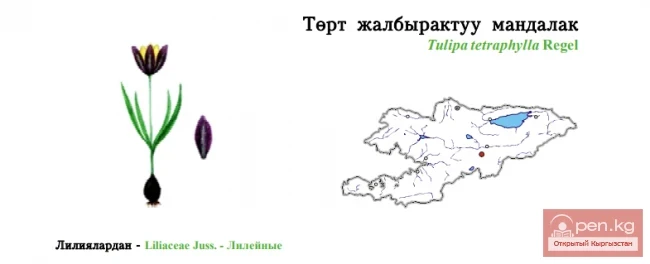
Four-leaved Tulip / Turt Jalbyraktuu Mandalak / Quadrifolious Tulip
Quadrifolious Tulip Status: VU. Endemic to the Inner Tien Shan....
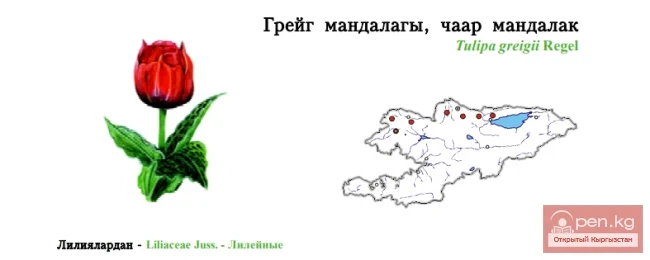
Greig's Tulip, Variegated Tulip / Greig Mandalagy, Chaar Mandalak / Greig’s Tulip
Greig’s Tulip / Тюльпан Греига, тюльпан пестролистный Status: EN. A species with declining numbers...
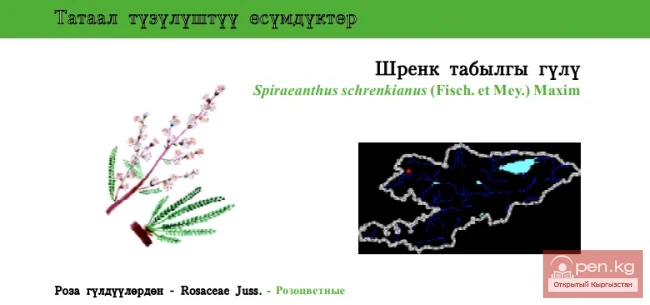
Schrenk's False Spirea / Schrenk's Tavolga Flower / Spireanthus
Schrenk’s False Spirea Status: CR B2ab(iii). Endemic, ornamental, and rare plant with a decreasing...
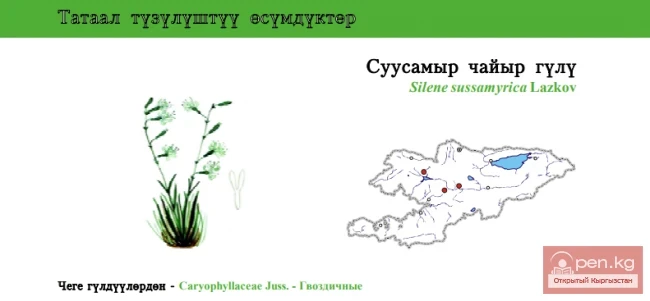
Susamyr Catchfly
Susamyr Catchfly Status: EN. A rare species found in small numbers and in a limited area, which...
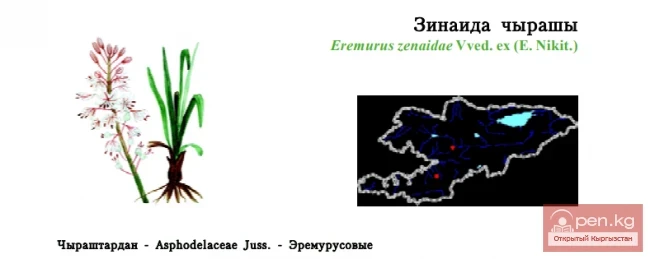
Zenaida's Foxtail Lily
Eremurus Zenaidae Status: VU. Endemic to the lower and middle belts of the Fergana and Alai...
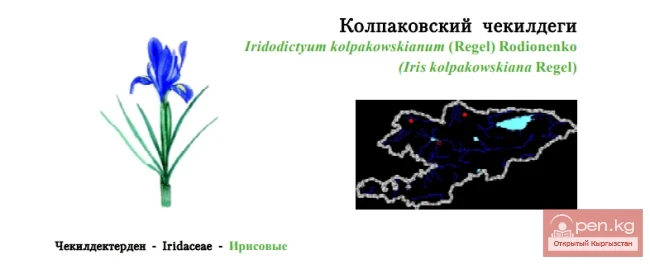
Kolpakovski's Blueflag
Iridodictyum Kolpakovski Status: VU. A species with a reducing range and population. It deserves...
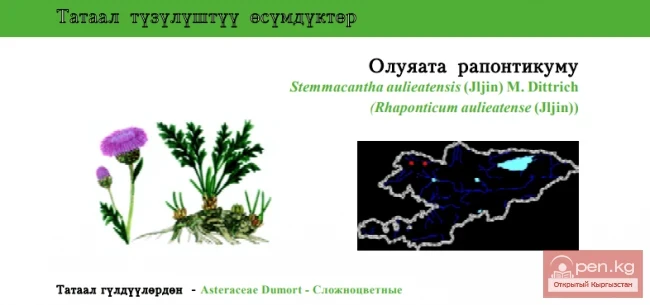
Aulie-Ata Stemmacantha Centaury / Aulie-Ata Stemmacantha / Aulie-Ata Centaury
Aulie-Ata Stemmacantha Centaury Status: EN. A very rare species, critically endangered....
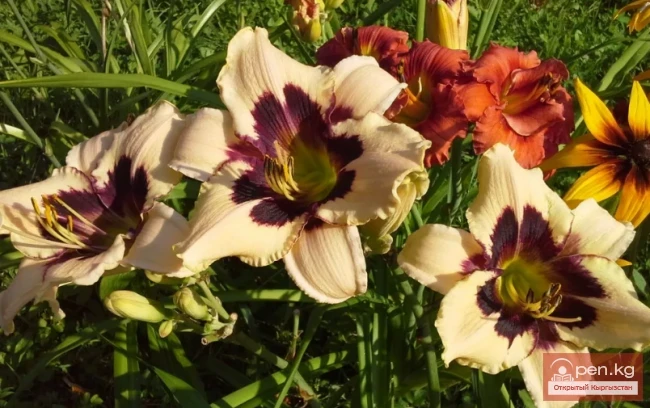
Daylily, Marsh Marigold. Perennial Herbaceous Plants Wintering in the Soil of Kyrgyzstan
Daylily, Hemerocallis (Hemerocallis L.). In nature, it is found on the edges of forests, among...
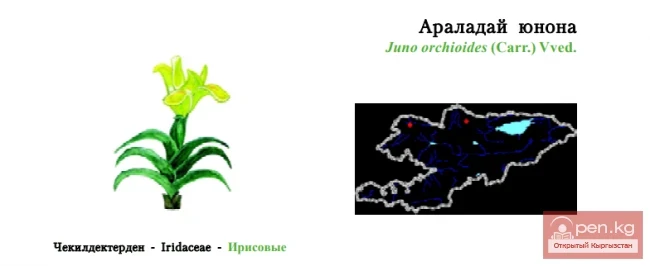
Orchid-like Juno / Araladay Juno / Juno Orchid
Orchid-like Juno Status: VU. Endemic to the Western and Northern Tien Shan....
Vvedensky's Sage / Vvedensky Sage, Vvedensky Kyok Bashy / Vvedensky’s Sage
Vvedensky’s Sage Status: VU. A very rare narrowly endemic species. An ornamental plant....
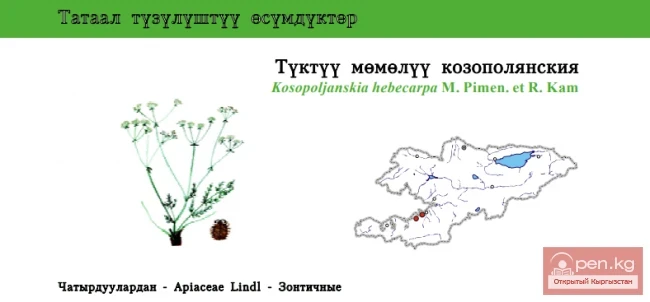
Wolly-fruited Kosopoljanskia
Wolly-fruited Kosopoljanskia Status: EN. Endemic. One of the two species that are sub-endemic to...
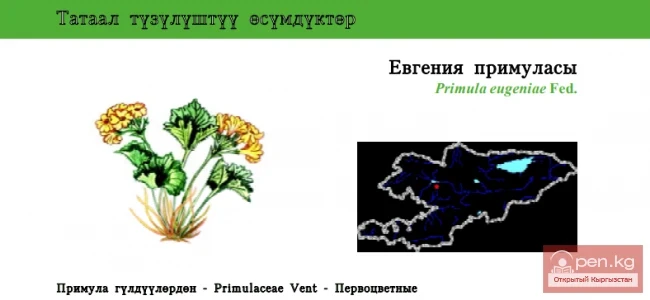
Eugenia's Primrose
Eugenia's Primrose Status: VU. A narrow endemic rare, highly ornamental species. Found in...
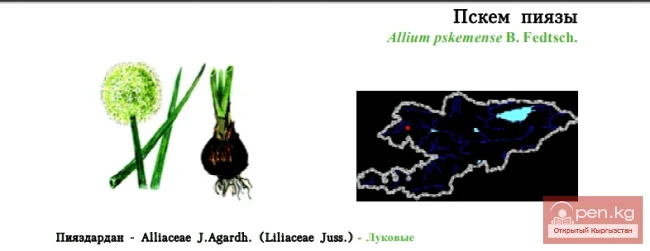
Pskem Onion / Pskem Piyaz / Pskem Onion
Pskem Onion Status: EN. A very rare species with a shrinking range in the Western Tien Shan....
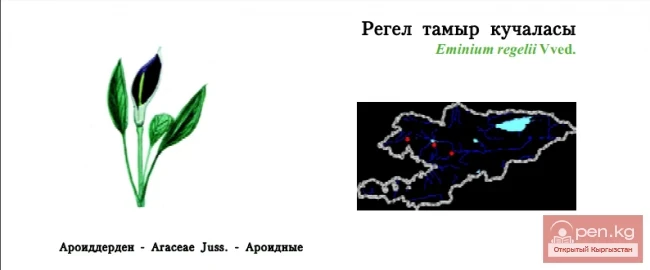
Regel's Eminium / Regel's Root Cluster / Regel's Eminium
Regel’s Eminium Status: VU. A rare endemic species of the Western Tien Shan....
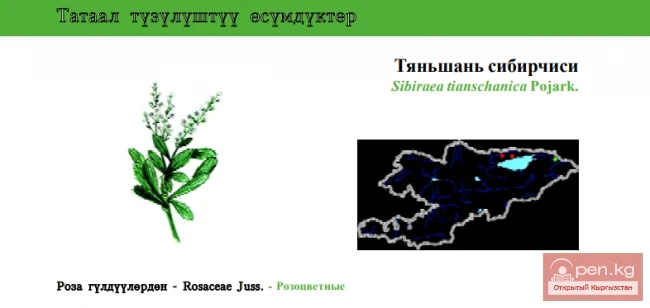
Siberian Tien Shan / Tien Shan Sibericus \ Tien Shan Sibiraea
Tien Shan Sibiraea Status: CR. An endemic, decorative, and rare northern Tien Shan plant....
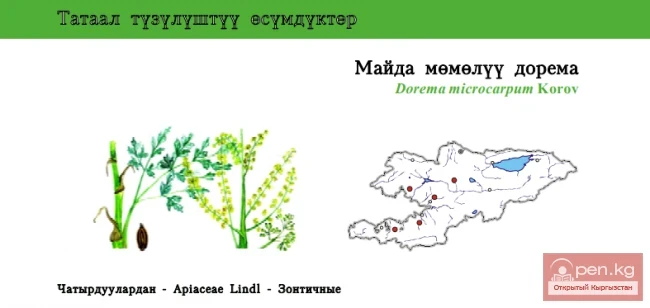
Dorema microcarpous \ Mayda myomyolu Dorema \ Microcarpous Dorema
Dorema microcarpum Status: VU. Rare endemic species....
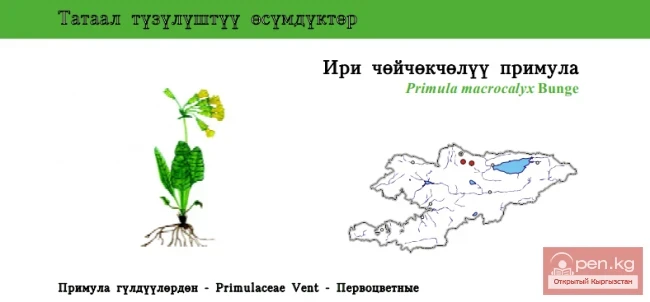
Large-calyxed Primrose
Large-calyxed Primrose Status: VU. In Kyrgyzstan, it is a very narrowly distributed, rare,...
Lily of the Valley, Poppy, Small-leaved Aster, Monarda. Rhizomatous Perennials Wintering in the Soil of Kyrgyzstan
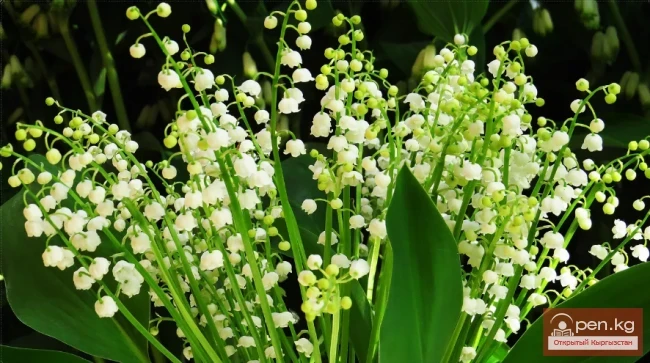
May Lily (Convallaria majalis L.). Has long been used in decorative gardening. Beautiful not only...
Bergenia, Anemone, Helenium, Delphinium. Rhizomatous Perennials Overwintering in the Soil of Kyrgyzstan
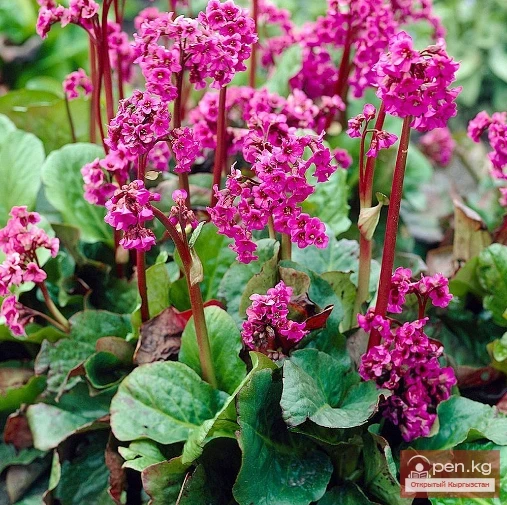
Bergenia (Bergenia Moench). The plant retains its foliage year-round. It prefers semi-shaded or...
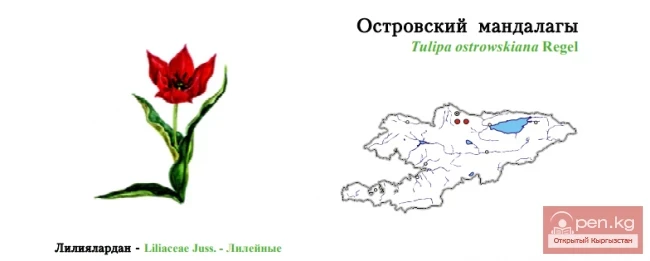
Ostrovski's Tulip / Ostrovski Mandala / Tulip of Ostrovski
Ostrovski’s Tulip Status: VU. A narrowly endemic species of the Kyrgyz and Zailiysky ranges. It...
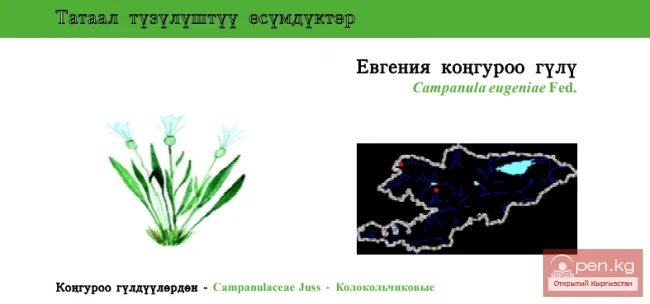
Eugenia's Bell-flower
Eugenia’s Bell-flower Status: VU. Endemic to the Western Tien Shan (Talas and Fergana Ranges). A...
Zoya's Yellow Desert Candle
Eremurus zoae Status: VU. A narrowly endemic species of the Kyrgyz Range....
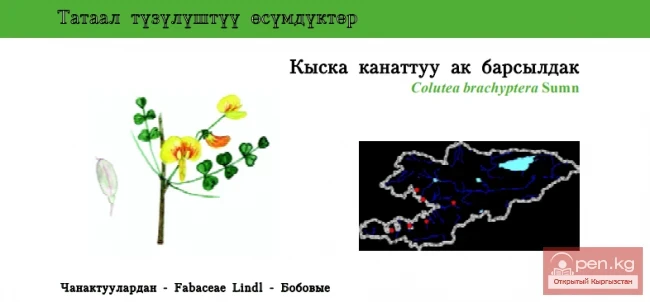
Short-winged Bladder-senna / Baibiche Chekey
Short-winged Bladder-senna Status: VU. One of three very rarely occurring species of this genus in...
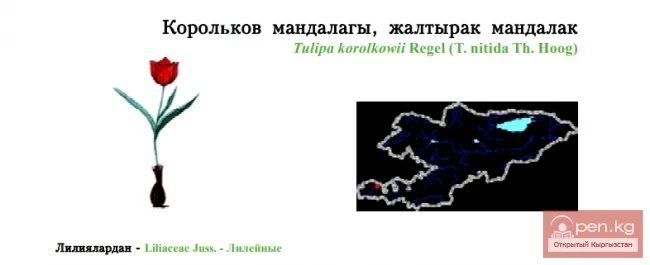
Korolkov's Tulip, Brilliant / Korolkov's Mandala, Shiny Mandala / Korolkov’s Tulip
Korolkov’s Tulip, shiny Status: VU. Endemic to Central Asia, primarily found in Uzbekistan and...
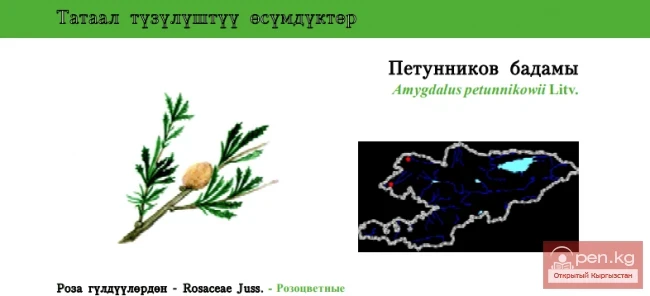
Petunnikov's Almond
Petunnikov’s Almond Status: VU. One of 40 species growing from the Mediterranean to Central Asia....
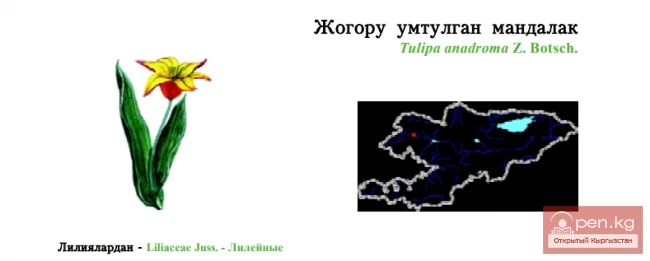
Tulip Aspiring Upward / Chatkal Yellow Tulip
Chatkal Yellow Tulip Status: VU. An endemic species of the Chatkal Ridge with a decreasing...
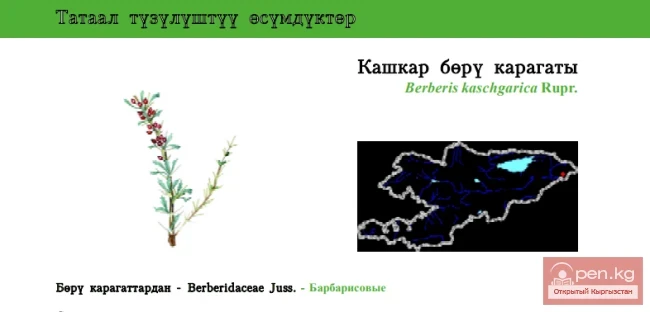
Kashgarian Barberry
Kashgarian Barberry Status: VU. Rare species....
Natural Plants of Kyrgyzstan
Natural Flowers in Kyrgyzstan Every year, the number of true nature enthusiasts increases, who...
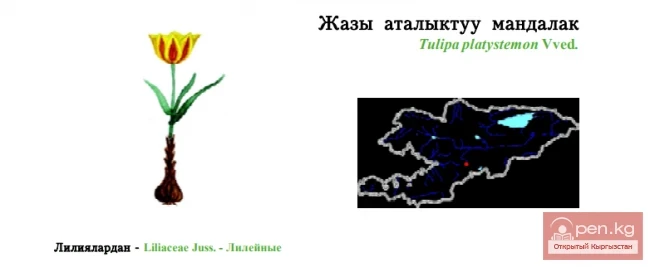
Broad-stamened Tulip / Tulip with Wide Stamens / Жазы аталыктуу мандалак
Broad-stamened Tulip Status: VU. A narrow endemic of the Alai Ridge....
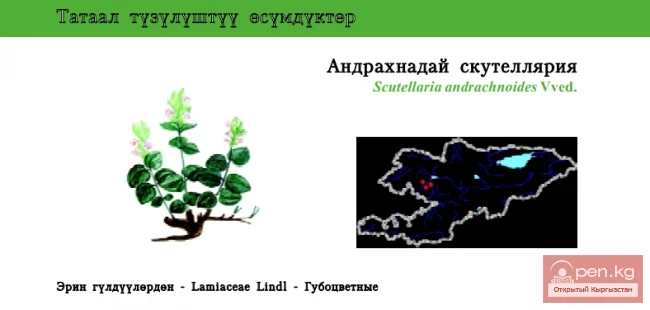
Andrachne-like Scullcup / Andrachne-like Helmet
Andrachne-like Scullcup Status: VU. A very rare rocky species, narrowly endemic to a small section...
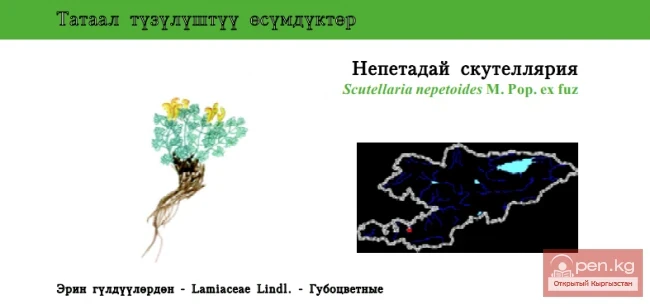
Catmint-like Scullcup / Nepeta dalmatica / Scullcap-like Catmint
Catmint-like Scullcup Status: VU. A very rare narrowly endemic species. Ornamental plant....
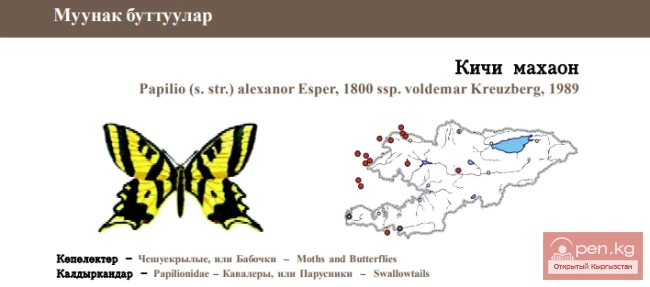
Alexanor, subspecies Voldemar / Kichi Mahahon / Voldemar Southern Swallowtail
Alexanor, subspecies Voldemar Status: Category II (VU B1ab(iii)+2ab(iii)c(iii,iv); C2b). A local...
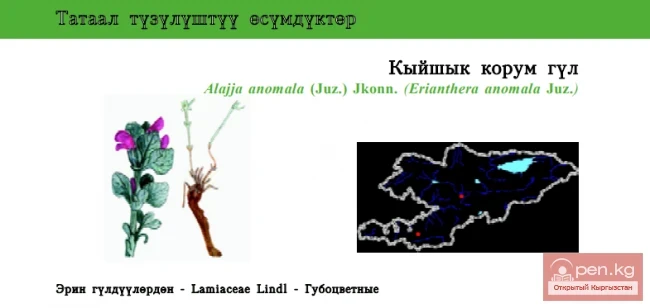
Alajja (Eryantera) Deviating / Kıyshyk Korum Gul / Anomalous Alajja
Anomalous Alajja (Erianthera anomala) Status: VU. Endemic to the mountains of Central Asia. A rare...
Schennikov's Otostegia
Schennikov’s Otostegia Status: VU. A rare endemic species, endemic to Kyrgyzstan with a disjunct...
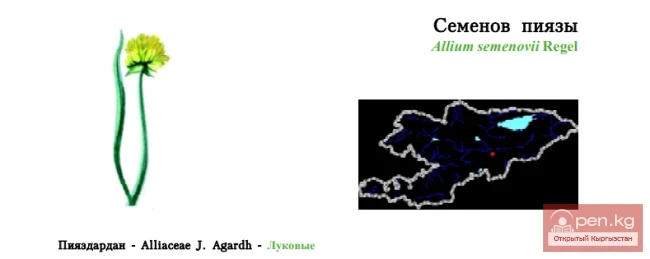
Semenov's Onion
Semenov’s Onion Status: VU. Endemic to the Inner Tien Shan....
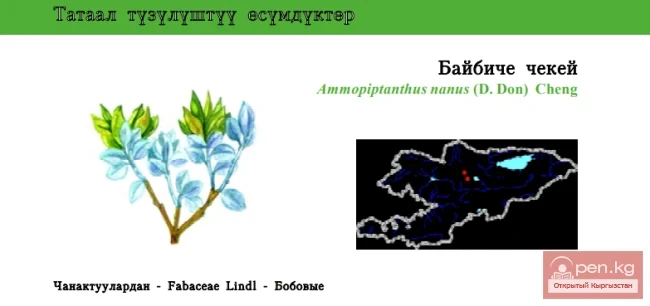
Dwarf Ammopiptanth / Baibiche Chekey / Ammopiptanth Dwarf
Dwarf Ammopiptanth Status: EN. A rare species with a disjunctive range. One of two known...
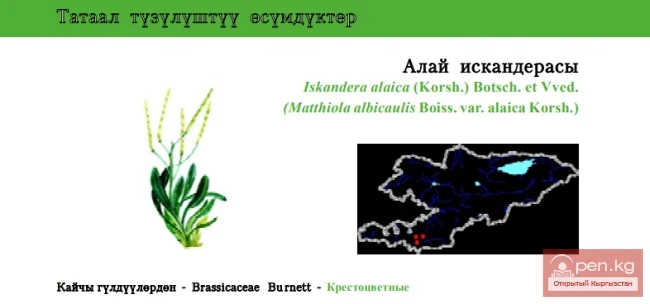
Iskander of Alai / Alai Iskander / Alai Iskander
Iskandera Alai Status: VU. A very rare narrow endemic species. There is only one species of this...
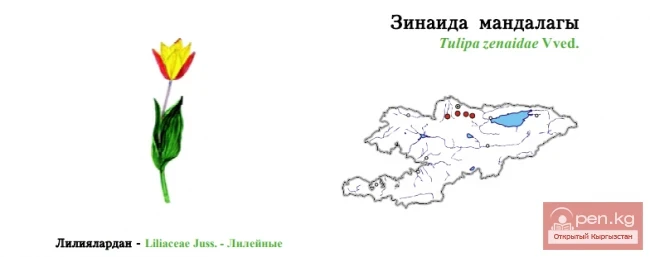
Zenaida's Tulip / Zinaida Mandala
Zenaida’s Tulip Status: VU. A narrowly endemic species of the Kyrgyz Ridge, at risk of rapidly...
Narrow-skulled Field Mouse - Momoloylordun
Narrow-headed Vole (Kyr cheke momoloy). Body length up to 125 mm, tail length up to 40 mm (from...
Niedzvetzki’s Apple-tree \ Red-leaved Apple
Niedzvetzki’s Apple-tree Status: VU. Very rare, endemic, endangered species with a small...
Alai Bubblefish / Alai Physocline / Alai Physochlaina
Alai Bubblewort Status: VU. A rare narrowly endemic species....
Wrapped Alpine Saw-wort
Wrapped Alpine Saw-wort Status: VU. Rare species. Found in Kyrgyzstan at the edge of its range....
Land Resources. Their Role in Nature and Human Life.
Land resources refer to lands that are systematically used or suitable for use for economic...