Qualities of Pasture Grasses
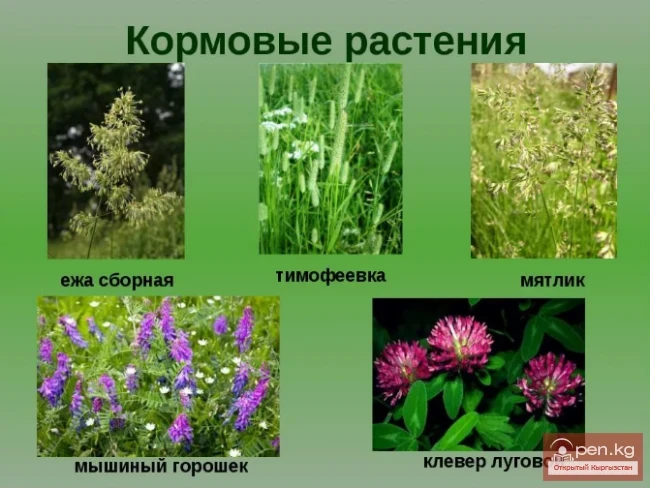
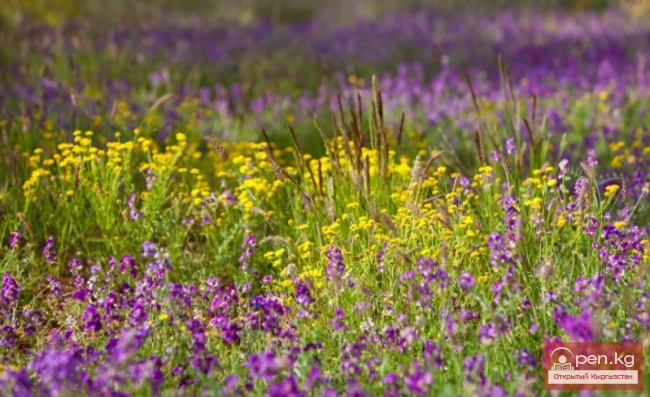
The foundations of the herding system for livestock grazing, widely recommended by modern botany, were established and used by the Kyrgyz for a long time. They had a good understanding of the qualities of pasture grasses and their usefulness for livestock. For example, regarding sedge grass, the Kyrgyz said: "Until a horse grazes on sedge pastures, it does not gain fat."
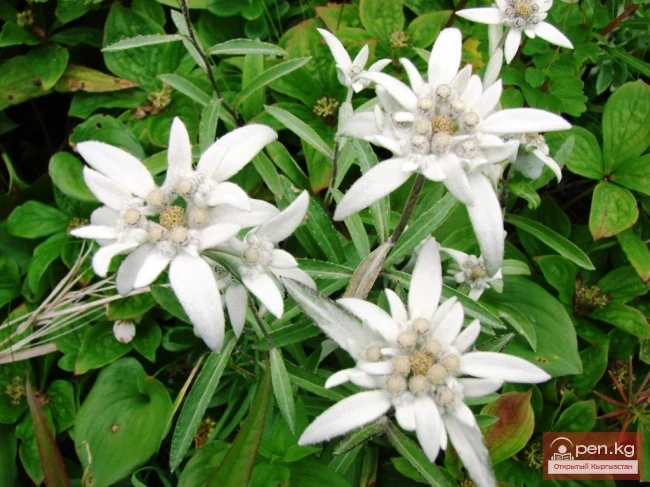
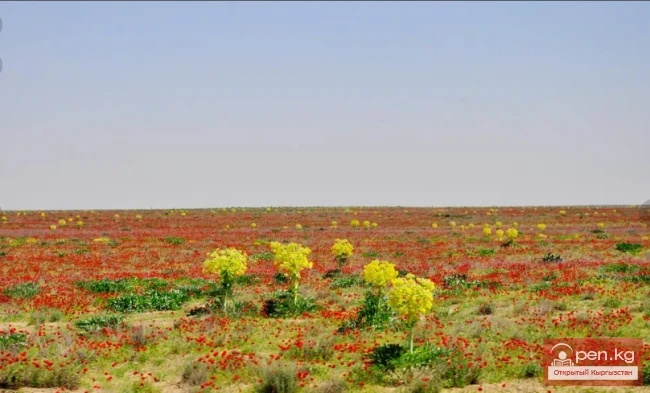
Pastures where feather grass or fescue grows abundantly were considered the best. Feather grass pastures are geographically widespread—from the Danube (Romania, Hungary, Poland) to Transbaikalia. In the CIS countries, feather grass grows over vast territories: in the Black Sea region, the Lower Don, the Lower Volga, Crimea, the Caucasus, and Western Siberia. In Kyrgyzstan, feather grass grows on all the ridges of the Tien Shan and Alai, from the foothill semi-deserts to high mountain subalpine and alpine meadows and meadow-steppes.
Ak-shybak — Tien Shan wormwood — is a late-developing plant. In the autumn-winter period, it has more protein, fat, and less fiber than other forage plants during this time, which is why wormwood pastures are considered good autumn-winter pastures.
On rocky and sandy southern slopes — the southern side of the mountains and the foothills — where there is usually little snow, besides wormwood, there is abundant growth of teresken, kochia, salsola — kuduruk, and many other grasses and plants. Here are located indispensable autumn-winter pastures for small livestock.
In early spring, the best pastures for horses are tulan — feather grass. In winter, horses graze on grass, scattering snow with their front hooves and breaking ice.
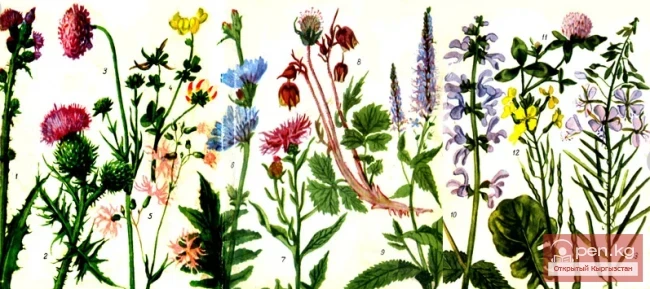
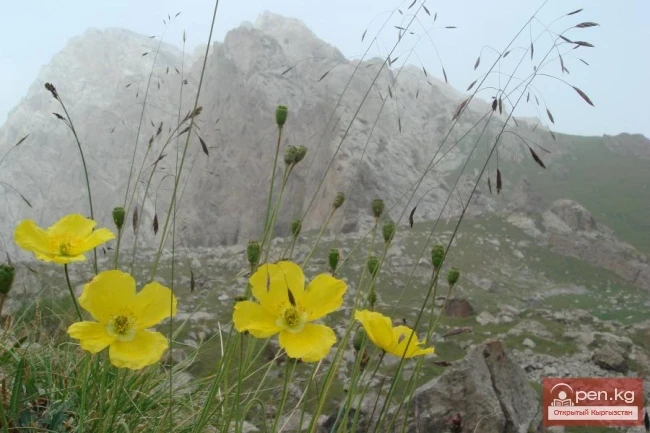
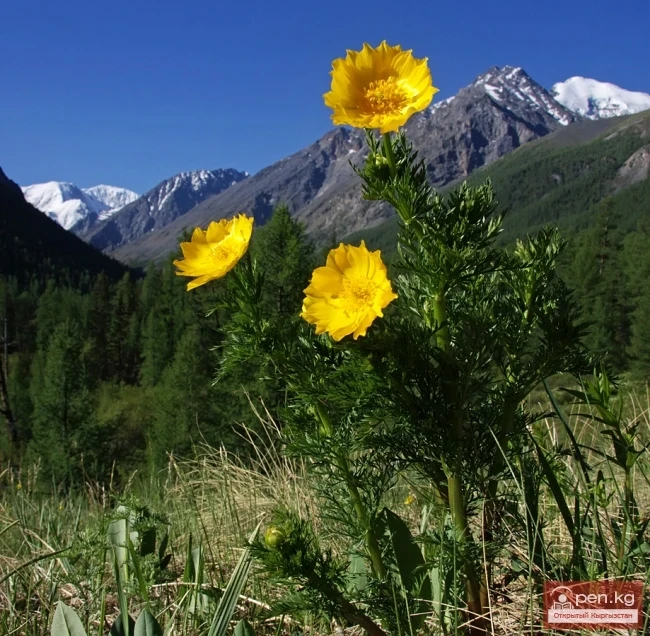
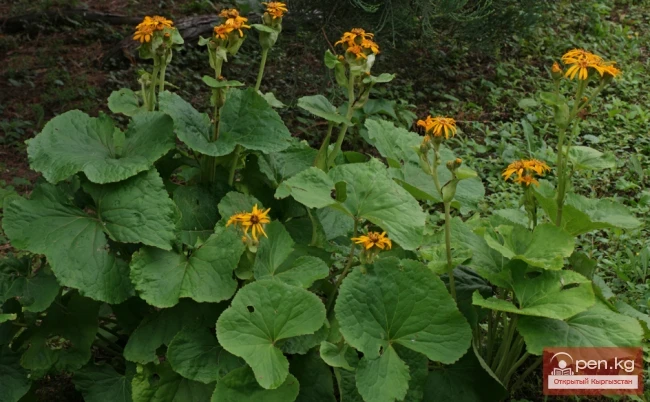
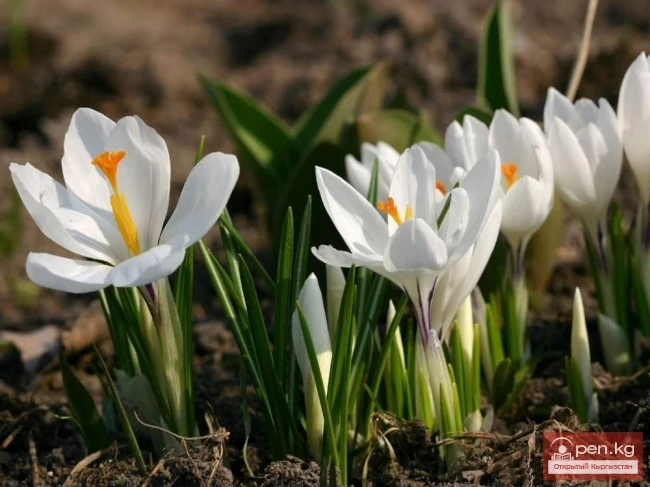
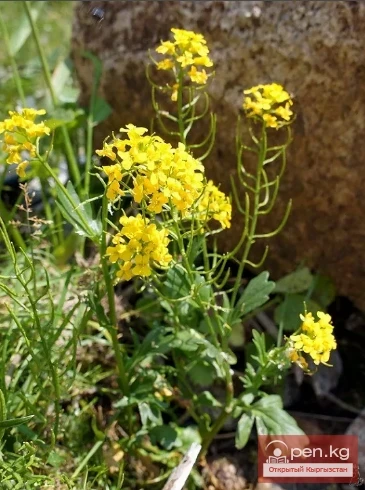
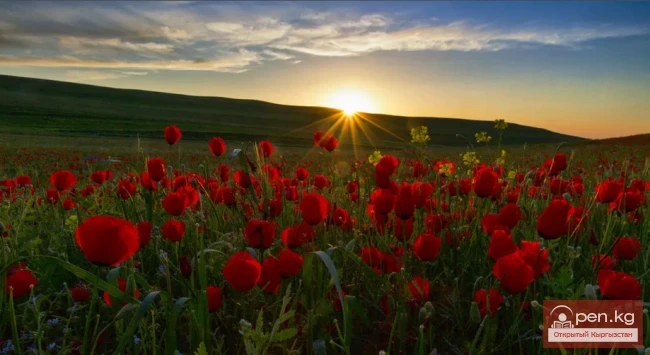
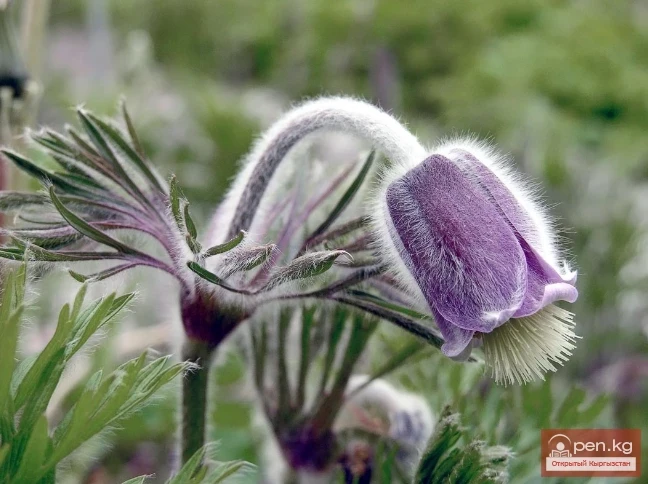
The first spring shoots of all plants that have just awakened to life are called kok chykty by the Kyrgyz, or simply baichchekey. Buttercups, snowdrops (crocus, or winter aconite), irises, and others bloom first. The appearance of baichchekey was a sign of the arrival of spring, which people eagerly awaited.
The cutting of grass and haymaking was mainly done by herders during the flowering period; at this time, the nutritional value of the grasses is very high, and they are well consumed by livestock. Modern science has established that grasses in the milk ripeness phase contain more proteins, fats, and carbohydrates than in other phases. However, during the full ripeness period, the content of these substances decreases, while the fiber content increases. Therefore, when feeding during this period, animals leave a lot of waste — mash.
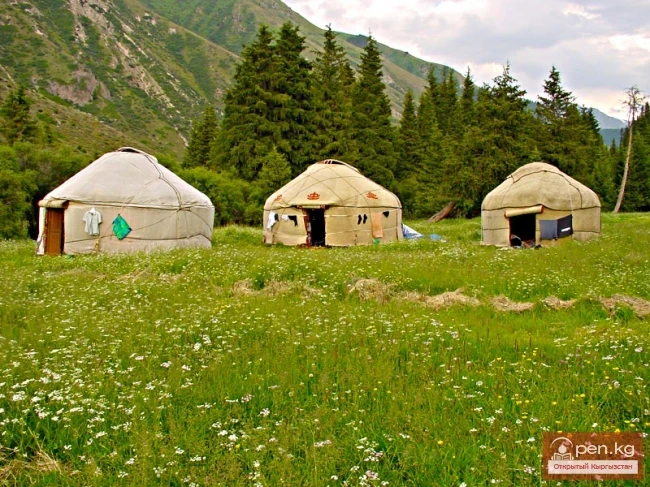
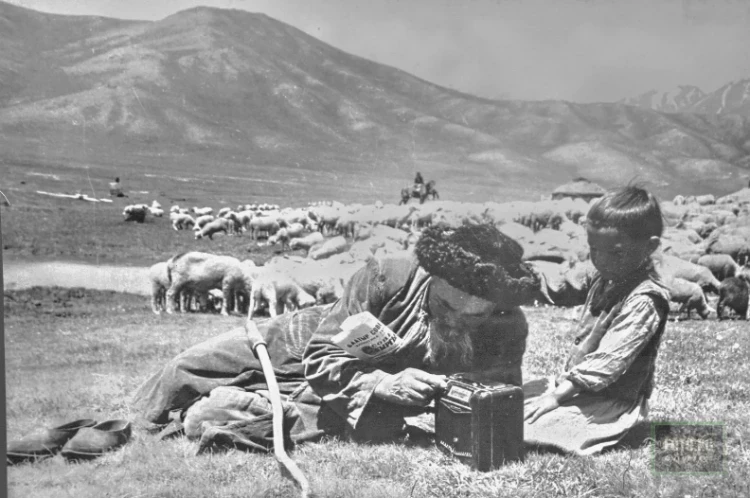
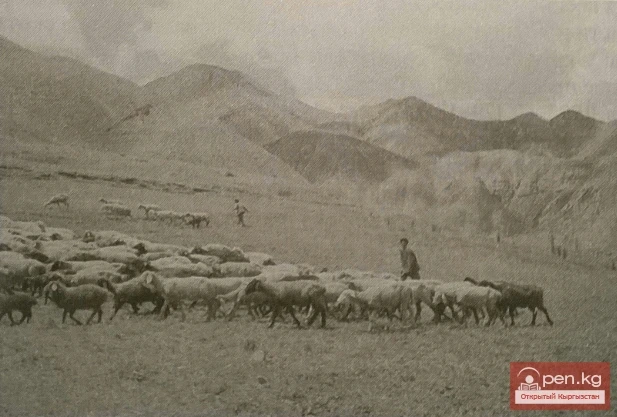
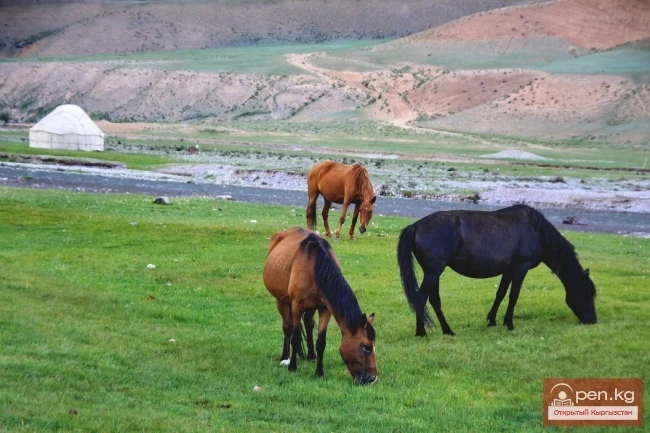
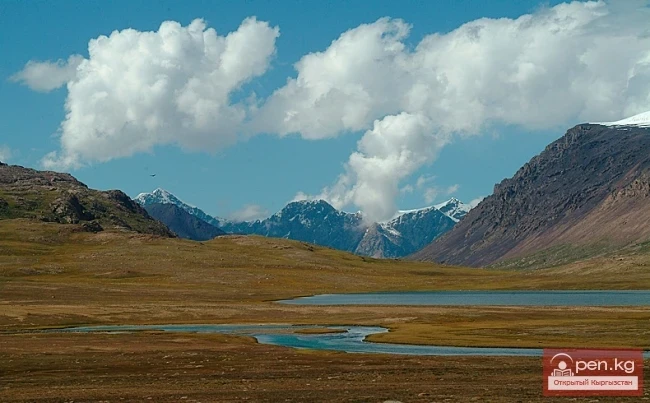
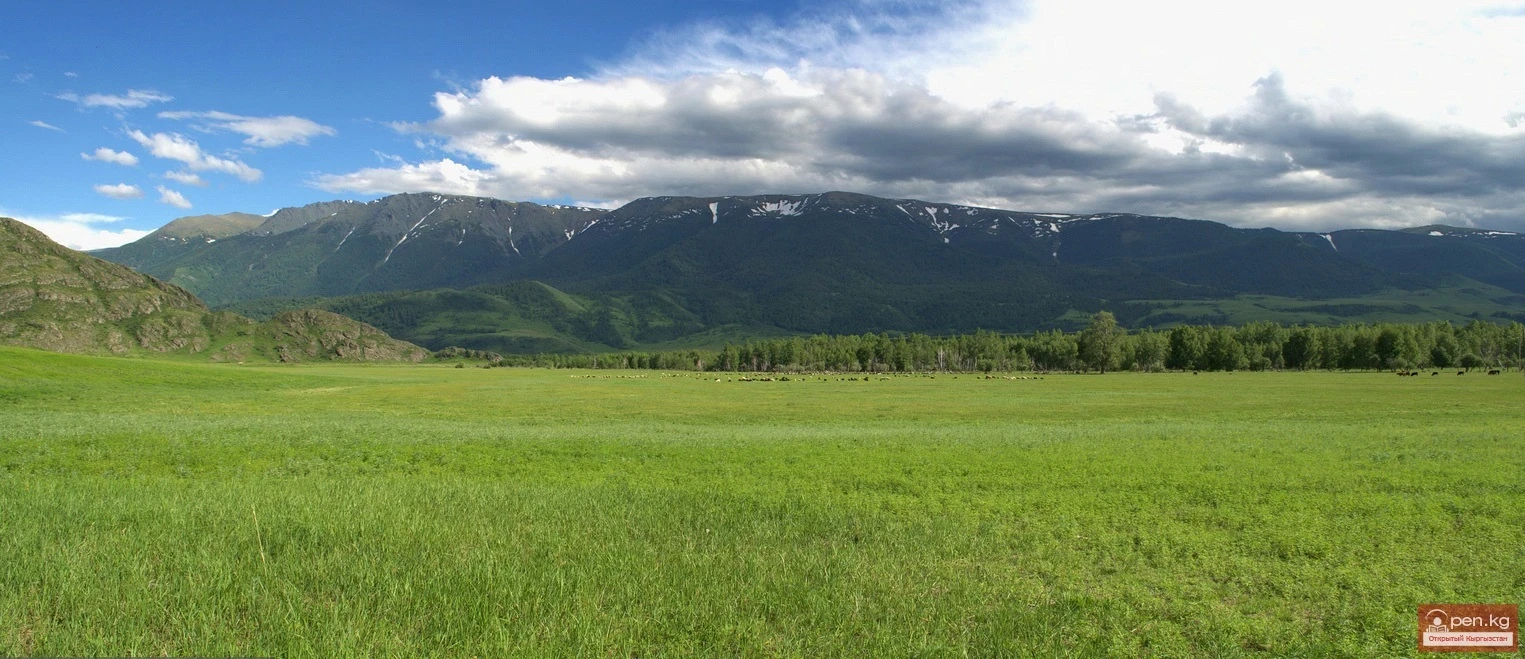
The centuries-old, life-tested experience of the Kyrgyz herders in year-round livestock maintenance on pasture feed has not lost its significance. Thousands of flocks, herds, and cattle graze in the hollows, on the slopes of the Tien Shan mountains, at Issyk-Kul, in Pamir-Alai, and Talas.
The widespread and universal use of plants as food, medicine, fodder, and fuel indicates that the Kyrgyz gradually learned, mastered, and skillfully utilized the flora of their region. Modern botany often employs the empirically obtained pre-scientific knowledge of the Kyrgyz in this field.
Read also:
Use of Pastures by Kyrgyz People
The natural conditions themselves suggested how to use the pastures more effectively, considering...
Forage Plants of Kyrgyzstan
FORAGE PLANTS Forage plants constitute the most numerous and important group of useful plants in...
Botanical Knowledge of the Kyrgyz
Plants are the primary source of life on Earth. Using solar energy, water, and carbon dioxide,...
How the Ancient Kyrgyz Made Soap
The history of cultural development of humanity knows that ancient people, in a certain sense,...
Plants of the Jailoo
In translation from Kyrgyz, "jailoo" means summer pasture. What else do you think this...
Annual Cycle of Nomadic Herding among the Kyrgyz
Ail before migration. Osh region, Alai valley. 1930. Annual Cycle of Pastoral Livestock Breeding...
Fauna and Flora of Kyrgyzstan
The plant and animal world in the territory of the republic is characterized by great diversity....
Honey Plants of the Forests, Meadows, and Shrub Thickets of Kyrgyzstan. Part 1
Honey Plants of Forests, Meadows, and Shrub Thickets The honey flora in the forests, meadows, and...
The Work of the Kyrgyz SSR on the Development of Public Animal Husbandry During the Great Patriotic War
Animal Husbandry The main direction in the multi-sector agricultural production of Kyrgyzstan was...
Composition of the Kyrgyz Herd
Composition of the Herd Kyrgyz people raised horses, sheep, yaks, goats, camels, and cattle. For...
The Transition of the Kyrgyz to Sedentary Life
Sedentary Life among the Kyrgyz The transition to sedentary life, being an extremely complex...
Natural Resources of the Kyrgyz in the Bronze Age
The main landscape of Kyrgyzstan consists of mountains. Enclosed mountain valleys are surrounded...
The migrations of Kyrgyz people from winter encampments to spring and summer pastures
Migrations of Kyrgyz to Jailoo A significant event in the life of nomadic Kyrgyz was the migration...
Honey plants and pollen carriers of the deserts, semi-deserts, and steppes of Kyrgyzstan
Honey Plants and Pollen Sources of Deserts, Semi-Deserts, and Steppes In the zone of deserts,...
Inulin-bearing Plants of Kyrgyzstan
INULIN-BEARING PLANTS A number of plants containing inulin— a substance that converts to sugar...
Guttapercha Plants of Kyrgyzstan
GUTTA-PERCHA PLANTS As is known, gutta-percha, or gutta, is the milky sap of gutta-percha plants....
Cattle Breeding among the Kyrgyz
Migration in the Alai Range. Early 20th century. Kyrgyz SSR HERDING The leading sector of the...
Insecticidal and Rodenticidal Plants of Kyrgyzstan
INSECTICIDAL AND RODENTICIDAL PLANTS “This group includes plants that produce toxins for combating...
What Do the Mounds of Preissykul Talk About?
Internal Political Struggle of the Usuns for Supreme Power The internal political history of the...
Desert Plants of Kyrgyzstan
The very word seems to suggest: empty, hence the desert. In Kyrgyz, it is approximately: чёль...
Analysis of the Flora of Kyrgyzstan
50% of the Flora of Kyrgyzstan Consists of the Largest Number of Useful Species Analyzing the...
Vegetation of the Chui Region
The Chuy Valley and the northern slope of the Kyrgyz Range is one of the most studied areas of the...
Cattle Breeding Cults of the Kyrgyz in the Early 20th Century.
Forage Preparation Forage preparation became widespread in the late 19th century due to a lack of...
Dye Plants of Kyrgyzstan
DYEING PLANTS Many plants in Kyrgyzstan contain dyeing substances. There are more than 80 species...
"Internal Dualism" of the Kyrgyz Nomadic Communities
Practice of Material Support for Economically Weak Members of the Community Communities were...
Cultural Food and Vitamin-Rich Plants of Kyrgyzstan
FOOD AND VITAMIN-BEARING PLANTS Cultural food and vitamin-bearing plants cultivated in Kyrgyzstan...
Honey Plants of the Forests, Meadows, and Shrub Thickets of Kyrgyzstan. Part 2
Honey Plants of the Forests, Meadows, and Shrub Thickets Shrubs play a significant role,...
Starch-Producing Plants of Kyrgyzstan
STARCH-BEARING PLANTS Among the numerous wild plants of Kyrgyzstan, there are also starch-bearing...
The Influence of Stars on People's Lives
Tootaydyn Ogu (stars I and V, located below the Belt of the Three Kings). The ancient Kyrgyz were...
Steppe Plants of Kyrgyzstan
Much larger areas than deserts and semi-deserts are occupied by steppes in Kyrgyzstan, which are...
Fibrous Plants of Kyrgyzstan
FIBROUS PLANTS The most valuable fibrous plants in Kyrgyzstan are cultivated species — cotton,...
Tanning Plants of Kyrgyzstan
TANNING PLANTS Despite the current rapid development of chemistry and the creation of many...
Honey Plants of Kyrgyzstan
HONEY PLANTS A significant support in the implementation of the Food Program comes from products...
Beneficial Oilseed Plants of Kyrgyzstan
OILSEED PLANTS The most valuable oilseed plant is the arugula (wild rocket). This biennial plant...
The History of the Economy of Southern Kyrgyz in the 19th Century
In the history of the economy of southern Kyrgyzstan, the 19th century was a turning point: they...
Cattle Breeding among the Kyrgyz before the 20th Century
Curl error: Operation timed out after 120001 milliseconds with 0 bytes received...
Natural Plants of Kyrgyzstan
Natural Flowers in Kyrgyzstan Every year, the number of true nature enthusiasts increases, who...
Knowledge in the Field of Practical Chemistry
In folk medicine, compounds of mercury have long been used: sulaim (HgCl2), calomel (Hg2Cl2),...
The Plant World of Kyrgyzstan
Flora of the Republic of Kyrgyzstan The totality of all plant species is called flora. The...
Essepchi Nasyr Ake - Weather Predictor from Alai
Essepchi Nasyr Ake from Alai paid great attention to the plant and animal world for the purpose of...
Essential oil plants of Kyrgyzstan
ESSENTIAL OIL PLANTS Despite the sharp increase in the production of synthetic fragrant substances...
Resinous Plants of Kyrgyzstan
RESINOUS PLANTS One of the interesting and little-studied groups of useful plants in Kyrgyzstan is...
Cattle Breeding Among the Kyrgyz in the 20th to Early 21st Century
Migration near the village of Troitskoye. Kara-Kyrgyz. Syrdarya region. 1902. Animal Husbandry in...
Sugar-producing plants of Kyrgyzstan
SUGAR-BEARING PLANTS In Kyrgyzstan, there are no wild sugar-bearing plants from which sugar is...
Saponin-bearing Plants of Kyrgyzstan
SAPONIN-CONTAINING PLANTS Among the many useful plants of Kyrgyzstan, there are those that contain...
The title "Сырты Тянь-Шаня" translates to "The Ridges of the Tian Shan."
Syrty - the magnificent pastures of Kyrgyzstan In the valleys of the Arabel-Su and Kumtor rivers,...
Terskey Alatau, Tian Shan
Journey through the Terskey Alatau and Tian Shan...