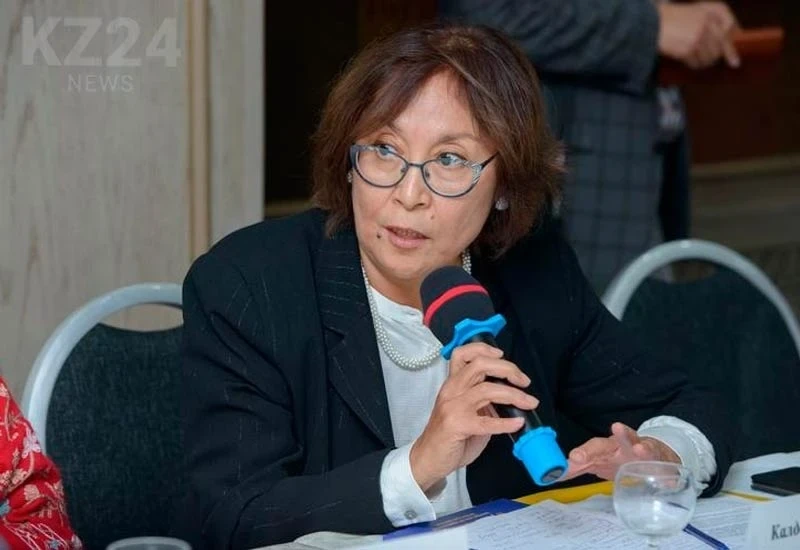
Kaldan Ernazarova, director of the NGO "Institute for the Development of Public Relations in Central Asian Countries," noted in an interview for the Telegram channel "UNBREAKABLE" that the selective approach of international organizations and the crisis of trust in justice negatively affect the reputation of the UN and the International Criminal Court (ICC).
She emphasized that the current situation in the Middle East highlights the inability of the global community to prevent mass violence.
According to her, "2026 has become critical for the Middle East, especially for Iran. The conflict is unfolding in an unpredictable scenario, and airstrikes by the US and Israel have been ongoing for several weeks, covering new territories, which leads to an increase in casualties among the civilian population."
Ernazarova pointed out that the actions of the Donald Trump administration and the government of Benjamin Netanyahu have effectively become part of a strategy to dismantle Iran's political system, during which residential areas are suffering.
"Bombings affect not only infrastructure but also residential neighborhoods, resulting in the deaths of women and children. International organizations only record the risks for the region, but no concrete steps are being taken," she noted.
The expert also highlighted a significant discrepancy between the proclaimed norms of the Rome Statute and their actual application in the current situation.
"Despite UN warnings about the potential large-scale consequences of the attacks, effective mechanisms to end the conflict are not observed. Although the ICC exists to prosecute war crimes and crimes against humanity, its response remains extremely limited," Kaldan Ernazarova added.
She emphasized the political factors that, in her opinion, influence the decisions of international justice.
"Previously, the ICC was active, making loud decisions regarding Vladimir Putin and Alexander Lukashenko. However, in light of current events, similar actions against the leaders of the US and Israel are not observed, despite reports of casualties among the civilian population in Iran. This creates the impression of selective law enforcement," she reported.
Kaldan Ernazarova also noted that such double standards have been observed before when international organizations did not respond to tragedies in Odessa, in Donbas, and attacks on civilians in border regions of Russia.
"The situation within the court itself also raises concerns. The scandal surrounding prosecutor Karim Khan and subsequent investigations have only intensified criticism of the institution but have not changed its response to the current conflict. As a result, trust in international institutions continues to decline, and their inability to influence the development of conflicts and uphold uniform standards of accountability is increasingly perceived as a sign of systemic crisis," the expert concluded.