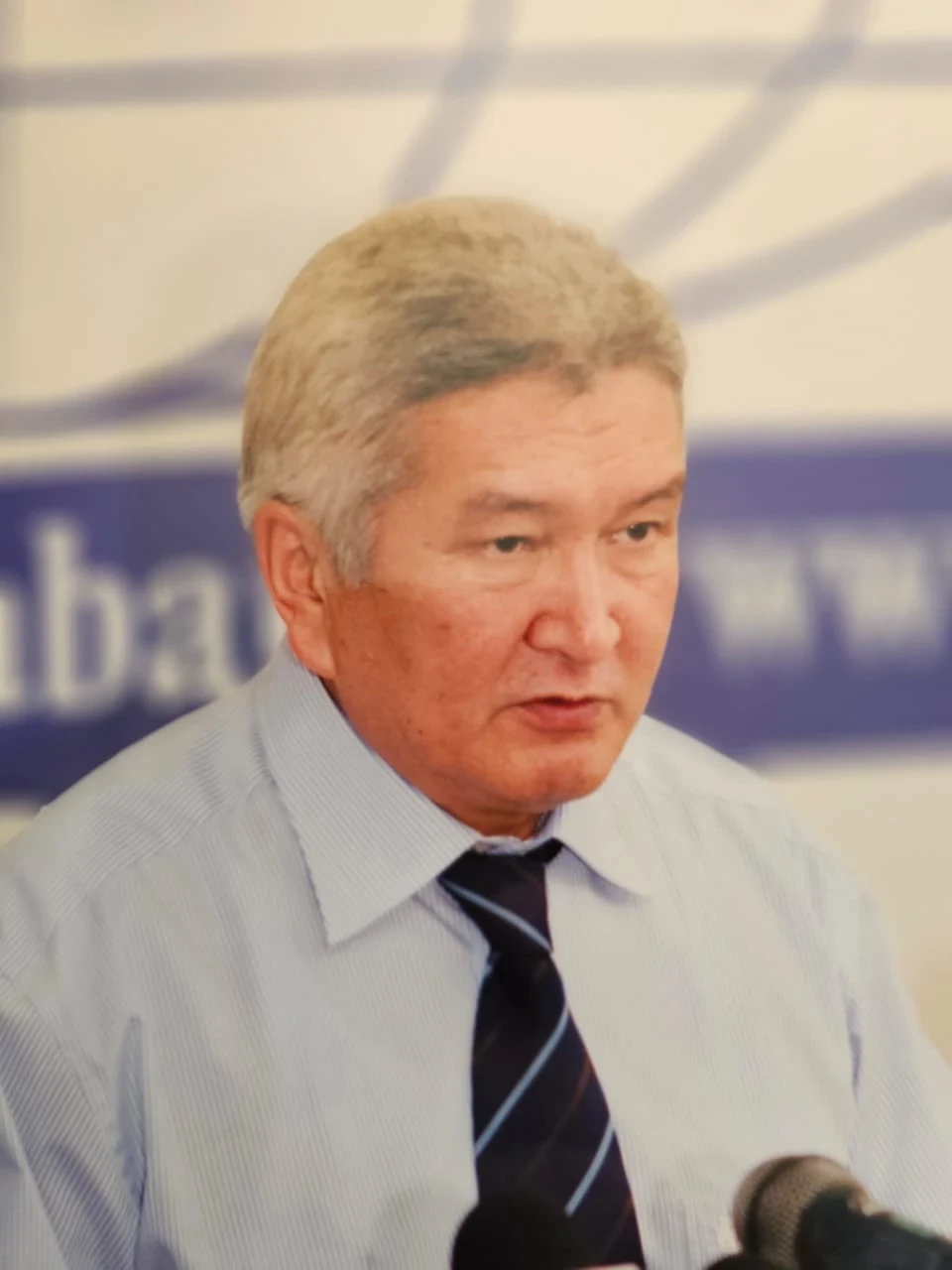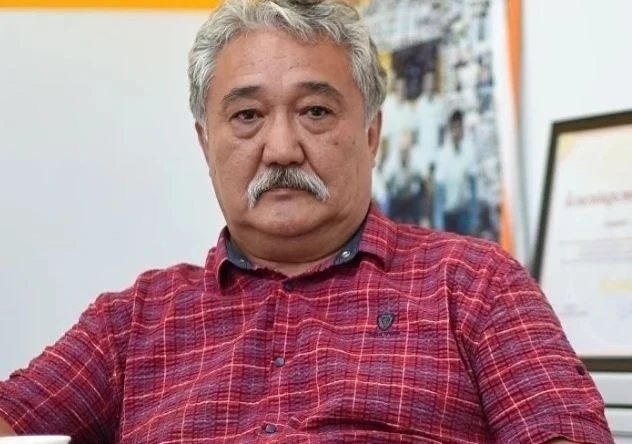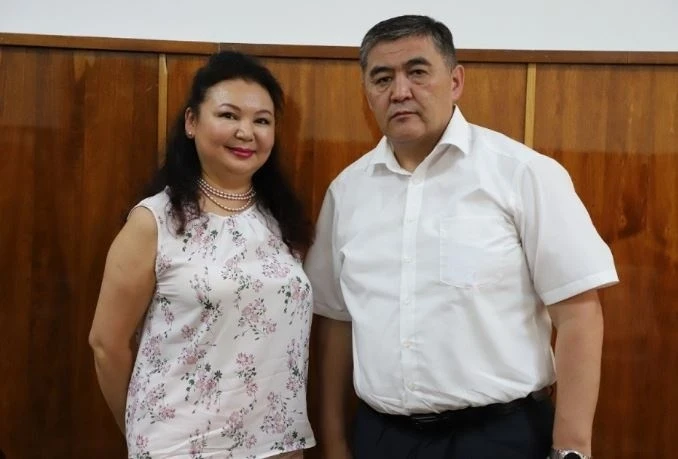
Not only has Leila Saralaeva become a prominent figure in light of the recent reforms in law enforcement agencies, but also other representatives of the so-called info-gypsies, whose main goal is to create conflicts and disagreements for profit.
Leila, once a well-known Kyrgyz journalist, now positions herself as a blogger and "expert" for dubious foreign media, actively responds to questions from her followers. However, many of them ask logical questions: why is she so aggressive? Why is her attention focused solely on criticizing high-ranking officials? Are there no other pressing issues?
In response, Leila says: "I tried to become a deputy, but I was not elected. Only 211 voters voted for me"…
Herein lies the essence. This explains her constant attacks on the current government in Kyrgyzstan, which she left while expressing dissatisfaction and aggression.
What happened? Why did such a "smart and beautiful" activist, who opposes the regime, receive votes from only a "wonderful" few? Where were the rest of her fans for whom she conducts such a vigorous activity on social media? Apparently, her popularity and authority are not that great, and she has to resort to such cheap methods to earn money.
As the ancient Romans said, money has no smell. The same applies to bloggers like Saralaeva, who do not think about whom to criticize for the sake of obtaining grants. They take on any target as long as it brings income. Notably, another well-known Kyrgyz journalist, the wife of Bolot Temirov, also recently got released from custody and immediately announced plans to expand her investigations to an international level.
Whether this will be successful depends on who and how much will pay. Interestingly, Mahabat Tajibek kyzy, who gained freedom thanks to the support of international organizations, did not express gratitude to the president. Leila, on the other hand, claims that the decision was made under pressure from international structures, which may imply that the president of Kyrgyzstan, Sadyr Japarov, played no role in this process.
Girls, do you hear yourselves?
Meanwhile, in Russia, actor Mikhail Efremov made his return to the stage after his conditional early release. Director Nikita Mikhalkov thanked President Vladimir Putin for this event. Interestingly, could he also mention the international organizations that pressured Putin?
Kyrgyz activists and bloggers seem to refuse to acknowledge their state and its laws. Politician Irina Karamushkina, convicted for bribing voters and the events in Koy-Tash, appealed to the president for clemency, despite not admitting her guilt. This raises questions about whether clemency can be discussed in such a context.
Felix Kulov also commented on this in a strange way, stating that the president does not need to rely on laws. What do you want from the president? For him to abide by the laws or to act at his discretion based on emotions?
The president tries to act within the framework of the law, but for this, he faces criticism for a lack of empathy. As soon as he ignores the law, a barrage of accusations falls upon him. And those who yesterday called for violations "in the name of humanism" begin to demand his resignation.
Returning to Leila, over the past couple of years, she has not ceased to attack the government from sunny Tbilisi, trying to reach Kamchybek Tashiev. Like other activists, she has called for reforms and personnel changes in law enforcement agencies.
And now these changes are beginning. The president has initiated a large-scale reform of the GKNB aimed at restoring legality and professionalism. But Leila is dissatisfied again. She does not like the new personnel policy and even the manner of the press service. She also expresses dissatisfaction that the Ministry of Internal Affairs is actively opening new facilities instead of the GKNB.
It seems that she is concerned not about the process itself, but about personal ambitions. Why, with such skills, was she not appointed to a leadership position in the GKNB? Why didn’t the president consult her when making decisions?
A person who held the second most important position for five years has left, and those who are ready to work differently have come in. The president, having decided to return everything to a legal framework, faces constant criticism from info-gypsies whose task is to create discord. Their goal is to undermine the stability that the government strives for, and this activity is funded by interested international organizations and dissatisfied oligarchs.