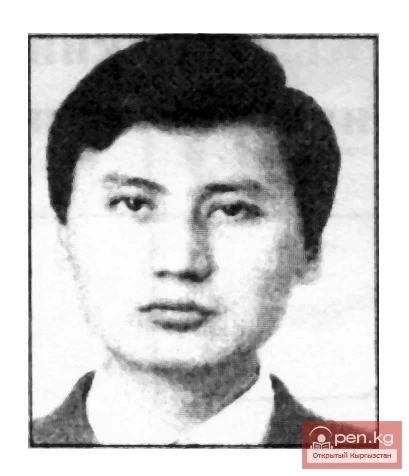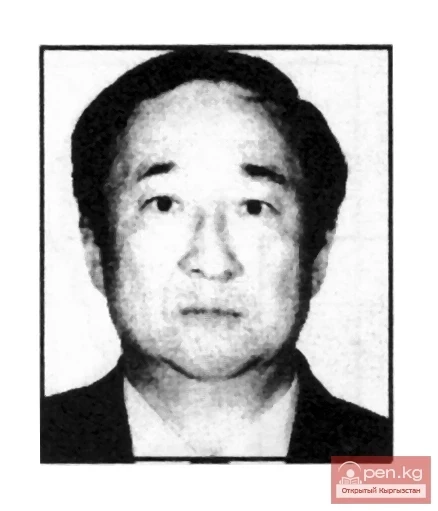
As a master of the chamber psychological portrait, David Vladimirovich Kheidze laid the foundation for the development of easel and monumental sculpture in southern Kyrgyzstan. Possessing a solid professional background and a realistic vision of form, the sculptor primarily emerged as a master of the chamber psychological portrait. Understanding the tasks of the portrait genre in the spirit of the traditions of Russian democratic art, he cares in his works about the accuracy of the plastic characteristics of a specific person and the expression of his attitude towards them. In Kheidze's best portraits, he combines the distinctiveness of the model with typical generalization, achieving substance and artistic persuasiveness of the image.
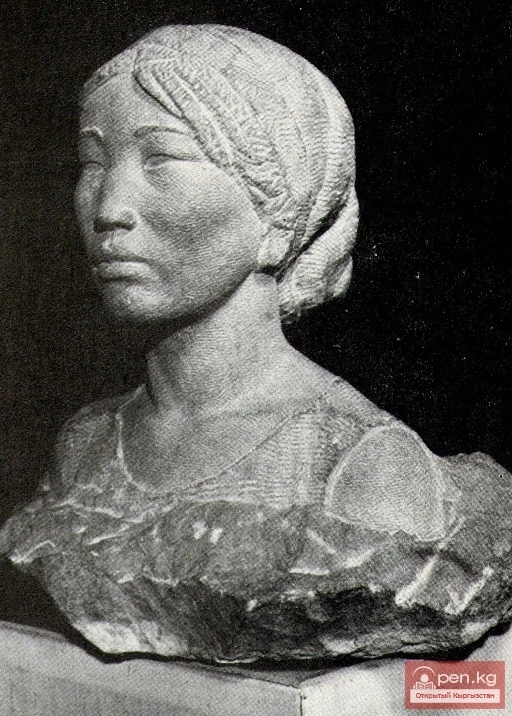
One of the brightest works of the sculptor is distinguished by its realistic fullness — "Portrait of Erkaim Turdubaeva, Spinner of the Osh Cotton Mill" (1969, stone, fig. 230), where the image of a contemporary worker is interpreted as deep, integral, psychologically rich, affirming a sense of dignity and confidence of a person in socialist society. The plastic language of the sculptor here is weighty, significant, and at the same time sensitive to the flow of the inner life of a specific person.
In the cycle of portraits of Kyrgyz artists, Kheidze emphasizes the spiritual concentration of each, attentively and lovingly revealing the plastic essence embedded in the model, highlighting through the expressiveness of the volume of the head and the plasticity of the face the individuality of the creative nature and his empathy. Among such works stands out "Portrait of Artist A. Beishenov" (1971, copper). Here, not only the external resemblance to the model is conveyed, but also the character of a person inclined to lyrical contemplation, his emotional delicacy, manifested in the subtle play of feelings on the expressive face. The "Portrait of Tolubai Jammanov" (1971, plaster) is endowed with imagery and wholeness of form, presenting a charming image of a young man with a beautiful face and an independent, strong-willed character.
The modest individual appearances of young workers in Kyrgyzstan, their naturalness, kindness, and openness of character are embodied in works such as "Dairymaid" (1971, limestone), "Portrait of T. Jalilov" (1971, plaster), "Zulai" (1979, stone). The composition "I Am a Cotton Picker" (1978, wood) is original, preserving the liveliness of natural impressions and executed with a sense of humor.