Healing Springs
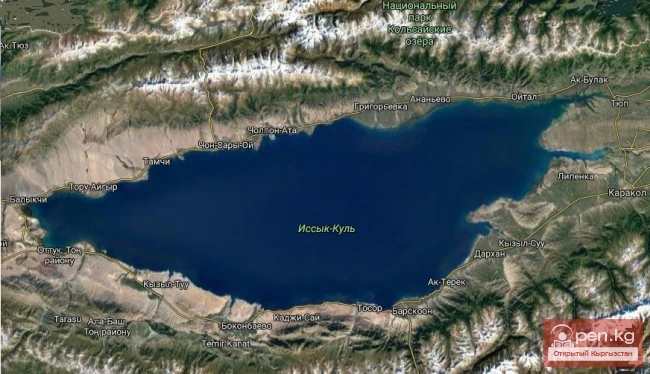
On a hot summer day on the shores of Lake Issyk-Kul, one can observe a strange sight. Adults, seemingly respectable, walk covered in mud. Their legs and arms are especially abundantly coated in clay. Some even manage to smear their bellies. Others—what a wonder!—completely bury themselves, leaving only their heads above the fine sandy shore of the lake.
But do not doubt, any tourist will do the same upon learning what it is all about.
In the famous Code of Health, known as the Salernitan Code, written in the 14th century by the philosopher and physician Arnold of Villanova, the results of centuries of observations on the effects of natural factors on the human body are summarized.
"When your hands awaken, wash them and your eyes with cold water. Walk moderately back and forth, stretch, and straighten your limbs. Comb your hair and brush your teeth. All this strengthens the mind and infuses strength into the other limbs. Take a bath, and after eating, walk or stand; beware of cooling. The smoothness of springs and grass is a comfort to the eyes. In the morning, turn your gaze to the mountains, and in the evening—to the waters."
As we can see, the recommendations of doctors from the fourteenth century have hardly changed at all. Healing in harmony with nature—this commandment is still relevant today. However, the ancient physicians could not have imagined how mineral water, climate, and healing mud affect a person. Although for centuries people have traveled to natural springs to heal their ailments, they did so without knowing the essence of their effects, believing in them only because they brought healing.
In Kyrgyzstan alone, there is a rich variety of mineral waters: radon, carbonic, hydrogen sulfide, chloride, sodium, and others.
The "father of medicine," Hippocrates, also widely utilized natural factors. According to legend, Hippocrates' residence was on the island of Kos in Greece. The giant plane tree, under which the famous healer received patients and conversed with students, has survived to this day. Once, it was an entire grove, sheltering the majestic temple of the god Asclepius. Here, twenty-four centuries ago, the genius of medicine worked, creating his teachings, and whose oath is still recited by every physician today. The temple served not only for prayers but also for medical procedures, surrounded by many courtyards, each of which necessarily had pools for washing and therapeutic baths.
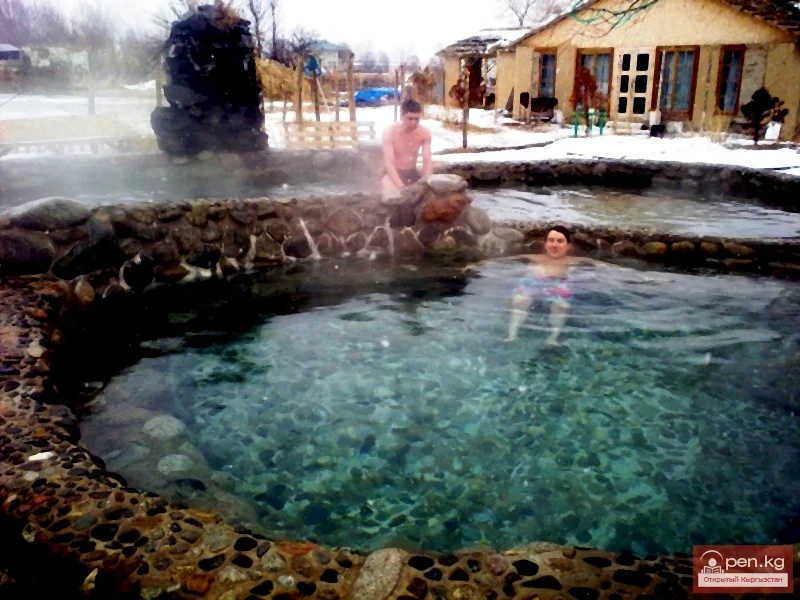
No matter where tourists travel in Kyrgyzstan, they will not miss the mineral water springs, of which there are many in the republic. The southern part of Kyrgyzstan and the Issyk-Kul basin are especially rich in mineral and thermal water deposits. For those travelers who understand their quality, it is possible to receive treatment right along the way. In general, balneotherapy can become a very attractive accompanying service for guests of the republic and local tourists.
Currently, most of the springs remain undeveloped. Only through the efforts of local residents have some of them been turned into balneotherapy centers. There are, of course, resorts, among which "Jalal-Abad," "Altyn-Arashan," "Issyk-Ata," and "Jety-Oguz" are well-known.
Among the mineral waters of Kyrgyzstan, there are many that, in their composition and taste qualities, are very close to the world-famous waters like "Borjomi" (Kulung, Terek springs, and several others), "Essentuki" (Konur-Tube, Seok, Kyzyl-Beles, Chavay), "Arzni" (Kolubek, Surtrash, Kara-Kuldja, Uselek, and others), "Lastochkin" (Karakol Western, Kara-Kuldja, Uselek, and others). The waters of the Sary-Jaz springs at the eastern end of the Inylchek ridge, Ak-Suu, sixteen kilometers from Karakol, Keregetash in the gorge of the Jilik River in the Issyk-Kul basin, Jili-Suu in the upper reaches of the Kodjo-Ashkhan River, and Sulyukta in the upper reaches of the Koz-Bala River in southern Kyrgyzstan, as well as Issyk-Ata in the Chui Valley and Alamedin near Bishkek, have temperatures exceeding fifty degrees in summer and winter. There are many springs with water heated above forty degrees. The sources of Kara-Shoro are intensively used.
Kyrgyzstan also has many deposits of healing mud—peat and silt—that can improve the nervous system, gastrointestinal tract, musculoskeletal organs, and liver. Almost all of them help with gynecological and urological diseases.
Almost all of these natural treasures are still waiting to be utilized for the benefit of people's health.
Read also:
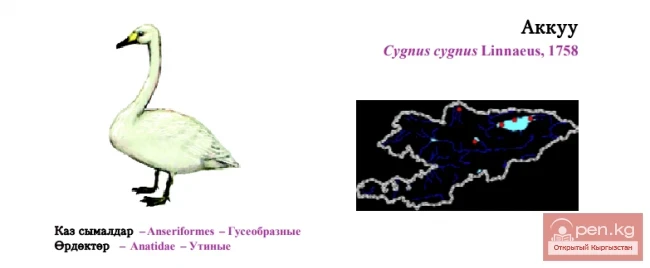
Whooper Swan
Whooper Swan Status: Category VII, Least Concern, LC. Rare breeding species. One of seven species...

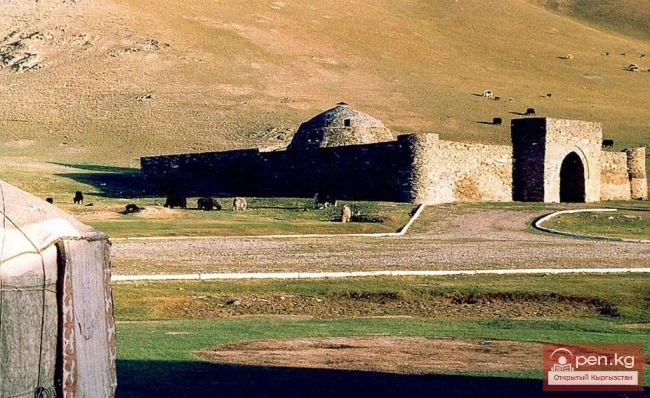
Attractions of Naryn Region
Historical-Architectural and Modern Attractions, as well as Natural-Ecological Complexes Cities...
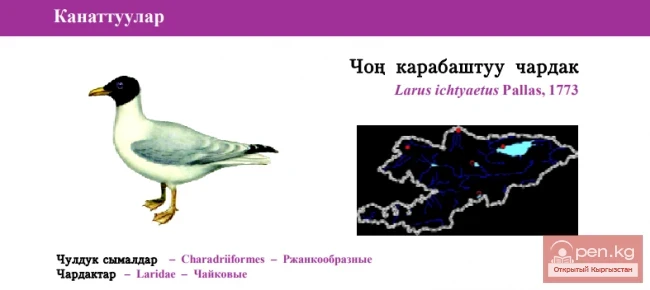
Black-headed Gull / Great Black-headed Gull
Great Black-headed Gull Status: VI, Near Threatened, NT: R. One of 6 species of the genus in the...
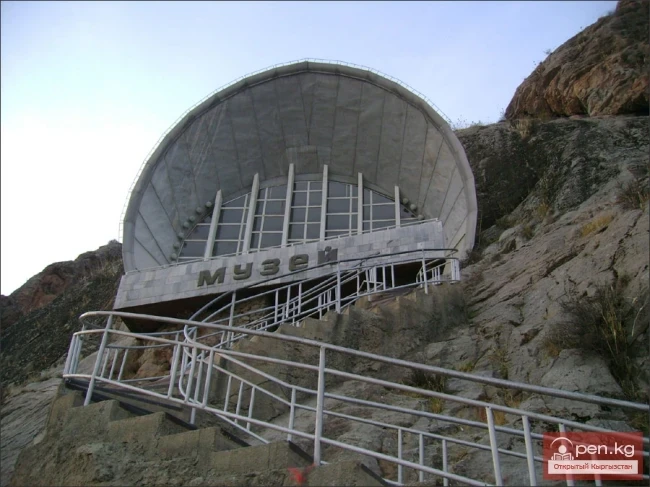
Attractions of Osh Region
Attractions of the city of Osh...
Issyk-Kul - the most beautiful lake in Central Asia
The most beautiful and largest lake in Central Asia is Lake Issyk-Kul. For this reason, it is...
Kulung Kol (Lake of the Foal)
A long time ago, high in the mountains at the foot of a gorge in Tar Alabyn (the Tar basin), there...
Issyk-Kul Marinka / Carp Fish / Issyk-Kul Marinka
Issyk-Kul Marinka Status: 2 [EN: D]. A rare taxon inhabiting Lake Issyk-Kul. Its...
Attractions of the Chuy Region
Natural and ecological complexes: Shamsi Natural Complex Ala-Archa National Park Chon-Kemin Zone...
Issyk-Kul Scaleless Osman / Kök Chaar, Ala Buga
Issyk-Kul Scaleless Osman Status: 2 [CR: D]. Lake form, very rare, critically endangered....
Usuni in Prissykul
Usuns This text will discuss the people of the Usuns. Few Central Asian-Kazakh ethnonyms have such...
Attractions of the Issyk-Kul Region
Historical and Cultural Monuments of the City of Karakol Attractions of the Southern Shore of...
Sako-Usun Period (5th century BC)
Late Medieval Period (14th—15th centuries). Saka-Usun Period (5th century BC). This period is...
Jayran / Zheiren / Goitered gazelle
Dzhayran Status: Category III, Critically Endangered, CR: R, Cl. An endangered or possibly extinct...
The Beautiful Country Known as Kyrgyzstan
Kyrgyzstan is a small country bordering Uzbekistan, Kazakhstan, and Russia. The main attractions...
Attractions of Batken Region
Mountains: Ak-Suu - Karavshin (Asian Patagonia)...
Unknown Saka Settlement on the Shores of Issyk-Kul?
Hypothesis—1985 At the bottom of the Tyup Bay of Issyk-Kul during the field season of 1985, we...
Lake Kel-Suu
Lake Köl-Suu in Kyrgyzstan: a fairy tale of mountains, a song of ice Lake Köl-Suu...
Summer in Kyrgyzstan
No one has seen Kyrgyzstan from such angles before. YouTube user Alexey Nikitin published a video...
Sarybulun Bead
Little Guest Such finds are not anticipated. They come from a fairy-tale land and are always...
Early Saka Finds from the Issyk-Kul Region of the VIII—VI Centuries B.C.
Early Saka Period (VIII—VI centuries BC). It is represented by metal artifacts: an amulet with a...
Krechetka / Cheł yzyty / Sociable Plover
Sociable Plover Status: III category, Critically Endangered, CR, A3bc. Endemic to Kazakhstan and...
Attractions of Jalal-Abad Region
Nature Parks and Reserves: Relict Walnut-Fruit Forests of Arslanbob Sary-Chelek Biosphere Reserve...
The State of Dawan
Davan. In the Fergana Valley, a powerful state emerged in the 1st millennium BC. In Chinese...
Black-throated Loon
Black-throated Loon Status: Category III, Critically Endangered, CR: R. Close to extinction in the...
Zhang Qian - "The Asian Columbus"
The Little-Known "Columbus of Asia" The name Zhang Qian is almost unknown to the general...
Transgressions and Regressions at Issyk-Kul
What fate awaits modern culture? We have talked about the tragic fate of just one sunken city in...
Sakpa / Balıkçı Kushu / Osprey
Osprey Status: Category VII, Least Concern, LC. A representative of a monotypic family and genus...
Central Asian otter / Kunduz / Common otter
Central Asian otter Status: III category Critically Endangered, CR: R, Cl. The subspecies Lutra...
Arguments in Favor of Identifying the Settlement of Sarybulun with Chigu
“The City of the Red Valley” In connection with the discovery of a large settlement from the 1st...
Chuya Sharp-wing / Uchtoo Kanat / Eastern Ostroluchka
Chuy Ostroluchka Status: 2 [CR: C]. Possibly already extinct in Kyrgyzstan, an endemic...
Is Sarabulun not the ruins of Chigu?
On which shore of Issyk-Kul was the ancient Chigu located? Sarybulun is the only known large...
Central Asian Frog / Kyzyl Koltuk Frog / Middle Asia Wood, or Asiatic Brown, Frog
Central Asian Frog Status: Category VUB1ab(iv). A mosaic-distributed species with a disjunct and...
How did the star Kurmandzhan Datka rise in the Islamic world?
LIFE AND BELIEFS OF THE KYRGYZ DURING THE TIME OF KURMANDZHAN DATKA And still, how did the star of...
Crane Beauty / Karkyra / Demoiselle - Crane
Demoiselle Crane Status: Category VI, Near Threatened, NT: R. One of two species of the genus in...
Japanese song dedicated to Kyrgyzstan
A Japanese song in the traditional Japanese genre of "enka," titled "Wanderer of...
Periods of Habitation of the Sarabulun Settlement
When was life flourishing? Even a brief overview of the material culture with a short excursion...
Chonbasheva Cholpon Keneshovna
Chonbasheva Cholpon Keneshovna (1959), Doctor of Medical Sciences (1998) Worked as a professor at...
Hymn to the Great Silk Road
1600 Years of the Great Road In the decades following the death of Zhang Qian, his plan of...
Discovery in the Tyup Bay Area
Bronze Items from the Bottom of Lake Issyk-Kul (VII—V centuries) Settlement at the Bottom of the...
Kolpitsa / Kashyktumshuktuk Kytan / Eurasian Spoonbill
Eurasian Spoonbill Status: VI category, Near Threatened, NT: R. The only representative of the...
Corncrake / Kadimki tartartook / Corncrake
Corncrake Status: Category VI, Near Threatened, NT. The only representative of the genus in the...
Common Water Shrew / Eurasian Water Shrew
Common Water Shrew Status: Category VI, Near Threatened, NT: R. A rare species for Kyrgyzstan,...
Zhang Qian in Chigu
The Nomads Retreat The third year of exile was coming to an end. Zhang Qian began to receive...
Findings Indicating the Construction of a Palace-Type Structure at the Issyk-Kul Settlement of Sarybulun
Sarybulun Palace at the Issyk-Kul Settlement The "Jianhanpu" contains significant...
Stone Tools of Sarabulun
Stone Tools of Sarybulun Even in the best books about the culture of ancient pastoralists, which...