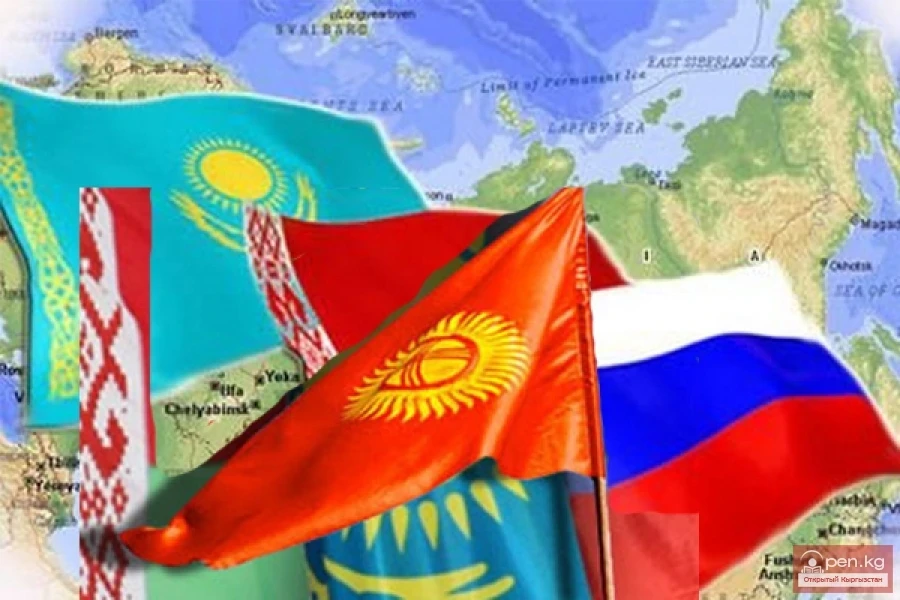
Currently, the Government of the Kyrgyz Republic is actively working on joining Kyrgyzstan to the Customs Union. In this regard, the Ministry of Economy of the Kyrgyz Republic informs about the conditions for the access of Kyrgyz goods (products) to the markets of the Customs Union countries from the perspective of technical regulation (standardization, certification, testing, accreditation, etc.) in the case of Kyrgyzstan's accession/non-accession to the Customs Union.
Technical regulation is one of the key sectors of integration with the Customs Union. One of the most important factors in forming such an integration association is the creation of a unified system of technical regulation (standardization, accreditation, certification, and metrology), which is intended to ensure the unhindered movement of safe and quality products within the territories of the Customs Union countries. To achieve this, it is necessary to coordinate a large number of issues, clarify the positions of the parties, and develop a comprehensive set of regulatory documents that ensure the protection of the market and consumers from dangerous products.
At the present stage, no issue related to the field of technical regulation in the world can be considered in isolation from integration processes. In this regard, on November 18, 2010, in St. Petersburg, members of the Customs Union Commission signed an Agreement on the unified principles and rules of technical regulation of the Republic of Belarus, the Republic of Kazakhstan, and the Russian Federation. This agreement represents a stricter system of integration than the model of the European Union, as the establishment of mandatory requirements for products becomes the prerogative of an exclusively supranational governing body of the Eurasian Economic Commission (EEC). National safety requirements for products will cease to be in effect after the adoption of the relevant regulatory documents by the EEC.
Currently, based on this Agreement, the EEC has adopted a number of technical regulations and a package of documents in the field of technical regulation.
To create conditions for a smooth transition from national to a unified technical regulation regime, since July 1, 2010, national and unified technical regulation regimes have been operating on an alternative basis in the territories of the Customs Union member states.
The unified regulation regime covers products included in the Unified List of products subject to mandatory conformity assessment (confirmation) within the framework of the Customs Union, with the issuance of unified documents confirming the safety of products approved by the EEC decision. This list includes the nomenclature of mutually supplied products by the Customs Union member states, as well as mass consumption products. The EEC has also approved a list of unified mandatory requirements through the application of voluntary standards and unified sanitary-epidemiological, hygienic, veterinary-sanitary, and phytosanitary requirements.
Under the national regulation regime during the transition period, products intended for sale only within the given state are subject to regulation.
To form a unified regulatory framework for the Customs Union, a decision has been made to cease the development of national technical regulations and concentrate efforts on the development and adoption of unified technical regulations of the Customs Union. On November 18, 2010, the Customs Union Commission approved a schedule for the adoption of 47 priority technical regulations of the Customs Union, as well as specific deadlines for their submission for approval to the EEC.
As of September 1, 2014, 34 technical regulations have been adopted in the Customs Union, of which 31 have come into force. According to the adopted technical regulations of the Customs Union, only accredited certification bodies and testing laboratories included in the Unified Register of accredited certification bodies and testing laboratories of the Customs Union have the right to conduct product certification and testing for the purpose of confirming compliance with unified requirements on its territory.
Each of the Customs Union member states has taken upon itself the right to determine the list of accredited certification bodies and testing laboratories for inclusion in the Unified Register, which must be recognized by each of the countries for the purpose of confirming compliance. For example, the Unified Register includes: 259 certification bodies out of 1038 and 291 testing laboratories out of 3046 – RF; 120 certification bodies out of 180 and 250 testing laboratories out of 500 - RK; 52 certification bodies out of 106 and 326 testing laboratories out of 3000 - RB.
Furthermore, most goods subject to sanitary control in the Customs Union must undergo state registration by the authorized bodies for sanitary-epidemiological supervision of the Customs Union countries before their importation into the customs territory, with the issuance of a registration certificate of a unified form of the Customs Union. At the same time, testing for compliance with the Unified sanitary requirements of the Customs Union must be conducted only in laboratories included in the Unified Register of certification bodies and testing laboratories of the Customs Union.
The Customs Union countries mutually recognize veterinary certificates issued in the Customs Union countries and do not recognize veterinary certificates from third countries, including CIS countries, the presence of which is one of the conditions for customs clearance of controlled goods. The veterinary control procedures for the importation of controlled goods into the Customs Union countries are much stricter than the procedures that existed before.
The same can be said regarding goods subject to phytosanitary control upon their importation. According to the new requirements, the Customs Union documents exclude the import quarantine permit for the importation of quarantine goods into the Customs Union countries, but this has been compensated by tightening the requirements for phytosanitary control by the state quarantine services of the Customs Union member states when importing quarantine goods from third countries.
Regarding Kyrgyzstan's accession to the Customs Union, it should be noted that the Customs Union represents a higher level of integration, and half of Kyrgyzstan's foreign trade turnover is with the Customs Union countries, which is why Kyrgyzstan will build its technical regulation system and apply SPS measures based on the regulatory acts adopted within the framework of the Customs Union.
In this regard, significant work is being carried out in Kyrgyzstan to harmonize national regulatory acts with the acts of the Customs Union. Much has been said about the pros and cons of Kyrgyzstan's accession to the Customs Union. I would like to highlight the following positive aspect of this issue in terms of technical regulation and the application of SPS measures: undoubtedly, there are several positive points for Kyrgyzstan from integrating into the Customs Union.
For businesses: Kyrgyzstan's accession to the Customs Union will primarily benefit domestic producers of agricultural products (vegetables and fruits, dairy products, etc.). Kyrgyz vegetables and fruits have always had good demand in Russia and Kazakhstan. In the event of Kyrgyzstan's accession to the Customs Union, suppliers of any products produced in the Kyrgyz Republic, receiving documents confirming the safety of products in a unified form from certification bodies included in the Unified Register of certification bodies of the Customs Union, can freely supply their products to any region of the Russian Federation and Kazakhstan. At the same time, there will be no need for customs documentation and re-issuing documents confirming the safety of the supplied products upon arrival at the place of sale; certificates of conformity, declarations of conformity accepted by product manufacturers, veterinary and phytosanitary certificates issued in the Unified form of the Customs Union by the relevant authorized bodies of Kyrgyzstan included in the Unified Register of the Customs Union will be recognized throughout the Customs Union territory.
For the state: there will be no need to develop national technical regulations and other regulatory acts in the field of technical, sanitary, veterinary, and phytosanitary legislation, which is significant for Kyrgyzstan from the perspective of ensuring adequate funding for these areas.
It is necessary to develop about 180 technical regulations for 60 groups of goods:
- the authorized body for technical regulation will have the right to include certification bodies and testing laboratories accredited in the national accreditation system of Kyrgyzstan in the Unified Register of accredited certification bodies and testing laboratories of the Customs Union, which are granted the right to issue certificates of conformity in the Unified form of the Customs Union, register declarations of conformity in the unified form of the Customs Union, conduct tests (studies), the results of which will serve as the basis for issuing certificates of conformity (accepting declarations of conformity), veterinary, phytosanitary certificates, and registration certificates in the Unified form of the Customs Union;
- the relevant authorized bodies of Kyrgyzstan will have the right to independently make decisions on including enterprises and farms of Kyrgyzstan engaged in the production, processing, and/or storage of goods subject to veterinary control in the Register of enterprises of the Customs Union, as well as issuing certificates of state registration in the Unified form for products included in the Unified list of goods subject to sanitary-epidemiological supervision (control) on the territory of the Customs Union. In this regard, our businessmen importing products from China need to reorient and organize "assembly" or joint production here.
At the same time, it should be noted the following possible risks in the area of technical regulation regarding Kyrgyzstan's accession to the Customs Union:
- control over compliance with a number of mandatory requirements for products established in the current regulatory acts of the Customs Union, the confirmation of which presents certain difficulties due to the lack of technical capabilities of the laboratory-testing base in the republic. In this regard, it is necessary to involve additional financial costs for the modernization and re-equipment of the quality infrastructure of the republic as a whole. According to preliminary estimates, about 30.0 million dollars is needed for the modernization of the laboratory-testing base of the republic;
- state policy in the field of technical regulation and the application of SPS measures will be conducted taking into account the opinions of participants from the Customs Union member states.
When Kyrgyzstan joins the Customs Union, it is necessary to take into account the fact that at the beginning of 2012, the Russian Federation became a member of the WTO. The Russian Federation, fulfilling its obligations to the WTO, is gradually bringing its regulatory acts, including Customs Union documents, in line with the requirements of the WTO TBT Agreement and SPS measures. As a result, the conditions for access to the Customs Union market will significantly change towards trade liberalization.
Such are the general approaches and conditions for placing products on the Customs Union market. The conditions for supplying specific products to the Customs Union market are reflected in the technical regulations of the Customs Union for the corresponding products.
For detailed information on the conditions for supplying to the Customs Union markets, you can contact the ministry for consultation at tel. 62 05 35 (ext. 220, 219), 62 41 76.