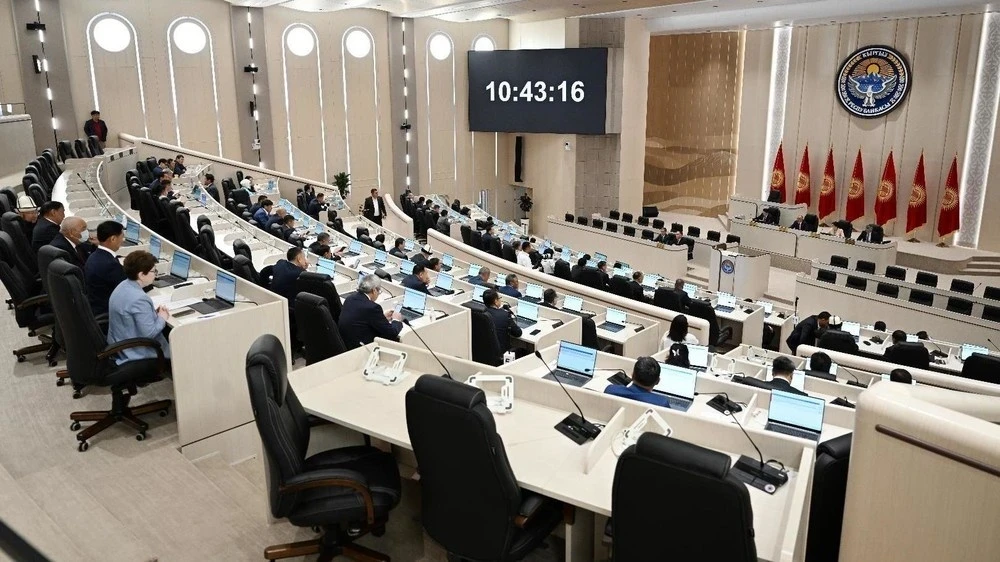
Members of the Jogorku Kenesh, who were elected before the end of their term, are actively taking on their responsibilities. They are discussing the registration of Kyrgyz tribal horses, setting the amounts of contributions for alternative service, and debating the right to criticize deputies. However, the most pressing issue regarding the presidential elections remains unaddressed.
A multitude of opinions has already been expressed on this matter. Politicians, lawyers, and experts from various fields are sharing their views. Some are against early elections, others support them, while a third group tries to sit on the fence, presenting arguments both for and against.
Let us recall that the presidential elections in Kyrgyzstan were also held early in January 2021. This was a forced step, and OSCE observers noted the organization and transparency of the elections at that time. Now, with the power becoming more stable, nothing prevents the elections from being held at an even higher level. So what is the difference between elections being held on time or early?
The upcoming elections have been actively picked up by representatives of civil society and the media. Some of them, primarily those supporting the authorities, cover the situation from various angles, while others, seemingly on cue, sharply criticize the current government, expressing concerns not only about the timing of the elections but also about Sadyr Japarov's right to run for a second term.
The publication "Kaktus" subtly hints that Japarov does not deserve a second term, referring to the opinions of his opponents: "In January 2021, the president was elected for six years and no more than one term. And now, suddenly, a referendum, and he becomes almost a monarch with the right to a second term..."
However, the facts show that no surprises have occurred: Japarov, having amended the Constitution, justifiably severed ties with deputies who had exhausted their capabilities. Time has proven the correctness of this decision, as Kyrgyzstan has achieved significant successes over five years under a presidential form of government. As for the right to run for a second term, Japarov's position is legal and justified, but the opposition cannot come to terms with this.
Employees of "Azattyk," who initially opposed Japarov, do not hold back in their statements. They claim that "autocrats around the world learn to tailor laws to themselves to stay in power." For them, the current authorities appear as usurpers who think only of their own well-being. There are people to whom it is useless to explain simple things – they cannot distinguish black from white.
Even when Japarov or Tashiev report on revenues to the state budget, the "azattyk" journalists do not believe them. And when one of the leaders admits that he is not tied to power and is ready to serve the people, the journalists again speak of distrust.
Leaders of "Kloop," who receive funding from abroad and have recently been hiding from the GKNB, also seize the opportunity to criticize the president, portraying him in a negative light. It is interesting what relation the "patriots," who have left the country, have to the business of the president's nephew?
Other foreign "patriots," funded by the "exile" Atambaev, also do not hold back in their assessments. They accuse Japarov of corruption, although this seems absurd, as he himself is fighting against this phenomenon. Accusations of a lack of empathy also do not stand up to scrutiny: Japarov and Tashiev are, in fact, very sensitive to the needs of the people and are implementing reforms for their benefit.
In recent days, criticism has been directed at the driver's license reform. Accusations that Japarov does not deserve a second term because of it seem strange. The "accusers" are playing on emotions: now driving lessons will take more time, and the training will be conducted by the state, not private driving schools. But this topic, too, would likely not be raised so actively if it weren't for the upcoming elections.
What is wrong with the president? Isn't it better to learn to drive thoroughly before hitting the road? Terrible reports about traffic accidents speak to the need for reform. If the presidential reform is unsatisfactory, propose an alternative – but so far, no one is doing this!
Some deputies, who have chosen the path of populism, have begun to condemn the reform, showing their loyalty to the president's opponents. However, the majority of deputies in the "early" parliament support the president.
Sadyr Japarov noted that when sharp questions arise in society, some deputies rush to the microphone to earn "people's love." He urged them to thoroughly study the issues raised and organize open discussions involving society and the government.
However, there has been no open discussion about the driver's reform, nor is there any discussion of the presidential elections that concern society. Deputies should gather and discuss this topic instead of avoiding it and earning political points.
Kyrgyzstan is a presidential republic. The decision on presidential elections is made by the sitting president based on the Constitution, but the Jogorku Kenesh must also support him in this decision.