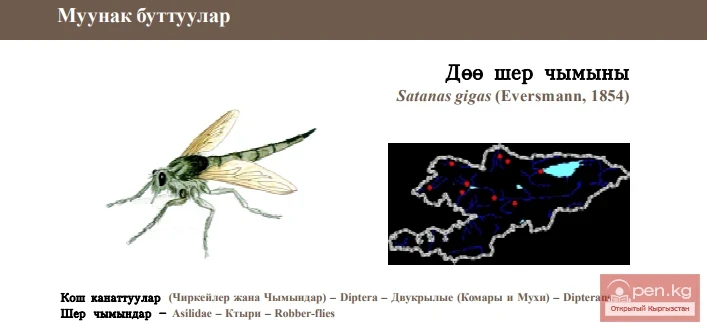
Giant Ktyr / Dёё sher chymyny \ Eversmann’s Giant Robber-fly
Eversmann’s Giant Robber-fly
Status: Category III (LR-nt). A species that is rarely encountered over a wide range, with habitats tending to decrease in area. Listed in the Red Book of the USSR in 1984 (Category II) [26].
Brief description of the adult stage appearance. The largest fly in the country's fauna, with a forewing length of up to 26 mm and a body length of 38-50 mm. The slender body is covered with a dense, gray coating; the thorax is strong, massive with a strongly convex middle back. The eyes are very large, protruding, and separated from each other in both sexes. The proboscis is elongated, protruding, and highly sclerotized. Long legs are covered with hairs and bristles. A pair of transparent, fast wings fold over the back when at rest. Sexual dimorphism is weakly expressed.
General distribution and in the country. Found in North Africa, Iran, the southern European part of Russia, Ukraine, Moldova, the Caucasus, Central Asia, Kazakhstan, Altai, Mongolia, and Northern China [33, 26, 22]. In Kyrgyzstan - the valleys of the Talas, Chatkal, and Uzun-Akhmat rivers [42, 63], the Atoyok ridge (Kurpsai gorge [37]), the northern slope of the Kyrgyz ridge, and the Chui valley (Petrovka village [42, 63], Chon-Aryk village [49], Kashka-Suu village [49]), the western end of the Issyk-Kul basin [49], the Inner Tien Shan (the valley of the Djaman-Davan river, Sary-Bulun village) [42, 63], and the Fergana region [12].
Habitats. Virgin steppes, wastelands, and sparse shrubs on hills and foothills at altitudes up to 1900 m [63].
Population. Very low. Single individuals are encountered.
Life style (life cycles). Adult robber-flies and their larvae lead a free lifestyle, preying on other insects. Larvae develop in soil or decaying wood. Adult flight is observed from late June to mid-September. They are skittish; catching them, especially with prey, is very difficult. They are entomophagous, with Moroccan locusts Dociostaurus maroccanus Thunberg and horseflies (family Tabanidae) noted in their prey [33]. Development lasts one year [26].
Limiting factors. Development and plowing of steppe areas, use of insecticides.
Breeding (keeping in captivity). Not conducted.
Existing conservation measures. Not developed, despite the fact that the species was included in the Red Book of the republic in 1985 [60].
Recommended conservation measures. It is necessary to study the current distribution and ecology of the species, after which micro-reserves should be created in habitats, prohibiting plowing and the use of insecticides.
Eversmann’s Giant Robber-fly
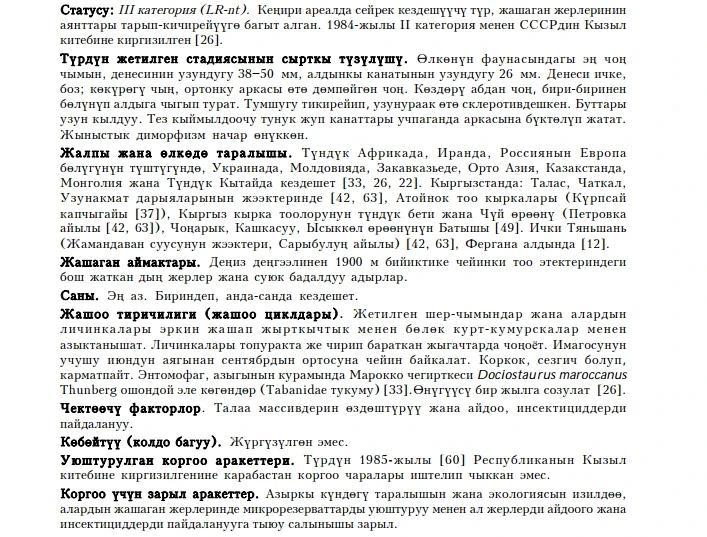
Satanas gigas (Eversmann, 1854)
Status: “Lower Risk - near threatened” (LR-nt - Category III), a naturally rare widespread (from Northern Africa up to Mongolia and Northern China) species, populations of which are mosaic-distributed in lands under economic development. It is a noticeably large robber-fly, which species is included in some regional Red Lists, an active predator, catching acridids and gad-flies. Flies occur in season from the end of June to mid-September; the species inhabits foothills and piedmonts with steppe vegetation, up to 1,900 m above sea level and is registered in Kyrgyzstan in several sites in Talas, Chatkal, Uzun-Akhmat, Fergana, and Tchu valleys, in Middle-Naryn and Issyk-Kul hollows. The number is small everywhere. Limiting factors: development of virgin lands, ploughing-up, and pesticide treatments. At present, it is out of any protection, while it was included in the Red Book of the country in 1985. To conserve the species, the creation of micro-reservations with a decrease in the mentioned limiting factors, and the study of the current distribution and ecology, are necessary.
Read also:
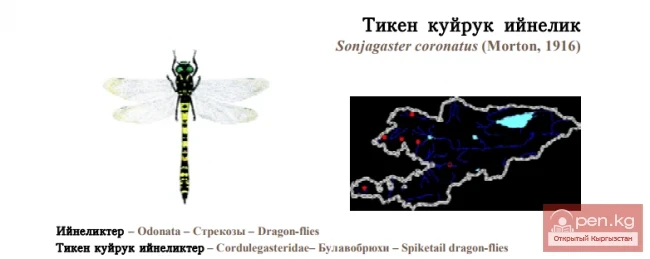
Crowned Bulbous-Body / Tiken Tail Needle / Coronate Spiketail
Coronate Spiketail Status: Category II (VUA4bc; B2b(iii,iv); D2). A locally occurring species with...
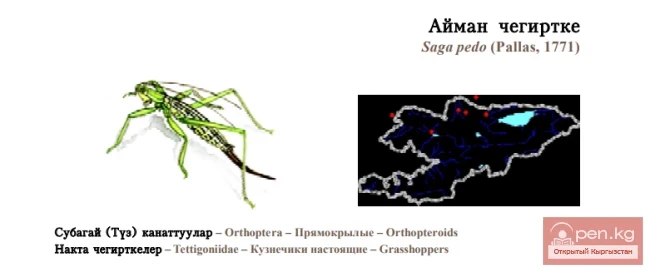
Steppe Dybka / Ayman Katydid / Matriarchal Katydid, Predatory Bush Cricket
Steppe Katydid Status: Category II (VU Alc; B2ab(iii,iv); D1+2). A relic steppe species with...
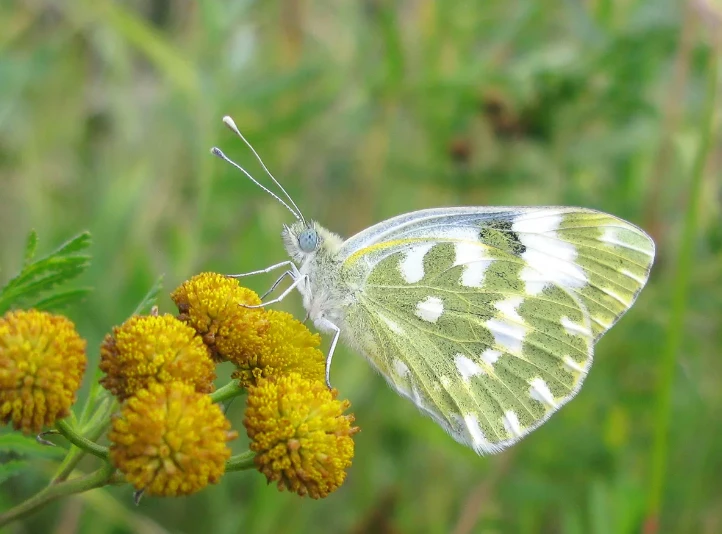
Cabbage White Butterfly - Zargyn White Butterfly
Cabbage White Butterfly - Pontia daplidice L. This is a medium-sized butterfly with white wings,...
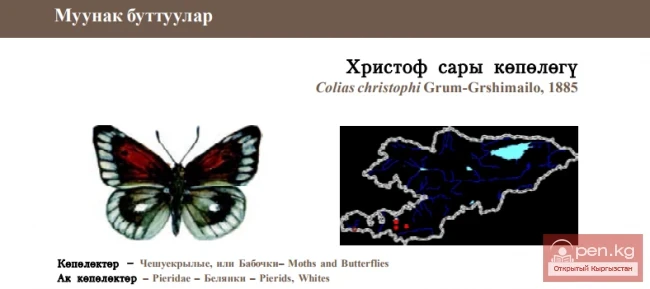
Christoph's Clouded Yellow
Christoph’s Clouded Yellow Status. Category II (VUBlac(v)+2ac(v); D2). Vulnerable species, a...
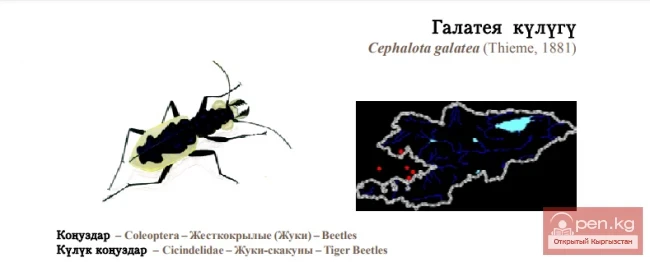
Galatea Steed / Galatea Bug / Galatea Tiger Beetle
Galatea Tiger Beetle Status: Category I (EN B1ab(iv)+2ab(iii,iv)). A narrowly endemic species with...
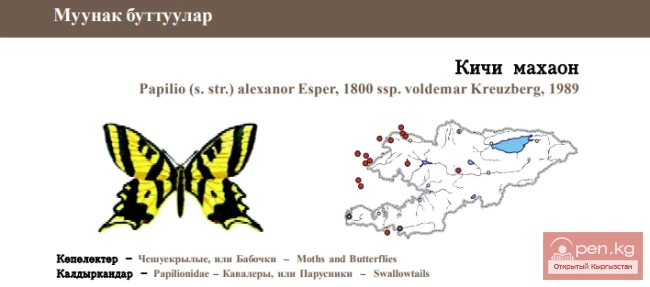
Alexanor, subspecies Voldemar / Kichi Mahahon / Voldemar Southern Swallowtail
Alexanor, subspecies Voldemar Status: Category II (VU B1ab(iii)+2ab(iii)c(iii,iv); C2b). A local...
Saker Falcon
Saker Falcon. A large falcon, usually with reddish-yellow tones in its plumage. It has quite large...
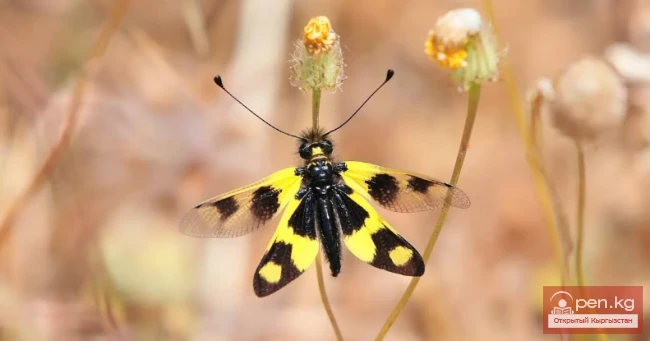
Acalypha - Chaara Acalypha
Ascalaphus varius - Libelloides macaronius Scop. It is commonly referred to as...
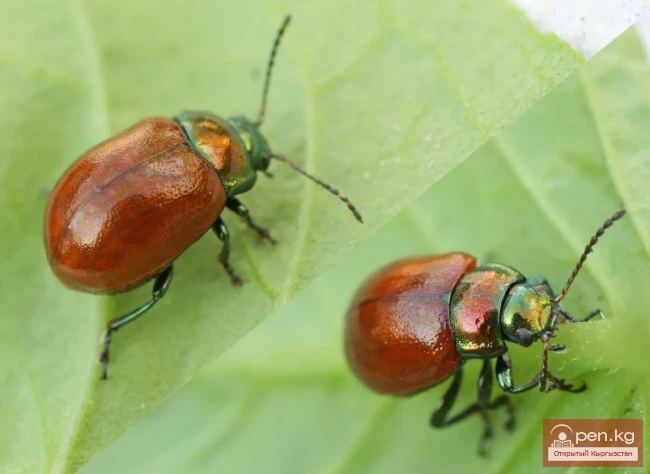
Asian Leaf Beetle - Азиялык жалбырак жегич
Asian Leaf Beetle - Chrysochares asiaticus Pall. One of the largest and most colorful leaf...
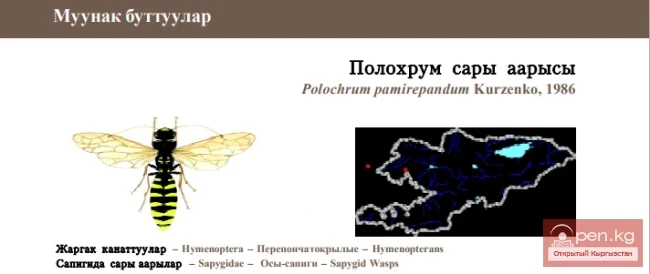
Asiatic Polochrum Wasp / Polochrum Sary Aarysy / Polochrum Azimuth Wasp
Asiatic Polochrum Wasp Status: Category II (VUB2ab(iii); C2b; D2). A rare vulnerable endemic...
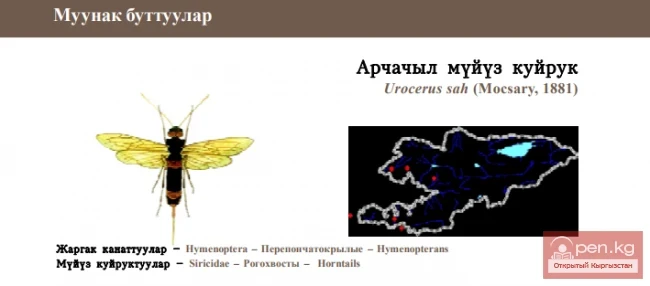
Arch's Hornet / Archachyl Muyuuz Kuyruk / Juniper Horntail
Juniper Horntail Status: Category III (LR-nt). A naturally rare species with a tendency to habitat...
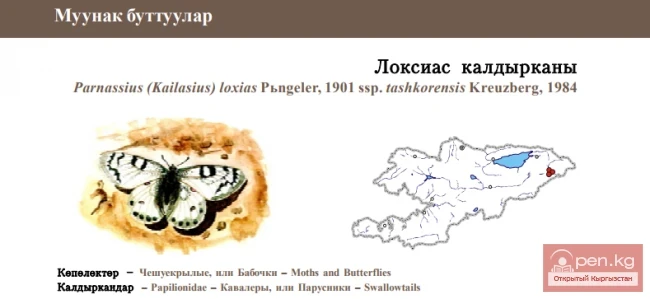
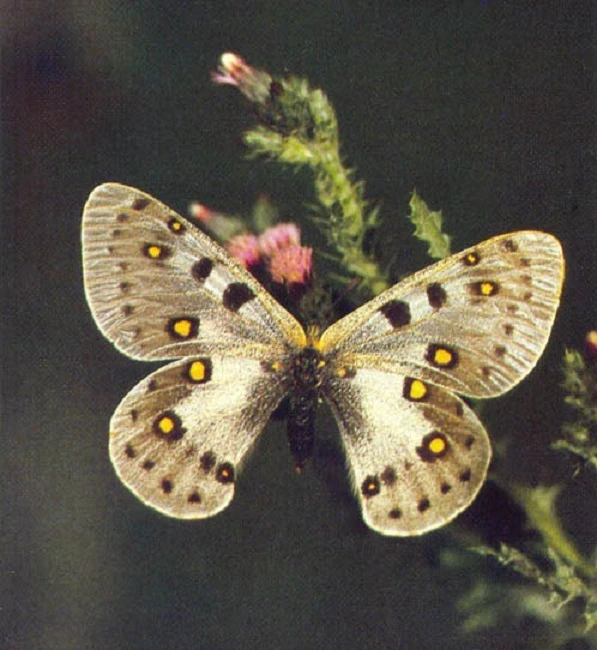
Apollo Loxias, Tashkoro subspecies / Loxias kaldyrkany \ Loxias Apollo Butterfly
Apollo Loxias, Tashkoro subspecies Status: Category II (VUB1ac(v)+2ab(iii)c(v); D2). An isolated...
Apollonius
Apollonius - Parnassius apollonius Ev. This species of butterfly was first described in 1847 by...
Smooth Leaf Beetle - The Complaining Firebug Beetle
Smooth Leaf Beetle - Clytra laeviuscula Ratz. The smooth leaf beetle has orange-red elytra; there...
Mnemosyne, or Black Apollo - Mnemosyne, the one who left a mark
Mnemosyne, or Black Apollo - Parnassius mnemosyne L. The butterfly was described by Carl Linnaeus...
The title translates to: "Melon Grasshopper - Bakhcha Grasshopper"
Melon Grasshopper - Thisoicetrinus pterostichus F.-W. A desert species of Central Asia, usually...
The title translates to: "Christoph's Jaundice - Christof's Yellow Butterfly."
Christoph's Sulphur - Colias christophi Gr.–Gr. This butterfly is named after the famous...
Green Grasshopper - Zhasyl Ayman
Green Grasshopper - Tettigonia viridissima L. The body of this grasshopper is almost entirely...
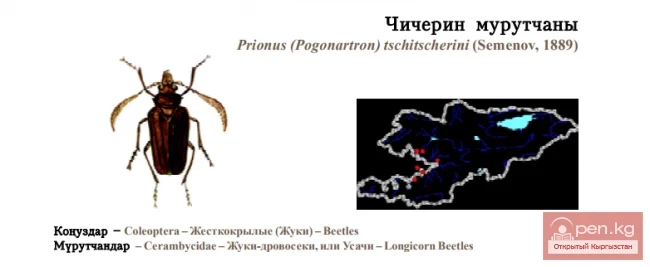
Chicherin's Root Borer
Tschitscherin’s Root Borer Status: Category II (VUB2ab(iii)). A narrowly distributed rare species,...
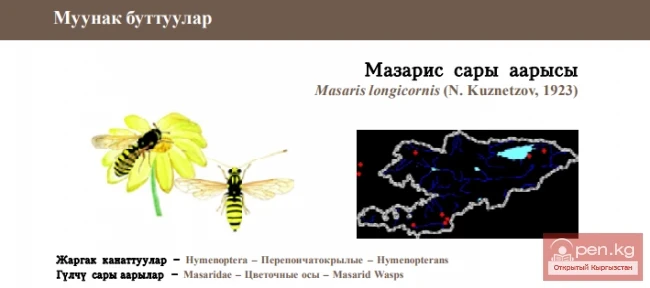
Mazaris Longhorned Wasp / Mazaris Yellow Wasp / Kuznetzov’s Longicorn Wasp
Kuznetzov’s Longicorn Wasp Status: Category III (LR-nt). A naturally rare Central Asian species...
Black Pine Longhorn Beetle - Karagay's Black Moustached
Black Pine Longhorn Beetle - Monochamus galloprovincialis Oll. The body of the beetle is thick,...
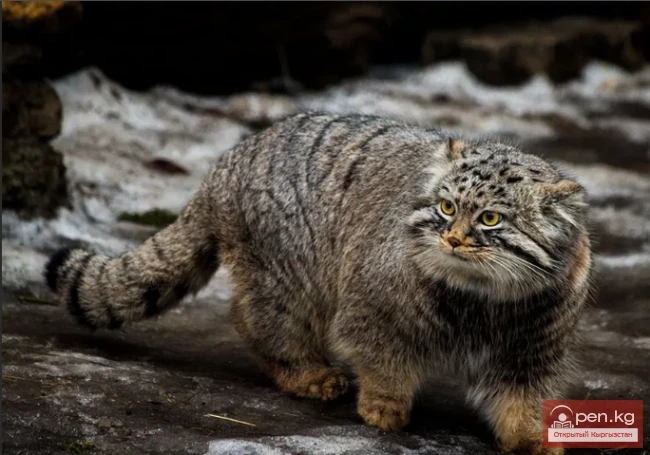
Manul - Sulvsun
Manul — Felis (Otocolobus) manul Pall. Externally, the manul is very similar to a large domestic...
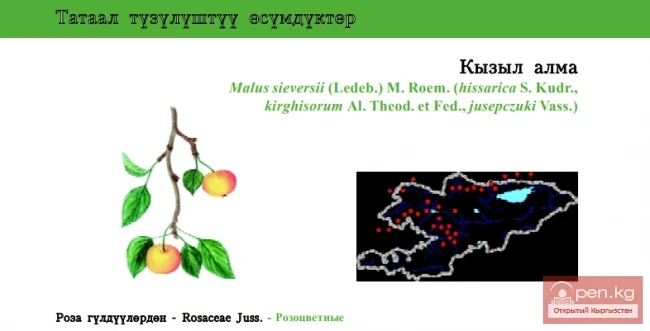
Sievers’s Apple-tree \ Kyzyl Alma \ Sievers’s Apple-tree
Sievers’s Apple-tree Status: LC category. A polymorphic species of the mountain-central Asian...
Cheglok - Zhagalmai
Cheglok. Small (like a pigeon), as with all falcons, it is beautiful and graceful. It has long...
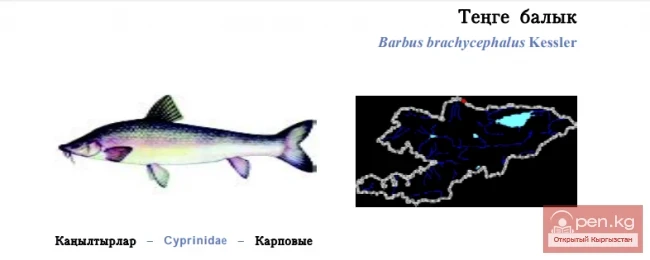
Aral Catfish / Tenge Fish / Aral Barbel
Aral Barbel Status: 2 [CR: C]. Species extinct in Kyrgyzstan....
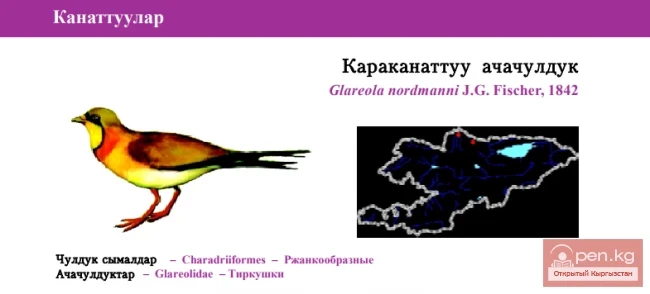
Steppe Pratincole / Karakanattoo Achachuldik / Black-winged Pratincole
Steppe Pratincole Status: Category VIII, Data Deficient, DD. One of two species of the genus in...
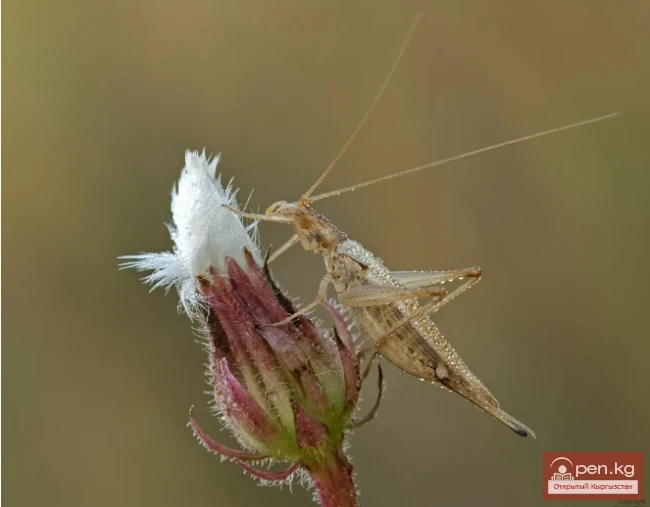
Common Trumpeter - Kadimki Surnaychi Cricket
Common Trumpeter - Oecanthus pellucens Scop. The trumpeter is a relative of crickets and...
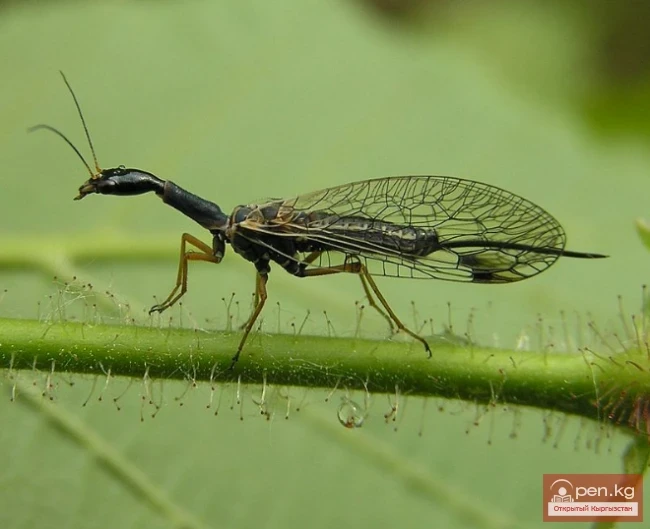
Camel - A Worm Like a Beetle
Camel Cricket - Raphidioptera Camel crickets are externally distinctive; they are humped in...
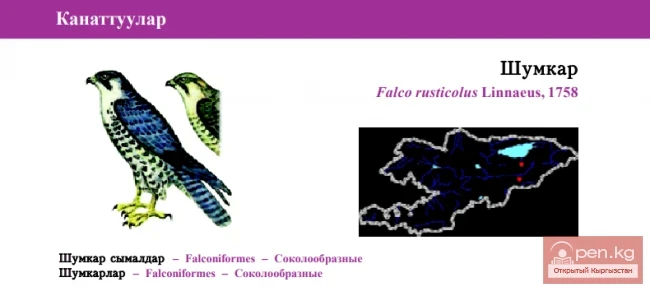
Krechet / Shumkar / Gyrfalcon
Gyrfalcon Status: Category VII, Least Concern. One of 10 species of the genus in the fauna of...
The title translates to "Large Dove - Chon Baktek."
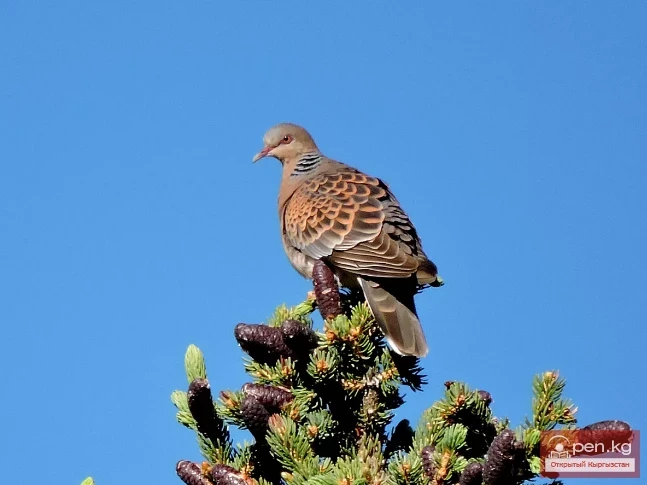
Large Turtle Dove. The total body length is 340–345 mm, and the wingspan is 590–600 mm. The head...
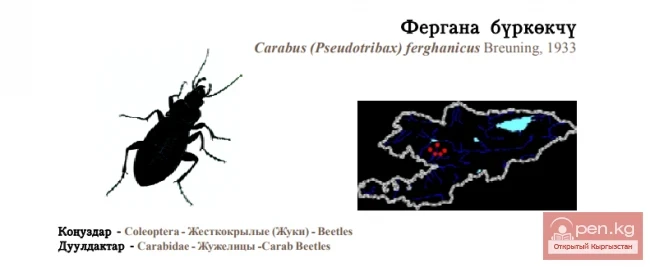
Fergana Sprayer / Fergana Burkyokchu / Fergana Ground Beetle
Fergana Ground Beetle Status: Category II (VUB1ab(iii)+2ab(iii)c(iii,iv); C2b). A narrowly...
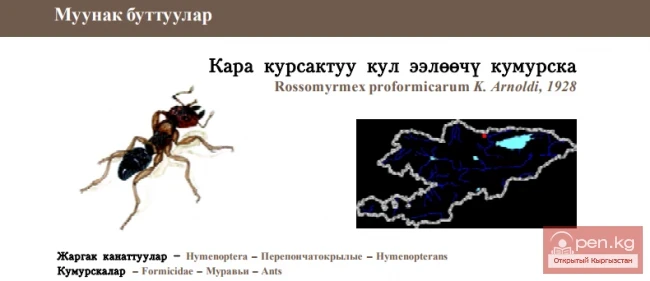
Amazon-Rossomyrmex / Kara kursaktuu slave-holding ant \ Russian Rossomyrmex
Amazon-Rossomyrmex Status: Category II (VUB2ab(iii); C2b; D2). A rare relict representative of the...
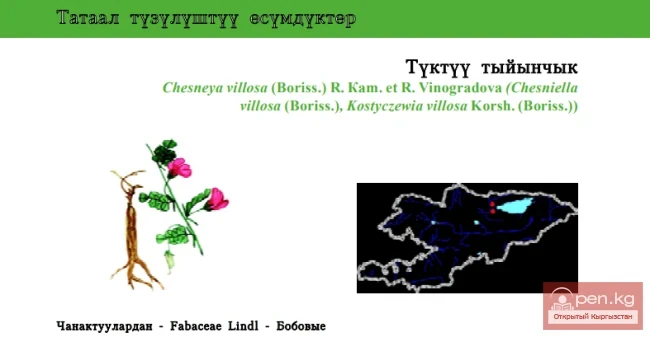
Chesneya Woolly / Tuktuk Coin / Kostyczewia, Pilose Chesneya
Chesneya villosa Status: EN. One of the three very rarely encountered species of this genus in...
Long-tailed Sea Eagle / Pallas’s Fish Eagle
Pallas’s Fish Eagle Status: V category, Vulnerable, VU, Cl. A species at risk of extinction. One...
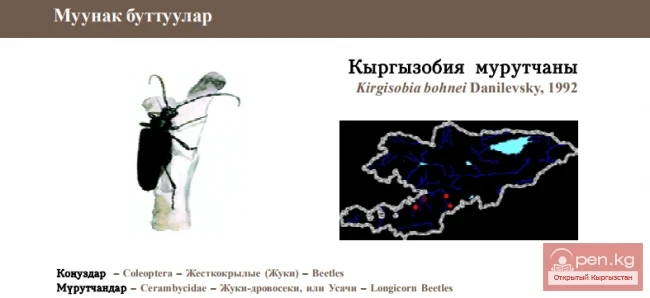
Kirghizobia Longicorn Beetle
Kirghizobia Longicorn Beetle Status: I category (ENA4bc; B1a+2ab(i,ii,iii,iv)). A narrowly...
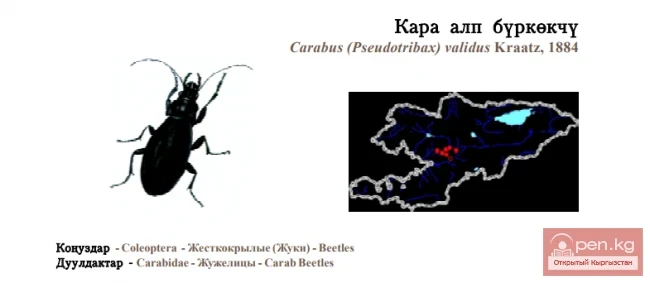
Vigorous Ground Beetle / Кара алп буркёкчу / Брызгун могучий
Vigorous Ground Beetle Status: Category II (VUBlb(iii)+2b(iii,iv); C2b). A narrowly distributed...
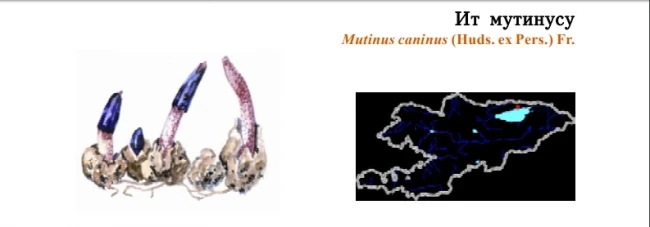
Mutinus caninus / It mutinus / Dog Stinkhorn
Dog Stinkhorn Mutinus caninus (Huds. ex Pers.) Fr. Status: EN. A decorative species, used in folk...
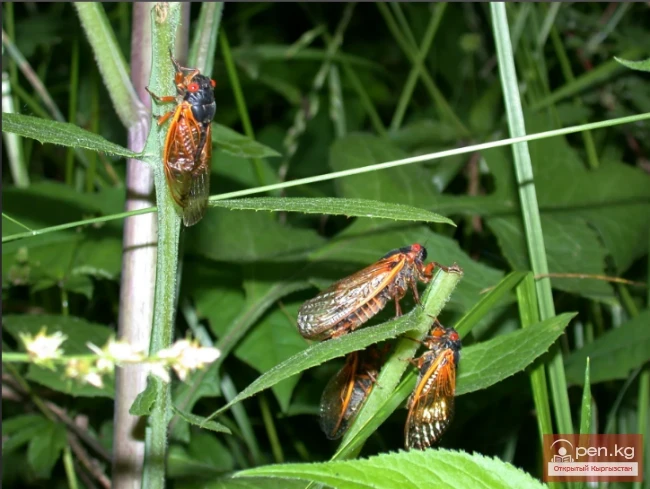
Singing Cicada - Chyrıldak Kverulasy
Singing Cicada Querula - Cicadatra querula Pall. Cicadas are mostly large insects that...
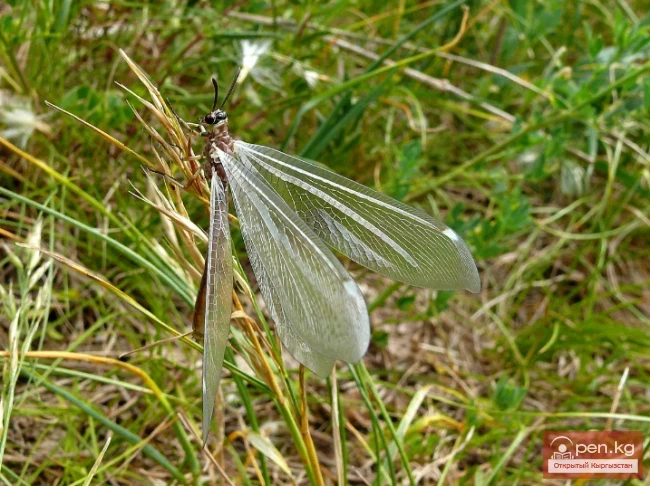
Ant Lion - Kumurska Arstany
Ant Lion - Acanthaclisis occitanicus Vill. The ant lion is a net-winged insect, closely related to...
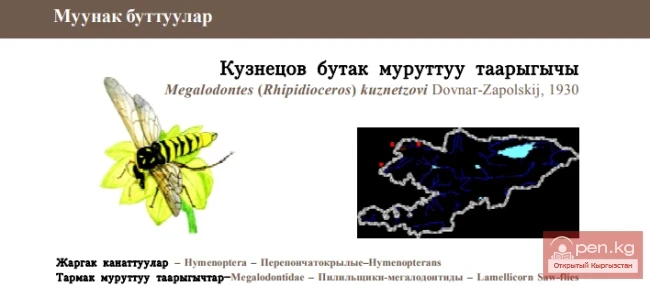
Kuznetsov's Megalodont / Kuznetsov's Lamellicorn Saw-fly
Kuznetzov’s Lamellicorn Saw-fly Status: II category (VU B1ab(iii)+2ab(ii,iii,iv); D2; E). A rare...
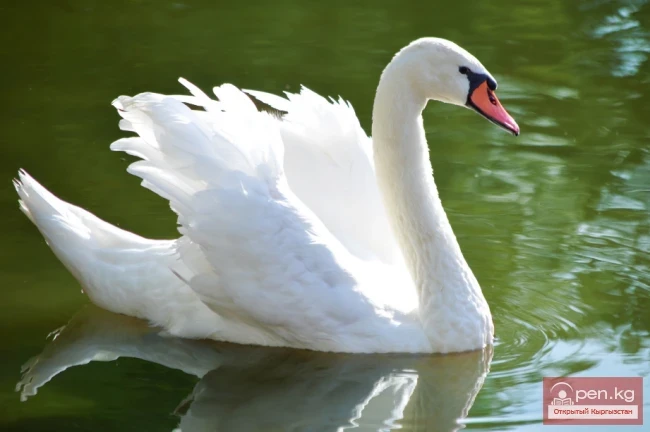
Swan - Ak Kuu
The Mute Swan is the largest representative of the order Weight is 7-13 kg, with park birds...
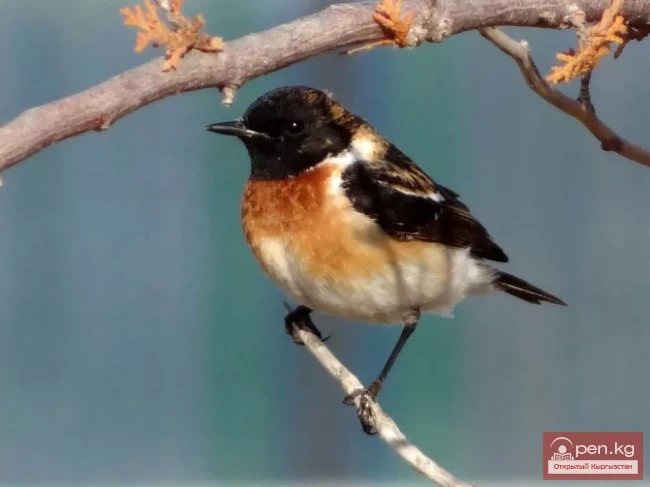
Black-headed Bunting - Kara-shtamptoo
Black-headed Stonechat. Stonechats (Saxicola) are a genus of birds in the thrush family. The...
Natural Resources of the Chui Region
All elements and conditions, as well as phenomena and bodies of nature, can be used in public...