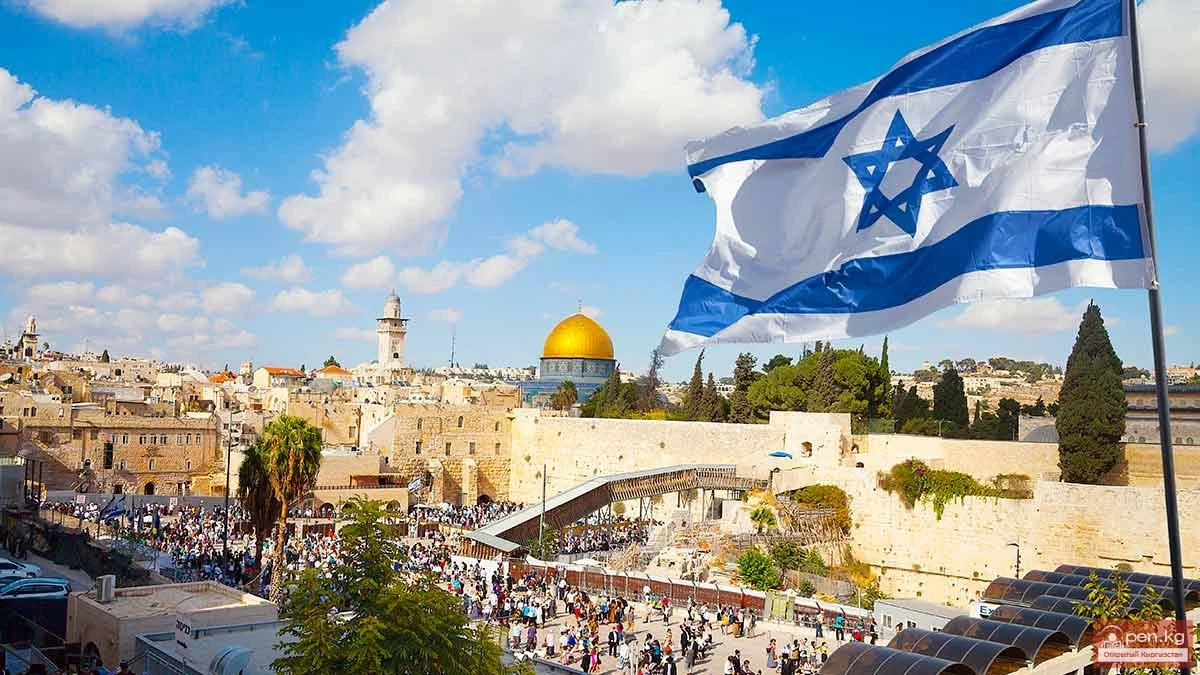
Development of Israel
One of the key elements of Israel's foreign policy is the "strategic alliance" with the USA, enshrined in a number of agreements and memoranda. These documents provide for extensive cooperation and close military collaboration, including maneuvers and the implementation of joint projects. Annually, Israel receives approximately $3 billion in American aid, most of which goes to military needs. Israel's traditional partners are European countries; it has agreements for associated membership with the EU and participates in European research programs. Cooperation between Israel and Turkey, India, and China is developing dynamically. Among the Arab-Muslim countries, full diplomatic relations have been established with Egypt (1979), Jordan (1994), and Mauritania (1999).
Relations between Russia and Israel are characterized by positive dynamics with an emphasis on expanding political dialogue and trade-economic ties, cooperation in the field of modern industrial developments, and the development of humanitarian and cultural contacts.
The trade turnover between Russia and Israel amounted to $1.2 billion in 2004 (31% higher than in 2003).
Israel's line in the UN (a member of the UN since 1949) is aimed at removing the block of Middle Eastern resolutions criticizing its policy towards the Palestinians from the agenda.
Israel is a developed industrial-agricultural country. Its GDP in 2004 was $110 billion, with an annual income per capita of $17,200. It has raw material resources such as phosphates (extraction of 2.1-2.7 million tons per year), mineral salts from the Dead Sea, and small reserves of oil and natural gas.
Israel occupies leading positions in the world in advanced technologies, production of computer programs, communication systems, agro-industry, and diamond processing. The metalworking, machine engineering (including aircraft and shipbuilding, including military), electrical engineering, chemical industries, and agriculture are also well developed. The Israeli economy is characterized by a high share of the military industry and a significant dependence on external sources of financing, primarily from the USA and the EU.
From 2001 to 2003, the Israeli economy experienced a severe crisis related to armed confrontation with the Palestinians, as well as unfavorable conditions in the global high-tech market. Since the end of 2003, thanks to the economic recovery program, there has been a revival in the economic sector. In terms of growth rates, Israel ranked second among Western countries after the USA (4.4%).
Inflation did not exceed 1.3%. Foreign investments in 2004 amounted to $6 billion, while Israeli capital investments abroad were $8.5 billion.
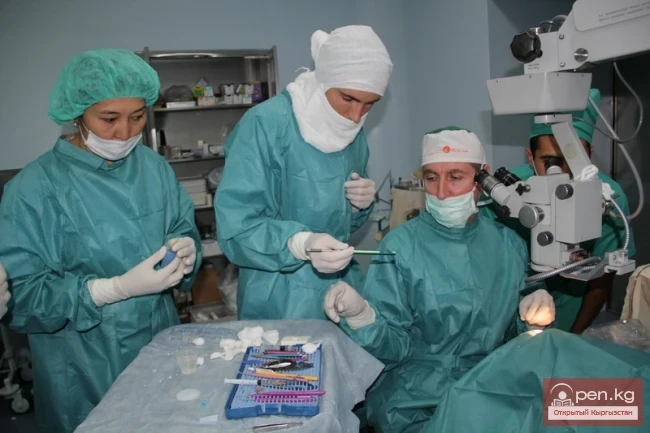
Israel has a developed social security and healthcare system. The standard of living (consumption per capita) increased by 3.5% in 2004, following a decline in the previous two years. The average salary is $1,539. Child mortality is among the lowest in the world (5.4 per 1,000 live births). The average life expectancy is 80.9 years for women and 76.7 years for men. Unemployment remains a serious problem (10.5% in 2004).
The volume of exports in 2004 amounted to $33.7 billion, while imports were $40.5 billion. 96% of the export value consists of industrial products and diamonds. Israel ranks 5th in the world in arms exports (revenue - $2.8 billion per year). Imports consist of unprocessed diamonds, petroleum products, chemicals, machinery, equipment, and consumer goods. The main trading partners are the USA and Western European countries.
Israel has a developed system of higher education. The largest universities are in Jerusalem (Hebrew University), Tel Aviv, Haifa, and Be'er Sheva.
Main newspapers: "Haaretz" (published in Hebrew and English with a circulation of 75-95 thousand copies), "Yedioth Ahronoth" (in Hebrew and English with a circulation of 750 thousand copies), "Maariv" (in Hebrew with a circulation of 150-170 thousand), "Jerusalem Post" (in English with a circulation of 25-90 thousand). There are several state and commercial television and radio channels, and cable and satellite television networks are widely represented. Among Russian-language media, the newspapers "Vesti" and "Novosti nedeli," Channel Nine, and the REKA radio station stand out. Israel ranks 7th in the world in terms of the level of Internet service availability.