In an exclusive interview for "VES 24", Alexey Dremuchev spoke about the significant achievements of "Rosatom" in Central Asia, such as the construction of a small nuclear power plant in Uzbekistan, the development of nuclear medicine in Kyrgyzstan, and the implementation of environmental initiatives.
A unique export project in Uzbekistan
- The year 2025 became an important milestone for "Rosatom" and its international divisions. We observed changes in public opinion about the company in Central Asia. The events held to promote nuclear energy showed that in Uzbekistan, there is no need to convince people about the safety and advantages of Russian technologies. The uniqueness of Russian technologies, especially small nuclear power plants, lies in the fact that they are built on advanced principles. Russian President Vladimir Putin announced that by 2030, the first nuclear energy system in the world with a closed fuel cycle is planned to be launched in the Tomsk region. Does this mean that similar reactors, which do not exist anywhere else in the world, can be used in new "Rosatom" projects in Central Asia?
- You are absolutely right, 2025 became a landmark year for "Rosatom": last year we celebrated the 80th anniversary of the Russian nuclear industry. As part of this anniversary, we honored veterans whose achievements continue to inspire us for new accomplishments.
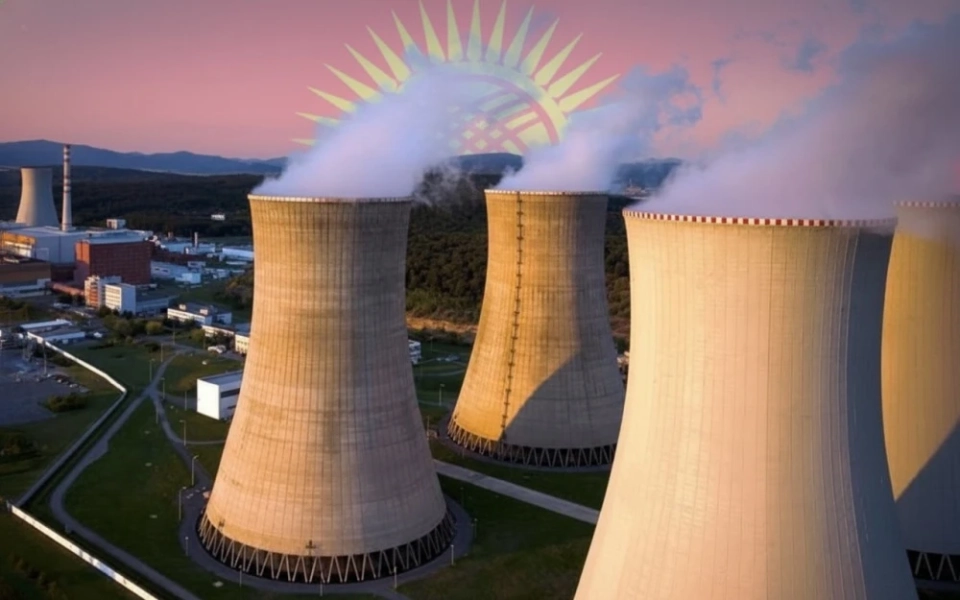
One of these achievements was the start of construction of a small nuclear power plant in Uzbekistan — this is the first export contract for such a project in the world.
In May 2025, the engineering division of "Rosatom" began producing reactor equipment, casting the first ingot from special steel weighing 205 tons for the future RITM-200N reactor vessel. In October, work began on the excavation for the ASM block in the Jizzakh region, with plans to excavate about 1.5 million cubic meters of soil.
The nuclear power plant based on the RITM-200N reactor is a unique project. It is not just a small nuclear power plant; such projects have a long history, but Uzbekistan chose an integrated layout where the active zone and steam generator are combined in one vessel. This corresponds to modern trends in nuclear energy, and currently only "Rosatom" and China have such reference projects, while others remain in the development stage.
The plant based on RITM-200N technology is characterized by compactness and faster construction rates compared to large nuclear power plants. It is also important to note that the reactor belongs to generation 3+, which meets all modern safety requirements, including the ability to increase the heat removal period from the reactor without human intervention up to 72 hours.
Regarding the closed fuel cycle, "Rosatom" has achieved significant success in this area, advancing in the development of IV generation technology, which ensures more efficient use of uranium and reduces the volume of nuclear waste. The "Breakthrough" project includes the BREST-300 reactor, which operates on fast neutrons, and we have significant experience in operating such reactors.
Currently, Uzbek nuclear power projects involve the installation of VVER reactors, which is a completely different direction.
Undoubtedly, safety is a priority for "Rosatom", and we offer only proven technologies that have references in Russia. All necessary licenses for the "Breakthrough" project have been obtained, and we are confident in its effectiveness. The possibility of replicating this technology abroad may be considered in the future, but for now, it is premature.
- In the summer of 2025, "Uzatom" and "Rosatom" signed an agreement to build a large-capacity nuclear power plant in Uzbekistan. What will make this facility unique? When will construction begin?
- On September 26, during the "World Nuclear Week", an additional agreement was signed for the implementation of the integrated nuclear power plant project in Uzbekistan, which involves the construction of two VVER-1000 blocks and two small-capacity blocks based on RITM-200N. The signed documents clarify the agreement reached on June 20 at the St. Petersburg International Economic Forum.
We are currently working on the contract, and I cannot yet specify the exact date for the start of construction. We should adhere to the wisdom that "haste is from the devil." We will definitely inform about our readiness to start.
The integrated nuclear power plant represents a unique solution: it will provide base load through large blocks and will be able to compensate for peak loads with small capacities. When all blocks are put into operation, the plant will be able to provide up to 14% of Uzbekistan's energy consumption, generating about 17.2 billion kWh per year. Given the growth in energy consumption in the republic, it is projected that by 2030, such a plant will become an important energy source for the country.
As I mentioned, the RITM-200N reactor will ensure a high level of safety, and the VVER-1000 is considered one of the most reliable today. Currently, 13 VVER-1000 power units are in operation in Russia, and similar installations are also operating in China, India, and Iran.
Nuclear medicine: a step into the future
- "Rosatom" is implementing a project in the field of nuclear medicine in collaboration with Kyrgyz partners. What are the benefits for healthcare in Kyrgyzstan and what changes can patients expect?
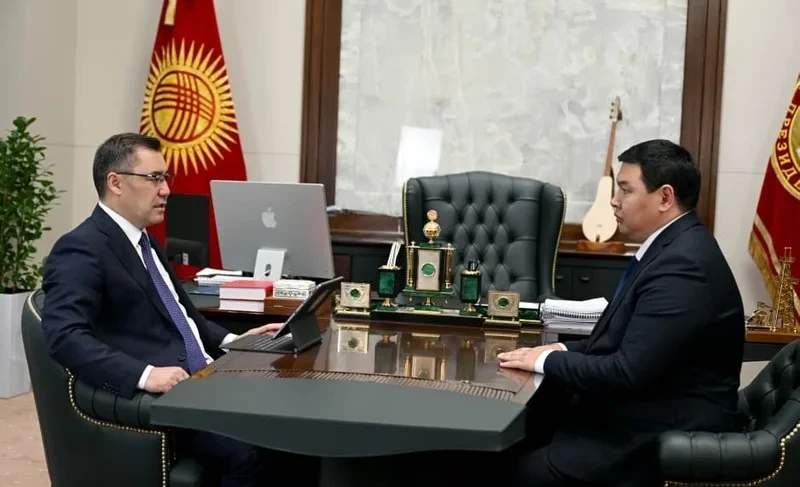
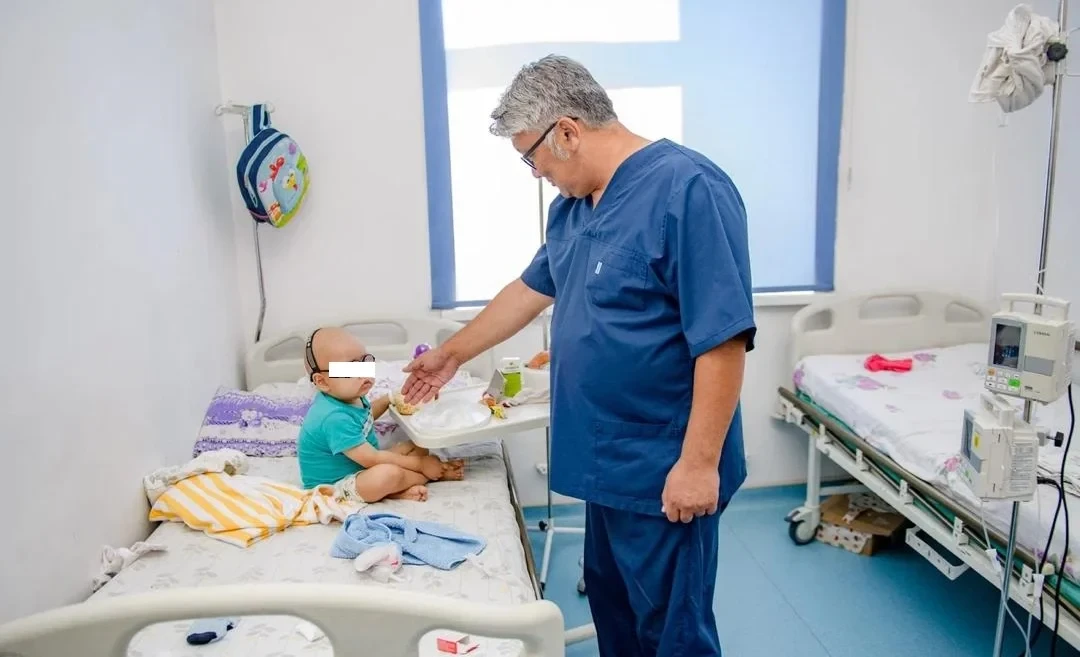
- "Rosatom" and the Ministry of Health of Kyrgyzstan are actively working in the field of nuclear medicine. We have already achieved many results. In particular, after many years of inactivity, the nuclear medicine department in Bishkek has reopened. Supplies of technetium generators and reagents for radiopharmaceuticals from Russia are ongoing to support clinical operations.
Based on this department, a key facility for healthcare and education will be built — a nuclear medicine center, which will help address issues of drug safety and improve demographic indicators. This project aligns with the goals of sustainable development and economic growth of the country.
The main goal is to ensure timely diagnosis and treatment of cardiovascular and oncological diseases using modern radiopharmaceuticals. This project will be beneficial not only for the citizens of Kyrgyzstan but also for neighboring countries.
First steps in "green" energy
- "Rosatom" is also building the first wind power station in Kyrgyzstan. How is the implementation of this project progressing?
- "Rosatom" is actively developing a strategy for low-carbon energy production, remaining a leader in "green" energy in Russia, where the state corporation provides 51% of all low-carbon generation.
We are ready to apply our experience in Kyrgyzstan, where wind can become an important source of energy. We are pleased that our Kyrgyz partners have entrusted us with the construction of a wind farm in the Issyk-Kul region with a capacity of 100 MW. The project is on schedule, and key components for the wind installations have already been delivered. Next year, we plan to pour the first foundation for the wind turbine.
- How does "Rosatom" plan to address environmental issues in Kyrgyzstan and Tajikistan?
- We are confident that nuclear energy is "green" energy, and this is recognized at the international level. Nuclear power plants produce minimal CO2 emissions throughout their entire lifecycle. Moreover, an operating nuclear power plant does not produce CO2 emissions, unlike coal stations.
People are often frightened by waste issues. We showed Oliver Stone's film "Nuclear" to students in Uzbekistan and Kyrgyzstan, where he discusses how the nuclear industry is responsible for its waste. Unlike other energy sources, the nuclear industry can precisely indicate where the waste is stored.
Our projects in Tajikistan and Kyrgyzstan for the elimination of "tailings storage" demonstrate "Rosatom's" responsible approach. The outcome of such projects should be the restoration of the natural landscape. We are confident that in 100 years, when current projects are completed, we will have all the tools to return the sites to their original state.
Education and training in the nuclear industry
- What is "Rosatom's" strategy for training specialists to work with "peaceful nuclear energy"?
- "Rosatom" emphasizes the training of personnel, as only highly qualified specialists can ensure the reliable operation of reactors. As part of cooperation with the Ministry of Education and Science of Russia, quotas are provided for training foreign students in nuclear specialties. A branch of the National Research Nuclear University MEPhI has opened in Tashkent, which has already graduated 161 bachelors, many of whom continue their studies or start working in Uzbekistan's energy system.
The MEPhI branch also operates in Kazakhstan, where "Rosatom" was selected to build the first large-capacity nuclear power plant. This year, we began engineering surveys as part of this project.
- What humanitarian initiatives is "Rosatom" implementing in Central Asia?
- We pay special attention to working with students and schoolchildren, conducting science festivals and film screenings. As part of "Rosatom's" program, we invite schoolchildren to international smart holidays in Russian camps.
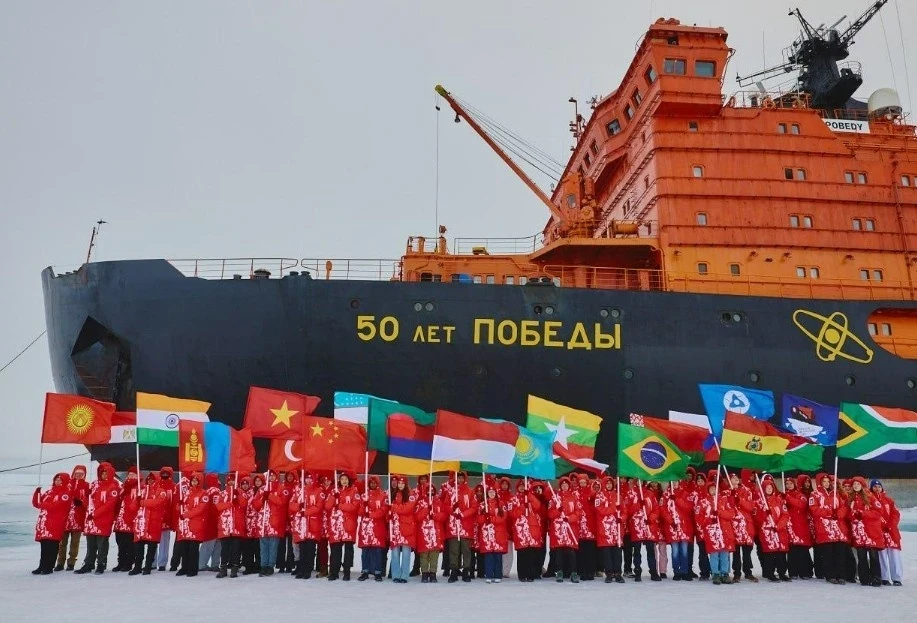
One of the bright projects is the "Icebreaker of Knowledge", where schoolchildren from Kazakhstan, Uzbekistan, and Kyrgyzstan went on an expedition to the North Pole on the nuclear icebreaker "50 Years of Victory", where they were able to see whales and polar bears in their natural habitat and learn a lot about the world of nuclear energy and ecology.