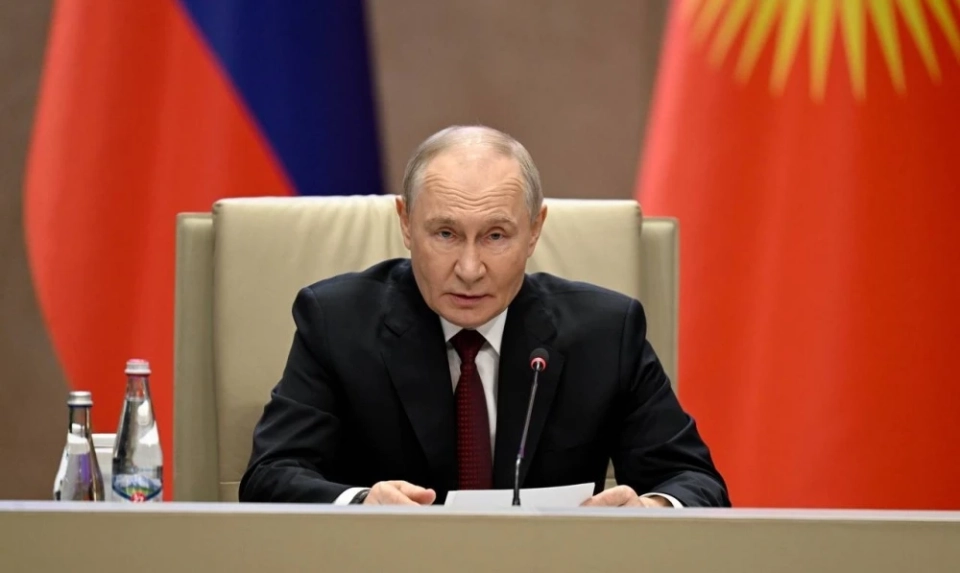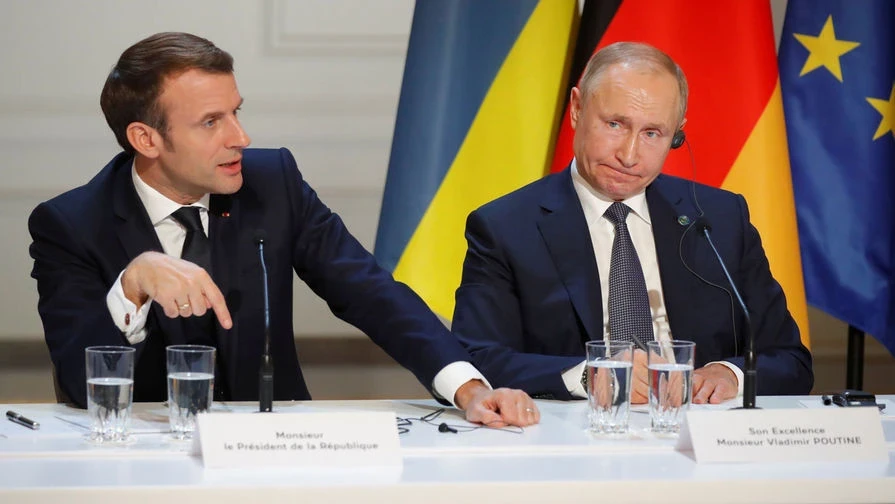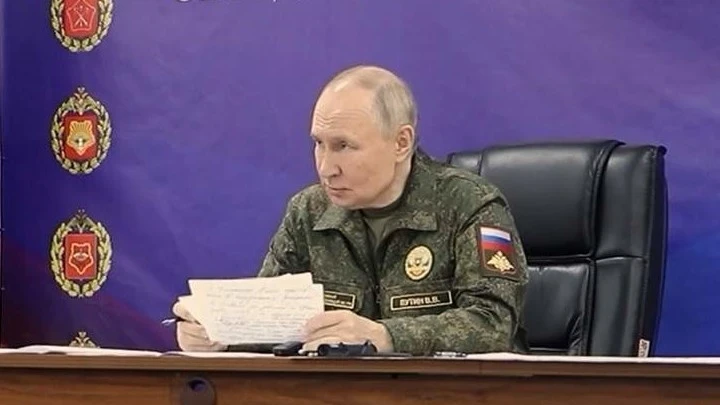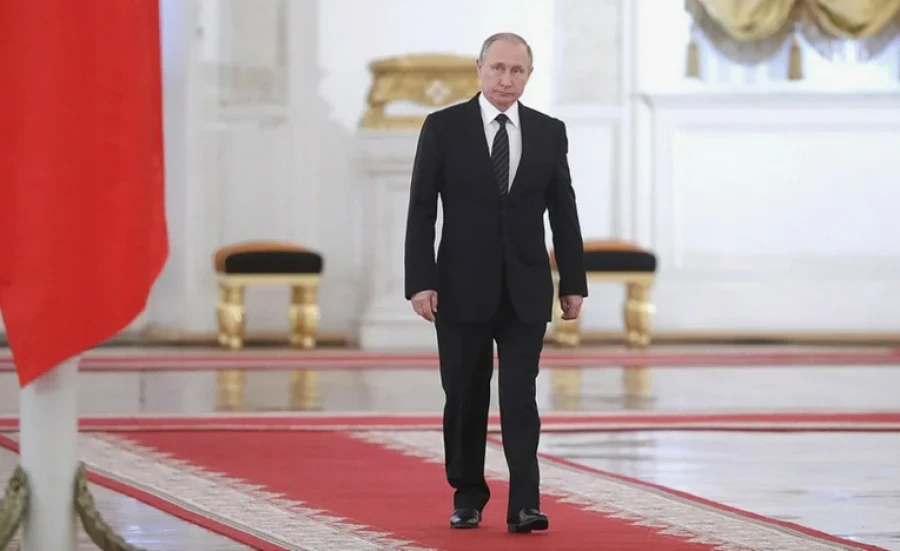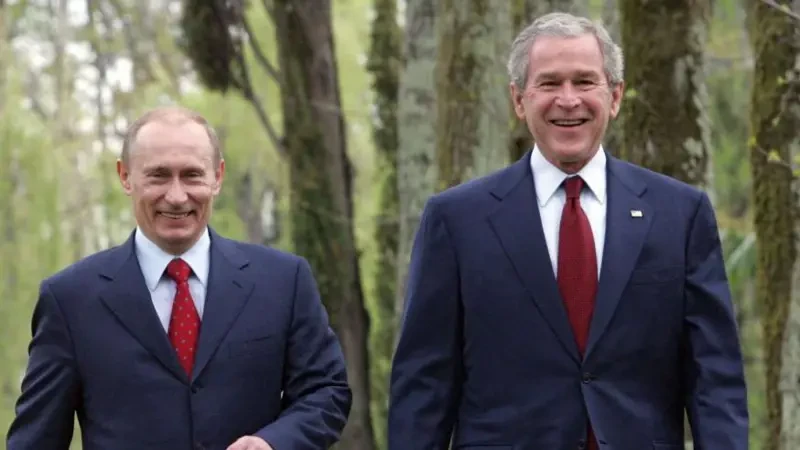
The “National Security Archive” has released three transcripts of meetings between Putin and Bush that took place in 2001, 2005, and 2008.
According to the documents, at the first meeting, Putin stated that Russia “gave away thousands of square kilometers” and expressed protest against NATO expansion, as reported by the BBC.
The “National Security Archive” explains that the publication of the transcripts became possible due to a lawsuit filed by this organization under the Freedom of Information Act in the U.S.
The first transcript is dated June 16, 2001, when Putin and Bush met in person at the “Brdo” castle in Ljubljana, Slovenia.
George Bush was elected the 43rd president of the U.S. in 2000 and took office in January 2001, while Putin had just begun his presidency after winning the elections in March 2000.
The First Meeting: Friendly Atmosphere and Complaints About Territorial Loss
According to the transcript, both sides expressed goodwill and a desire to establish relations between Russia and the West.
At the beginning of the meeting, Bush invited Putin to visit his ranch in Texas and noted that he “did not want to underestimate the importance of Russia,” adding that “a strong Russia is in our interests.”
In response, Putin emphasized the need for honesty in relations and added: “I am popular in Russia — and I know why: because I listen to the people” [all quotes from Putin in the transcript are presented in English, and we publish them in translation — Ed.]
“People in Russia feel that they have been let down by the changes that brought more freedom, but they cannot take advantage of it,” he added.
Soon after this, Putin unexpectedly shifted to historical issues and territorial problems.
It seems that these issues were already troubling the Russian president at the beginning of his rule. Western media repeatedly mentioned that during subsequent meetings, Putin focused on historical aspects to justify his actions.
“Russians gave away thousands of square kilometers voluntarily,” Putin told Bush in the summer of 2001. “It’s just incredible! Ukraine, which has been part of Russia for centuries, was given away. Kazakhstan was given away. The Caucasus too. It’s hard to imagine, and it was done by party leaders,” he said.
Then Putin expressed dissatisfaction that Western countries, in his opinion, had not fulfilled their obligations to Moscow, including not resolving issues with the Russian debt and ignoring the actions of radical Islamists in Chechnya.
At the meeting, Putin also raised questions about the necessity of NATO expansion and expressed dissatisfaction that Russia “feels left out” in this context.
The President of Russia claimed that in 1954, Russia applied for NATO membership, but was not accepted. “It is important to understand how we can associate Russia with the rest of the civilized world,” Putin told Bush. “The fact is that NATO is expanding, and we have no opportunity to discuss this.”
The transcript shows that Bush asked several times about issues related to press freedom in Russia, particularly referring to the transfer of management of the “NTV” television company to “Gazprom-Media.” In response, Putin accused former owner of “NTV” Vladimir Gusinsky of embezzling state funds.
The 2008 Meeting: “Ukraine is an Artificially Created State”
According to the “National Security Archive,” the last meeting between Putin and Bush took place on April 6, 2008, at the summer residence “Bocharov Ruchey” near Sochi.
The tone of communication this time was significantly different from previous meetings, where the presidents managed to discuss cooperation and personal relations.
It should be noted that these were negotiations immediately after the NATO summit in Bucharest, where the U.S. advocated for inviting Ukraine and Georgia into the alliance.
As a result, alliance members decided not to provide Kyiv and Tbilisi with specific plans for membership but noted that both countries could become NATO members in the future. Putin then called this decision a threat to Russia's security, and four months later, Russian troops invaded Georgia.
According to the transcript, at the beginning of the conversation, Putin and Bush discussed missile defense issues in Europe.
Then Putin raised the issue of NATO expansion, emphasizing that “Ukraine's accession to NATO will create a long-term field of conflict and long-term confrontation for us.”
Bush asked why that was, and Putin explained that Ukraine is an “artificial state created in Soviet times.” These arguments were later used by the Russian leadership to justify the invasion of Ukraine.
Putin also listed ideas that various parts of Ukraine were “put together” in the Soviet Union and noted that “a large part of the population of Ukraine considers NATO a hostile organization.”
He stated that Ukraine's accession to NATO “will create a threat of military bases and new systems near Russia,” as well as “create uncertainty and a threat for us.”
Putin Warned Bush About Russia's Readiness to “Create Problems in Ukraine”
The transcript shows that Putin effectively warned Bush about Russia's readiness to destabilize the situation in Ukraine to prevent its NATO membership.
“Relying on the forces of NATO opponents in Ukraine, Russia can ensure that NATO has no opportunity to expand,” Putin told Bush. “Russia can create problems in Ukraine constantly.”
“What is the goal of Ukraine's NATO membership? What benefit will it bring to NATO and the U.S.? Perhaps the only reason is to strengthen Ukraine's status as part of the Western world — that’s the logic. I don’t think that’s the right logic,” Putin added.
In the conversation with Bush, Putin also claimed that 70% of Ukrainians oppose joining NATO.
However, according to sociological research, this figure was inflated: during a survey conducted in the spring of 2008, the majority of respondents (59%) indeed expressed opposition to NATO membership, 22% were in favor, and 19% were undecided.
Nevertheless, after the full-scale invasion of Russia, support for Ukraine's NATO membership sharply increased. In the fall of 2024, the Ukrainian Razumkov Center conducted a survey showing that over 82% of the country's population supports membership in the alliance.
Notably, at the meeting with Bush in 2008, Putin stated: “We are against Ukraine's accession to NATO, but let’s wait until the majority of the population is ‘for’ it, and only then provide them with membership, not the other way around.”
Russia also claims that Ukraine's refusal to join NATO is one of the conditions for ending the conflict. Ukraine acknowledges that the current authorities in the U.S. and some Western countries are not ready to accept it into NATO but demands similar security guarantees as in Article Five of the alliance's charter on collective defense.
Membership in NATO and the European Union is also enshrined in the constitution of Ukraine.
Bush briefly responded to Putin's statements about the undesirability of Ukraine and Georgia joining NATO: “One of the reasons I like working with you is that you are not afraid to talk about this with NATO. That’s commendable. Your position has been heard, and there is no doubt about how you feel about it. Good speech.”
The “National Security Archive” also presented the transcript of another conversation between Putin and Bush that took place on September 16, 2005, in the Oval Office of the White House.
At the meeting, issues of nuclear non-proliferation and Russia's relations with Iran and North Korea were discussed.
“The conversation demonstrates the closeness of positions on Iran and North Korea, and Putin appears as an interested and supportive partner,” the authors of the publication note.