This is a translation of an article by the Ukrainian service of the BBC. The original in Ukrainian is available here.
The material contains sensitive details and mentions of suicides. Some names have been changed for safety reasons.
“When I hear people say ‘he did it himself,’ it just infuriates me… He wasn’t home when it happened,” says Kateryna, her voice full of emotion. She cannot talk about her son Orest without tears.
Orest, who served on the front lines near Chasiv Yar in 2023, did not die from a sniper's bullet or shell, but took his own life. That is the version of the investigation. However, Kateryna still does not know exactly what happened and why.
“It happened, and that’s it — he was buried, and that’s all. I don’t know where to go or who to turn to, you understand?” she says.
Kateryna experiences the loss of her only son every day. But it’s not just that. According to Ukrainian law, suicides are considered “non-combat losses,” which leaves the families of such soldiers without payments and support.
In the USA, military suicides are considered service-related, and families are entitled to assistance, and the deceased are buried with military honors.
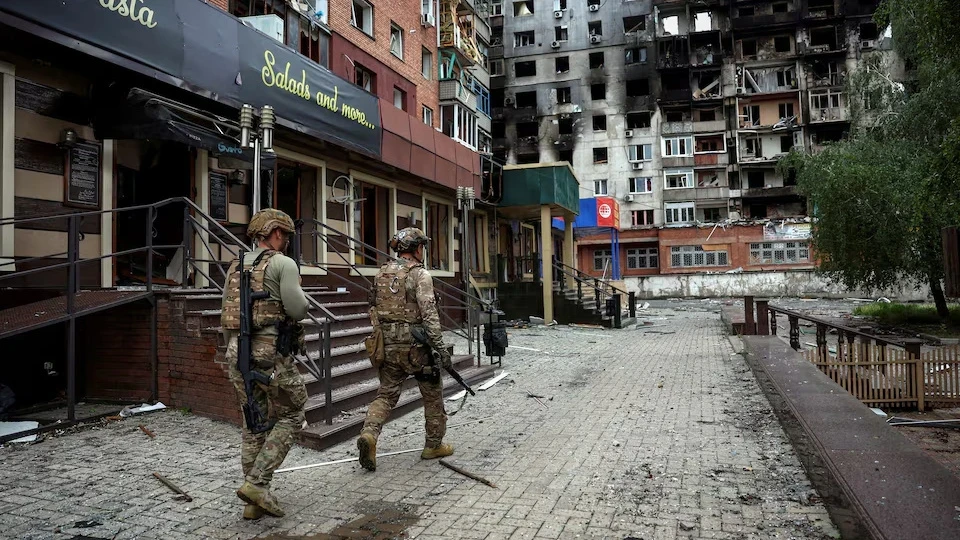
In Ukraine, such support is absent. While the entire nation honors those who died on the battlefield, another category of soldiers remains unnoticed and unrecognized.
“We have been divided into categories,” explains Kateryna. “Some died the right way, and others the wrong way.”
She is not alone in her grief. Accurate data on suicides among Ukrainian soldiers is lacking. Officials claim these are isolated cases, but human rights activists believe there may be many more.
We found three women whose tragedies are hidden behind the term “non-combat loss.”
Their tears are quiet, their stories whispered, but their grief is real and deep. They want to be heard, as each of them has lost the most precious thing in the war — a husband or a son.
650 Days
Kateryna writes letters to her son Orest every day.
“Today is the 650th day,” she says. We meet her in Ivano-Frankivsk. At her request, the names have been changed. The woman chose a rented apartment so that no one would recognize her.
She shows photographs of Orest on her phone — a tall young man in military uniform and glasses, with sad eyes. He was 25 years old. Since childhood, he was quiet and loved to read. After school, he enrolled in the history department, dreaming of a scientific career abroad.
In January 2023, Orest was returning home from an interview when he was stopped by a military recruitment patrol. Kateryna says that day became a turning point in her life.
Orest had poor eyesight since childhood. He passed a medical commission and was deemed unfit for service.
“He didn’t hide from the army. He wasn’t sent a summons — he was just caught on the street. I wasn’t going to get him out of it; I said he couldn’t see. What more do you need?” she says.
Her son told her that he was immediately sent for a medical examination and declared fit for service. According to him, the documents stating his unfitness were torn up. The military recruitment office denies this.
Then began his service at a training ground and transfer to the front, where Orest became a signalman. Kateryna noted how her son changed: he became more withdrawn, and his messages became shorter.
“He started to fall into depression. I understood that he was not well,” she recalls.
Her son spoke little about his service, only once mentioning how they were sent into battle without preparation. The BBC has no way to verify this information.
And then Kateryna received a call from the military recruitment office.
“Two people came and said it was psychological support service. I didn’t immediately understand what had happened. They said ‘he died.’ Not ‘he was killed,’ but ‘he died.’ Suicide. I couldn’t believe it,” she recalls.
In the first days after her son’s death, Kateryna cannot remember anything. She wore his robe, which still smelled of Orest. While reading the investigation materials, she noticed some alarming points.
According to the documents, Orest died from “self-inflicted gunshot wounds.”
“In one document, it says ‘single shot,’ and in another — ‘burst’… There were no witnesses. This happened on the second floor. They heard a shot, but the explanations are almost identical,” she recounts. She fears that Orest may have been killed or driven to suicide.
“I can’t say for sure whether it was suicide or if he was provoked. He found himself in a completely unfamiliar situation, under constant threat to his life,” she explains.
It was also shocking that she received no assistance from the state.
“The investigator called me a month later and asked if I had calmed down. He said I had no payments and no prospects,” she recalls.
Now her life is dedicated to the fight for the truth about her son. Kateryna is trying to get the investigation reopened: “This is about justice. You had a child, they took him, sent him to war, gave him a gun. And then they brought back a body, and that’s it. The state is no longer involved.”
Kateryna feels the pain of the indifference of those around her, as she often hears condemnation of soldiers who committed suicide.
“This person was in hell. How can people judge what happened there? He didn’t run away. He didn’t kill anyone; he took his own life,” she says.
Her tears make it hard for her to speak. Helplessness and fatigue weigh on her shoulders. She thanks us for listening to her and admits that she rarely trusts anyone with her story.
“I don’t cry in front of people. But I cry every day,” she says quietly.
On the Sidelines
“We need rotation, all the guys are tired. We have no strength left. I’ve done so much bad — it’s just awful. If I were sitting next to you…” — I watch a video that Marianna, the wife of another fallen soldier, sent me later.
In the video, her husband Anatoly speaks gently, his voice soothing, but there is fatigue in his eyes. He records the video against the backdrop of a village near Bakhmut. Soon he will take his own life in the hospital after being wounded.
We meet with Marianna in Brovary near Kyiv, where she and her husband moved from Donbas after the conflict began in 2014.
“He was an honest man. He always tried to do everything right, to hurt no one. We lived together for 25 years,” she says, her eyes shining as she remembers her husband.
When the full-scale war began, Anatoly immediately signed up at the military recruitment office as a volunteer; he came six times before he received a summons.
“They told him: are you tired of living? Go home,” Marianna recalls. She remembers the resolve with which he went: “I understood when he said: who, if not me? Should our son go to die? Who else will go? I’ve already lived enough.”
A month after training, Anatoly was already a machine gunner near Bakhmut, where heavy fighting was taking place. People were falling from exhaustion, and instead of several days of rest, they were immediately sent into battle.
One day he told her that in one outing their unit lost almost 50 people, and their bodies remained in the field. Marianna noticed how he became more withdrawn.
“I saw how hard it was for him morally because he was a kind person. The death of his comrades weighed on him,” she says.
The situation worsened when Anatoly ended up in a hospital in Chernihiv after being wounded and having part of his arm amputated. Marianna says her husband began to confuse reality, thinking he was in captivity.
One day they spoke on the phone, and in the evening he stopped answering. The next day, when Marianna went to visit him in the hospital, she was told that he had taken his own life. He was found in the yard.
“I believe he lost touch with reality,” Marianna says through tears. Although Anatoly was a lover of life, he had plans — to build a house and wait for grandchildren.
“The war broke his psyche. He became disillusioned with his team and everything that was happening,” she adds.
When Marianna went to the military recruitment office, she was told that since her husband is considered a suicide, he cannot be buried in the military alley, and there will be no memorial ceremony.
“I started to argue, saying: wait, when he was at zero and doing something for the country, he was useful, and now he’s a suicide? This is his life; he made that decision,” she recounts.
Marianna faces condemnation and misunderstanding even among other military widows.
“I see that there is condemnation. ‘My husband died as a defender of the Fatherland, and yours died by his own hand,’” Marianna shares. She is overwhelmed with pain and a sense of injustice.
“The country just threw me to the sidelines. I gave my husband to protect my state, but the country took him from me. I am left alone in this country. Without any help.”
According to her, the only place where she finds support is an online group of women who have lost husbands to suicide. They are preparing a petition to revise the laws to achieve equal rights with families of other fallen soldiers.
“They didn’t do this for nothing. I believe this is a consequence of PTSD. For me, my husband is a hero. I want him to be remembered as a hero,” Marianna repeats.
“My War is Not Over”
“Once a priest told me that you will live with this for the rest of your life,” Victoria recounts about her husband Andriy.
To meet with us, she came from her hometown in Lviv. She did not tell her son that she would be speaking with journalists; he was against it. All due to the fear of condemnation.
Before the interview, Victoria warns that she will cry. We agree to that.
Andriy went to the front as a volunteer, despite a congenital heart defect. He fought for his service in the military recruitment office and was assigned as a driver to a reconnaissance unit, participating in the liberation of Kherson.
In June 2023, his unit was in Dnipropetrovsk region when Victoria received a call from the military recruitment office.
“They read to me that he committed suicide. I was in shock; I couldn’t understand how this could happen,” Victoria says.
“And then the madness began,” she recalls.
“Such causes of death are now called ‘non-combat loss’ so it doesn’t sound harsh. I am angry at everyone. I am angry at the system,” she says, her voice breaking. “Even if he did it himself, he gave a year and a half to protect the country.”
Her husband’s body was brought back only on the tenth day. During the identification at the morgue, Andriy was already in uniform, and she was discouraged from viewing the body. Only after the funeral did Victoria find a lawyer who uncovered contradictions in the case.
Thanks to the lawyer, Victoria gained access to photographs from the investigation materials and began to doubt: “I don’t believe what happened. The photos show that the body was moved.”
Victoria blames herself for accepting the investigation’s version. “I probably believed that the case would be investigated properly,” she says. But after doubts about a possible murder arose, she sought to reopen the investigation through the military prosecutor’s office.
The lawyer warned her of a long road ahead. But Victoria is determined not to give up. I ask what this struggle means to her.
“I am not fighting for money. I am fighting for my husband’s name. I have to see this case through to the end. He cannot stand up for himself,” she says resolutely: “My war is not over.”
With sadness, Victoria notes that there are very few like her to change the system.
God, State, People
The stories of Kateryna, Marianna, and Victoria are typical. Their suffering and struggle for the truth reflect a broader, systemic problem that military personnel, human rights activists, and advocates speak about.
“In war, everyone believes in God. Not everyone is religious, but everyone believes because they hope for the truth,” says military chaplain Borys Kutovyi.
We meet in a church in Dnipro. He communicates with soldiers on the front lines and knows how close they come to death. According to him, chaplains often become the first interlocutors for soldiers, even before psychologists: “The priest earns trust among the warriors. He supports them differently and may know a lot about the internal state of soldiers.” Soldiers are more prone to mental disorders and suicides than civilians.
“A person with a weapon is in a high-risk category,” he explains, especially concerning mobilized soldiers, who are less prepared for stress and may have psychological problems that do not manifest during medical examinations.
The chaplain asserts that there have been three cases of suicide in his sector since the war began. This indicates a deep spiritual and psychological crisis that the system cannot recognize in time.
“For me, one suicide is already too many. A human life is priceless. If we have at least one case, it means we are not doing enough,” he says.
The tragedy of families who have lost loved ones to suicide also has a social dimension.
“We all experience grief, but for those who have lost someone to suicide, the burden is even heavier,” says Oksana Borkun, founder of the “Mayemo zhyty” (Ukrainian for “We must live”) movement.
We meet at the alley of glory in Irpin, where portraits of fallen soldiers hang. Oksana is a widow; her fiancé died three years ago. Since then, she has been fighting for the rights of the families of the deceased.
According to her, the wives of soldiers who likely committed suicide face condemnation.
“If a person took their own life, then they are not a hero. Somewhere they refuse to bury him, somewhere — to place him on the memorial alley,” she says. It is even more painful that the law deprives the family of state support.
“These are soldiers on duty, not civilians who sleep in their beds. These are people under constant stress,” Oksana explains.
In their online community, there is a chat for non-combat losses, where about 200 families participate. Most of them doubt the suicide versions. Oksana recalls a case where relatives were forbidden to open the coffin, and after insistence, they saw that the body was “blue from bruises.” These families are seeking the truth and hiring lawyers.
Military ombudsman Olha Reshetylova agrees that support for families of soldiers who likely committed suicide is insufficient. Statistics show that the suicide rate among military personnel is not higher than in society as a whole.
“I learn about such cases two or three times a month,” she says. With each year of war, these risks are increasing.
“We have been in active combat for the fourth year now. People are exhausted. They have seen hell and have been in these conditions for a long time. Even a strong psyche may not withstand,” she adds.
The ombudsman emphasizes that the war continues, and such cases may increase, and this needs to be addressed.
First and foremost, prevention is necessary.
Although on paper the psychological assistance system for military personnel works, in practice, the staff is only partially filled, and the training of specialists is insufficient. Often, military chaplains occupy this niche, of which there is a shortage in the Armed Forces of Ukraine.
The second is the family’s right to the truth.
“Families do not know what really happened, and they do not trust anyone,” the ombudsman explains.
“Among known cases, there are those where suicide may conceal murder. When there is no access for command and law enforcement agencies at the front line, anything can happen,” she adds.
If commanders lean towards the suicide version, the investigation often adjusts to this hypothesis, which primarily affects families left without answers.
“In small communities, suicide is considered a disgrace,” says Reshetylova.
Therefore, the ombudsman’s team is working on changing practices: introducing mandatory photo and video documentation from the scene of a probable suicide and replacing the term “committing suicide” with a more neutral one.
However, in her opinion, when it comes to compensation and honoring the memory of the deceased, an individual approach is needed. “There is a difference between the suicide of a recruit and a fighter who has gone through a long combat path,” she says.
“This person risked their mental health defending the state,” emphasizes Olha Reshetylova. Such families deserve support, and soldiers deserve proper honors.
Military chaplain Borys Kutovyi and advocate for the rights of Ukrainian widows Oksana Borkun disagree with this approach. They believe that suicide is a consequence of war, and all such deceased should receive honors, and their families should receive compensation.
Despite the disagreements, all interviewees are convinced that suicides among military personnel are not private tragedies but systemic problems that need to be addressed together with the state.
But the most challenging challenge awaits Ukraine after the war ends, when many soldiers return.
Psychologist Sebastian Junger said that modern veterans are ready to give their lives for their country but do not know how to live after the war. Society needs to be prepared for their return, explains Olha Reshetylova.
“Society must understand that those who were your neighbors just a few years ago have gone through a completely different path. The warmer the welcome, the fewer tragedies there will be,” she adds.
The preparation of this material also involved Kevin MacGregor and Oleksiy Nazaruk. The author of the illustrations is Maggeram Zeynalov.