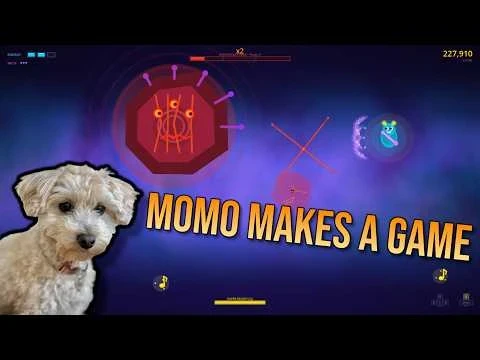
Caleb Leak, the author of a YouTube channel, came up with an interesting experiment: his dog controls a neural network that writes code for a game. The process involves the dog pressing keys on a keyboard, while the artificial intelligence transforms random characters into a working project on the Godot engine.
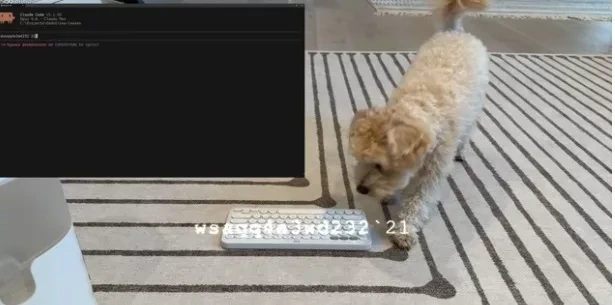
For the experiment, a dog named Momo, a Cavapoo breed, was chosen. The owner placed a Bluetooth keyboard on the floor, which was connected to a Raspberry Pi 5. Each time the dog pressed the keys, it received a treat from a special feeder.
No key press went to waste — a special program written in Rust sent the data to the AI service Anthropic Claude Code. The requests looked like a set of random characters, for example: "skfjhsd#$%".
To enable the neural network to correctly process these nonsensical combinations, the author used an interesting approach. He presented the AI as an eccentric game developer who uses encrypted commands and tasked it with deciphering them into game ideas and writing the corresponding code.
The experiment was successful: from the first key presses to the completed game took only one to two hours. The project was created on the Godot 4.6 engine, and the logic was written in C#.
As a result, a game called Quasar Saz was created, in which the main character named Zara battles with distorted sound. The game includes six levels and a final boss battle, and its graphics are styled to reflect the atmosphere of the 1980s.
This experiment demonstrated that modern neural networks are capable of generating working code even based on requests containing only nonsensical characters.