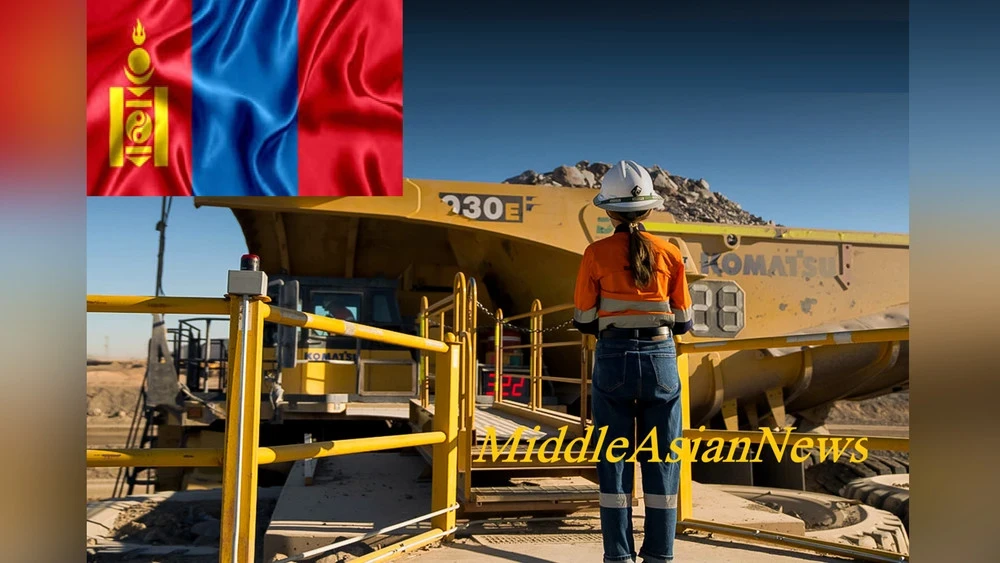
According to data published by the National Statistical Office of Mongolia (NSO) on Wednesday, the volume of industrial production in the country in 2025 amounted to ₮52.9 trillion ($14.8 billion), which is 4.8 percent more than the previous year. This was reported by MiddleAsianNews.
The National Statistical Office (NSO) reported that the growth was mainly due to increased production volumes in key sectors of mining and processing.
The mining sector continues to be one of the main elements of Mongolia's economy due to its rich natural resources, including gold, copper, silver, and coal.
In 2025, 99.2% of Mongolia's total export volume consisted of products from the mining industry, including coal, copper, and iron ore.
It is expected that in 2026, Mongolia's GDP will grow by 5.7–5.9%. The main growth factors will be mineral extraction, increased investment in infrastructure, and rising domestic demand. The latest forecast from the Asian Development Bank (ADB) emphasizes not only sustainable growth but also the need to consider downward adjustments compared to previous forecasts due to weakening export volumes.
According to forecasts, in 2026, Mongolia will continue to demonstrate economic resilience, although structural problems will remain. The AustCham Mongolia forecast is based on the analysis of local data, assessments from the Asian Development Bank, and general economic trends.
⛏️ Key Growth Factors:
• Mining Sector: Copper extraction at Oyu Tolgoi and other mining enterprises remain the main driving forces of growth, with increased production and export volumes contributing to revenue growth.
• Services and Non-Commodity Sectors: The development of the services sector, construction, and energy contribute to the expansion of the economic base.
• Agriculture and Domestic Demand: Agriculture shows signs of recovery after losses from dzud, while private consumption and investment support overall economic activity.
💹 Inflation and Macroeconomic Pressure: Inflation is expected to remain high, but by 2026 it may decrease to around 7%, providing some relief for households and businesses in planning expenses and investments.
Coal continues to be the cornerstone of Mongolia's economy, playing a significant role in industrial production, exports, tax revenues, and logistics chains. Approximately 70% of total industrial production is provided by the mining sector, with coal accounting for about 43% of this volume. The mining industry also dominates the country's export basket, making coal a key source of foreign currency and liquidity.
Moreover, the coal industry supports services through trade, transport, and job creation. The volume of transportation in this sector creates demand for rail and road freight, while the growth of the mining sector as a whole contributes to strengthening the labor market and increasing consumption.
Thus, the performance of the coal industry has a significant impact on the country's economy.