Kyrgyz Ornaments
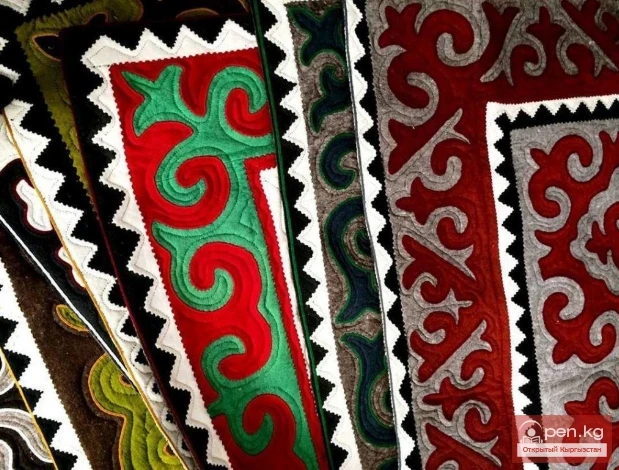
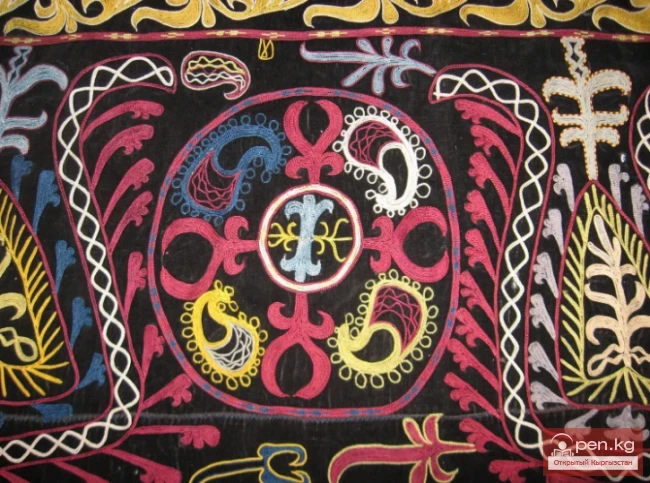
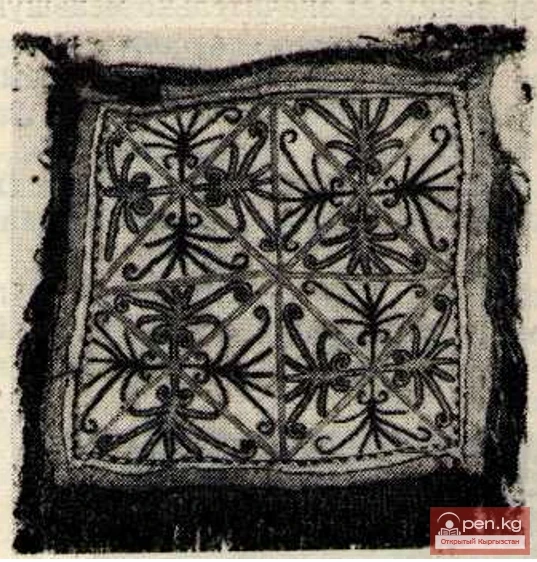
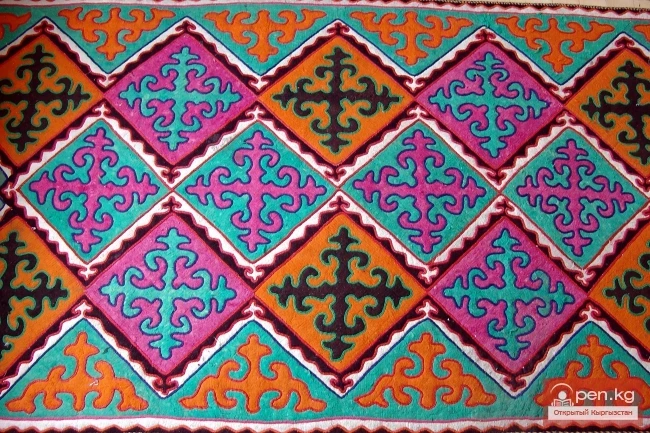
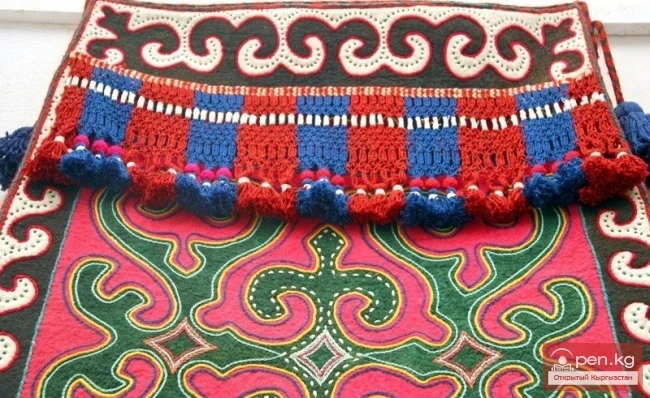
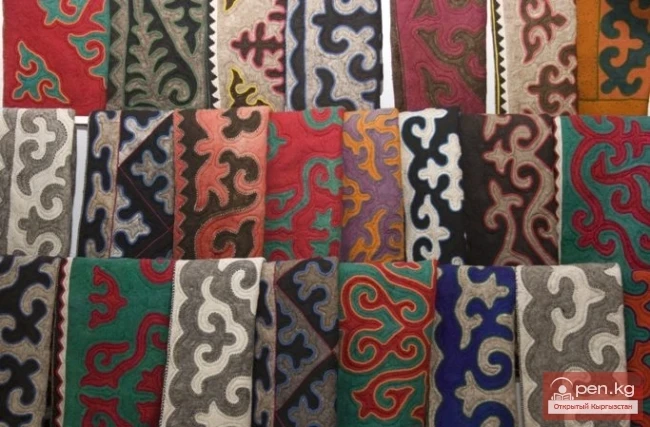
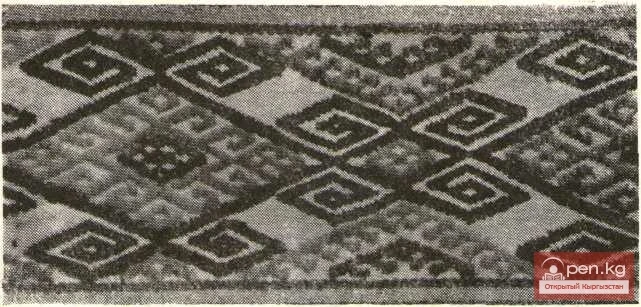
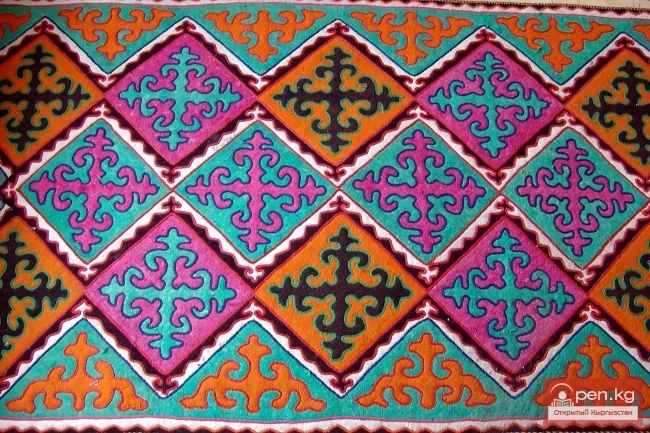
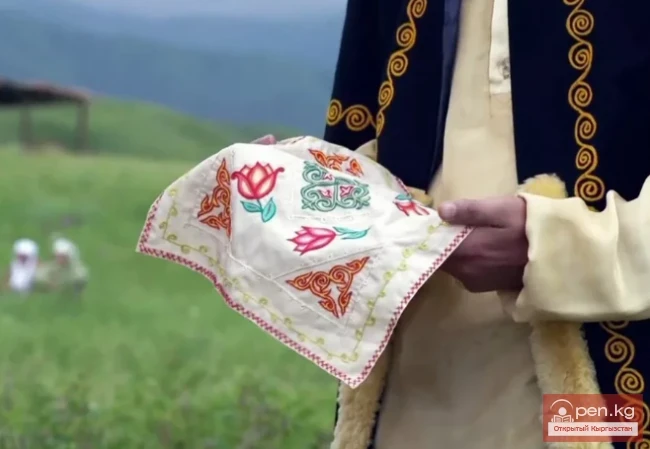
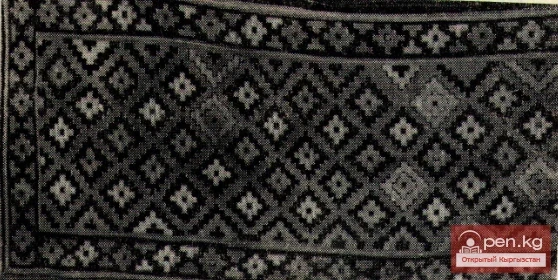
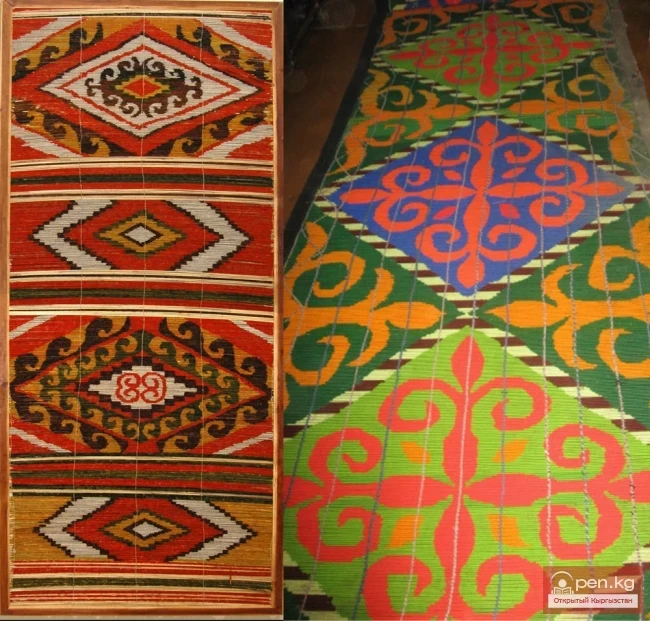
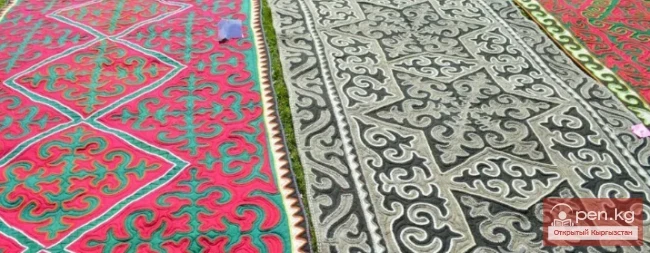
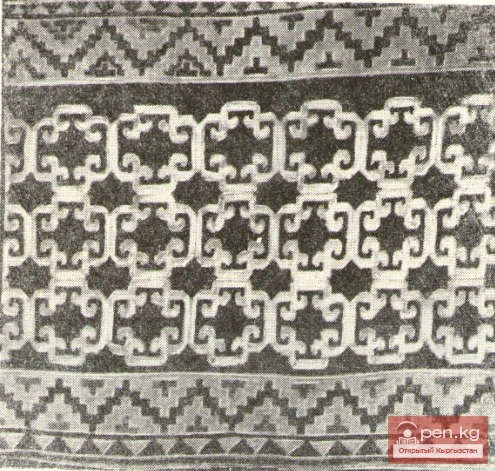
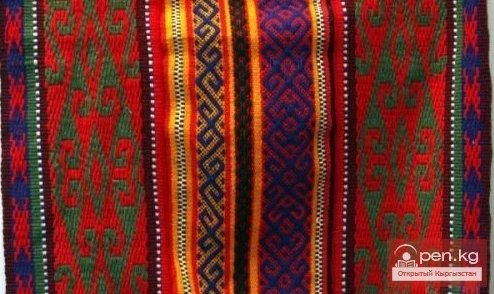
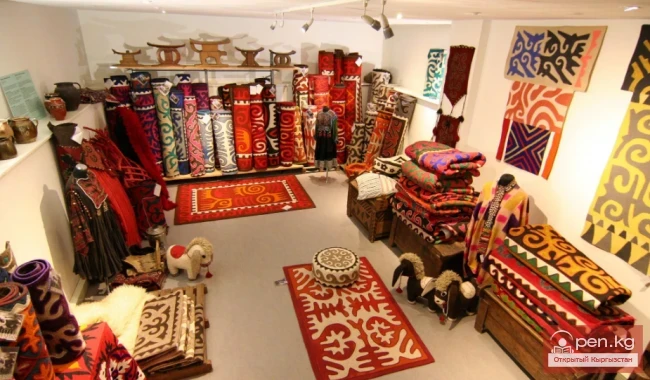
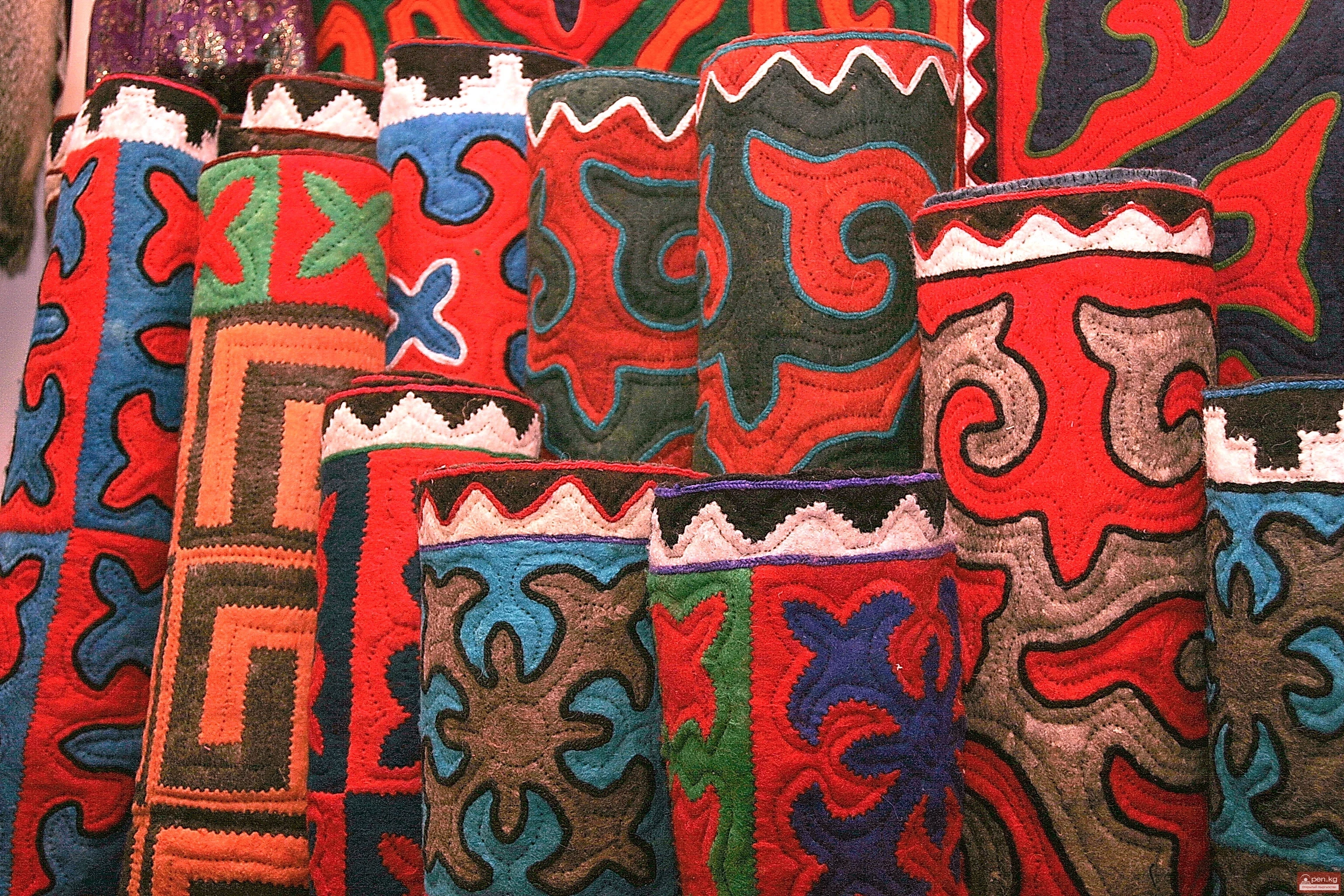
The main ornamental motif is the curl, executed in various variations. Sometimes the entire pattern consists only of curls enclosed in squares or triangles. This decoration, "ala kiyiza," is most typical for the Batken region. More often, artisans develop simple and more complex rosettes that incorporate the curl motif in different combinations and positions.
According to many researchers, the horn-shaped ornament has a zoomorphic origin, reflects the pastoral direction of the economy, originated in ancient times, and has survived to this day in a highly stylized form. This motif is known among the Kyrgyz and is widely recognized in Central Asia and Kazakhstan as "kochkor muyu." Variations of the pattern are called "synar muyu" (one horn), "kosh muyu" (double horn). However, most artisans who identify themselves as "ichkiliks" refer to the curl motif as "kaykalak." The Andijan Kyrgyz also call the curl pattern by this name. M. S. Andreev, who collected ornaments among the Pamir Kyrgyz, noted an ancient pattern they had "in the form of an oblique cross with a small vertical stick in the middle," which he considered a stylized representation of the figure of an ancient deity, explaining the name of the pattern as "khaykal," i.e., "image," "statue," "representation of a deity." According to E. M. Peshchereva, the Kyrgyz name "kaykalak" undoubtedly conveys in Tajik diminutive form the widely known word "khaykal" in Central Asia, meaning image, representation, and also amulet.
Observations show that the pattern called "kaykalak" is understood by artisans as a curl, a hook (sometimes referred to as "ilmek"). This is all the more likely since among the Kyrgyz, the word "kaykala" means to bend backward, "kaykai" — to lean back, "kayky" — to be concave, "kaykach" — bent back.
In second place in terms of popularity in Kyrgyz ornamentation is the plant-derived pattern called "toguz dobo" — nine hills. Under this same name, the widely distributed plant "manzhetka" (Alchimella L.), which is part of the fodder grasses, is known throughout Kyrgyzstan. Its leaves are round, with 7-9 lobes ending in rounded teeth. Artisans often refer to figures of similar designs as flowers.
A pattern in the form of three shoots having one base is widely spread. Usually, this pattern is called "karga tyrmak" (crow's claws) in the eastern part of the region, and "kaz ayak," "kaz alk" (goose's paw) in the western part. We conventionally refer to this pattern as a trefoil. It is typical for all types of decorations not only in Kyrgyz ornamentation. Its widespread use is evidenced by numerous historical monuments. T. K. Basonov notes it in Kazakh plant ornamentation.
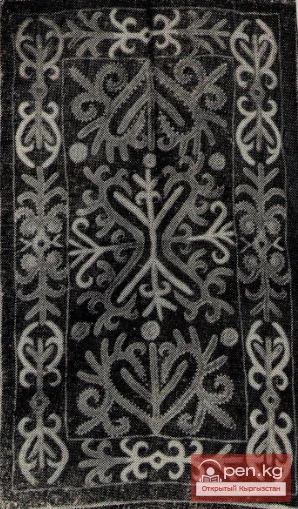
A pattern in the form of a wavy line with rhythmic branches is popular on felt carpets, as well as on other Kyrgyz products. In the eastern part of the Osh region, it is called "kyial" (dream, thought). In Central Asia, many peoples know it by the name "islami." M. S. Andreev noted this pattern among the Kyrgyz of Pamir.
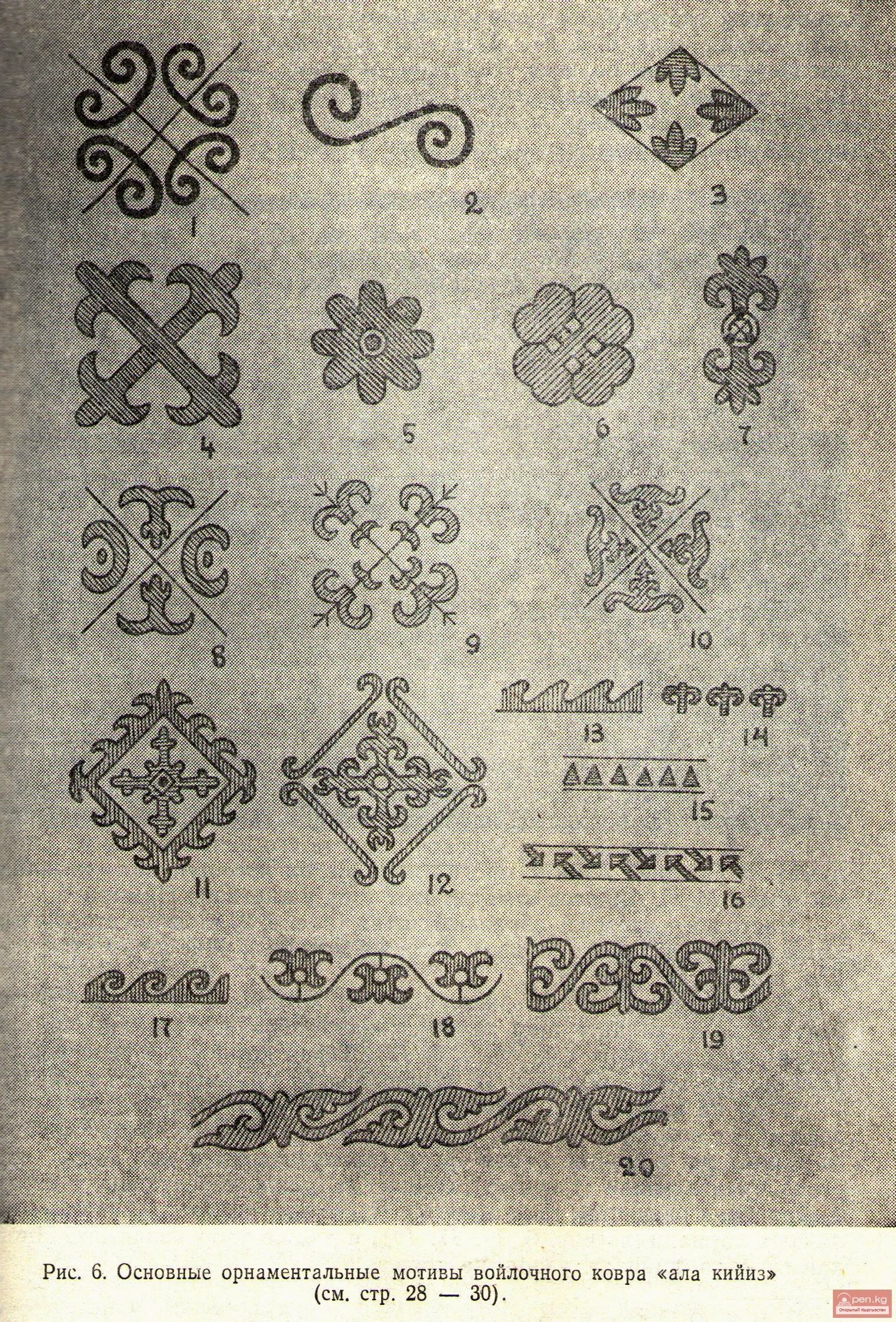
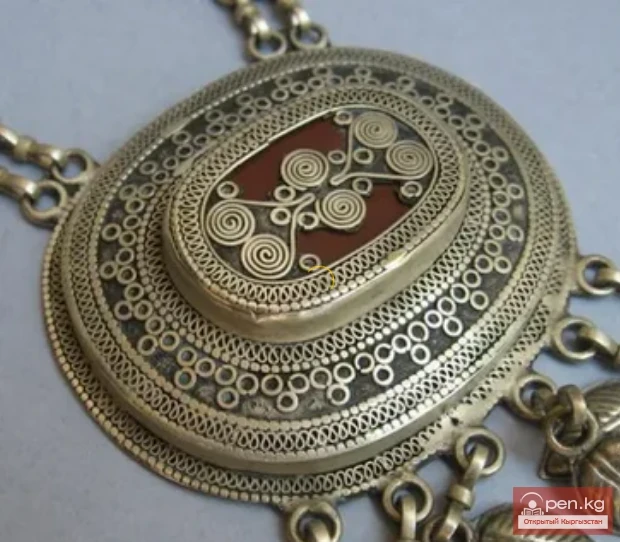
An S-shaped motif, commonly referred to as "it kuyruk" (dog's tail), as well as motifs in the form of a circle (tegerak) or semicircle, are often encountered.
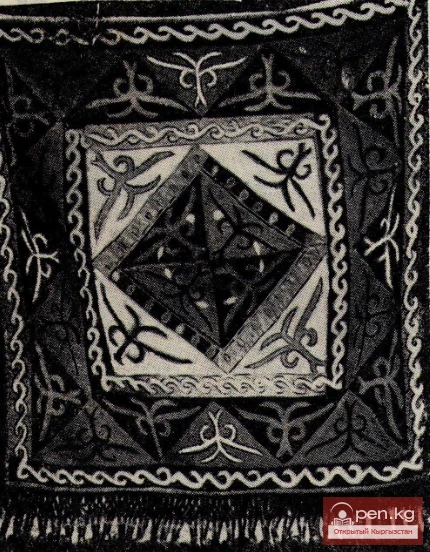
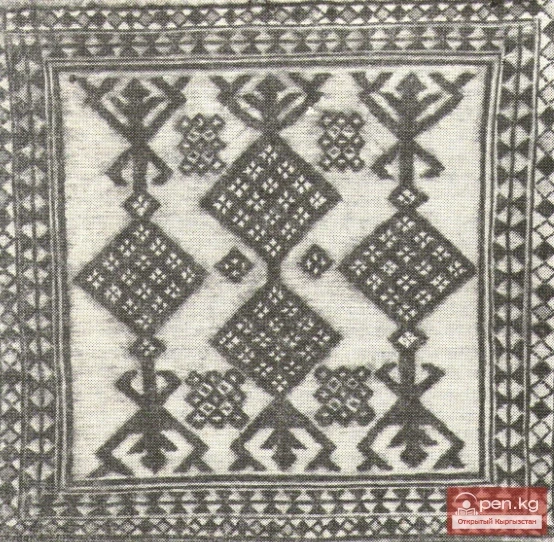
In the composition of medallions and rosettes that fill the central field, a characteristic feature is the cross-shaped arrangement of ornamental motifs. This compositional solution is typical for all felt (and embroidered) ornamentation of the Kyrgyz.
The pattern on the border of "ala kiyiza" varies, usually containing all the main motifs, starting from the simplest geometric shapes: one or two lines — "suu" (perceived as water, irrigation ditch, river), triangles (tumarcha), wavy lines, alternating segments of contrasting colors. The curl is often used in various variations, as well as the "islami" pattern. Sometimes the border of the "ala kiyiza" pattern is absent.
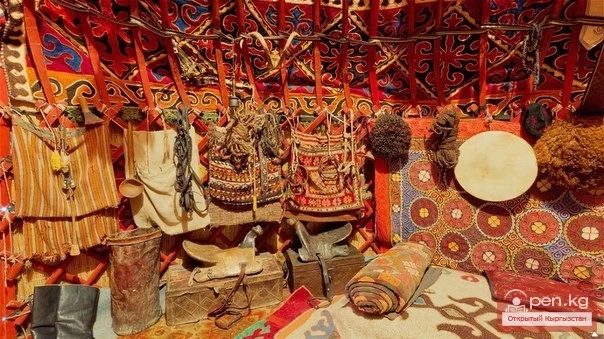
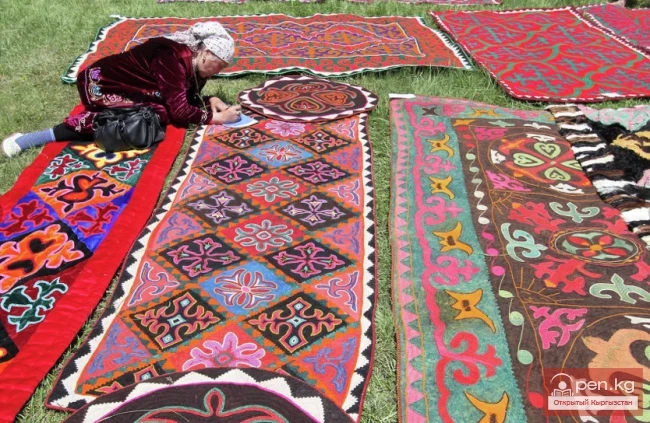
A large group of felt products consists of items decorated with cut-out patterns. This technique can be conditionally called mosaic technique. Various products of this type were important elements of the decorative decoration of the yurt and nomadic caravan in the past. These include strips (zhabyk bash), which covered the dome of the yurt from the inside, special covers for decorating items placed near the honored place (zhuk zhaby), bags for storing household items (ayak koychu, bashtyk), cups, plates (ayak kap), and wooden spoons. This technique was also used to decorate covers (uuk kap, kerege kap), which covered the ends of the dome poles and the links of the lattice framework of the yurt during migrations. However, the most perfected typical product of this kind is the patterned felt carpet "shirdamal."
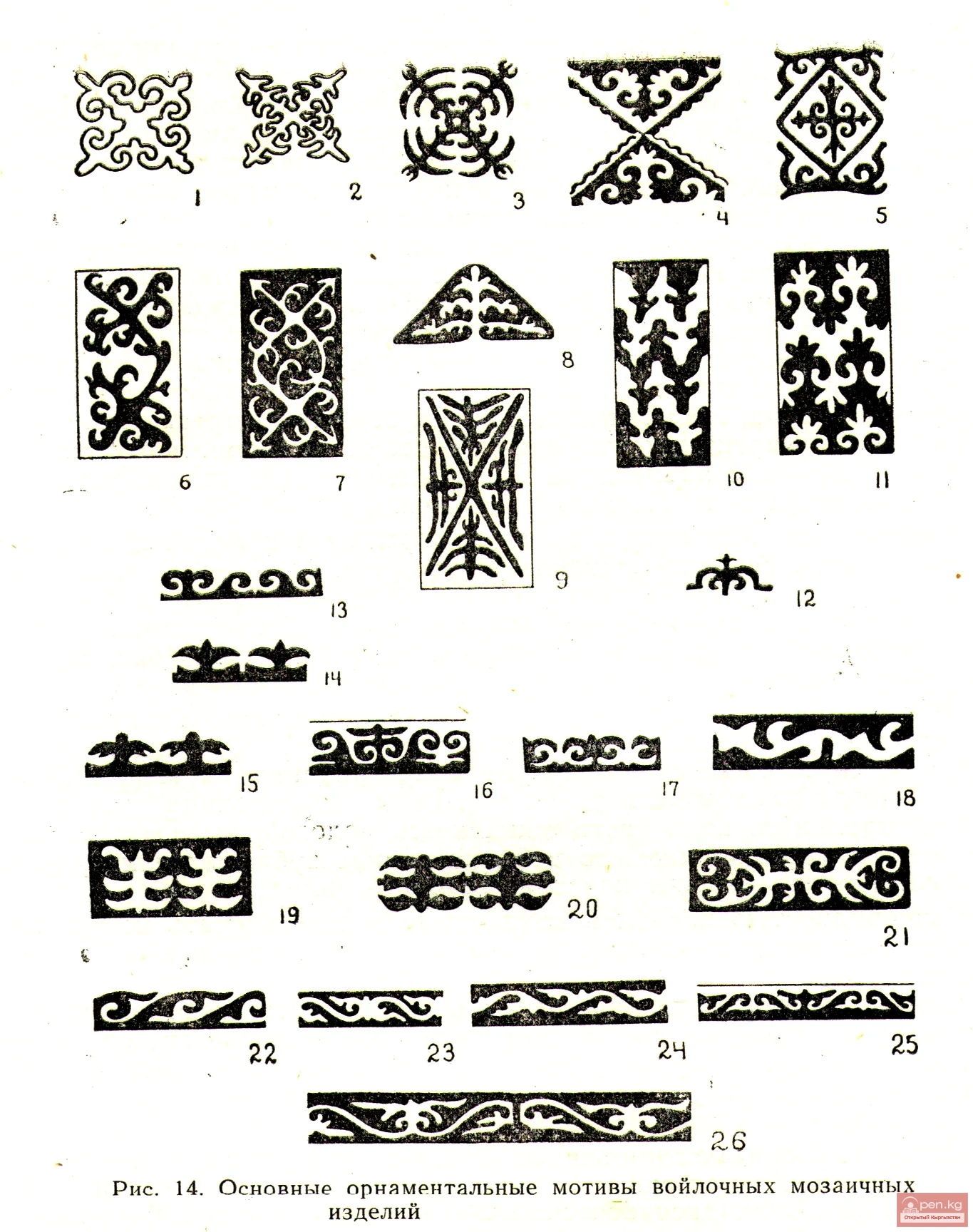
Products decorated using the mosaic technique are widespread among all Kyrgyz, but representatives of the tribal groups known as "ichkiliks" were evidently not familiar with this technique. It is not used by them even today. It is characteristic that it is also unfamiliar to other peoples of Central Asia. This technique is widely used only among the Kazakhs, where the assortment of items decorated with felt mosaic includes, in addition to those common with Kyrgyz, also covers for chests. However, not all Kazakhs are familiar with the production of mosaic carpets. For example, it is unknown to the Kazakhs of the Adaev tribe living in Mangyshlak, Buzachi.
Read also:
Carpet Patterns Related to the Animal World
Characteristics of Main Carpet Patterns Many ornamental motifs of Kyrgyz carpets bear a strong...
Plant Patterns of Southern Kyrgyz Embroidery
Southern Kyrgyz Embroidery The next ornamental motif characteristic of southern Kyrgyz embroidery...
Ornamental Embroidery of the Southern Kyrgyz
The Artistic Creativity of Kyrgyz Women At first glance, one might get the impression that the...
The Placement of Patterns in Kyrgyz Embroidery
The Arrangement of Patterns in Kyrgyz Embroidery Among the other most commonly used patterns in...
Fabric "terme"
The fabric "terme" is known to all Kyrgyz people. It is widely used among the...
Application
A significant place in the decoration of felt products among the Kyrgyz is occupied by appliqué....
Original Kyrgyz Carpets
Kyrgyz Carpet Weaving Patterns whose names are associated with the plant world are equally...
Rhythmicity in the Arrangement of Ornamental Motifs in Kyrgyz Carpets
A Unique Type of Kyrgyz Carpet In the compositional structure of the central field, rhythmic...
The Decoration of a Felt Carpet
Turning to the characteristics of the decoration of the felt carpet, we will first focus on its...
The title translates to "Khadzhary Fabric."
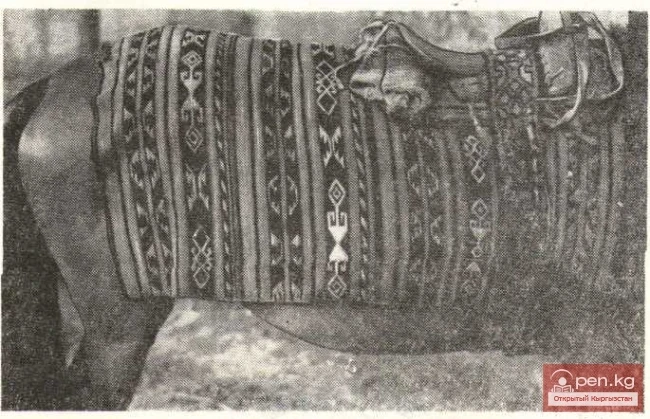
A saddle blanket made from strips of "kadjary" fabric Fabrics made using the...
"Shirdamal" Carpets
The term "shirdamal" is used among the pre-Fergana Kyrgyz. Carpets by this name are made...
The title translates to "Fabric 'Besh Keshte'."
Sample of patterned fabric 'besh keshté'. Nookat District. The most vibrant and colorful...
The technique of rolled colored pattern
Using the technique of rolled colored pattern, a felt carpet is made, which has the original name...
Ancient Kyrgyz Loop Stitches: Ilme, Ilmedos, Tuur Saimа
Loop Stitches The loop stitches ilme, ilmedos, tuura saima, and overlock stitches are considered...
The Use of Flat Seams by the Kyrgyz
Surface Stitches. Surface stitches include the basma, buraya, chirash, kepturme, suurma, jormyo,...
Seven Types of East Turkestan Carpets
Eastern Turkestan Carpets A. Felkerzam notes seven types of Eastern Turkestan carpets. Two of them...
Counting stitches of Kyrgyz artisans. The "tersayik" stitch.
Stitch "terskayik" The technique of execution, i.e., the stitch, is of great importance...
Production of Musical Instruments and Saddles by Kyrgyz People
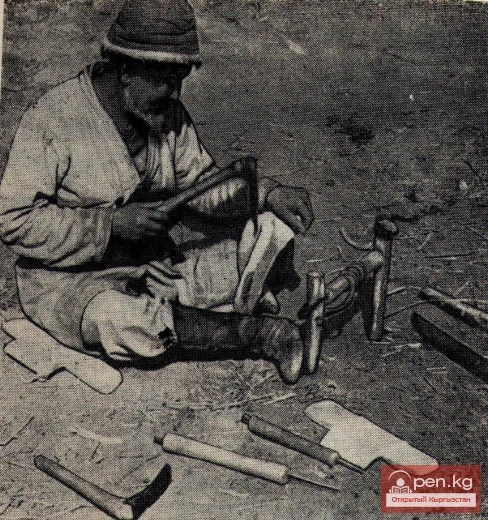
Kyrgyz Woodworking Masters Woodworking masters also make musical instruments (Fig. 84) from...
Production of Carpets in Kyrgyzstan at the End of the 19th Century
Production of Carpets In southern Kyrgyzstan, in addition to pile carpets, they also produce...
The title translates to "Koshmovalyanie among the Kyrgyz."
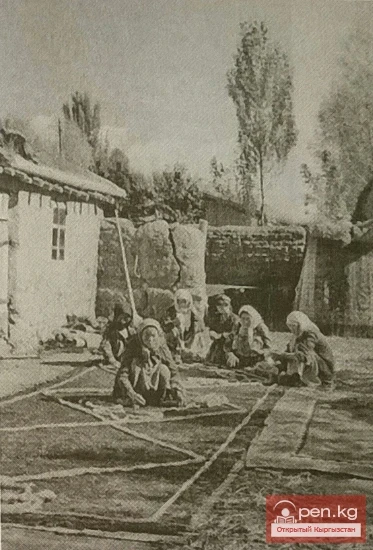
Wool Crafting. Wool served as the primary material for making felt, pile and non-pile carpets,...
Patterned weaving of "chia" stems
Kyrgyz people have long used the stems of the steppe plant chiy for various products. A. P....
Kyrgyz Ornamental Origins
Deep ancient local traditions in the art of the Kyrgyz can be traced when studying the...
Various Techniques of Kyrgyz Embroiderers
Stitch "d j or m o m ё" The stitch "d j or m o m ё" (from the word...
Processing of Silver Products by Kyrgyz People
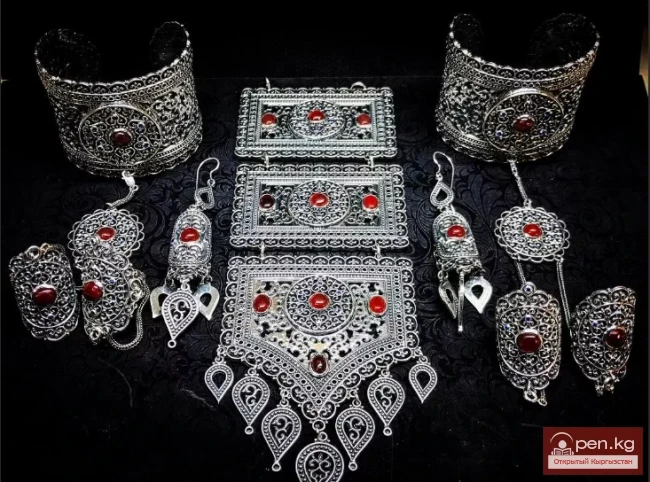
Silver Jewelry Among the Kyrgyz In the past, Kyrgyz jewelers widely used the technique of inlaying...
Kyrgyz Weaving Loom
The southern Kyrgyz are also known for a manual device for cleaning raw cotton from seeds — the...
Kyrgyz Non-Pile Artistic Fabrics
Non-pile artistic fabrics. In ancient times, all women to some extent were skilled in weaving...
Tanning of Suede among the Kyrgyz
Tanning of Suede. For this purpose, the skins of sheep, goats, mountain goats, and roe deer were...
Kyrgyz Antique Carpet Products
Pattern of Kyrgyz Antique Carpets Kyrgyz antique carpets are distinguished by their high artistic...
Creating Patterned Fabric
Typically, two women work on the navoi. One unwinds the threads onto the warp (erish) of the...
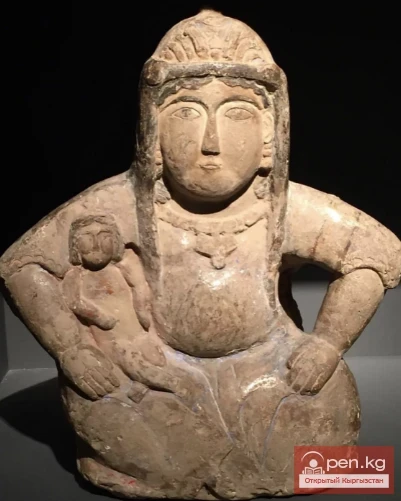
The title "Умай эне" translates to "Mother Umai" in English.
UMAI - GODDESS OF FERTILITY The ancient Kyrgyz worshipped four natural elements: Sky, Earth, Fire,...
Banknote with a denomination of 1000 som
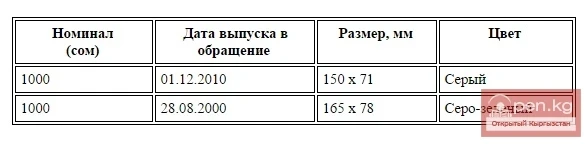
The 1000 som banknote of the 2010 series is made of white paper measuring 150x71 mm. The...
Visual Arts of the Kyrgyz SSR
Before the revolution, the Kyrgyz people knew visual arts only in its folk, applied form. The art...
White boho (sash) in men's clothing of the Kyrgyz.
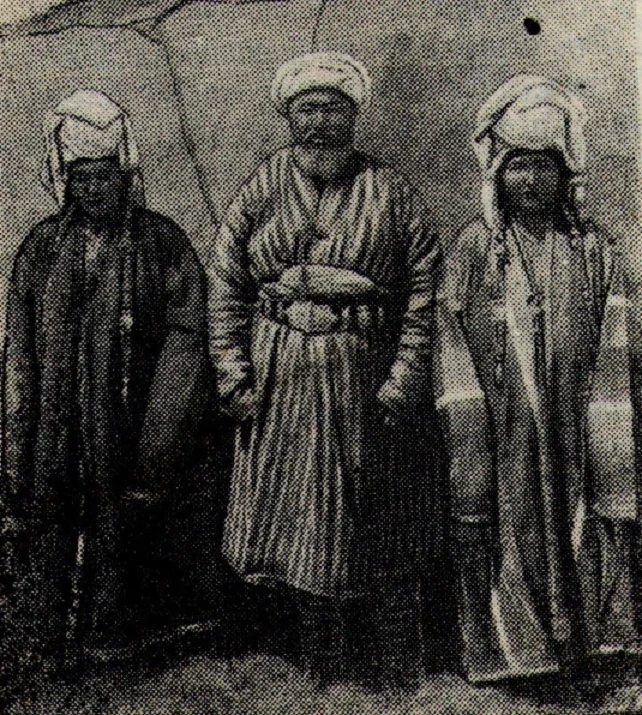
In the men's Kyrgyz costume, wearing a belt is considered mandatory. For the past hundred...
Clothing of the Southern Kyrgyz. Part - 1
The clothing of the southern Kyrgyz has not received special attention in literature. There are...
Excursion into the Material Culture and Decorative Applied Arts of the Kyrgyz People
The material culture of the Kyrgyz people from the 16th to the first half of the 19th century has...
Kyrgyz Tuluup
The clothing that protects against the cold in winter and at high altitudes in the mountains for...
In Kyrgyzstan, a "vertical" banknote has been issued.
The National Bank of Kyrgyzstan has issued an unusual commemorative banknote with a denomination...
Various Techniques of Kyrgyz Jewelers of the Last Century
Jewelry Masters of the Last Century Masters of silver craftsmanship adorned horse harnesses, items...
Southern Kyrgyz Embroidery
Embroidery of the Southern Kyrgyz Southern Kyrgyz embroidery is the result of centuries of...
The 19th Century — A Century of Radical Change in the Lives of the Kyrgyz
Settlements and Permanent Housing The 19th century was a turning point in the life of the Kyrgyz....
Artistic Crafts
Artistic Crafts: Traditions and Modernity The decorative and applied arts of various territorial...
Metalworking and Jewelry Making of the Kyrgyz in the Late 19th - Early 20th Century.
Metal Production and Artistic Metalworking The production of metal products among the Kyrgyz is...
Banknotes with a denomination of 1 som
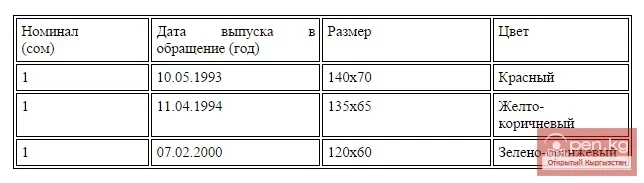
The 1 som banknote of 1993 is made of white paper measuring 140x70 mm. The predominant color of...
The Origin of the Names of Stars and Constellations among the Kyrgyz
After the Sun and the Moon, the brightest celestial body is the beautiful Cholpon, whom the Kyrgyz...
Carpet Products among the Kyrgyz
The production of pile carpet products among the Kyrgyz was closely linked to the needs of a...
The History of Transport and Communication Development in Kyrgyzstan
Transport and Communication of the Republic of Kyrgyzstan It seems that just recently only bumpy...