Devices and Weapons for Hunting by the Kyrgyz in the 19th - Early 20th Century.
Agriculture

Devices and Weapons for Hunting by the Kyrgyz in the 19th - Early 20th Century.

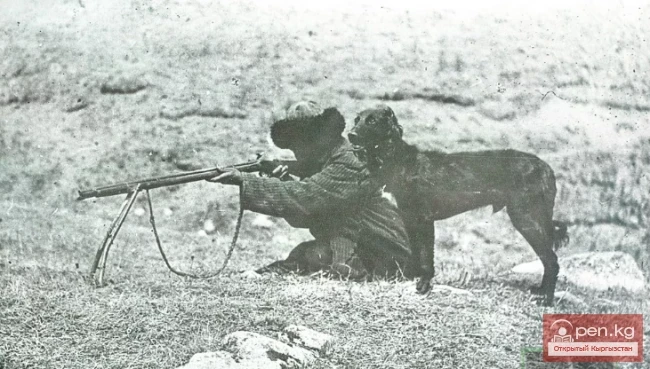
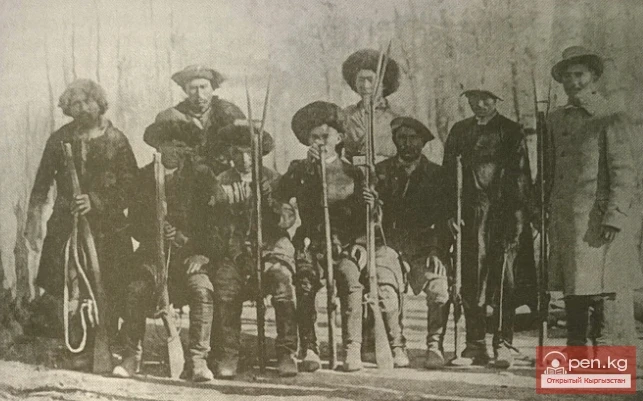
Hunting Tools and Weapons. Since ancient times, the Kyrgyz have used both "active" and "passive" forms of hunting. The former involves searching for, pursuing, and capturing game by an armed hunter, as well as group hunting. The latter involves capturing animals using pre-set traps. One of the early forms of "passive" hunting was the use of pit traps (or) with vertical walls. Typically, a camouflaged pit was made, over 2 meters deep and 1.5-2 meters in diameter,

23.11.2019, 21:41
Hunting Techniques and Division of Spoils among the Kyrgyz from Ancient Times to the Early 20th Century.
Agriculture

Hunting Techniques and Division of Spoils among the Kyrgyz from Ancient Times to the Early 20th Century.

Hunting Techniques and Division of Game. The Kyrgyz hunted both on horseback and on foot. In deep snow, they wore special stepping skis called zhapka, which significantly eased movement. They hunted large herbivores living high in the mountains either collectively using ambush methods known as bukturma or individually. The bukturma or tosot method (in Aksy and Chatkal) was carried out as follows. Participants were divided into two groups; the first group, aidakchylard, consisted of riders

20.11.2019, 04:53
Commercial Animals of Kyrgyzstan in the Early 20th Century.
Agriculture

Commercial Animals of Kyrgyzstan in the Early 20th Century.

Commercial Animals. Sources from the 19th to early 20th centuries contain information about wild animals and their distribution areas. Typical representatives of the fauna of the Tien Shan mountains included tigers and leopards, which inhabited the bushes and reeds along riverbanks, wild boars, bears, lynxes, wolves, foxes, martens, badgers, squirrels, wild cats, ferrets, stoats, marmots, kulan (wild horses), wild goats, mountain rams (argali), marals, as well as birds: vultures, eagles,

17.11.2019, 17:16
Hunting - An Important Component of the Kyrgyz Economy from Ancient Times to the Early 20th Century.
Agriculture

Hunting - An Important Component of the Kyrgyz Economy from Ancient Times to the Early 20th Century.

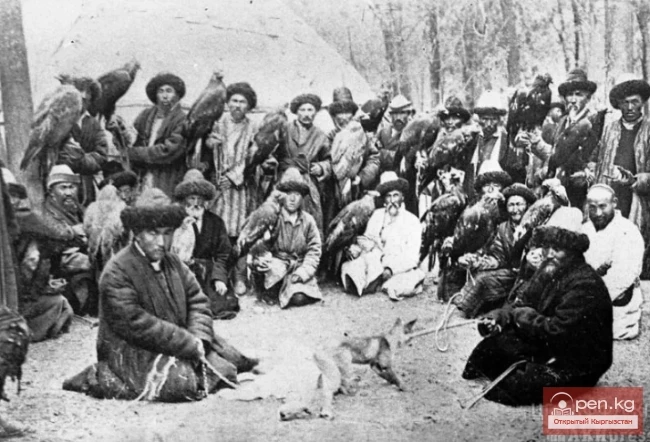
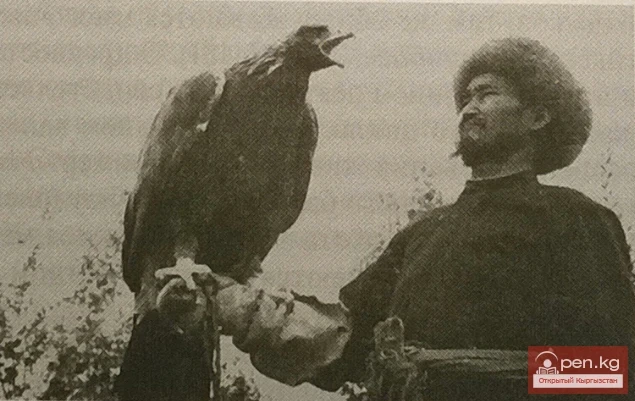
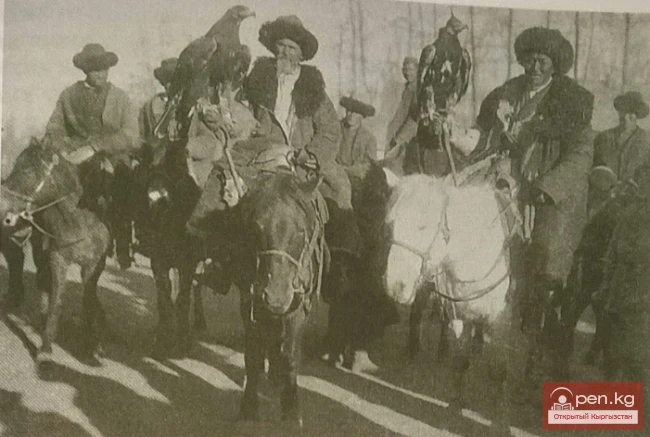
Hunters with Golden Eagles. Mountain Semirechye, Kyrgyzstan. 1926. HUNTING Hunting has been an important component of the complex economy of the Kyrgyz from ancient times until the early 20th century, complementing livestock breeding and agriculture (Abramzon, 1971; Aitbaev, 1959, p. 82; Petrov, 1961, pp. 81, 82; Zhapparov, Toktakunova, 2006, p. 43). The meat of wild animals was consumed as food, and valuable fur was used as a means of payment, exchanged for food products and other goods

13.11.2019, 16:01
Kyrgyz Irrigation Technique - Irrigation
Agriculture

Kyrgyz Irrigation Technique - Irrigation

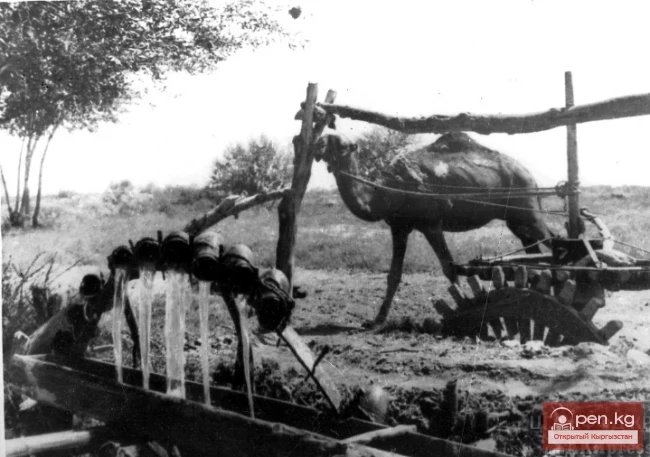
Irrigation The Kyrgyz used techniques and methods of irrigation developed over many centuries, adapted to both the flat landscapes of lowlands and the high-altitude conditions. Irrigation channels were often laid at great heights, across slopes and rugged areas with rocky soil. Simple tools were used in the construction of ditches, such as tyapka ketmen, kayla, chukuldak, choku, lom, lopata kurok, as well as the horns of mountain goats kiyiktin muyuzy - with their help, they deepened the

05.11.2019, 11:48
Agriculture among the Kyrgyz
Agriculture

Agriculture among the Kyrgyz

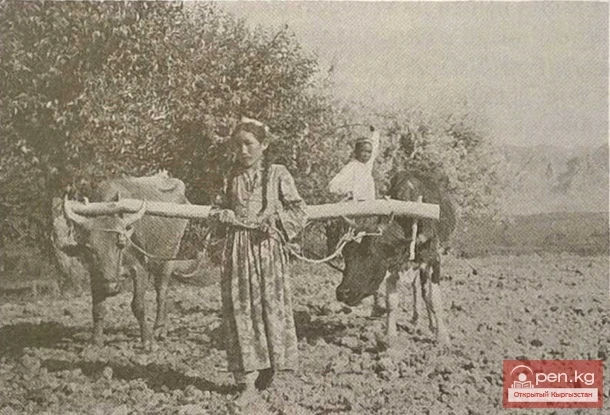
AGRICULTURE Agriculture was an important area of economic activity for the Kyrgyz, ranking second after livestock breeding. This was facilitated by the climatic conditions: the amount of precipitation in most of the country exceeds the minimum of 400 mm per year necessary for agricultural activities, and this culture has existed since at least the Bronze Age (Ivanov, 1957; Zadneprovsky, 1997, p. 4). From the mid-16th century, during the final settlement of the Kyrgyz in the Tian Shan,

01.11.2019, 15:04
Cattle Breeding Among the Kyrgyz in the 20th to Early 21st Century
Agriculture

Cattle Breeding Among the Kyrgyz in the 20th to Early 21st Century

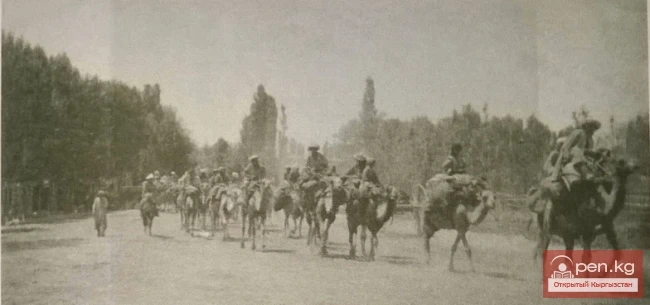
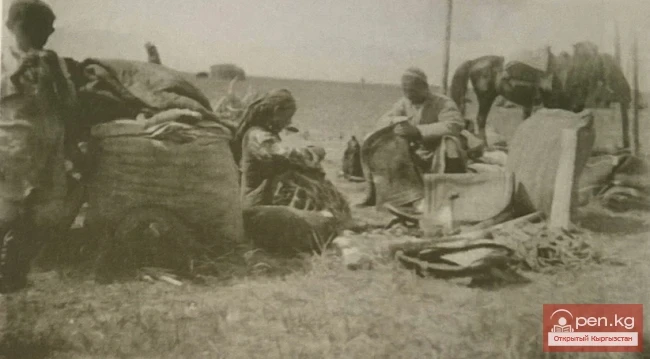
Migration near the village of Troitskoye. Kara-Kyrgyz. Syrdarya region. 1902. Animal Husbandry in the 20th - Early 21st Century By the beginning of the 20th century, animal husbandry continued to be the leading sector of the economy among the Kyrgyz. According to various sources, the number of settled households by 1914-1916 ranged from 15 to 30% in the Pishpek, Przhevalsk, and Namangan districts (in particular, in the Talas Valley, their share was especially small in the adjacent mountainous

28.10.2019, 17:28
Cattle Breeding Cults of the Kyrgyz in the Early 20th Century.
Agriculture

Cattle Breeding Cults of the Kyrgyz in the Early 20th Century.

Forage Preparation Forage preparation became widespread in the late 19th century due to a lack of pasture lands and the processes of sedentarization. Wealthy livestock owners harvested up to 10-15 thousand bundles of hay. Sometimes family members participated in this, or they worked as ashars - using collective mutual assistance, while some purchased hay from others (Manuscript fund of the Ch. Aitmatov Institute of Language and Literature of the National Academy of Sciences of the Kyrgyz

25.10.2019, 15:11
Annual Cycle of Nomadic Herding among the Kyrgyz
Agriculture

Annual Cycle of Nomadic Herding among the Kyrgyz

Ail before migration. Osh region, Alai valley. 1930. Annual Cycle of Pastoral Livestock Breeding All pastures were divided into summer (jailoo), autumn (kuzdov), winter (kyshtoo), and spring (zhazdoo). The most intense and responsible period was the wintering of livestock. The harsh, prolonged cold period with severe frosts, winds, frequent and heavy snowfalls, as well as the constant need for tebenevka (snow digging) required efforts to maintain the herd, especially since the nutritional

24.09.2019, 14:12
Composition of the Kyrgyz Herd
Agriculture

Composition of the Kyrgyz Herd

Composition of the Herd Kyrgyz people raised horses, sheep, yaks, goats, camels, and cattle. For normal grazing in vertical herding, an average of at least one horse is needed for every six sheep (Akmoldoeva, 1983, p. 121). Overall, horse breeding was the leading branch of livestock farming, as horses were less prone to winter mortality than other animals—they could relatively easily find feed under the snow and moved more easily in the mountains. Horses were used as the main means of

22.09.2019, 14:45
Cattle Breeding among the Kyrgyz
Agriculture

Cattle Breeding among the Kyrgyz

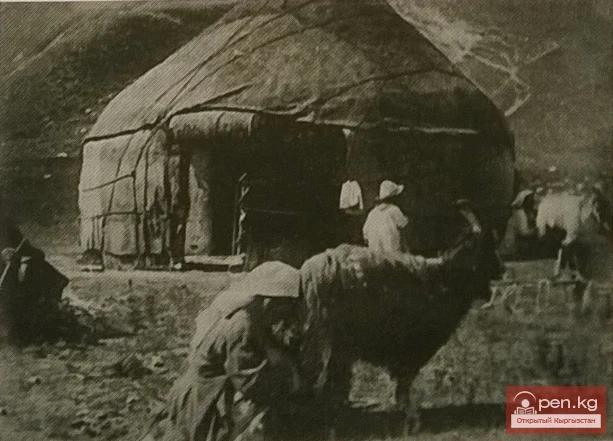
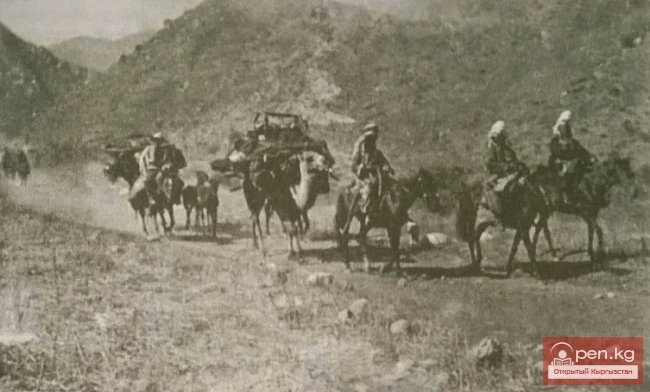
Migration in the Alai Range. Early 20th century. Kyrgyz SSR HERDING The leading sector of the traditional economy of the Kyrgyz was extensive animal husbandry, which belonged to the mountain-steppe Central Asian subtype, a cultural-economic type of herders in Eurasia. This primary sector was combined with equally significant ones—agriculture and hunting. The historically established dominant type of economy absorbed the rich experience accumulated by both ancient and medieval inhabitants of

19.09.2019, 15:38
Agriculture of the Southern Kyrgyz in the 19th - Early 20th Centuries.
Agriculture

Agriculture of the Southern Kyrgyz in the 19th - Early 20th Centuries.

The second half of the 19th century and the beginning of the 20th century were filled with significant historical events. The Kyrgyz population repeatedly rose against the oppression of the Kokand Khanate. After its fall, the territory of Southern Kyrgyzstan became part of Russia (1876). Gradually, patriarchal-feudal relations began to break down, and the seeds of capitalism emerged. Trade intensified, and industrial enterprises appeared, particularly coal mines. Cotton cultivation began to

15.04.2015, 13:15
Production of Livestock Products as of March 1, 2015
Agriculture

Production of Livestock Products as of March 1, 2015

Meat Production. During the reporting period of 2015, economic entities of all categories in the republic produced 55.6 thousand tons of meat in live weight, which is 888 tons or 1.6% more than the corresponding period of the previous year. The increase in meat production occurred mainly due to an increase in the number of agricultural animals, except for pigs, as well as due to the provision of preferential loans to the livestock sector in 2014 amounting to 4,177.0 million soms, which

14.03.2015, 06:41
Water Management
Agriculture

Water Management

In the system of water use and water consumption, intra-economic and inter-state water relations, the Law of the Kyrgyz Republic "On Water," adopted on January 14, 1994, with some amendments and additions made in 1995, has been approved and is in effect. Its main feature is that it established the payment for natural resource use rights, as well as for water supply services and for discharges of pollutants into water bodies and water management structures, within the established

03.11.2014, 14:11
Agriculture
Agriculture

Agriculture

Grain farming is one of the main sectors of agriculture. Economic difficulties in agriculture over the past few years have also affected grain farming. Agriculture has not been adequately supplied with machinery, and the number of tractors and grain harvesters has decreased. To develop grain farming, the use of mineral and organic fertilizers is necessary, which contributes to increased yields. Due to the worsening economic situation, most farms were unable to purchase the now expensive

03.11.2014, 13:46
Agriculture, Land Resources of Kyrgyzstan
Agriculture

Agriculture, Land Resources of Kyrgyzstan

Land Resources of Kyrgyzstan The climatic features dictate the development of agricultural sectors and farming with a high level of irrigation. The landscapes of the low semi-closed basins — Fergana, Chui, Talas — have been almost completely transformed into cultivated landscapes. Here, viticulture, horticulture, melon growing, and vegetable growing are well developed, with all cotton, tobacco, rice plantations and major areas of grain and technical crops concentrated. Rainfed and semi-rainfed

20.03.2014, 17:07