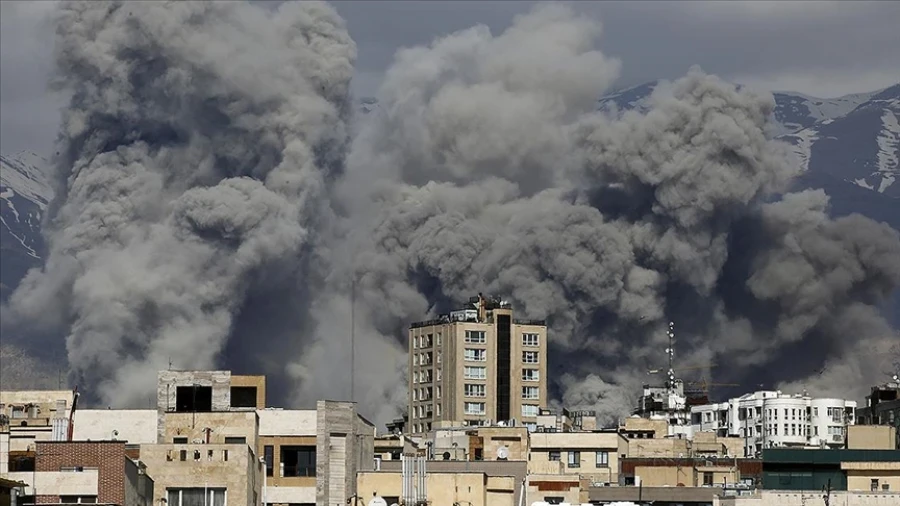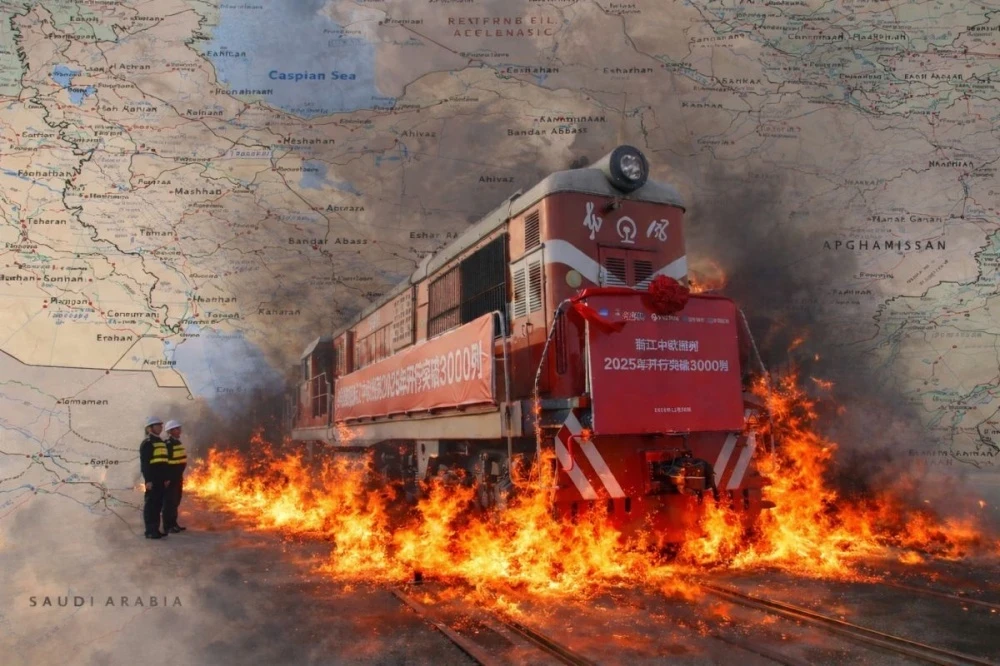
Recent escalation of tensions between Israel and the United States on one side and Iran on the other is largely associated with Iran's active transport diplomacy in Central Asia. This ambition is driven by a common goal of strengthening positions in the field of transit cargo transportation, especially against the backdrop of the growing importance of land corridors "East – West" and "North – South." Despite ongoing international economic sanctions and pressure from the United States, Iran is actively developing cooperation with neighboring states, which allows it to establish itself as a key transit hub in the region. Support for the Southern corridor to Europe, which involves almost all Central Asian countries as well as China, is a vivid example of this strategy, as noted by the online journal "Military-Political Analytics."
In recent years, Central Asia has transformed into a key region for the transformation of Eurasian transport infrastructure. This phenomenon, according to Uzbek analyst Nargiza Umarova, has given a new impetus to the creation of sustainable trade routes through Iran aimed at Western and Southern Asia, as well as Europe. This trend aligns with the Chinese initiative "One Belt – One Road," which Iran joined in 2021 after signing a long-term cooperation agreement with Beijing.
China is increasingly exploring the southern branch of the "New Silk Road." Due to the exacerbation of the maritime situation and the conflict in Ukraine, which made the Northern corridor through Russia and Belarus inaccessible, Beijing was forced to redirect part of its cargo to continental routes. Alternative multimodal transport through the Caspian and Black Seas, offered by Central Asia and the Caucasus, is becoming increasingly attractive. In 2024, the volume of cargo transported via the Middle Corridor reached 27,000 containers, which is 25 times more than in 2023. Beijing is also interested in further supporting the Southern transit route for economic and geopolitical reasons.
According to data, the European Union is China's second-largest trading partner, with trade between them reaching $762 billion in 2024, with a forecast growth to $850 billion in 2025. Given that high-tech goods dominate China's exports to the EU, preference is given to container transportation for land logistics. The transit corridor through Iran is technically well-suited for this purpose. The completion of the construction of the China – Kyrgyzstan – Uzbekistan railway and the connecting line from Iran's Marand to Cheshmeh-Sorayi and further to the Turkish border is expected to make this corridor monomodal, eliminating the need for ferry crossings over Lake Van, which currently complicates the operation of the Southern corridor.
In 2025, Iran's Ministry of Roads and Urban Development announced plans to build nine transit railway corridors with a total length of 17,000 kilometers, costing over $10 billion. Once these projects are completed, the Iranian railway network will be able to transport up to 60 million tons of cargo per year. Some of these, such as the 200-kilometer Marand – Cheshmeh-Sorayi railway, will be part of the Southern railway corridor connecting East and West.
Considering the exclusive rights granted by the United States for the development of the Zangezur corridor, dubbed "Trump's Route to International Peace and Prosperity" (TRIPP), China is increasingly supporting the Southern corridor through Iran. The establishment of the joint venture TRIPP Development Company, where 74% of the shares are owned by the U.S., is perceived by Beijing as an attempt by Washington to gain control over cargo transportation along the Middle Corridor. To mitigate this risk, China needs reliable transport routes that bypass the Caspian Sea.
Currently, a railway terminal is being constructed in Serakhs, on the border of Turkmenistan and Iran, which is expected to accelerate container transportation along the route China – Central Asia – Iran – Turkey – EU and through the Persian Gulf. In August 2025, Iranian authorities reported that more than 50% of this project had been completed.
China and Iran have also agreed on the electrification of a 1,000-kilometer section of the railway from Serakhs to Razi on the border with Turkey. This project includes the construction of additional tracks, which is expected to triple cargo turnover to 15 million tons per year.
Iran and Turkmenistan also plan to expand the railway tracks between the stations in Serakhs with widths of 1435 mm and 1520 mm to increase the capacity of border crossings and accelerate cargo transportation. It is expected that the volume of cross-border cargo transportation will grow to 20 million tons per year, of which 6 million tons will be transported by rail. Both countries have confirmed their readiness to strengthen the Southern railway corridor in the western direction and develop the multimodal transport corridor Central Asia – Persian Gulf, launched in 2016 under the Ashgabat Agreement between Uzbekistan, Turkmenistan, Iran, and Oman.
Uzbekistan's policy of diversifying trade flows and establishing effective transport links with global markets significantly contributes to the development of the southern branch of the transit corridor East – West. In 2022, Tashkent, in partnership with Ankara, launched freight railway transportation along the route Uzbekistan – Turkmenistan – Iran – Turkey, which is seen as the fastest and most efficient route for bilateral export and import supplies.
Tashkent views the Southern corridor, whose capacity is currently limited to 10 million tons per year due to technical and political reasons, as an important factor for its economic growth through a significant increase in the export of transport services. This prospect is closely linked to the completion of the construction of the China – Kyrgyzstan – Uzbekistan railway, scheduled for 2030. Integration with Iran's railway network within the framework of a unified transport space of the Shanghai Cooperation Organization will reduce the route from East Asia to Europe by 900 kilometers, and delivery time will decrease by seven to eight days.
The Southern railway corridor is expected to become the shortest monomodal route between two economically developed regions. Simultaneously, the construction of an international highway connecting China with Tajikistan and Uzbekistan is planned, which will increase cargo flows towards Iran – Turkey and will contribute to the development of the multimodal corridor China – Tajikistan – Uzbekistan – Turkmenistan – Iran – Turkey / EU. The pilot implementation of this project is scheduled for 2026.
Work is also underway on the railway corridors China – Kazakhstan – Uzbekistan – Turkmenistan – Iran – Turkey / EU and China – Kazakhstan – Turkmenistan – Iran – Turkey / EU, coordination of which is carried out through regular consultations between the railway authorities of the six countries. In 2025, two meetings took place, the first of which was held in Tehran in May, after which China sent its first freight train from Xi'an to Aprin, Iran's largest land port, via Kazakhstan and Turkmenistan. This route reduced delivery time to about 15 days, which is twice as fast as maritime transport. By the end of 2025, 40 freight trains had been sent from China to Iran, significantly increasing the level of cargo transportation compared to seven trains over the previous seven years. These events are significant not only for trade between China and Iran but also for improving transport links between East Asia and Europe.
On August 2, 2025, another round of negotiations took place in Beijing between the heads of railway companies from Iran, Kazakhstan, China, Uzbekistan, Turkmenistan, and Turkey regarding the operation of the southern branch of the "East – West" corridor. Following the May meeting, a preliminary agreement was developed on unified tariffs for transportation along the railway route China – Kazakhstan – Uzbekistan – Turkmenistan – Iran – Turkey / EU and measures to increase cargo volumes, including standardized delivery times and simplification of procedures.
Central Asian states seek to use Iranian transit not only for access to Turkey and Europe but also for reaching the Indian Ocean through Iran's largest southern ports – Chabahar and Bandar Abbas. In 2023, Uzbekistan announced plans to build a terminal and warehouse facilities at the Shahid Beheshti port in Chabahar. In 2025, Kazakhstan announced its intention to create a transport and logistics terminal at the Shahid Rajaei seaport, which is part of the Bandar Abbas port. Tajikistan and Kyrgyzstan are also actively developing transport cooperation with Iran, ensuring access to Iranian maritime infrastructure through Uzbekistan and Turkmenistan. These events highlight the significant expansion of multimodal corridors along the north-south axis and the growing role of Central Asia in global logistics.
Cooperation between Central Asia and Iran, due to geographical location and diverse transport infrastructure, is becoming increasingly important. Despite existing international sanctions, the countries in the region maintain a pragmatic approach in relations with Iran, using transport diplomacy to strengthen their transit capabilities. A key task for the future is the joint elimination of bottlenecks in the Southern transit corridor, which will require harmonization of transport policies, legislation, technical standards, as well as the establishment of a coordinating body to align the actions of railway administrations along the entire route.
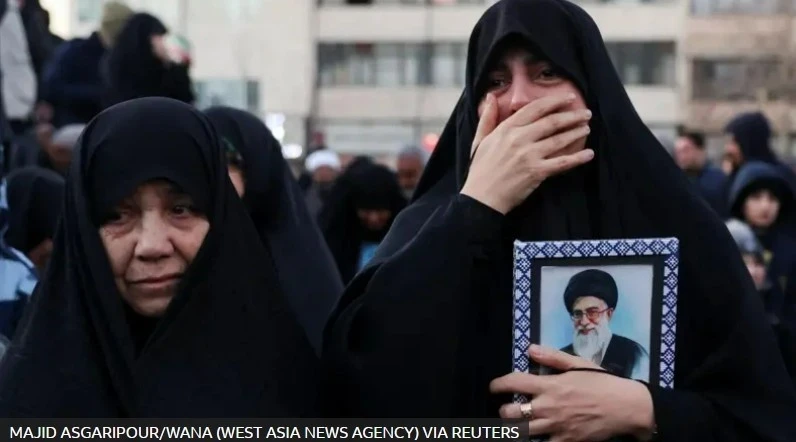
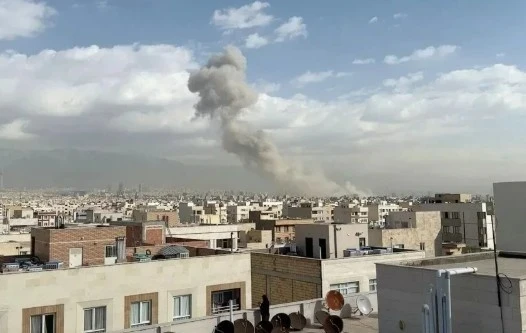
Furthermore, it is necessary to develop a coordinated approach to the conflict situation surrounding Iran, which may threaten the prospects of regional transport projects. Central Asian states must clearly define and protect their interests in relations with Western partners, including the United States, striving for favorable conditions for the development of trans-Iranian routes, Umarova believes. However, as it appears, the authors of aggression against Iran, despite positive statements and summits in Washington, initially did not intend to consider the interests of either Tashkent, Astana, or other countries.