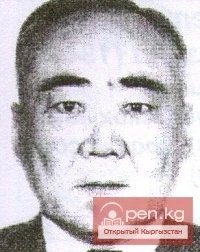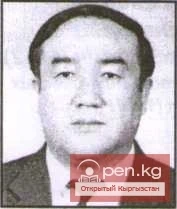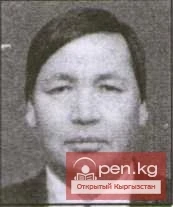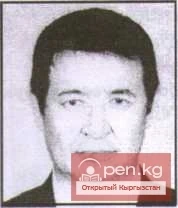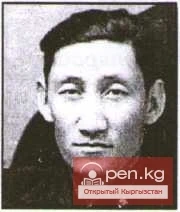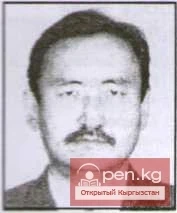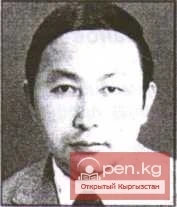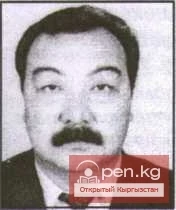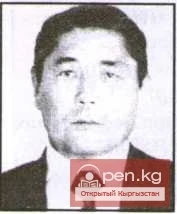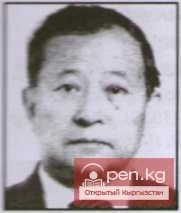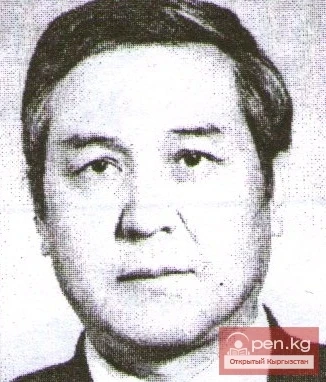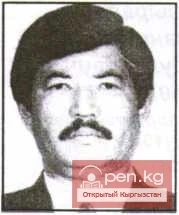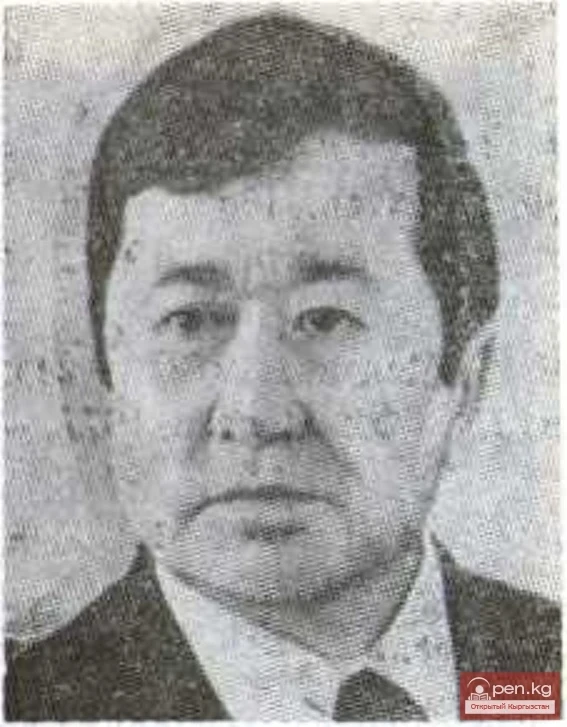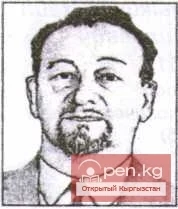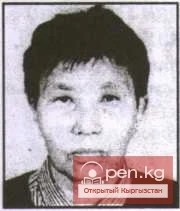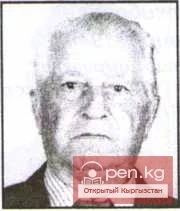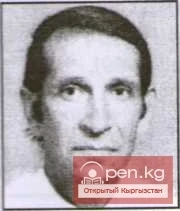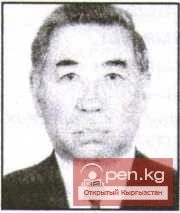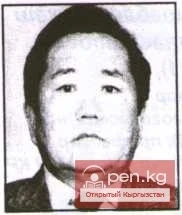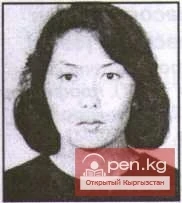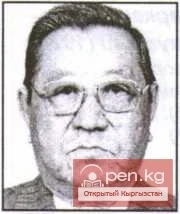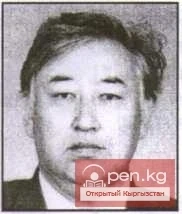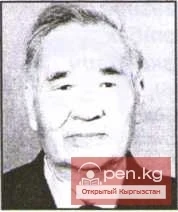
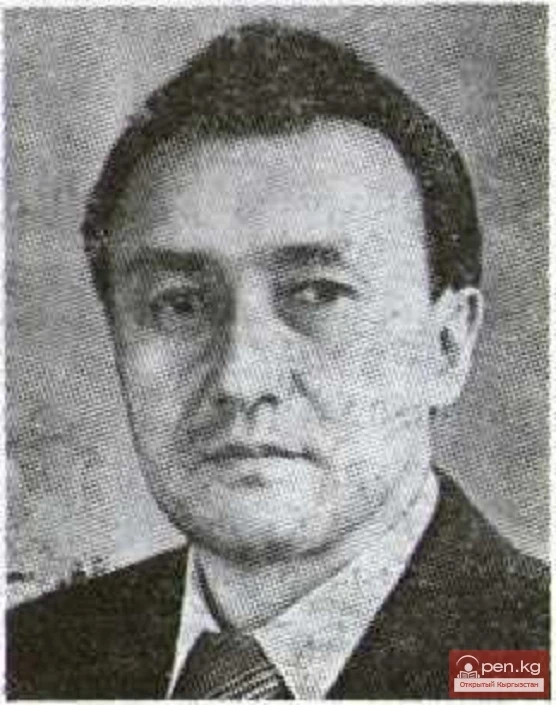
Brimkulov Nurlan Nurgazievich (1953)
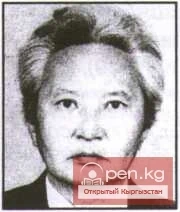
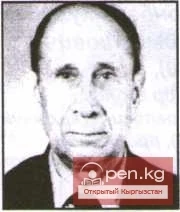
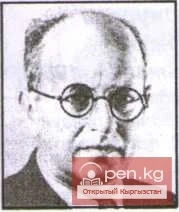
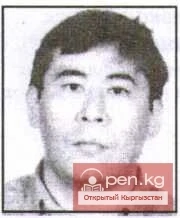
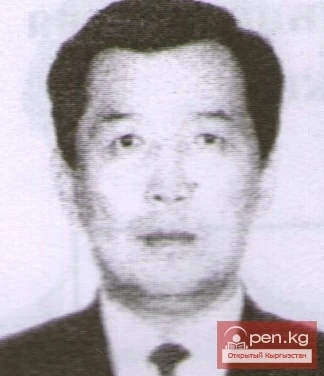
Brimkulov Nurlan Nurgazievich (1953), Doctor of Medical Sciences (1991), Laureate of the State Prize of the Kyrgyz Republic in the field of science and technology (1996).
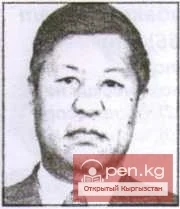
Brimkulov Ulan Nurgazievich (1948), Doctor of Technical Sciences (1992), Professor (1995), Corresponding Member of the National Academy of Sciences of the Kyrgyz Republic (1993).
Buylashev Talaybek Sabralievich (1957), Doctor of Medical Sciences (2001), Professor (2002). Kyrgyz. Born in the city of Naryn, Naryn Region. Graduated from KGMI (1981), postgraduate studies at the Research Institute of Pediatrics of the USSR Academy of Medical Sciences (Moscow, 1987). Worked as a junior researcher at the Kyrgyz Research Institute of Resortology and Physiotherapy, a doctor at the Republican Clinical Hospital, a doctor at the Children's Clinical Hospital, a senior
Boshkoev Zhusup Beyshekadyrovich (1962), Doctor of Medical Sciences (1999), Professor (2002). Kyrgyz. Born in the village of Orto-Uryukty, Issyk-Kul District, Issyk-Kul Region. Graduated from KGMI (1986), and completed postgraduate studies there (1991).
Botbaeva Mira Mahmudovna (1927), Candidate of Biological Sciences (1963), Professor (1985). Kyrgyz. Born in the village of Kara-Suu, Toktogul District, Talas Region. Graduated from KGU (1956), postgraduate studies at MSU (1958).
Botbaev Ilyas Mahmudovich (1931), Doctor of Agricultural Sciences (1984), Professor (1990), Academician of the National Academy of Sciences of the Kyrgyz Republic (1997), Laureate of the State Prize of the USSR in the field of science and technology. Kyrgyz. Born in the village of Kara-Suu, Toktogul District, Talas Region. Graduated from the Kyrgyz Agricultural Institute (1953), postgraduate studies at the A. N. Severtsov Institute of Animal Morphology of the USSR Academy of Sciences (1959).
Bochkaev Yakov Vasilievich (1928), Doctor of Technical Sciences (1967), Professor (1969), Corresponding Member of the Russian Academy of Agricultural Sciences (1991), Laureate of the State Prize of the Kyrgyz Republic in the field of science and technology (1976). Russian. Born in the village of Alamedin, Chui region. Graduated from the Kyrgyz Agricultural Institute (1954). Worked as an assistant, senior lecturer, head of the Department of Hydraulics and Automation, and dean of the
Botashev Azret-Aliy Ilyasovich (1937-1995), Doctor of Physical and Mathematical Sciences (1984), Corresponding Member of the Academy of Sciences of the Kirghiz SSR (1989).
Borubaev Altai Asylkanovich (1950), Doctor of Physical and Mathematical Sciences (1991), Professor (1992), Laureate of the State Prizes of the Kyrgyz Republic in the field of Science and Technology (1998, 2002), Academician of the National Academy of Sciences of the Kyrgyz Republic (2000)
Boronbaev Erkin Kaparovich (1947), Candidate of Technical Sciences (1979), Professor (1995).
Borbugulov Mukhtar Borbugulovich (1930), Doctor of Philological Sciences, Professor (1970), Laureate of the State Prize of the Kyrgyz Republic in the field of science and technology. Kyrgyz. Born in the village of Kyz-Kol, Suzak District, Jalal-Abad Region. Graduated from KSU (1952), postgraduate studies at the Institute of World Culture of the USSR Academy of Sciences named after A.M. Gorky (1957).
Mikhail Nikolaevich Bolshakov (1907-1992), Doctor of Technical Sciences (1952), Corresponding Member of the Academy of Sciences of the Kyrgyz SSR (1954). Russian. Born in Kaluga, Russian Federation. Graduated from Leningrad Polytechnic Institute (1931).
Literary scholar, translator V. Vakulenko was born in the settlement named after M. V. Frunze in the Sokuluk district of the Kyrgyz SSR in a working-class family. In 1963, he graduated from high school in his hometown, and in 1971, he graduated from the philological faculty of Leningrad State University named after A. Zhdanova. From 1964 to 1967, he served in the ranks of the Soviet Army. He began his professional career in 1971 as an editor at the "Kyrgyzstan" publishing house, and
Poet M. Bularkieva was born in the village of Kozuchak in the Talas district of the Talas region in a peasant family. In 1954, she graduated from high school in her native village, and in 1959, she graduated from the philological faculty of KGU. From 1963 to 1965, she was a student at the Higher Literary Courses under the USSR Union of Writers in Moscow. She began her labor biography in 1959 as an editor at Kiruchpedgiz, and from 1966, she served as the responsible secretary, and from 1980, as
Poet and playwright T. Bostonkulov was born in the village of Ana-Kyzyl in the Uzgen district of the Osh region in a peasant family. In 1971, he graduated from the X. Tashirov Secondary School (Kara-Suu district), and in 1984 — from the A. M. Gorky Literary Institute under the USSR Writers' Union in Moscow. From 1971 to 1973, he served in the Soviet Army, and from 1973 to 1979, he worked as a collective farmer and laborer. Since 1984, he has been working as a proofreader at the
Poet A. Bortsov was born in the city of Odessa in a family of a doctor. In 1932, he graduated from a seven-year school in Odessa, then studied at a vocational school for tram drivers. From 1933 to 1938, he worked as a mechanic at various enterprises in Odessa. From 1938 to 1949, he served in the ranks of the Soviet Army. In 1949, he moved to Frunze. From 1950 to 1953, he worked as the commandant of the RPSH under the Central Committee of the Communist Party of Kyrgyzstan. In 1954, he was
Improvisational poet I. Boronchiev was born in 1910 - 1978 in the village of Alchaluu, Chui region of the Kyrgyz SSR, in a family of poor peasants. In 1929, he joined a collective farm. This period marks the beginning of his creative activity. He became known among the people as a singer-improviser. In 1936, he was accepted as a soloist in the Kyrgyz State Philharmonic. That same year, his poem "The First Five-Year Plan" was published for the first time, followed by the poem
Literary scholar, prose writer, playwright, poet M. Borbugulov was born on May 5, 1930, in the village of Kyz-Köl, Suzak district, Osh region, in a peasant family of modest means. From 1946, he studied at the Jalal-Abad Pedagogical School, from 1947 at the Teacher Training Institute, and in 1949 he transferred to the second year of the Kyrgyz State Pedagogical Institute in Frunze. In 1952, he entered the graduate school of the A. M. Gorky Institute of World Literature of the USSR Academy of
Prose writer, playwright, screenwriter E. Borbiev was born on August 12, 1937, in the village of Kashka-Suu, Sokuluk District, Kyrgyz SSR, in a teacher's family. After graduating from Kyrgyz Secondary School No. 5 named after A. S. Pushkin in Frunze in 1956, he studied at the FPI, and from 1960 to 1966 — at the journalism department of the philological faculty of KGU; from 1971 to 1973 — a student at the Higher Directing and Screenwriting Courses in Moscow. From 1960 to 1963, he worked as
Prose writer and translator S. Bolekbai was born in the village of Kyzyl-Dyikan in what is now the Moscow district of the Kyrgyz SSR into a peasant family. In 1937, he graduated from the Kyrgyz Pedagogical Technical School in Frunze. From 1952 to 1955, he studied in the evening department of the philological faculty of KRU. While a student at the pedagogical technical school, he worked as a correspondent for the newspaper "Leninchil Zhas," where he later worked in 1941 and from 1947
Improvisational singer and akyn-songwriter O. Bolebalaev was born in 1888—1967 in the village of Chondaly (now part of the Kant district of the Kyrgyz SSR) in a family of a herdsman. He learned to read and write from the village mullah. In his youth, he composed love lyrical and lyrical-epic songs. As an improvisational singer, he emerged after the Great October Socialist Revolution. The development of O. Bolebalaev's creativity as an akyn was significantly influenced by K. Akiev, with
Poet and playwright J. Bokonbaev was born on May 16, 1910 — July 1, 1944, in the village of Mazar-Sai in what is now the Toktogul district of the Osh region, into a poor family. Having lost his parents at an early age, he was raised in the Kogart orphanage near Jalal-Abad from 1924 to 1926. From 1926 to 1931, he studied first at the Osh and then at the Frunze Pedagogical Technical Schools, and from 1933 to 1935 — at the Communist Institute of Journalism in Moscow. From 1931 to 1933, he worked
Critic, poet, prose writer K. Bobulov was born on May 15, 1936, in the village of Osor, Nookat district, Osh region, in a peasant family. In 1953, he graduated from high school in his native village, and in 1958, he graduated from the philological faculty of KSU. In 1962, he entered the graduate school of the AON under the Central Committee of the CPSU in Moscow. After a brief break, he resumed his studies in 1965 and defended his dissertation for the degree of Candidate of Philological
Prose writer K. Berdikeev was born on September 1, 1939, in the village of Kairma, Jumgal District, Naryn Region, in a peasant family. In 1955, he graduated from Chayek Secondary School, and in 1960, he graduated from the veterinary faculty of the Kyrgyz State Agricultural Institute named after K. I. Skryabin. He began his labor biography in 1960 as a veterinarian in the collective farm named after V. I. Lenin, and from 1964 he worked as the deputy head of the district veterinary station, from
Poet A. Berdibaev was born on 9. 1916—24. 06. 1980 in the village of Maltabar, Moscow District, Kyrgyz SSR, in a poor family. He lost his sight in childhood. From 1944 to 1953, he worked as a soloist at the Toktogul Satylganov Kyrgyz State Philharmonic. From an early age, he became fond of oral tales and songs of his native people and performed them for his family. At the age of ten, he began to pick melodies on the komuz, and in his older years, he traveled to villages, memorizing new songs
Poet K. Belekov was born on November 23, 1956, in the village of Korumdu, Issyk-Kul district, Issyk-Kul region, in a family of civil servants. In 1974, he graduated from Korumdin Secondary School, and in 1979, he graduated from the philological faculty of KSU named after the 50th anniversary of the USSR. From 1980 to 1985, he worked as a correspondent for the newspaper "Leninchil zhash," and as a literary employee in the editorial office of the magazine "Ala-Too." Since
Poet A. Belekov was born on February 1, 1928, in the village of Korumdu, Issyk-Kul District, Issyk-Kul Region, in a poor family. In 1943, he graduated from Toktogul Satylganov Secondary School in the village of Temirovka, and then studied for a while at short-term teacher training courses. From 1948 to 1952, he studied at the Faculty of Kyrgyz Language and Literature at the Kyrgyz State Pedagogical Institute, and from 1957 to 1959, he was a student at the Higher Literary Courses under the
Translator S. Bektursunov was born on December 20, 1909, and died on June 13, 1962, in the village of Uch-Koshoy, currently in the Talas district of the Talas region, in a family of poor farmers. Orphaned at an early age, he was raised in an orphanage and studied at a rural school. In 1930, he graduated from the Kyrgyz Pedagogical Technical School in Frunze. He began his labor biography in 1930 as the director of a school in the village of Aravan in the Osh region and then worked for some time
Prose writer and playwright K. Bektenov was born in the village of Dolinka in the Issyk-Kul district of the Issyk-Kul region in a peasant-poor family. Having lost his parents early, he worked as a laborer. He studied at a workers' faculty and graduated from GITIS named after A. V. Lunacharsky in Moscow in 1941. From 1949 to 1950, he was a student at the higher directing courses at the Tashkent Theatre Institute named after A. N. Ostrovsky. During the Great Patriotic War, he was at the
Translator Z. Bektenov was born on October 29, 1911, in the village of Ken-Suu in the current Tyup district of the Issyk-Kul region, in the family of a rural paramedic. In 1925, he graduated from elementary school in his native village, in 1930 — from the Kyrgyz Pedagogical Technical School in Frunze, and in 1940 — from the Kyrgyz State Pedagogical Institute. He began his career in 1930 as the head of the district education department in the city of Sulyukt. From 1931 to 1932, he worked as the
Poet J. Bekniyazov was born in the village of Kyzyl-Dyikan in the Moscow district of the Kyrgyz SSR into a peasant family. In 1957, he graduated from Budennovskaya Secondary School, and in 1964 — from the Faculty of Russian Language and Literature at Przhevalsky Pedagogical Institute. In 1964, he was drafted into the ranks of the Soviet Army. Since 1965, he worked as a teacher at his native Budennovskaya Secondary School, from 1967 — as a proofreader at the publishing house
Prose writer and playwright Sh. Beishenaliev was born in the village of Kurtka in the current Ak-Talinsky district of the Naryn region into a peasant family. In 1943, he graduated from the incomplete secondary school named after Togolok Moldo in his native village, and in 1952, he graduated from the philological faculty of KGU. From 1962 to 1964, he was a student at the Higher Literary Courses under the Union of Soviet Writers in Moscow. He began his labor biography as a teacher at an
Brief information about Taylak has been preserved in Chinese chronicles of the 19th century, and he is also mentioned by the Kazakh scholar-traveler Chokan Valikhanov, who visited the Kokand fortress of Kurtka in the middle of the last century. The genealogy of the Kyrgyz — sanjyra — also assigns an honorable place to Taylak. However, more extensive information about him can be gleaned from the historical legends of the people, which have survived to this day, recorded by A. Chorobaev and
Prose writer K. Bayalynov was born on September 25, 1902—September 3, 1979, in the Kotmaldy area (village of Kok-Moynok, now in the Issyk-Kul district of the Issyk-Kul region) in a family of semi-nomadic middle peasants. Orphaned at an early age, he was raised by relatives. During the events of 1916, he found himself in China among refugees. After the Great October Revolution, upon returning to his homeland, he worked as a laborer for kulaks in the village of Kochkorka, and in 1918 he walked
Critic, literary scholar X. Bapaev was born in the village of Alim-Tep in the Karasuu district of the Osh region into a peasant family. In 1945, he graduated from the seven-year school in his native village, in 1948 — from the pedagogical college in Osh, in 1953 — from the philological faculty of KGU, and in 1962 — from the graduate school of KGU. He earned a Candidate of Philological Sciences degree in 1963. He began his career in 1953 as a teacher at the pedagogical college named after J.
Poet, prose writer, playwright N. Baytemirov was born on April 14, 1916, in the village of Kegety, Chuy region of the Kyrgyz SSR, in a peasant family. From 1924 to 1933, he studied at a rural school, graduated from the zooveterinary institute in Frunze in 1937, and in 1955 graduated from the A. M. Gorky Literary Institute under the USSR Writers' Union in Moscow. From 1937 to 1939, he served in the ranks of the Soviet Army, and after demobilization until 1945, he worked as an accountant,
The poet T. Baizakov was born on September 23, 1923, in the village of Bokey, Suzak District, Osh Region, in a peasant family. In 1940, after graduating from the Tashtak Seven-Year School (now the village of Barpy) named after N.K. Krupskaya, he enrolled in the Jalal-Abad Pedagogical School, and in 1941 he was sent to a military school in Grozny. From 1948 to 1950, he studied at the Kyrgyz State Pedagogical Institute, and in 1954 he graduated from the philological faculty of KSU. In 1942, he
Literary scholar, critic, playwright T. Baidzhiev was born in the village of Tepke in the current Ak-Suu district of the Issyk-Kul region in a peasant-poor family. In 1930, he graduated from the Kyrgyz Pedagogical Technical School, and in 1940 — from the Kyrgyz State Pedagogical Institute. From 1930 to 1932, he worked as the director of the Gulchin orphanage in the Osh region, and from 1932 to 1936, he was the deputy director of the Jalal-Abad Medical College, teaching the Kyrgyz language,
Prose writer and playwright M. Baidzhiev was born on March 23, 1935, in the city of Jalal-Abad in a family of civil servants. In 1954, he graduated from Secondary School No. 24 in Frunze, and in 1960, he completed the Russian department of the philological faculty at KGU. From 1962 to 1964, he studied at the Higher Scriptwriting Courses in Moscow. In 1960, he was sent to the "Kyrgyzfilm" studio as a correspondent for the chronicle, later working as a senior editor in the script
Critic S. Baigaziev was born on May 1, 1945, in the village of Kairma, Jumgal District, Naryn Region, in a peasant family. In 1964, he graduated from high school, in 1969 — from the philological faculty of KSU, and from 1972 to 1976, he studied part-time in the graduate school of the Institute of Language and Literature of the Academy of Sciences of the Kyrgyz SSR. He earned a Candidate of Philological Sciences degree in 1984. From 1969, he served in the ranks of the Soviet Army, and from
Prose writer and poet T. Baigabulov was born in the village of Kyk-Kazyk in the present-day Talas district of the Talas region in a peasant family. In 1937, he graduated from a seven-year school in his native village, in 1940 — from a pedagogical college in Frunze, in 1952 — (part-time) from the faculty of language and literature of the teacher training institute in Frunze, and in 1956 — from the Kyrgyz State Pedagogical Institute. He began his working biography in 1940 as a teacher at
Prose writer K. Ashimbaev was born on September 10, 1932, in the village of Kairma-Aryk, Ak-Suy district, Issyk-Kul region, in a peasant family. In 1947, he graduated from a seven-year school in his native village, in 1950 — from Sary-Kamysh Secondary School, in 1952 — from Przhevalsky Teacher's Institute, and in 1966 — from the correspondence department of journalism at the Philological Faculty of K. GU. Since 1952, he has worked as a teacher and deputy director in schools in the Kochkor
Prose writer, poet, playwright D. Ashubaev was born in 1912—1943 in the village of Mamai, Ak-Su district of the Issyk-Kul region, in a peasant-poor family. After finishing seven grades in his native village, he studied at the Tyup Agricultural College from 1925 to 1931. From 1931 to 1936, he worked as the chairman of the village council, deputy head in the political departments of the state farms "Kochkorka" and "Orgochor," from 1936 — secretary of the Karakol district
Prose writer, translator T. Akhmetov was born in the village of Alchaluu in the Chui region of the Kirghiz SSR in a peasant family. In 1956, he graduated from high school in his native village, in 1964 — from the journalism department of the philological faculty of KGU, and in 1973 — from the postgraduate program at the Academy of Sciences of the Kirghiz SSR. From 1964 to 1966, he served in the ranks of the Soviet Army. Since 1966, he has worked as a proofreader at KirTAG, a research associate
Translator A. Atambaev was born in the village of Tash-Moynok in the Alamidin district of the Kyrgyz SSR in a family of a collective farm worker. In 1973, he graduated from Tash-Moynok Secondary School and enrolled in the Moscow Geological Prospecting Institute (MGRI). After the second year, he transferred to the S. Ordzhonikidze Institute of National Economy and graduated from it in 1980. Since 1980, he worked as an engineer in the Ministry of Communications of the Kyrgyz SSR, as chief
Critic and literary scholar T. Askarov was born on December 18, 1937, in the village of Kyzyl-Ozgoryush, Toktogul district, Osh region. In 1955, he graduated from Kyrgyz Secondary School No. 5 named after A. S. Pushkin in Frunze, and in 1960, he graduated from the philological faculty of KGU. From 1960 to 1963, he studied in the graduate school of the Institute of Philosophy and Law of the Academy of Sciences of the Kyrgyz SSR. In 1964, he defended his dissertation for the degree of Candidate
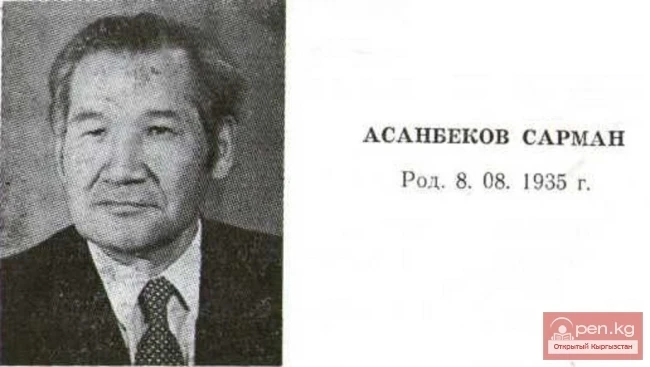
Poet and art critic S. Asanbekov was born in the village of Aral in the Talas region of Kyrgyzstan into a peasant family. In 1953, he graduated from Secondary School No. 1 in Talas, in 1958 — from the philological faculty of KGU, and in 1966 — from the postgraduate program at the Academy of Sciences of the Kyrgyz SSR, having interned at the Institute of Arts of the Ministry of Culture of the USSR in Moscow. He began his career in 1958 as a research associate at the KGMI, and from 1966 he
Zhamgyrbek Bokoshovich Bokoshov (1954), Doctor of Philosophy (1992), Professor (1993). Kyrgyz. Born in the village of Uch-Terek, Uch-Terek District, Jalal-Abad Region. Graduated from KSU (1977), postgraduate studies there (1981).