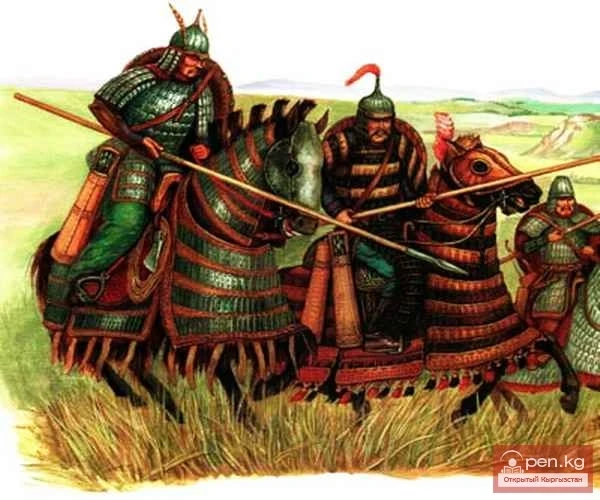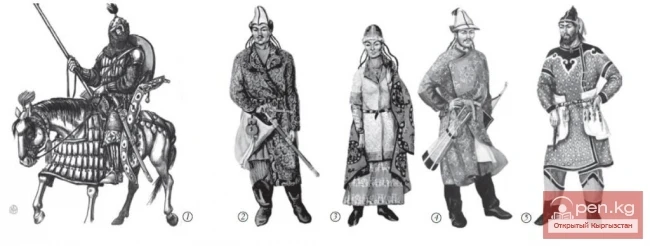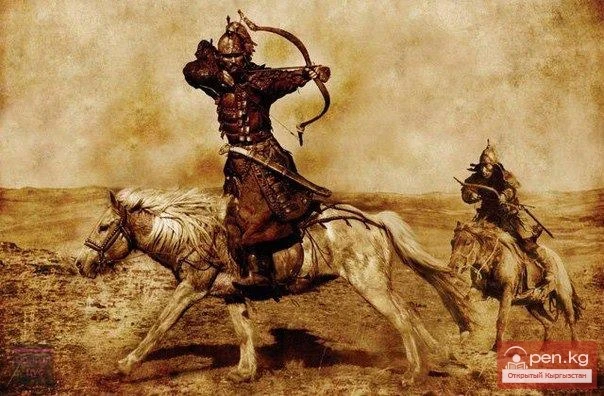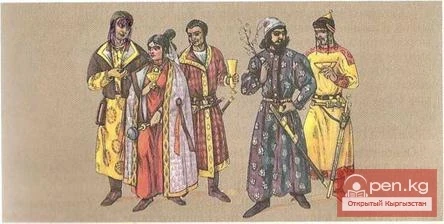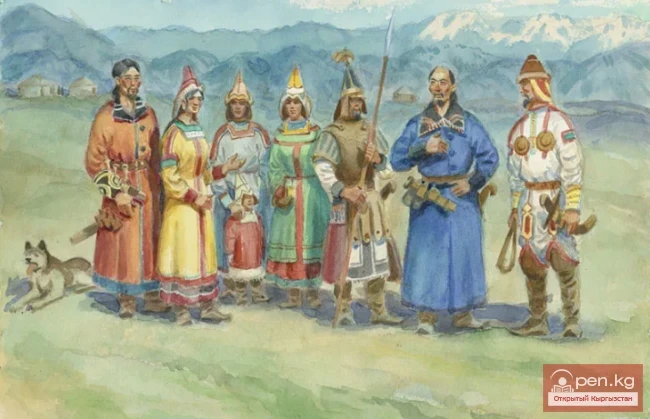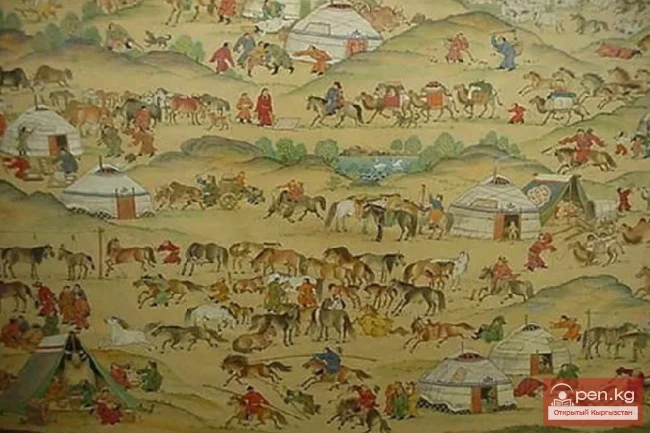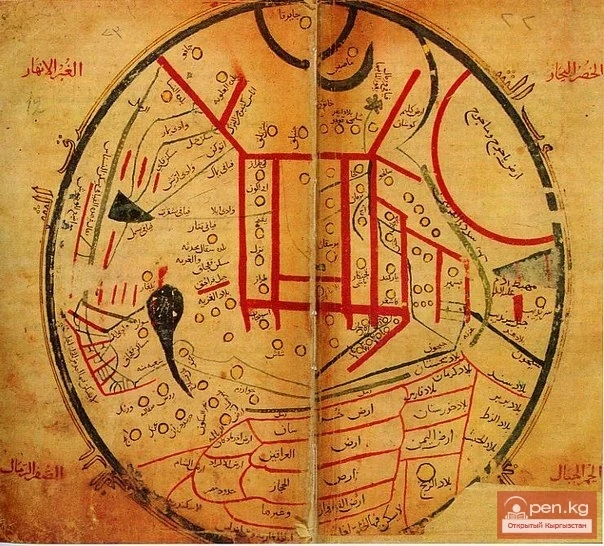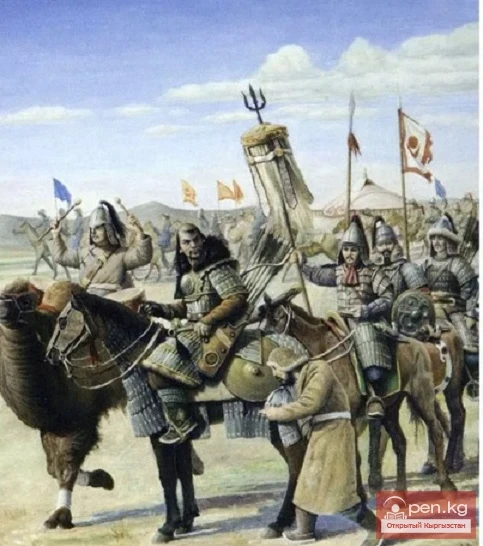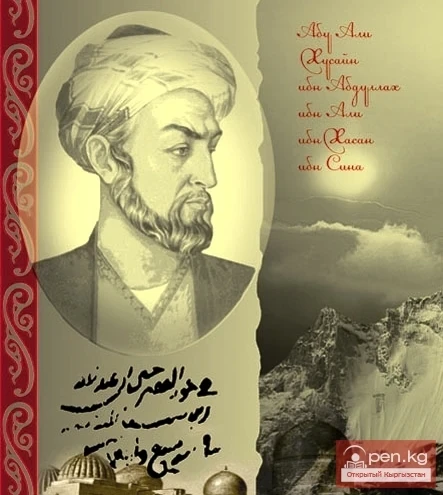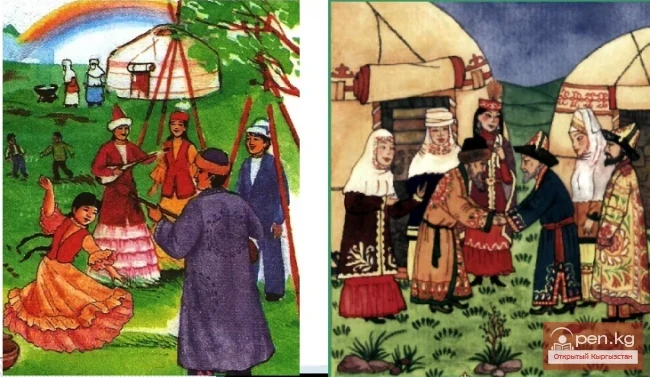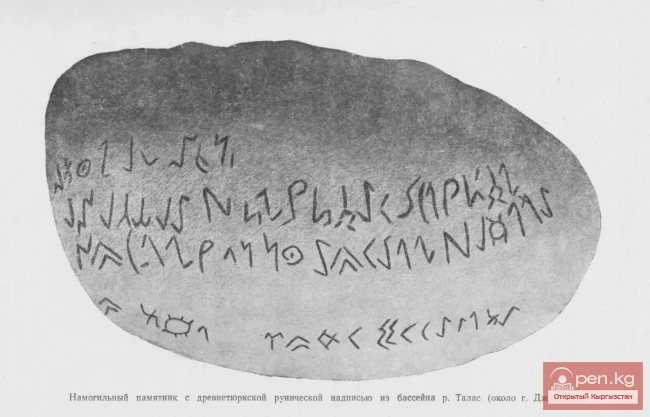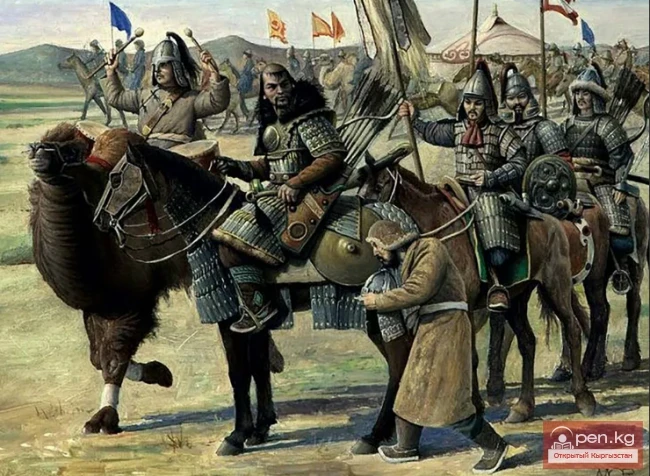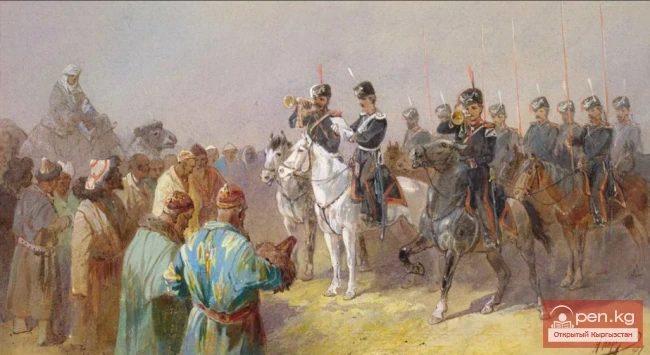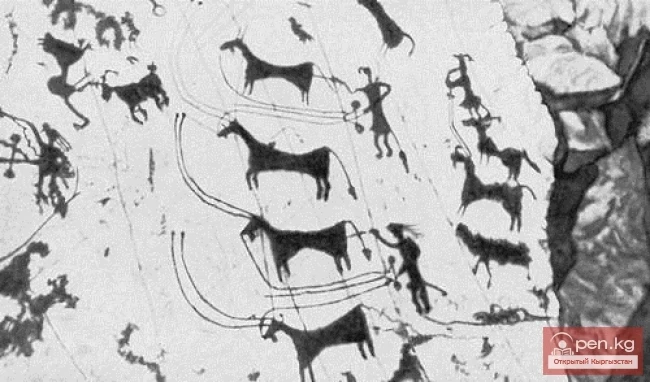
The ethnonyms “Turk” and “Turkut” were first mentioned in a Chinese chronicle from the year 546. Denoting the self-name of the people, they contained, according to runic texts, the concepts of “strong,” “stable,” and “unwavering.” On the other hand, the ethnonyms had more of a social than an ethnic significance, as they were initially associated only with representatives of the military aristocracy. Over time, they spread not only to the clan led by the military aristocracy but also to the peoples subject to them.
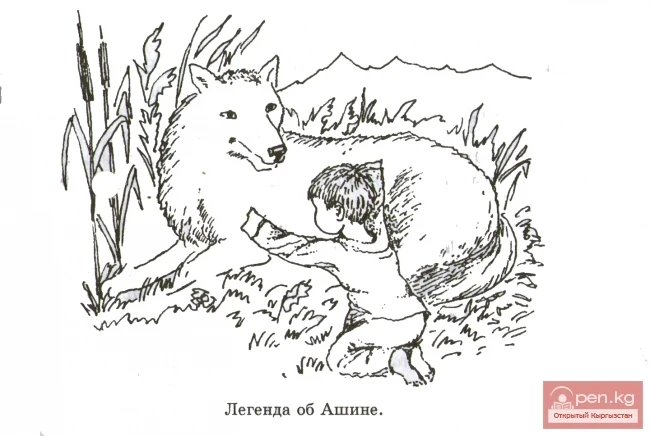
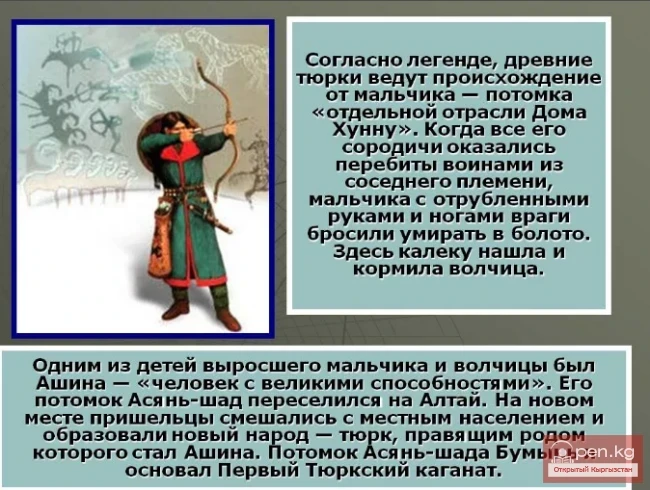
The Turkic tribe formed in the IV-V centuries among the Huns, who considered Ashina — the son of a mythical she-wolf — as their ancestor. By the mid-V century, the Turks were under the subjugation of the Juan-Juan (Avar) khan, and their main settlement area was Altai. Subsequently, many tribes joined the Turkic peoples: Oghuz, Huns, Azy, Chiki, Kyrgyz, Kimaks, Kipchaks, Bulgars, Avars, Tocharians, Türgesh, Karluks, Uighurs, Basmyls, Chigils, Yagma, Tukhsi, Yezdgers, Pechenegs, Katagans, and many others.
The mass mixing and mutual penetration of tribes and peoples in the Eurasian Turkic state led to the Turkicization of the population in the territory of Kyrgyzstan. It is known that Semirechye experienced Sogdian colonization twice: in the V-VI centuries and in the IX century. Consequently, Kyrgyzstan was inhabited until the Mongol invasion by settled tribes (Sogdians, settled Turks from the Nushabi confederations) and nomadic, as well as semi-nomadic Turkic-speaking tribes. Local tribes assimilated with tribes that came from outside. Mongoloid features increasingly manifested in their external appearance. Among those who spoke the Sogdian language (an Iranian language group), the Turkic dialect became more firmly established.
Among the large tribes that lived directly in the territory of Kyrgyzstan and formed states were the Türgesh, Karluk, Chigil, and Yagma. The Türgesh were part of the Dulu confederation of the tribal union “the people of ten tribes” and inhabited the valleys between the Ili and Chu rivers. The Türgesh were divided into two clans — the yellow Türgesh and the black Türgesh. The self-name “Karluk Bodun” (the people of the Karluks) or “Uch Karluk” (three tribes of the Karluks) referred to a strong alliance of nomadic tribes, whose territorial boundaries stretched from the Mongolian Altai to the shores of Lake Balkhash, as well as to the north and south of the Tarbagatai ridge. The Karluk union consisted of three large Turkic tribes — Bulak, Chigil (or Sebek), and Tashlyk. In the Karakhanid state, the defining positions were held by the Turkic clans Chigil and Yagma, which were part of the Karluk tribal union. It was mainly from them that the Turkic khans originated.
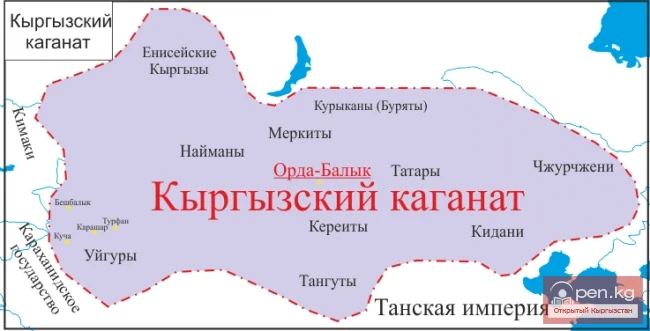
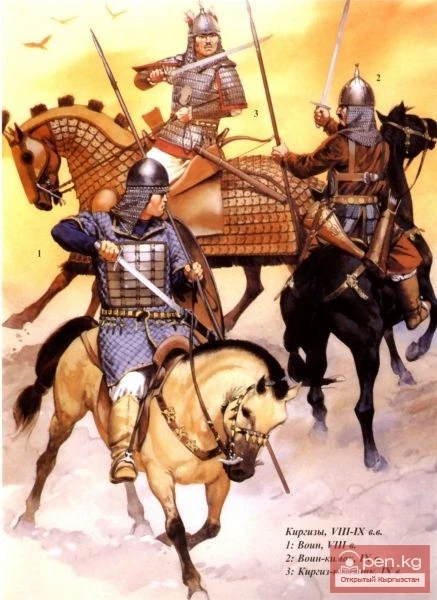
The population of the Yenisei Kyrgyz in the early Middle Ages was small. However, during the period of great power, it sharply increased. If we consider that in 840 the Kyrgyz sent a hundred thousand troops against the Uyghur Khaganate, and also that according to the rules of those times, Turkic tribes allocated one warrior for every three to five people, the estimated number of Kyrgyz was between 300,000 and 500,000. Thus, among the many tribes of Central Asia, the Kyrgyz ranked second in number after the Uyghurs. New conditions contributed to the development, consolidation, and strengthening of the Kyrgyz ethnicity. A number of small tribes merged into the Kyrgyz. For example, part of the Sart people, who lived among the Turkic tribes in the Dzungarian region, assimilated with the Kyrgyz and formed the Sart tribe. Some Tatars, Mangyts, and Nogais, linked by common ancestors with the Mongols, became part of the Kyrgyz tribe “sixty clans.” Thus, the era of the rise of the Kyrgyz Khaganate on the Yenisei was a time of the formation of feudal relations, within which the foundations of the modern Kyrgyz nation were born.
There is very little information about the Kyrgyz in the XI-XII centuries. Written sources from this time mention only three to five small possessions of the Kyrgyz. On the eve of the Mongol conquest, the Kyrgyz formed two principalities (states): Kem-Kemdzhuit and the Kyrgyz principality itself. Kem-Kemdzhuit was located on the Yenisei, while the principality of the Kyrgyz was situated in the Altai Mountains and in the northern regions of Dzungaria. Their rulers bore the title of inal.
In 1207, the Yenisei Kyrgyz recognized their dependence on the Mongol Empire of Genghis Khan without a fight. In 1218, they rebelled together with the Tumats (Tuvans) against the Mongols, but could not achieve independence, as the forces were too unequal. In 1226, after the death of Genghis Khan's eldest son — Juchi, the Kyrgyz came under the authority of the great khan Tolui. During the reign of Ogedei (1229-1241), the Kyrgyz enjoyed relative peace, as he married a Kyrgyz woman named Jachin, who became the fourth “main” wife of the great khan.
In 1273, the Kyrgyz rebelled and expelled the Mongolian governor Kublai — the Chinese Liu Haoli. They restored their independent state on the Yenisei, but it lasted only 20 years. It was during these years that a fierce struggle for supreme Mongolian power took place between Kublai and the ruler of Central Asia, Haidu. In 1293, Kublai sent a large army led by the Kipchak Tutukh to conquer the Kyrgyz, who ended the separatism of the Kyrgyz on the Yenisei, and they again became part of the Mongol Empire. This fact shows that the Kyrgyz, as a result of heroic struggle, managed — albeit for a short time — to achieve independence from the Mongols, who during this period subdued the peoples of China, Central Asia, the Near and Middle East, the Caucasus, and Rus.
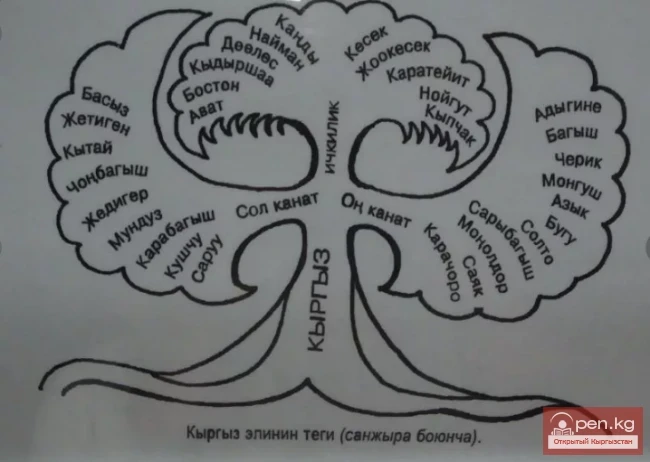
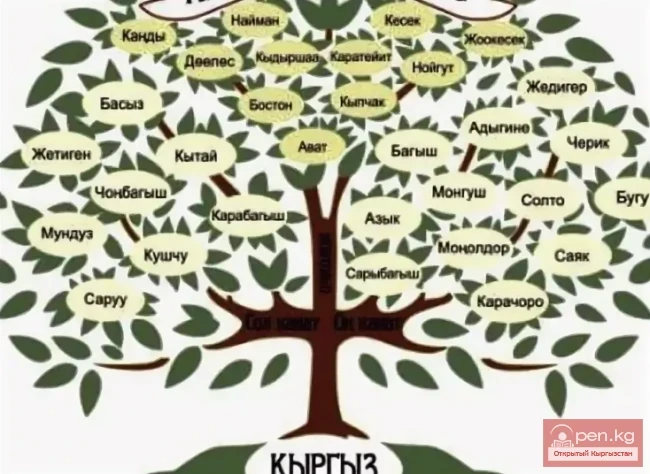
During the XIII-XV centuries, the Yenisei Kyrgyz gradually migrated to Tien Shan. This occurred both individually and as part of the Mongolian expansion (the Kyrgyz moved to other regions as part of Mongolian troops). During the existence of Moghulistan, the Kyrgyz tribes gradually began to occupy vacant pastures, subjugating the remnants of the Mongolian tribes defeated by Timur. By the end of the XV century, the political dominance of the Mongols over the peoples of Kyrgyzstan weakened, and in the 80s of that century, a new union of tribes formed in the territory of modern Northern Kyrgyzstan, with the Kyrgyz as its core. Two groups of Kyrgyz tribes formed two “wings” — a traditional union of all Turkic nomads, starting from the Huns (ong kanat — right wing and sol kanat — left wing). There was also a third group of tribes called ichkilik. All the tribes that entered the new system began to be called by the common ethnonym “Kyrgyz.”
Thus, the basis of the Kyrgyz people formed in the XIV-XVII centuries consisted of local Turkic-speaking tribes, migrated groups of Turkic, South Siberian, and Central Asian tribes, descendants of Mongolian and Kazakh-Nogai tribes, as well as Yenisei Kyrgyz.
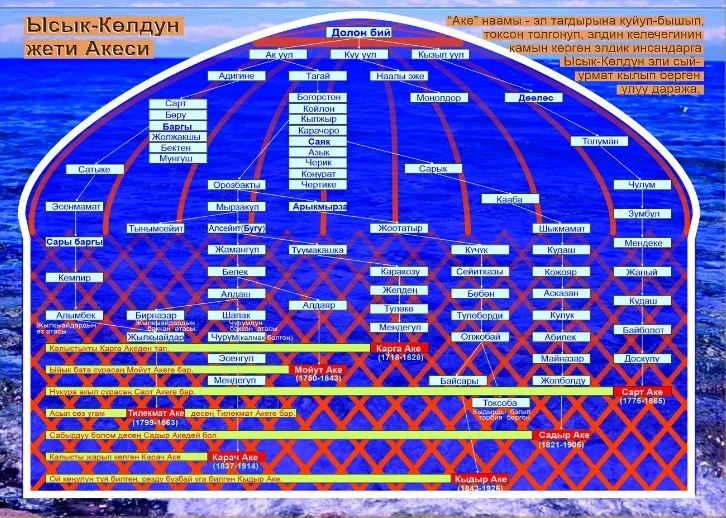
Recent scientific data on the ethnogenesis of the Kyrgyz people allow us to assert that the Kyrgyz are descendants of the Saka, Usun, Onok Bodun, Türgesh, Karluk, Chigil, and Yagma, who autochthonously lived in the territory of Kyrgyzstan from the mid-first millennium BC until the beginning of the Mongol invasion. Thus, even before the arrival of the Mongols in Fergana, when the ails of the legendary Dolon biya's son — Ak uula and his grandson Otuzy uula began to settle here, the Kyrgyz could very well have lived here. In the XVI century, the sons of Otuzy uula, Adygine and Tagai, were well-known biyas and clan leaders in Fergana. According to one of the latest scientific hypotheses, “old” Kyrgyz (on uul — ten sons and otuz uul — thirty sons) lived in Fergana even before the XVII century. This hypothesis is supported by many sanjyrs and materials from Kyrgyz epics, starting with “Manas.” One way or another, in all sanjyrs and epics, the Fergana Valley figures as one of the ancient habitats of the Kyrgyz. Moreover, a source from the XVI century, “Majmu at-tavarikh,” names the Fergana Valley (the Khojent Mountains, Uzgen, Alai, Andagen, Aksy, Kasan, Chatkal, and others) as the main homeland of the Kyrgyz (Gyzov or Guzov).