According to Kilyazova, organizations such as Kyrgyzpasture, the Institute of Pastures and Feeds, and the Veterinary Service of Pastoral Farming actively participated in the development of the methodology.
“The indicators for assessing the condition of pastures are quite simple: the state of vegetation cover, the presence of degradation processes, weeds, stoniness, and shrubs. In 30-40 minutes, one area can be assessed to determine whether the pasture is in good condition or is degrading, as well as to identify the causes,” she added.
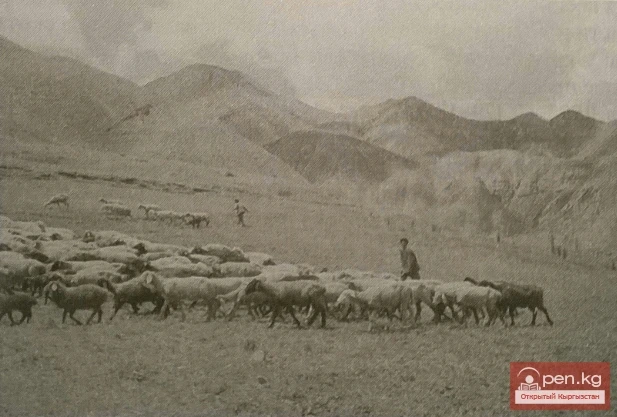
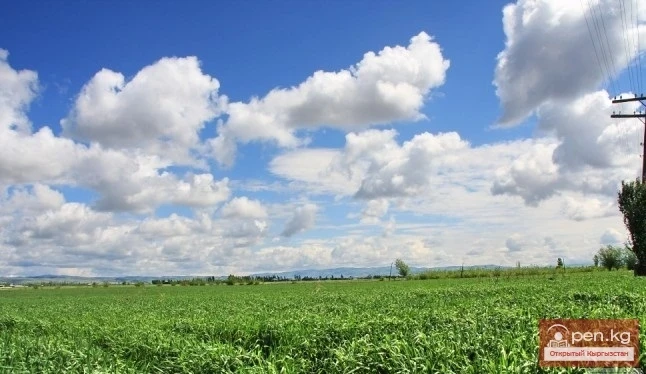
Regarding the condition of pastures in the Susamyr Valley, Kilyazova noted that they are generally in good condition and characterized by rich vegetation. However, in some areas, there is an active spread of the shrub Caragana, also known as altygan.
“Local residents report that Caragana is beginning to spread actively and is moving higher up the pastures. The first to raise the alarm were the residents of the Susamyr Valley, who want to get rid of this shrub,” she explained.
Kilyazova also noted that during the Soviet period, Caragana was destroyed everywhere, including through the use of chemical methods. Currently, various approaches are used to combat the shrub: chemical, biological, and mechanical.
“We assessed the condition of the pastures and began fighting Caragana using both mechanical and chemical methods. Two of the least toxic glyphosate-based herbicides were chosen, which were used on fenced areas of the pastures in the valley, but not on slopes or near rivers,” Kilyazova reported.
She emphasized that the tests conducted yielded positive results.
“Caragana is being successfully destroyed, while the forage vegetation remains untouched, recovering within a year if the pasture is given a rest,” the specialist noted.
Additionally, a mechanical method was tested, which involves uprooting the shrub followed by sowing perennial grasses.
“This is a more environmentally safe, although expensive, method that requires seeds and significant resources. Nevertheless, it contributes to the creation of cultivated pastures and prevents further degradation,” she added.
In response to a question about natural methods of control, Kilyazova pointed out the serious threat that Caragana poses to livestock grazing.
“This thorny shrub can reach a height of 1–1.2 meters and forms dense thickets. In such conditions, it is difficult for animals to move, which can lead to oral injuries, and young animals sometimes get lost and even die, unable to find a way out,” she reported.
According to her, measures to eliminate Caragana are being taken locally.
“We are fighting it in flat pasture areas where it does not perform the function of soil retention. Grasses should prevail in the pastures. Although we understand that Caragana is also important for the ecosystem, its absence in pastures would be preferable,” Kilyazova concluded.