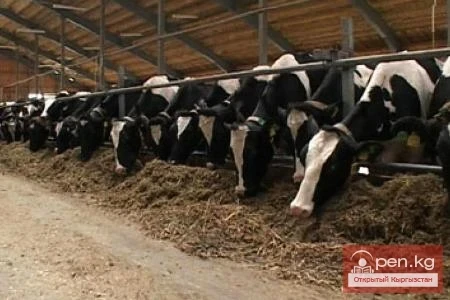
The Cabinet approved the project "Development of Breeding Livestock" and will allocate 140.4 million soms for subsidizing rates.
The Ministry of Finance has been instructed to allocate from the republican budget for 2026 140.4 million soms for subsidizing interest rates on preferential loans, which will be directed to "Aiyl Bank" and "Eldik Bank," after agreement with the relevant committee of the Jogorku Kenesh.
Furthermore, the Ministry of Finance is required to take into account the necessary changes when adjusting the law on the republican budget for 2026 and to plan project financing for subsequent years in tranches.
The project is designed for five years, starting from February 2026. A final interest rate of 3% per annum is set for borrowers, with a loan term of up to 60 months and a grace period of up to 12 months.
The maximum loan amount can reach 20 million soms (for insemination technicians — up to 2 million soms). Loans up to 500 thousand soms will be provided without collateral, while amounts above this threshold will require security.
Banks may independently establish a longer grace period at their own expense.
Within the framework of the project, the total volume of lending should amount to 1.232 billion soms. The distribution of funds will be as follows: no more than 10% for breeding farms and enterprises, no more than 10% for importers, no more than 5% for insemination technicians, and at least 75% for peasant (farmer) households and individual entrepreneurs.
It is recommended that "Aiyl Bank" and "Eldik Bank" do not charge commissions and other fees for lending to project participants, including financing based on Islamic principles. Additionally, the banks are required to provide the requested information to the Ministry of Agriculture and the Ministry of Finance and report on the issued preferential loans weekly.
The project also outlines requirements for participants and the animals to be purchased, as well as mechanisms for monitoring the targeted use of allocated funds. In the case of misuse, the interest rate will rise to the market rate from the moment the loan is issued, and banks must return the received subsidies to the Ministry of Finance. The control over the implementation of the directive is entrusted to the Department for Monitoring the Implementation of Decisions of the President and the Cabinet of Ministers of the Presidential Administration.
Read also:
Animal Husbandry
Curl error: Operation timed out after 120001 milliseconds with 0 bytes received...
Agriculture
Grain farming is one of the main sectors of agriculture. Economic difficulties in agriculture over...
Cattle Breeding among the Kyrgyz before the 20th Century
Curl error: Operation timed out after 120001 milliseconds with 0 bytes received...
Water Management
In the system of water use and water consumption, intra-economic and inter-state water relations,...
Development of Agriculture among the Kyrgyz in the 20th - Early 21st Century
Annual Cycle of Agricultural Work The most common practice was crop rotation with two-year and...
Agriculture among the Kyrgyz
AGRICULTURE Agriculture was an important area of economic activity for the Kyrgyz, ranking second...
Agriculture, Forestry, and Fishing
The gross output of agricultural products, forestry, and fishing in January-June 2014 amounted to...
Production of Livestock Products as of March 1, 2015
Meat Production. During the reporting period of 2015, economic entities of all categories in the...
Composition of the Kyrgyz Herd
Composition of the Herd Kyrgyz people raised horses, sheep, yaks, goats, camels, and cattle. For...
Annual Cycle of Nomadic Herding among the Kyrgyz
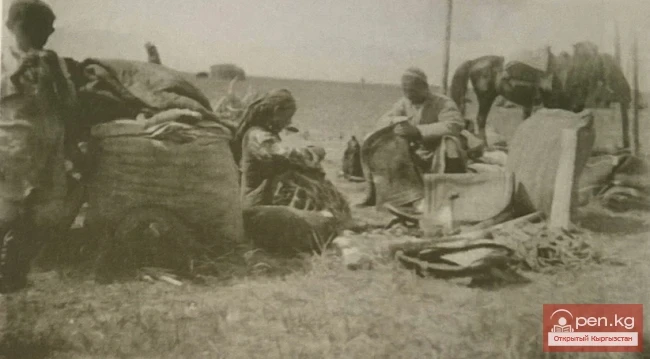
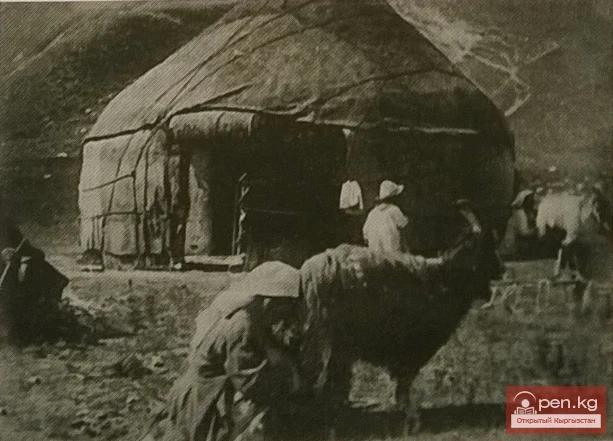
Ail before migration. Osh region, Alai valley. 1930. Annual Cycle of Pastoral Livestock Breeding...
Devices and Weapons for Hunting by the Kyrgyz in the 19th - Early 20th Century.
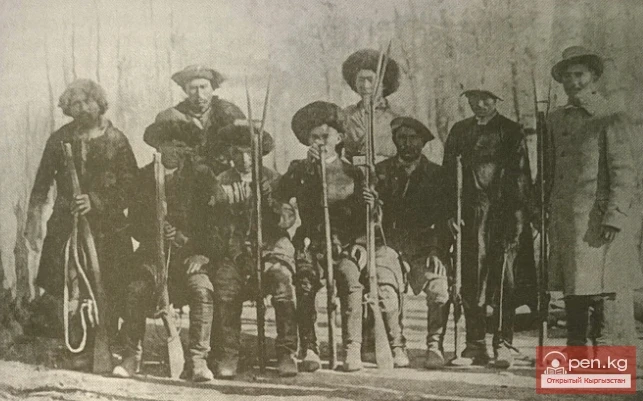
Hunting Tools and Weapons. Since ancient times, the Kyrgyz have used both "active" and...
Cattle Breeding Among the Kyrgyz in the 20th to Early 21st Century
Migration near the village of Troitskoye. Kara-Kyrgyz. Syrdarya region. 1902. Animal Husbandry in...
Methods of Hunting and Game Management by Kyrgyz Hunters in the 19th - Early 20th Century.
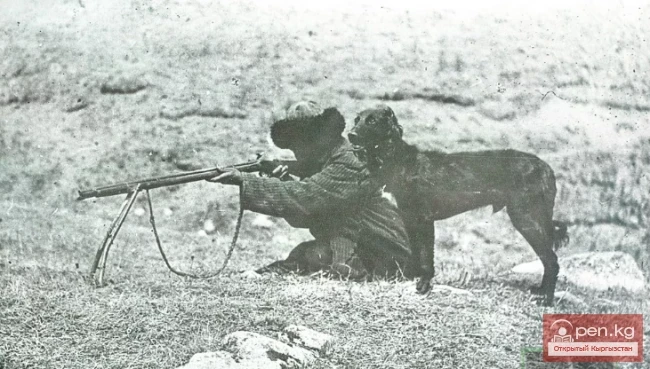
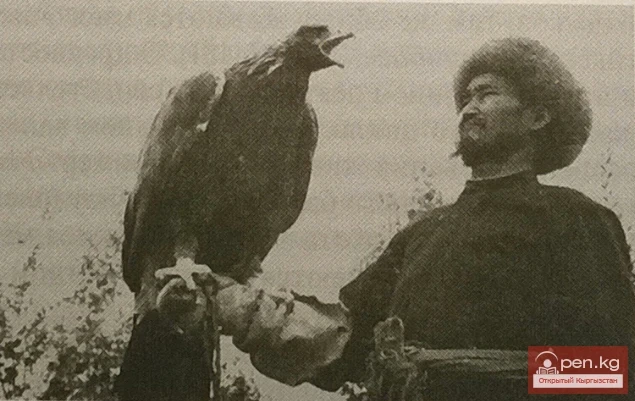
Hunting Dogs and Birds of Prey. Even in the early Middle Ages, specially trained dogs served as...
Hunting Techniques and Division of Spoils among the Kyrgyz from Ancient Times to the Early 20th Century.
Hunting Techniques and Division of Game. The Kyrgyz hunted both on horseback and on foot. In deep...
Agriculture, Land Resources of Kyrgyzstan
Land Resources of Kyrgyzstan The climatic features dictate the development of agricultural sectors...
Kyrgyz Irrigation Technique - Irrigation
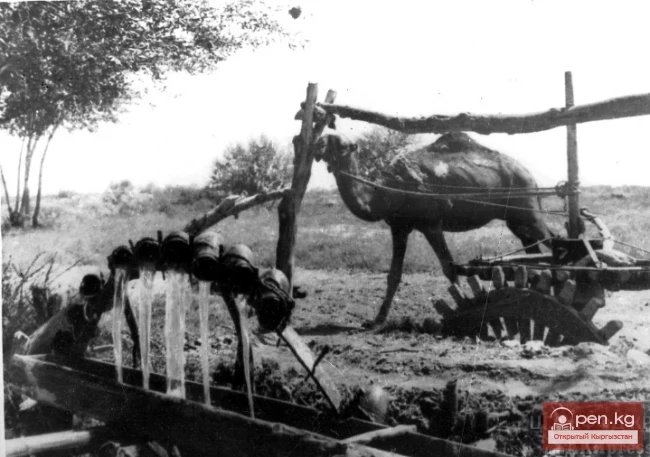
Irrigation The Kyrgyz used techniques and methods of irrigation developed over many centuries,...
Cattle Breeding among the Kyrgyz
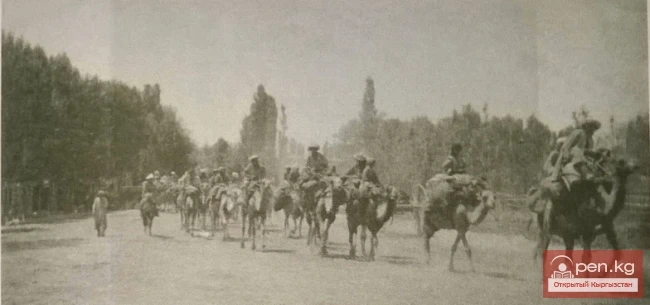
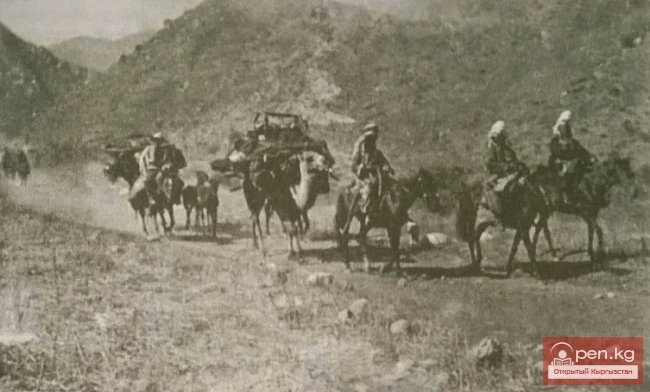
Migration in the Alai Range. Early 20th century. Kyrgyz SSR HERDING The leading sector of the...
Cattle Breeding Cults of the Kyrgyz in the Early 20th Century.
Forage Preparation Forage preparation became widespread in the late 19th century due to a lack of...
Commercial Animals of Kyrgyzstan in the Early 20th Century.
Commercial Animals. Sources from the 19th to early 20th centuries contain information about wild...
Agriculture of the Southern Kyrgyz in the 19th - Early 20th Centuries.
The second half of the 19th century and the beginning of the 20th century were filled with...
Hunting - An Important Component of the Kyrgyz Economy from Ancient Times to the Early 20th Century.
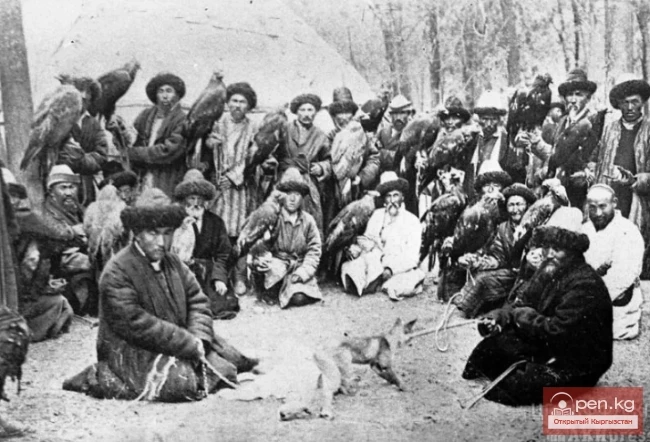
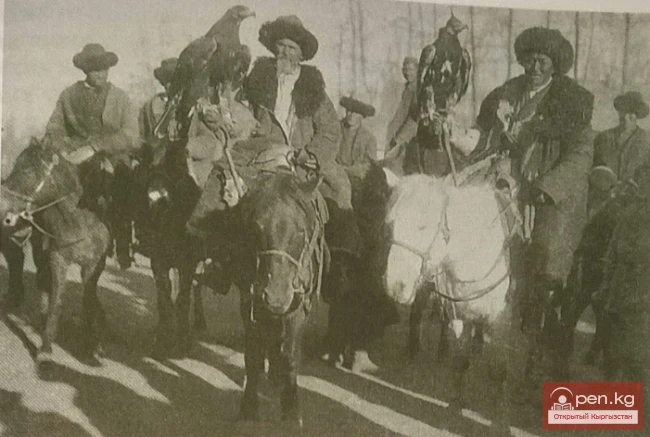
Hunters with Golden Eagles. Mountain Semirechye, Kyrgyzstan. 1926. HUNTING Hunting has been an...