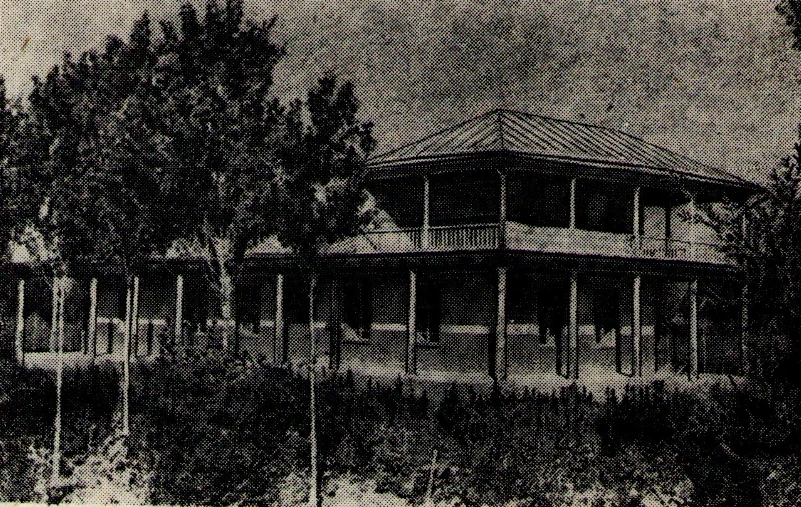
Conclusions on the Study of the Settled Dwellings of the Southern Kyrgyz
The study of the sedentary dwellings of the southern Kyrgyz allows us to draw some conclusions.
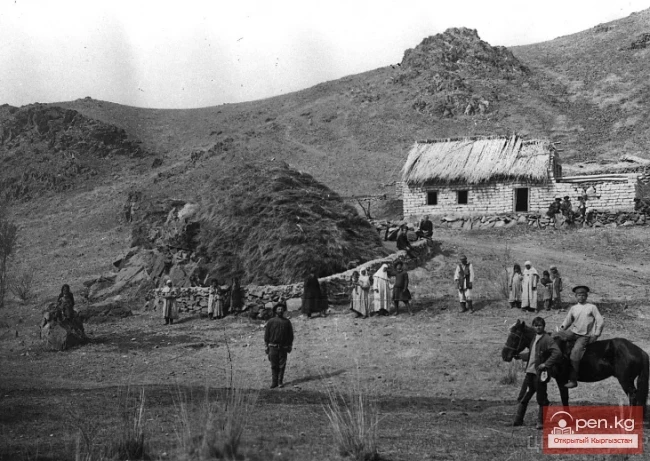
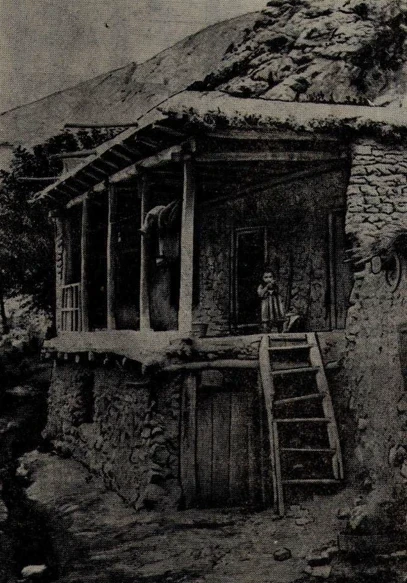
Settlements and estates among the southern Kyrgyz emerged at different times. The southwestern Kyrgyz (ichkilyaks) transitioned to sedentary living significantly earlier than the others. We were unable to obtain precise data on the timing of their transition to adobe dwellings, but by the mid-19th century, sedentary living already existed among the southern Kyrgyz. The presence of houses of the Pamir type suggests that the Kyrgyz mastered this type of dwelling much earlier.
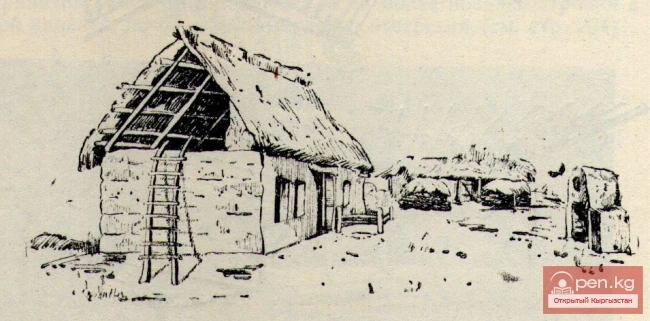
In the late 19th and early 20th centuries, there was a mass construction of houses in the southwestern regions of the area and partially in the east. During this time, houses of various Ferghana types were predominantly built. In the eastern part of the region, the most intensive construction began during the period of collectivization. Here, houses of a mixed type were mainly built.
The construction of houses by the Kyrgyz of the ichkilik group was strongly influenced by Tajiks and Uzbeks. This is evidenced by the preservation of their characteristic building techniques, terms, forms of housing, and estates. At the same time, connections with Eastern Turkestan are noted. The construction of eastern Turkestan adobe dwellings shows great similarity to the houses mastered by the southern Kyrgyz.
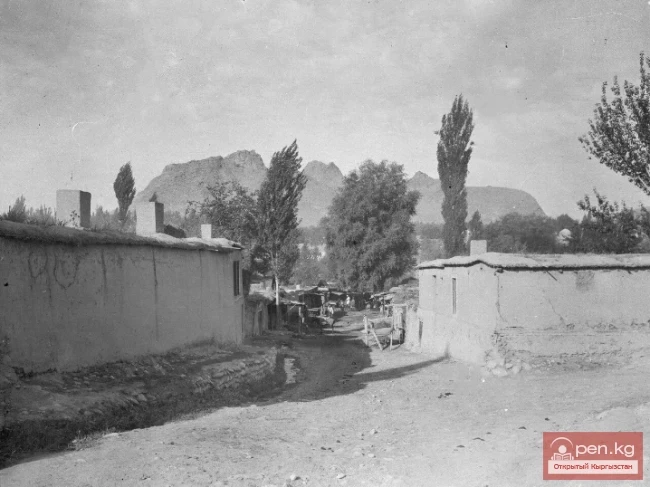
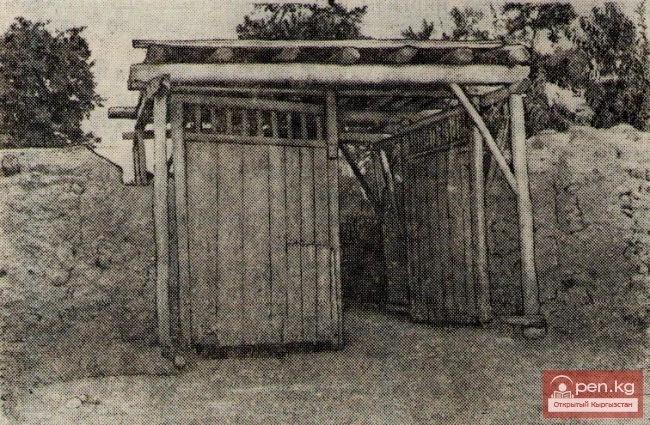
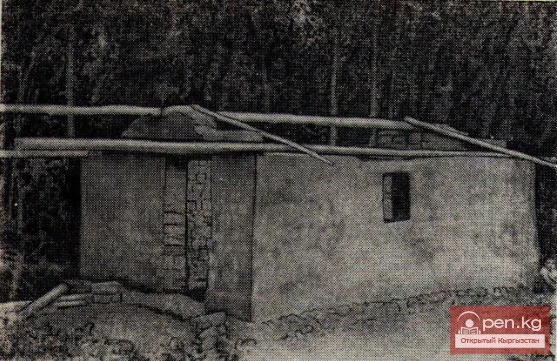
However, in the settlement patterns, the location of estates, and the planning of residential houses, the southern Kyrgyz developed their own features, determined by the nature of their economy, natural conditions, and ethnic traditions. Although the Kyrgyz still retain tribal remnants expressed in settlement by kin groups, their settlements do not have the dead ends and narrow streets with high fences characteristic of settled Uzbeks and Tajiks.
In the eastern part of the Osh region, the influence of Russian culture is very noticeable, which began after the annexation of Southern Kyrgyzstan to Russia (the construction of houses with gable roofs, the retention of Russian terms, the introduction of new elements into the interior decoration of houses). Here, the similarity is more with the housing of the northern part of the region than with the southwestern part, where the influence of Russians in the past was significantly less.
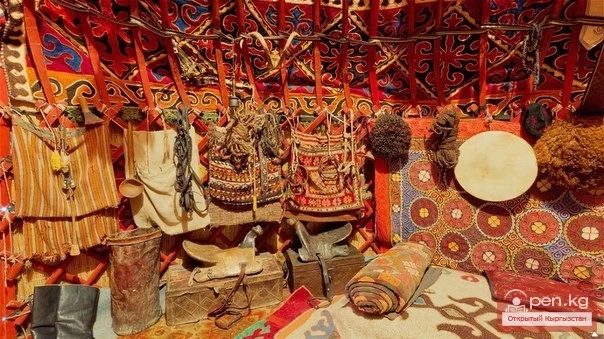
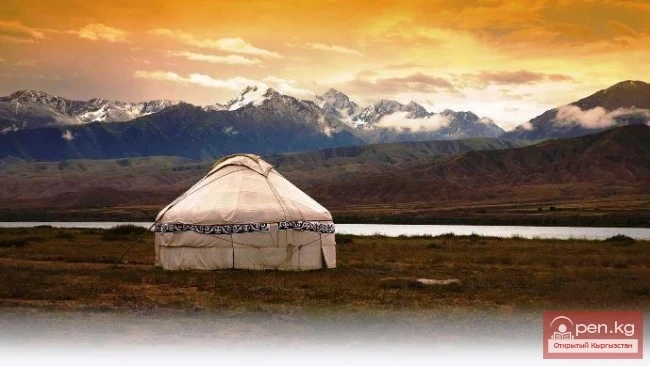
The transition to sedentariness brought about significant changes in everyday life, but many traditions of nomadic life have been preserved for a long time (settlement by kin groups, the arrangement of a hearth on the floor in the house, and the presence of a smoke outlet in the roof). As residual phenomena that still exist today, one can note the presence of a "zhuka" (a type of low table) and eating on the floor.
Since the time of the transition to collectivization, the social differences in the architecture of dwellings and their interior decoration, as well as in the fencing of estates, which existed during the period of the Kokand Khanate and the emergence of capitalist relations in southern Kyrgyzstan, have disappeared.
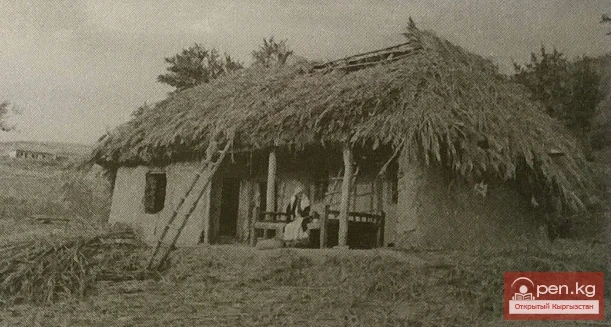
Now there is a widespread trend towards the construction of houses that have been developed based on close contact with the peoples of southern Kyrgyzstan and incorporate all their best traditions. The old-style houses no longer satisfy the increased cultural needs of the collective farmers. Almost everywhere, new houses are built on cemented high foundations, with large windows and double frames, wide verandas, and more advanced heating stoves.
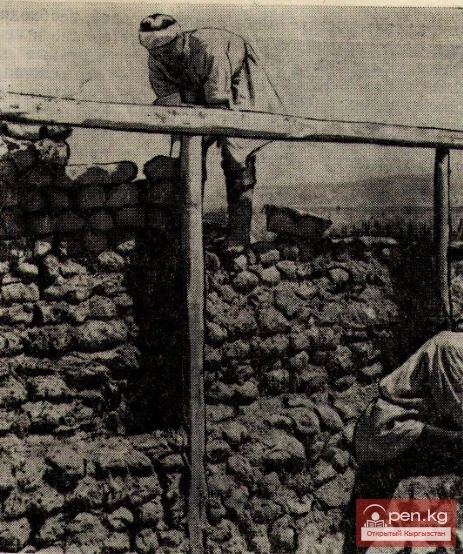
Raw brick is most often used as a building material. However, despite having several advantages over other building materials made by artisanal methods, brick requires a significant amount of time and labor. Given the intensive construction of houses currently observed in collective farm villages, it is to be expected that soon there will be mass production of basic construction components, which will not only accelerate the pace of construction but also free up time for collective farmers for more productive labor.
Recently, especially since the consolidation of collective farms, there has been significant development in the construction of standard houses. These are built by collective farm administrations for collective farmers. However, the universal standard developed by design and construction organizations, almost without variations and without taking into account the climatic features of the south, the duration of the hot period, and the habits and artistic tastes of collective farmers, often does not satisfy the population.
The transition to the socialist mode of production has led to changes in the nature of economic buildings. The main ones now are: premises for dairy cattle and storage, fuel. Stables and sheds are no longer built. The former glory of the horse in personal farming is fading.
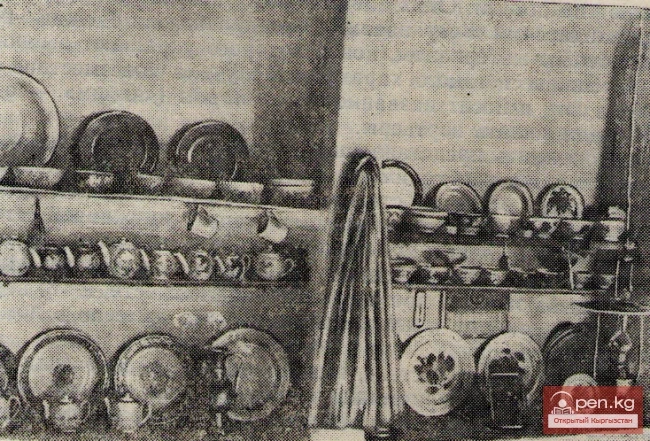
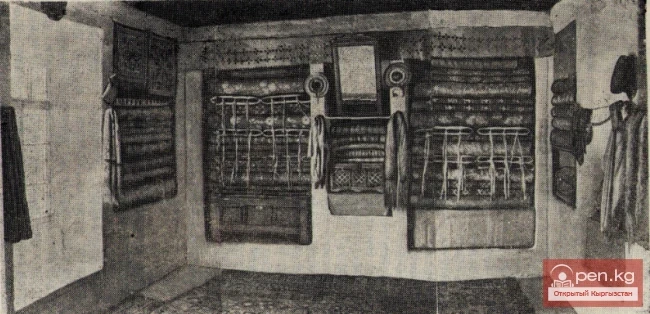
Radical changes are occurring nowadays in the interior decoration of dwellings. More and more items of urban furnishings are entering the lives of collective farmers. They testify to cultural skills and new elements of the socialist way of life in southern Kyrgyz villages.
A new style of decoration is emerging. Characteristic of it is the strict order of placement of necessary items. The need for new furniture is increasing. Collective farmers are increasingly demanding wardrobes for clothes, bookshelves. There is a growing desire to acquire radios, televisions, and musical instruments (in addition to national "komuz" and "dombra" — balalaikas, guitars, accordions).
Thus, in the decoration of modern collective farm houses, the best folk traditions and urban trends are combined.
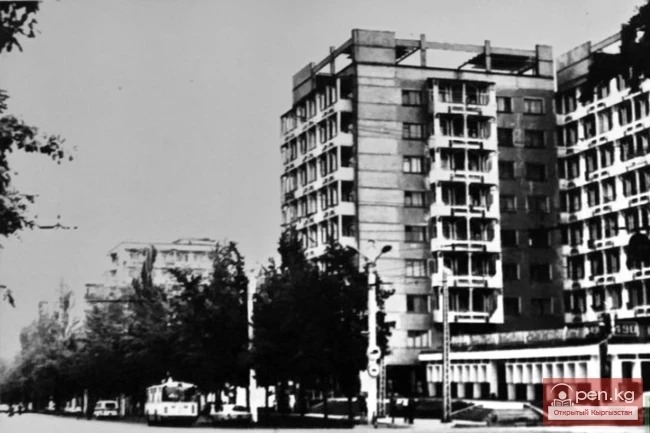
With the growth of the prosperity of collective farms, the cultural landscape of the villages is changing significantly, having transformed compared to the beginning of collective farm construction. New villages are being built with straight streets, while old ones are undergoing major redevelopment. Settlements are being electrified and radio-equipped. More collective orchards are being cultivated.
The diverse social life that has replaced the previously underdeveloped and limited interests, the construction of new cultural and household institutions of modern architecture — schools, clubs, cinemas, children's nurseries, medical points — are causing deeper transformations in the life of the collective peasantry of Southern Kyrgyzstan.
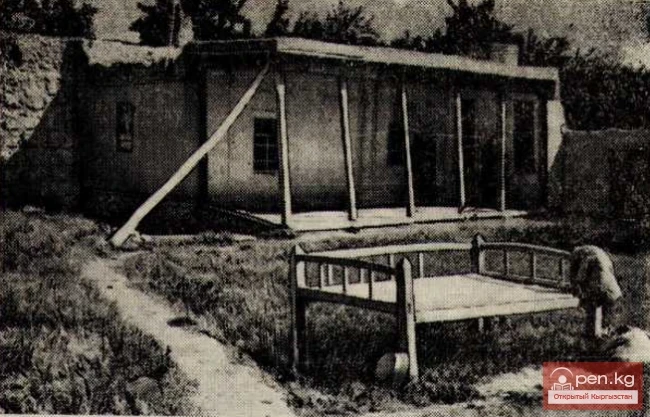
Estate without a yard and fence in Southern Kyrgyzstan
Read also:
Interior Design of a Pamir-Type House
In the early 20th century, Kyrgyz people also built houses similar to the described type, but...
The 19th Century — A Century of Radical Change in the Lives of the Kyrgyz
Settlements and Permanent Housing The 19th century was a turning point in the life of the Kyrgyz....
The title translates to "Dwellings of the Kyrgyz."
SETTLEMENT AND DWELLING The presence of two different types of economic activities in the 19th and...
Four Types of Houses Being Built in Southern Kyrgyzstan
The Influence of Other Peoples on the Craftsmanship of Kyrgyz The builders of Kyrgyz houses in the...
Clothing of the Southern Kyrgyz. Part - 1
The clothing of the southern Kyrgyz has not received special attention in literature. There are...
The Transition of the Kyrgyz to Sedentary Life
Sedentary Life among the Kyrgyz The transition to sedentary life, being an extremely complex...
The History of the Economy of Southern Kyrgyz in the 19th Century
In the history of the economy of southern Kyrgyzstan, the 19th century was a turning point: they...
Economic Buildings in Southern Kyrgyzstan
Outbuildings Outbuildings in southern Kyrgyzstan are quite uniform, but there are many variations...
Production of Felt and Felt Products
The production of felt used to occupy a significant place in home industry. In the 19th century,...
Characteristics of Types of Houses and Estates of Southern Kyrgyz People
Three Methods of Wall Construction among the Kyrgyz When starting to describe the types of houses...
Four Kyrgyz Types of Settlements
Kyrgyz Settlements The character of the settlement, as well as the dwellings themselves, shows...
The title translates to "Fabric 'Besh Keshte'."
Sample of patterned fabric 'besh keshté'. Nookat District. The most vibrant and colorful...
Clothing of the Southern Kyrgyz. Part - 2
Among the ready-made items purchased by Kyrgyz people, in addition to light robes, were quilted...
Fergana and Mixed Type Houses in the South of Osh Region
House with a high gable roof. Aksy District. Fergana and Mixed Types of Houses. While the spread...
Manor without a Courtyard and Fence in Southern Kyrgyzstan
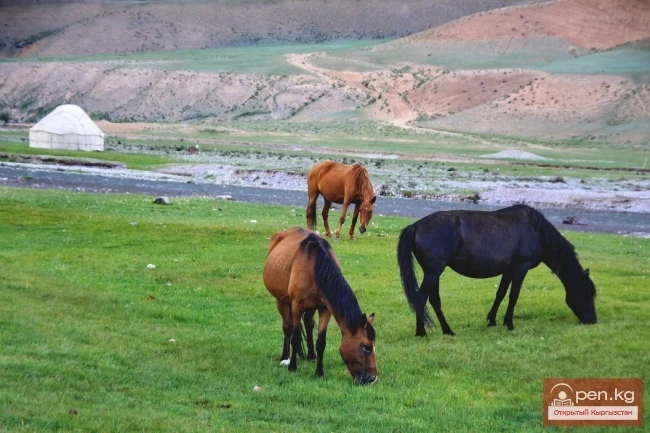
The third type is a manor without a yard and fence, although the area in front of the house is...
Weaving
Among other domestic crafts, weaving held one of the primary places among the Kyrgyz in the past....
Windows and Doors in the Homes of Southern Kyrgyzstan
Teshik and Eshik In the homes of Southern Kyrgyzstan, it is not difficult to trace the evolution...
Localization of the Tribal Groups of the Kyrgyz
Localization of the tribal groups of Kyrgyz...
External Decorations of Southern Kyrgyz Yurts
Yurt of the Laylak District (above), yurt of the Alay Valley (below). Motifs of the appliqué...
Mansions Built in the Late 19th Century in Southern Kyrgyzstan
The houses-manors are characterized by their close proximity to each other. Sometimes they adjoin...
Southern Kyrgyz Embroidery
Embroidery of the Southern Kyrgyz Southern Kyrgyz embroidery is the result of centuries of...
Wall Niches in Southern Kyrgyz Housing
Wall Niches Wall niches are one of the characteristic features of the dwellings in Uzbekistan,...
Application
A significant place in the decoration of felt products among the Kyrgyz is occupied by appliqué....
Types of Permanent Housing of the Kyrgyz
Construction Techniques The archaic types of stationary dwellings of the Kyrgyz include small...
Kyrgyz Dwelling — Yurt
The dominant type of dwelling in the conditions of centuries-old nomadic life of the Kyrgyz was...
Ethnic History of the Southern Kyrgyz Tribes
The territory of the Osh region occupies the southwestern part of Kyrgyzstan. Its area is 75.5...
Metalworking and Jewelry Making of the Kyrgyz in the Late 19th - Early 20th Century.
Metal Production and Artistic Metalworking The production of metal products among the Kyrgyz is...
Ornamental Embroidery of the Southern Kyrgyz
The Artistic Creativity of Kyrgyz Women At first glance, one might get the impression that the...
Carpet Products among the Kyrgyz
The production of pile carpet products among the Kyrgyz was closely linked to the needs of a...
The Emergence of Closed-Type Estates Among the Kyrgyz by the Beginning of the 20th Century
Gates of a closed-type estate. Batken district. The second type of estate is the closed-type...
Generations of Kyrgyz and Kemkemchut
Excerpt from the work of Abu-l-Ghazi (1603—1664) — almost a retelling from Rashid ad-Din's...
Mass Housing Construction
Housing. The new Constitution of the USSR was one of the first in the world to proclaim the right...
The Spread of Kyrgyz Pile Weaving
Pile weaving has long been known to the Kyrgyz living in the territory of the modern Osh region,...
The Interior Decoration of Southern Kyrgyz Homes
The Decoration of Southern Kyrgyz Dwellings A prominent role in the decoration of the living room...
The Distribution Area of the Kyrgyz People
Distribution area of the Kyrgyz...
The Transition of the Kyrgyz to Permanent Dwellings
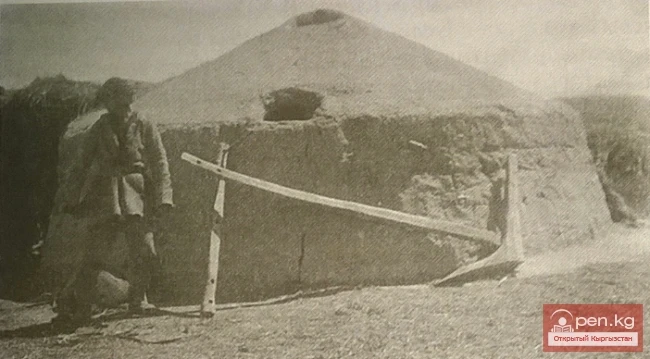
Tamuy - a mud yurt in the yard on kыштоо (wintering) and buursun - a wooden plow. The village of...
Kyrgyz Tuluup
The clothing that protects against the cold in winter and at high altitudes in the mountains for...
Artistic Crafts
Artistic Crafts: Traditions and Modernity The decorative and applied arts of various territorial...
Production of Musical Instruments and Saddles by Kyrgyz People
Kyrgyz Woodworking Masters Woodworking masters also make musical instruments (Fig. 84) from...
Processing of Silver Products by Kyrgyz People
Silver Jewelry Among the Kyrgyz In the past, Kyrgyz jewelers widely used the technique of inlaying...
The technique of rolled colored pattern
Using the technique of rolled colored pattern, a felt carpet is made, which has the original name...
Three Types of Roofing Used in Southern Kyrgyzstan
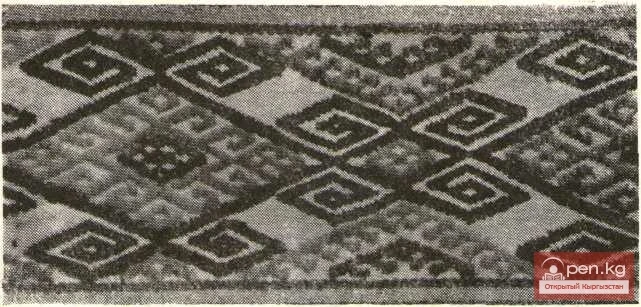
Roofing of Houses The construction of the walls of the house is preceded by the laying of the...
Fabrics of Kyrgyz Production
Fabrics of Kyrgyz production are characterized by plain weave, which is considered the simplest...
Processing and Preparation of Wool
In the nomadic lifestyle of the Kyrgyz, wool found wide application. Wool products and materials...
Men's Outerwear of the Kyrgyz - Robe
The men's outerwear known as a robe is characterized by great diversity. In the past, it was...
Population of Kyrgyzstan as of January 1, 2013
Population of Kyrgyzstan Thanks to the fundamental changes that occurred in Kyrgyzstan after the...