Steppe Eagle \ Kara Kush \ Steppe Eagle
Steppe Eagle Status: VI category, Near Threatened, NT: R. One of four species of the genus in the fauna of Kyrgyzstan. The subspecies Aquila nipalensis orientalis1 Cabanis, 1854 is found here.
Greater Spotted Eagle Status: Category VI, Near Threatened, NT. One of 4 representatives of the genus in the fauna of the Kyrgyz Republic. Monotypic species.
Diversity of Flora in Kyrgyzstan Introduction This work contains a brief description of useful plants in Kyrgyzstan, with a primary focus on wild species.
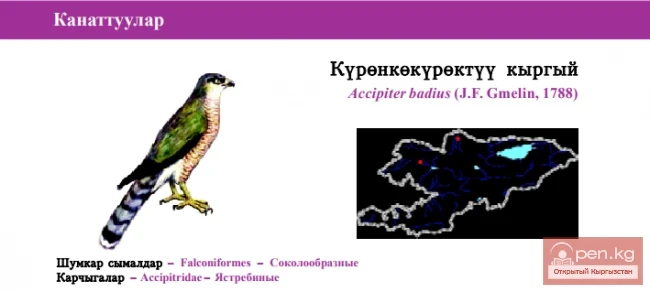
Turkestan Shikra Status: VI category Near Threatened, NT: R. One of ten species of the genus in the avifauna of the Kyrgyz Republic, inhabiting the subspecies Accipiter badius cenchroides (Severtzov, 1873).
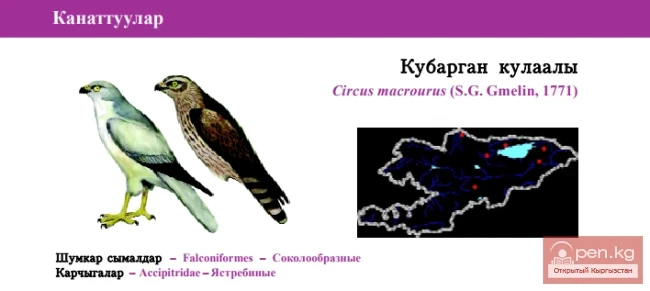
Steppe Harrier Status: Category VI, Near Threatened, NT. One of 4 representatives of the genus in the fauna of the Kyrgyz Republic. Monotypic species.
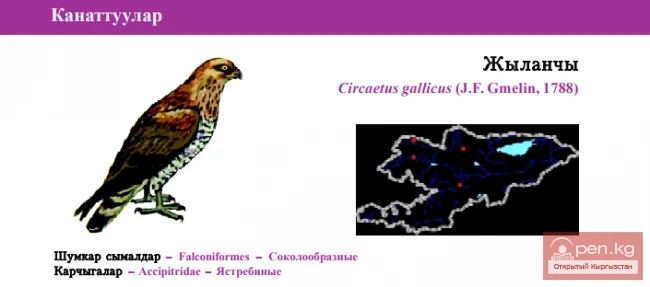
Short-toed Eagle Status: V category, Vulnerable, VU: R. The only representative of the genus in the fauna of Kyrgyzstan, subspecies - Circaetus gallicus heptneri Dementiev, 1932
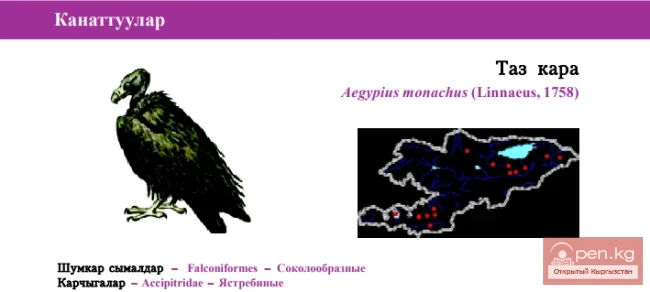
Cinereous Vulture Status: VI, Near Threatened, NT. The only representative of the genus in the fauna of the Kyrgyz Republic. Monotypic species. General distribution in the country. In the north, it is found in Morocco and Egypt, in Eurasia - the Iberian Peninsula, from the Balkan Peninsula eastward to Hangai, Gobi Altai, Gansu, Bhutan, and Assam. To the north, it ranges to Slavonia, Romania, Crimea, the northern slopes of the Greater Caucasus, Kopetdag, Badkhyz, Karatau, Chu-Ili Mountains,
Eurasian Griffon Status: Category VI, Near Threatened, NT: R. One of two species of this genus in Kyrgyzstan, inhabiting the nominative subspecies Gyps fulvus fulvus (Hablizl, 1783).
Himalayan Griffon Status: Category VII, Least Concern, LC. The only species of the genus in the fauna of the Kyrgyz Republic - a representative of a complex of species of Tibetan origin. Monotypic species.
Egyptian Vulture Status: Category V, Vulnerable, VU: R. The only representative of the genus in the fauna of the Kyrgyz Republic. The nominative subspecies N. p. percnopterus (L., 1758) inhabits the region.
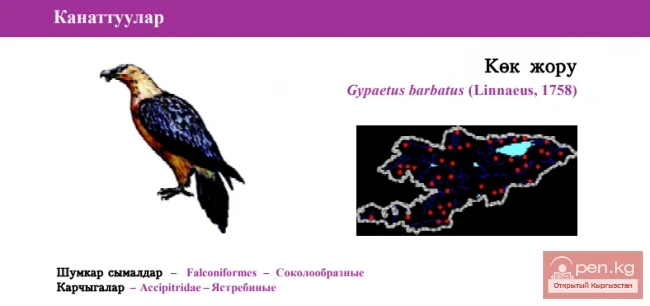
Bearded Vulture Status: Category VI, Near Threatened, NT: R. The only representative of the genus in the fauna of the Kyrgyz Republic. Inhabits the subspecies G.b. aureus (Hablizl, 1783).
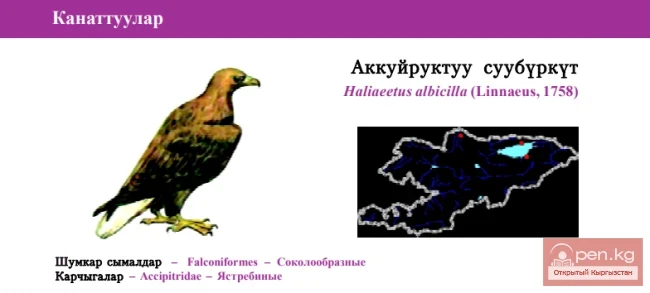
White-tailed Eagle Status: Category VI, Nearly Threatened, NT. A rare bird with a declining population. One of eight species of eagles in the world fauna and one of two species in the fauna of Kyrgyzstan, the nominative subspecies H. a. albicilla (Linnaeus, 1758) winters here. Not listed in the IUCN for Kyrgyzstan [1].
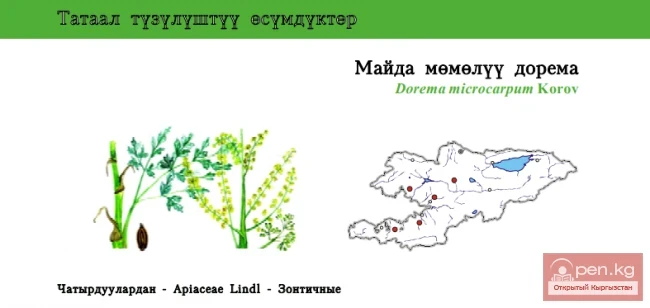
Dorema microcarpum Status: VU. Rare endemic species.
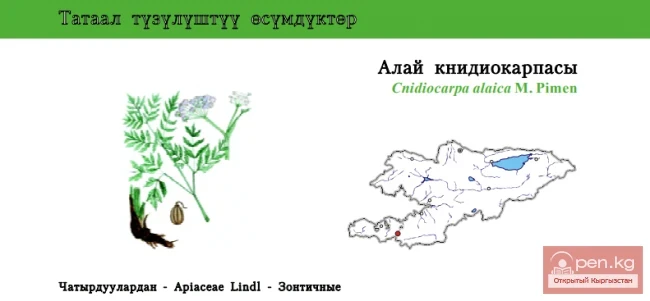
Cnidiocarpa alaica Status: VU. A rare representative of a monotypic genus.
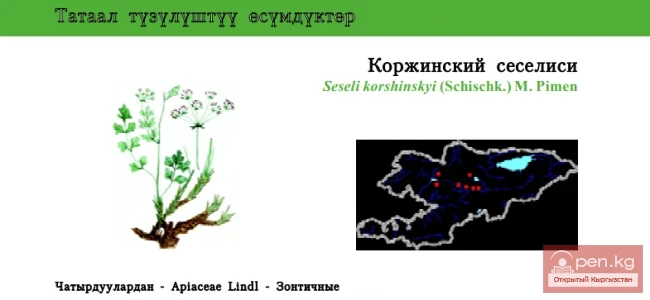
html Korshinsky’s Meadow Saxifrage Status: EN. A rare endemic species found in small numbers and in a limited area. The species has significant scientific value.
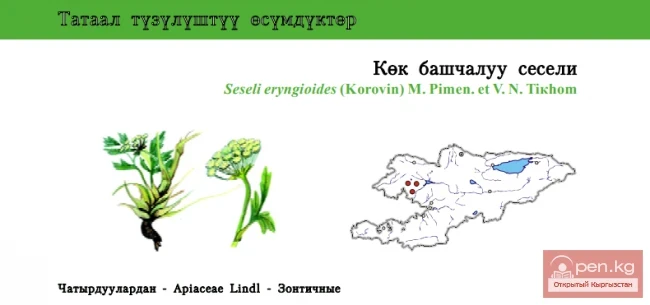
Seaholly-like Meadow Saxifrage Status: VU. Endemic. One of 16 species found in Kyrgyzstan.
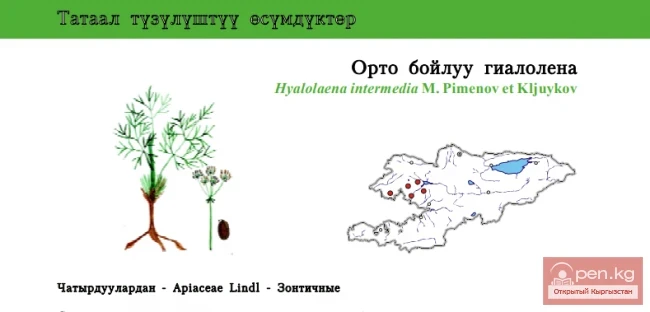
Intermediate Hyalolaena Status: VU. Endemic. One of three species growing in Kyrgyzstan.
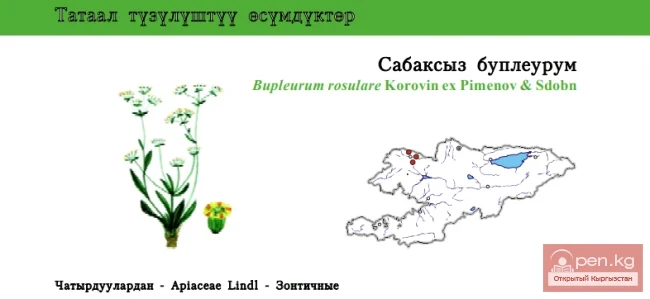
Rosetted Thorough-wax Status: VU. Rare species. One of six species of the genus found in Kyrgyzstan.
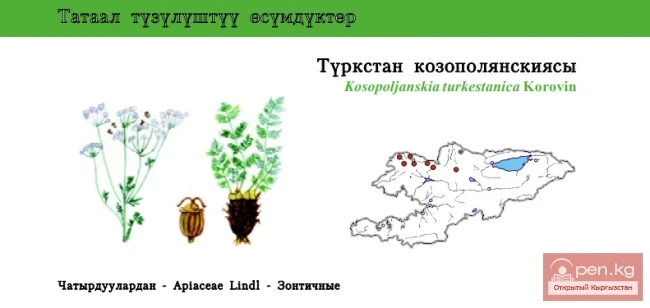
Kosopoljanskaya Turkestanian Status: VU. One of the two endemic species of this genus found in Kyrgyzstan.
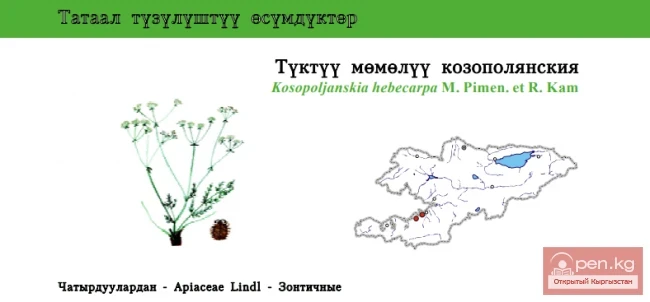
Wolly-fruited Kosopoljanskia Status: EN. Endemic. One of the two species that are sub-endemic to Kyrgyzstan. A rare species found in small numbers and on limited territory, it is at risk of extinction due to anthropogenic factors.
Sclerotiaria pentaceros Status: CR B2ab(iii). Endemic to a monotypic genus.
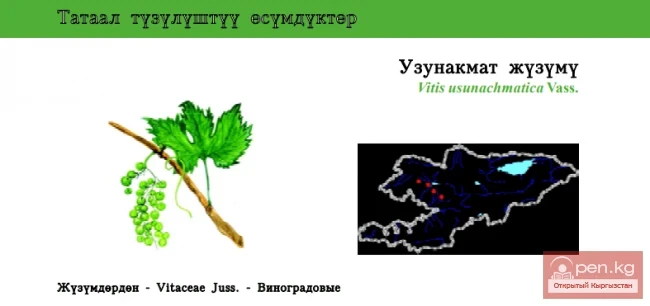
Uzun-Akhmat Grape Status: VU. Endemic species of Western Tien Shan.
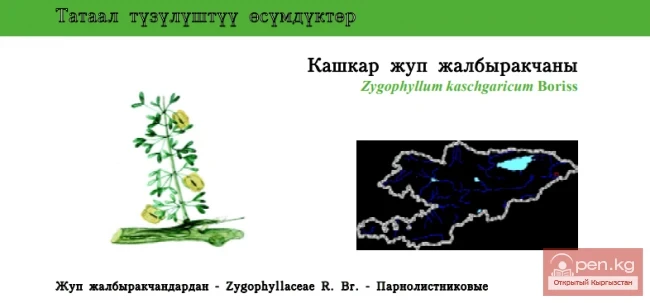
Kashgarian Bean Caper Status: VU. Rare, little-studied endemic species.
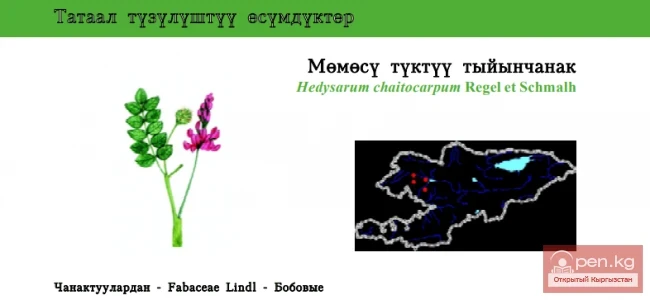
Chaeto-fruited Sweet Broom Status: EN. A relic endemic species found in walnut-fruit forests.
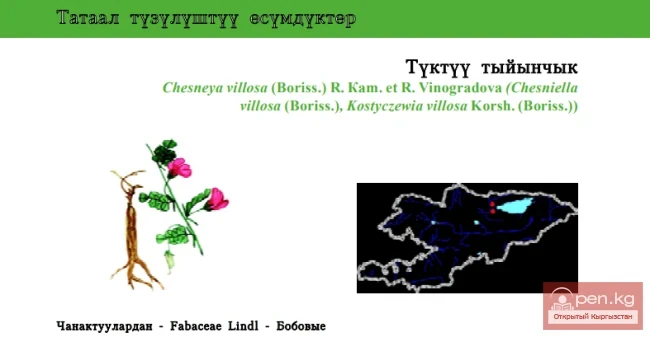
Chesneya villosa Status: EN. One of the three very rarely encountered species of this genus in Kyrgyzstan.
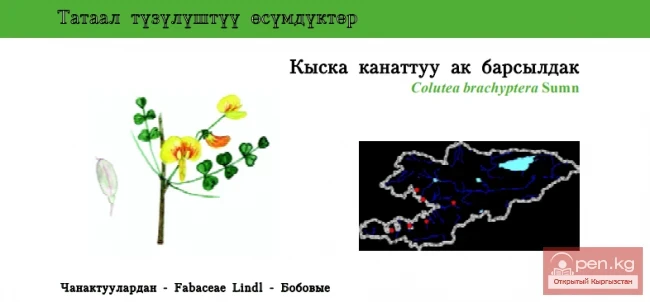
Short-winged Bladder-senna Status: VU. One of three very rarely occurring species of this genus in Kyrgyzstan.
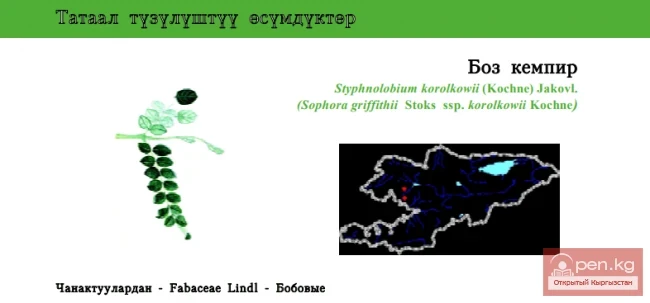
Korolkov’s Pagoda-tree Status: CR. The only species of the genus found in Kyrgyzstan.
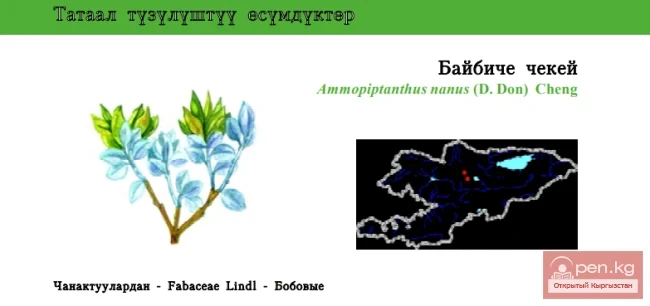
Dwarf Ammopiptanth Status: EN. A rare species with a disjunctive range. One of two known representatives of the relict genus, the only representative of the genus in Kyrgyzstan.
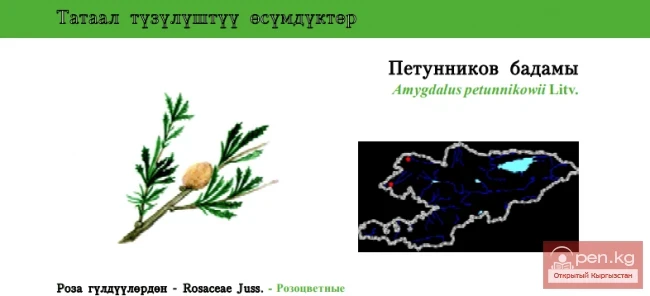
Petunnikov’s Almond Status: VU. One of 40 species growing from the Mediterranean to Central Asia. A relict narrow-endemic species.
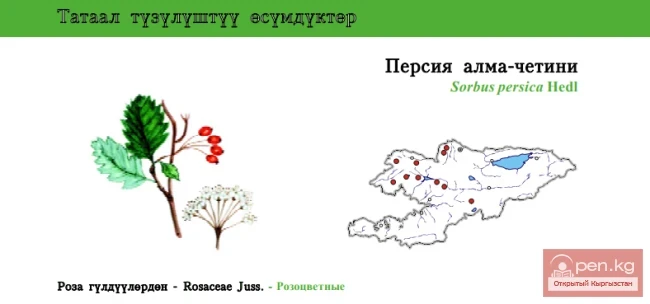
Persian Rowan Status: VU. Endemic, ornamental species.
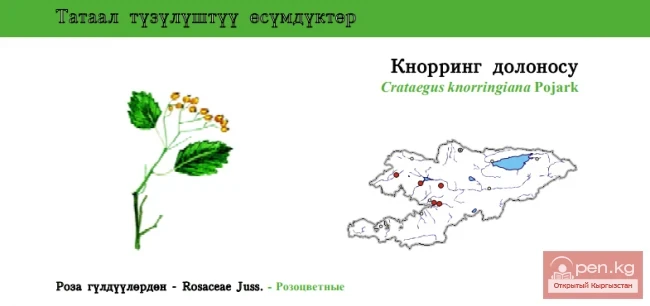
Knorring’s Haw-tree Status: VU. A narrowly endemic species.
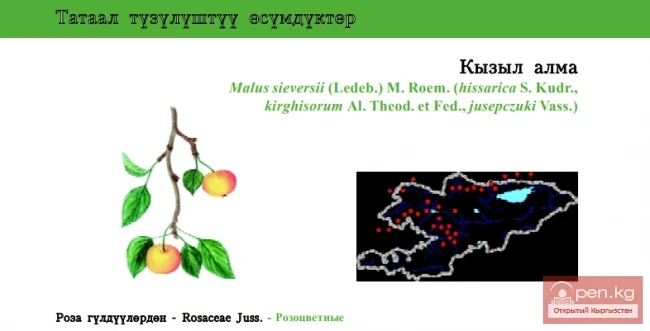
Sievers’s Apple-tree Status: LC category. A polymorphic species of the mountain-central Asian region, a valuable element of the gene pool, one of the secondary forest-forming and fruit-bearing species [61, 21, etc.]. The only species from the flora of Kyrgyzstan included in the International Red List (IUCN RLTS, category VU B1+2c) [87].
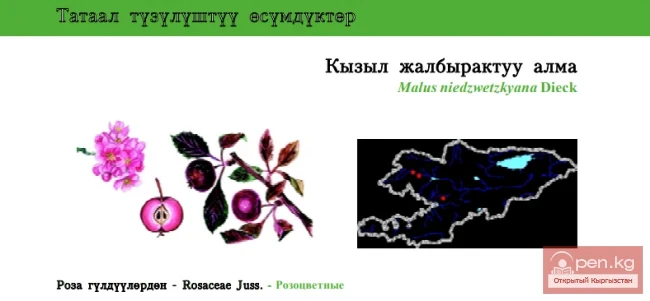
Niedzvetzki’s Apple-tree Status: VU. Very rare, endemic, endangered species with a small population. A valuable species for breeding.
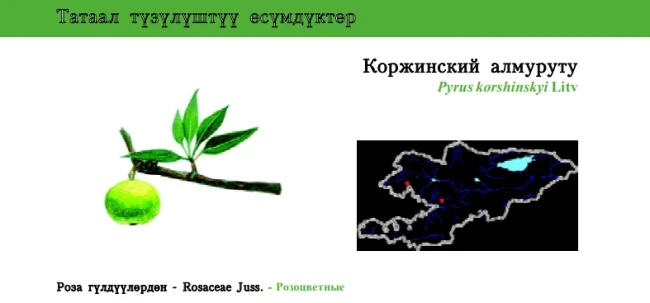
Korzhinski’s Pear Status: VU. One of three species growing in the territory of the Kyrgyz Republic. The taxon is little known. A narrow-local endemic of the Western Tien Shan. A valuable genetic resource for the selection of drought-resistant high-yield southern pear varieties.
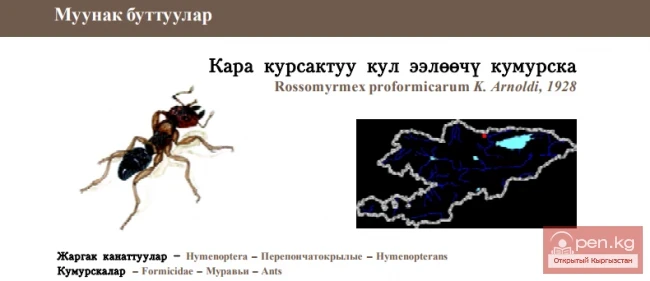
Amazon-Rossomyrmex Status: Category II (VUB2ab(iii); C2b; D2). A rare relict representative of the fauna of virgin steppes with a disjunctive range. There are only three species in the genus, R. proformicarum and R. minuchae Tinaut, 1981 (endemic to the Iberian Peninsula) were included in the IUCN RLTS in 1994 (VU D2 category) [76]; the status of the species described from China, R. quandratinodum Xia & Zheng, 1995, needs clarification.
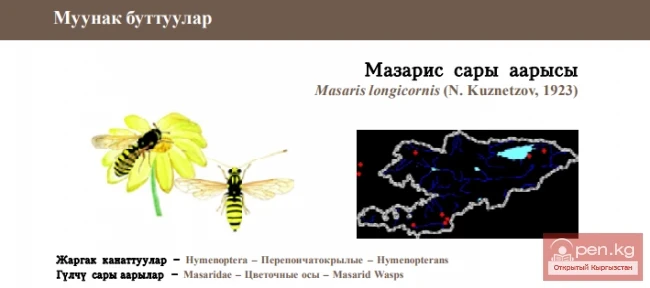
Kuznetzov’s Longicorn Wasp Status: Category III (LR-nt). A naturally rare Central Asian species from a small (4-5 species) relict genus. In Central Asia, the genus and family are among the most ancient groups of hymenopterans, known since the second half of the Cretaceous period (about 100 million years ago), having evolved as oligotrophic pollinators, precursors to bees. The second recorded representative of the genus Masaris in Kyrgyzstan (40 years ago) is Masaris carli Schulthess, 1922,
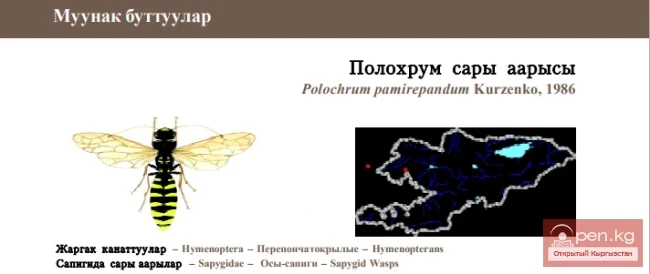
Asiatic Polochrum Wasp Status: Category II (VUB2ab(iii); C2b; D2). A rare vulnerable endemic species of Central Asia, a relic in the modern fauna of the family with a decreasing distribution; the group has scientific significance in aspects of zoogeography and conservation of genetic resources. The second known species of the genus (P. repandum Spinola, 1805) is distributed in Southern Europe and the Caucasus and is already protected in several countries [74]. The largest
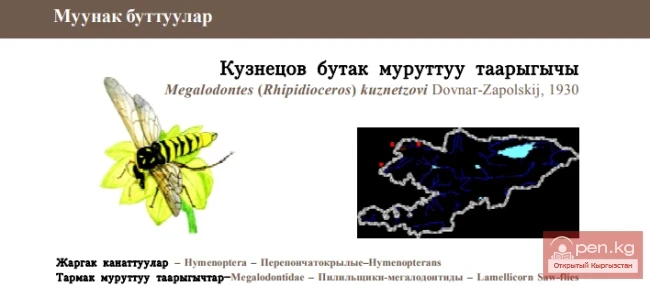
Kuznetzov’s Lamellicorn Saw-fly Status: II category (VU B1ab(iii)+2ab(ii,iii,iv); D2; E). A rare narrow-local endemic of the Western Tien Shan, with a population close to critical levels. One of six Central Asian representatives of a relict family (2-3 species in Kyrgyzstan [12]). It has the narrowest range among Central Asian species of sawflies [7], significant for aspects of zoogeography and conservation of genetic diversity.
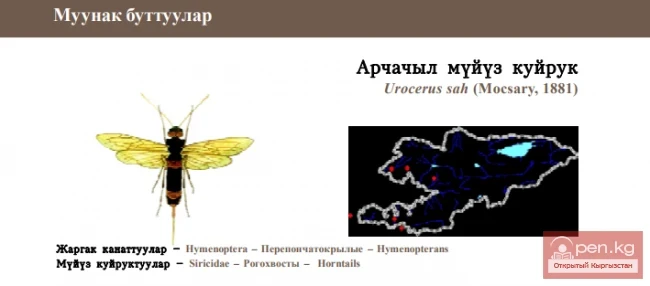
Juniper Horntail Status: Category III (LR-nt). A naturally rare species with a tendency to habitat reduction. It is significant as an object for zoogeographical research and in the aspect of preserving the regional gene pool, one of four representatives of the family in the fauna of the republic [11]. The downgrade of U. sah to the rank of subspecies U. augur (Klug, 1803) by some specialists appears biologically unfounded.
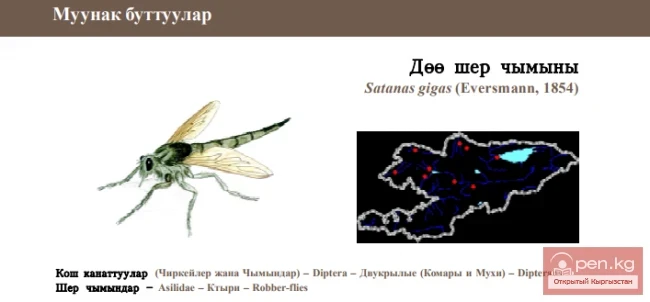
Eversmann’s Giant Robber-fly Status: Category III (LR-nt). A species that is rarely encountered over a wide range, with habitats tending to decrease in area. Listed in the Red Book of the USSR in 1984 (Category II) [26].
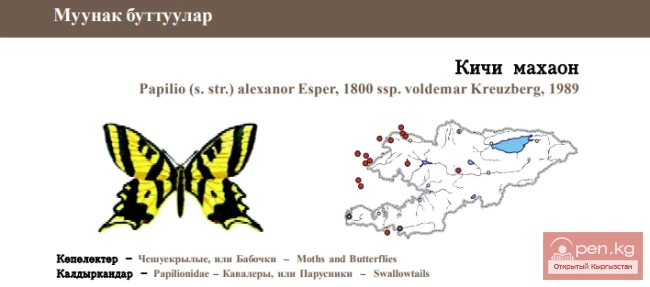
Alexanor, subspecies Voldemar Status: Category II (VU B1ab(iii)+2ab(iii)c(iii,iv); C2b). A local subspecies of a southwestern Palaearctic species with a mosaic range and declining population [23]; in Kyrgyzstan, populations are fragmented, small, and vulnerable, at the edge of the species range. The species is included in the Red Books of the USSR [26] and Uzbekistan (category VU B1ab+2ab(iii)c(iii,iv); D) [23]. An impressive and aesthetically valuable [13]
Apollo Butterfly, Merzbacher subspecies Status: Category 3 (LR-nt). A local subspecies whose populations are potentially vulnerable but not endangered. The species P. apollo is included in the IUCN RLTS (VU A2cde category as assessed in 1996) [76], in CITES Appendix II, and several regional Red Books [26]. The largest [46] of the 47 representatives [90] of the Holarctic genus; an impressive and nature-adorned species. An object of amateur collecting [1].
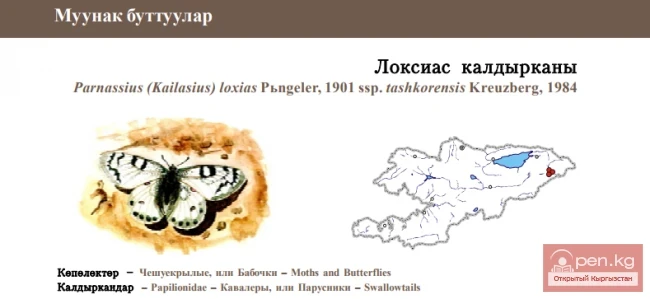
Apollo Loxias, Tashkoro subspecies Status: Category II (VUB1ac(v)+2ab(iii)c(v); D2). An isolated subspecies of an extremely locally and sporadically distributed species, which, due to monophagy, singularity, locality, and small population sizes, is vulnerable even in the absence of a decline in numbers. One of three [90] rare representatives of the peculiar subgenus Kailasius (two species in Kyrgyzstan). It represents significant scientific interest in aspects of zoogeography,
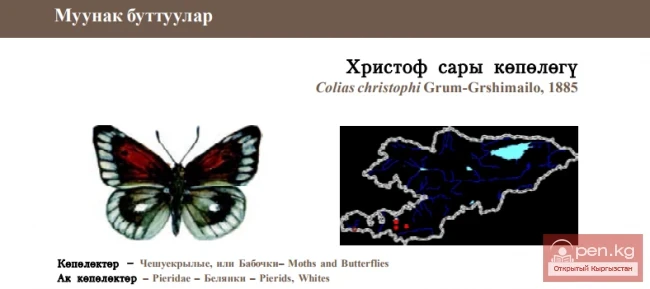
Christoph’s Clouded Yellow Status. Category II (VUBlac(v)+2ac(v); D2). Vulnerable species, a narrow endemic of the northern part of the Hissar-Alai mountain system, forming isolated local populations that are few in number. It is the most distinctive species among the 12 species of the genus found in Kyrgyzstan and has aesthetic value. It was included in the Red Data Book of the USSR in 1984 (category III) [26], and in the same year in the "Red Data Book of the Kirghiz SSR"
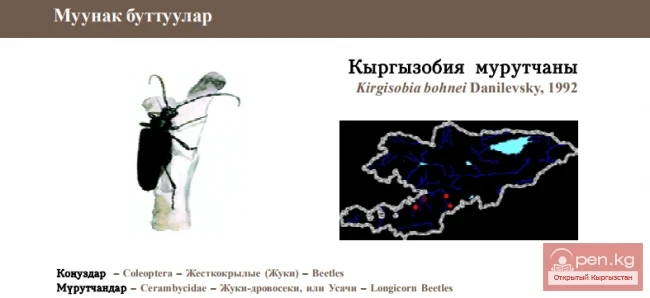
Kirghizobia Longicorn Beetle Status: I category (ENA4bc; B1a+2ab(i,ii,iii,iv)). A narrowly distributed endemic species, whose habitats are being intensively reduced due to habitat destruction. The genus Kirgisobia Danilevsky is monotypic [11, 78] and has significant scientific importance in aspects of zoogeography and genetic conservation.
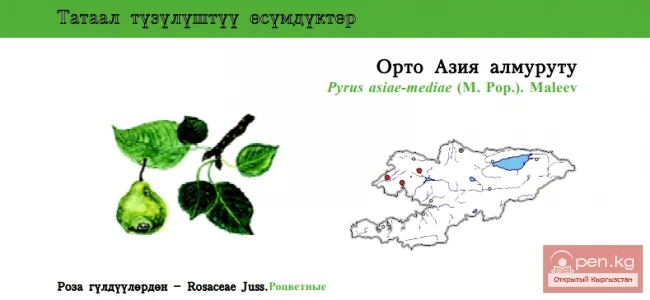
Middle Asian Pear Status: EN. The species is little-known and narrowly localized, endemic to the Western Tien Shan. The taxonomic position of the species is debatable. It is of great importance for breeding and developing resistant varieties of pears that are immune to fungal diseases and damage from fruit flies in high-yielding southern varieties.
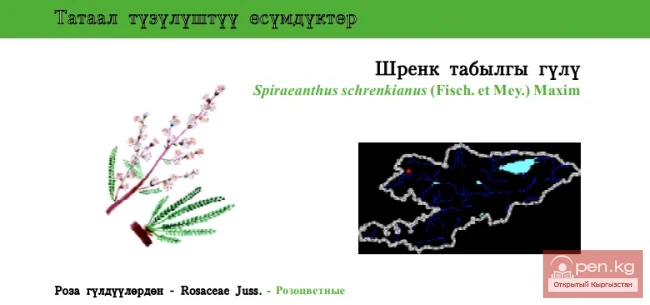
Schrenk’s False Spirea Status: CR B2ab(iii). Endemic, ornamental, and rare plant with a decreasing population. A representative of a relict genus.
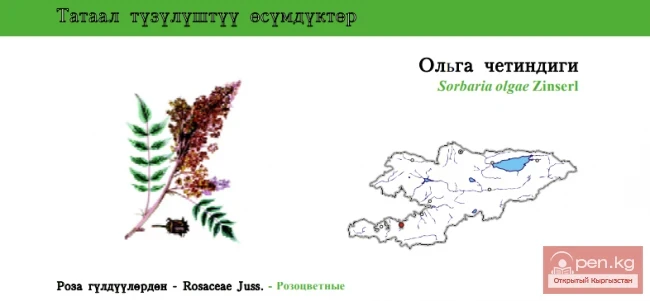
Olga’s Sorbaria Status: CR B2ab(iii). A rare narrow-endemic species of the Alai Mountain Range. Decorative.