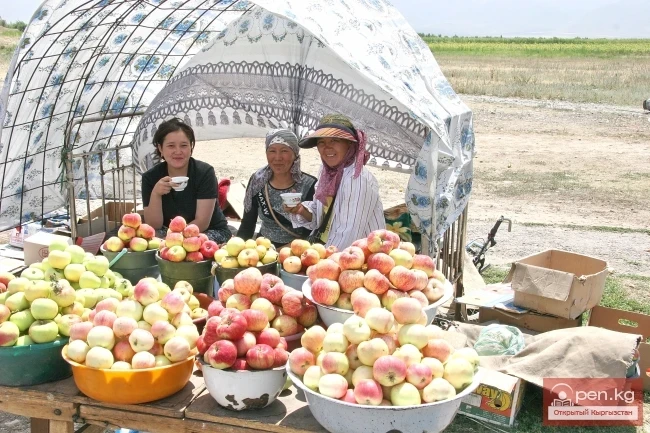
The deputy proposes placing certified organic food products on separate shelves in retail outlets.
As part of the initiative, it is proposed to amend the law on consumer protection and the Code of the Kyrgyz Republic on offenses. In particular, it is suggested to add a new clause to the article concerning information about goods (works, services). This clause will require retail outlets to place certified organic products in specially designated areas and to inform consumers about this. When selling food products online, sellers will have to allocate a separate section on their website for these products.
Moreover, changes to the Code of the Kyrgyz Republic on offenses will relate to the article that establishes liability for violating consumer rights. The deputy proposes to introduce fines for the absence of designated areas for organic products: 5,000 soms for individuals and 20,000 soms for legal entities. There will also be liability for the absence of a separate section on the website for online sales — 3,000 soms for individuals and 15,000 soms for legal entities.
Reference:
According to the law on organic production, producers of organic products must comply with the following rules:
1) the use of only healthy animals and plants, as well as safe products and raw materials;
2) conducting organic production without the use of synthetic chemicals, pesticides, antibiotics, and hormones, except for permitted substances;
3) a ban on chemically synthesized additives, except for those included in the list of permitted ones;
4) a ban on the use of GMOs and products created with their use;
5) a ban on hydroponic methods using prohibited chemicals;
6) a ban on the processing of organic products using ionizing radiation;
7) maintaining soil fertility;
8) minimizing the use of non-renewable resources;
9) recycling waste and by-products of organic production;
10) maintaining ecological balance;
11) protecting plants using traditional varieties and biological methods;
12) applying mechanical methods to protect plants from pests;
13) caring for animal health by stimulating their immune system;
14) breeding animals with consideration for their adaptation and resistance to diseases;
15) using only animals raised under organic production conditions;
16) feeding animals only organic feed;
17) preserving biodiversity of aquatic ecosystems in aquaculture;
18) creating buffer zones to protect against air and water pollution.
Read also:
Animal Husbandry
Curl error: Operation timed out after 120001 milliseconds with 0 bytes received...
Cattle Breeding among the Kyrgyz before the 20th Century
Curl error: Operation timed out after 120001 milliseconds with 0 bytes received...
Agriculture
Grain farming is one of the main sectors of agriculture. Economic difficulties in agriculture over...
Composition of the Kyrgyz Herd
Composition of the Herd Kyrgyz people raised horses, sheep, yaks, goats, camels, and cattle. For...
Devices and Weapons for Hunting by the Kyrgyz in the 19th - Early 20th Century.
Hunting Tools and Weapons. Since ancient times, the Kyrgyz have used both "active" and...
Annual Cycle of Nomadic Herding among the Kyrgyz
Ail before migration. Osh region, Alai valley. 1930. Annual Cycle of Pastoral Livestock Breeding...
Water Management
In the system of water use and water consumption, intra-economic and inter-state water relations,...
Methods of Hunting and Game Management by Kyrgyz Hunters in the 19th - Early 20th Century.
Hunting Dogs and Birds of Prey. Even in the early Middle Ages, specially trained dogs served as...
Development of Agriculture among the Kyrgyz in the 20th - Early 21st Century
Annual Cycle of Agricultural Work The most common practice was crop rotation with two-year and...
Agriculture among the Kyrgyz
AGRICULTURE Agriculture was an important area of economic activity for the Kyrgyz, ranking second...
Cattle Breeding Among the Kyrgyz in the 20th to Early 21st Century
Migration near the village of Troitskoye. Kara-Kyrgyz. Syrdarya region. 1902. Animal Husbandry in...
Hunting Techniques and Division of Spoils among the Kyrgyz from Ancient Times to the Early 20th Century.
Hunting Techniques and Division of Game. The Kyrgyz hunted both on horseback and on foot. In deep...
Hunting - An Important Component of the Kyrgyz Economy from Ancient Times to the Early 20th Century.
Hunters with Golden Eagles. Mountain Semirechye, Kyrgyzstan. 1926. HUNTING Hunting has been an...
Kyrgyz Irrigation Technique - Irrigation
Irrigation The Kyrgyz used techniques and methods of irrigation developed over many centuries,...
Cattle Breeding among the Kyrgyz
Migration in the Alai Range. Early 20th century. Kyrgyz SSR HERDING The leading sector of the...
Commercial Animals of Kyrgyzstan in the Early 20th Century.
Commercial Animals. Sources from the 19th to early 20th centuries contain information about wild...
Production of Livestock Products as of March 1, 2015
Meat Production. During the reporting period of 2015, economic entities of all categories in the...
Agriculture, Forestry, and Fishing
The gross output of agricultural products, forestry, and fishing in January-June 2014 amounted to...
Cattle Breeding Cults of the Kyrgyz in the Early 20th Century.
Forage Preparation Forage preparation became widespread in the late 19th century due to a lack of...
Agriculture of the Southern Kyrgyz in the 19th - Early 20th Centuries.
The second half of the 19th century and the beginning of the 20th century were filled with...
Agriculture, Land Resources of Kyrgyzstan
Land Resources of Kyrgyzstan The climatic features dictate the development of agricultural sectors...
By 2040, the level of agricultural product processing in the Kyrgyz Republic should reach 50%, - Agricultural Producers Association
- The country is set to significantly increase the level of agricultural product processing: from...