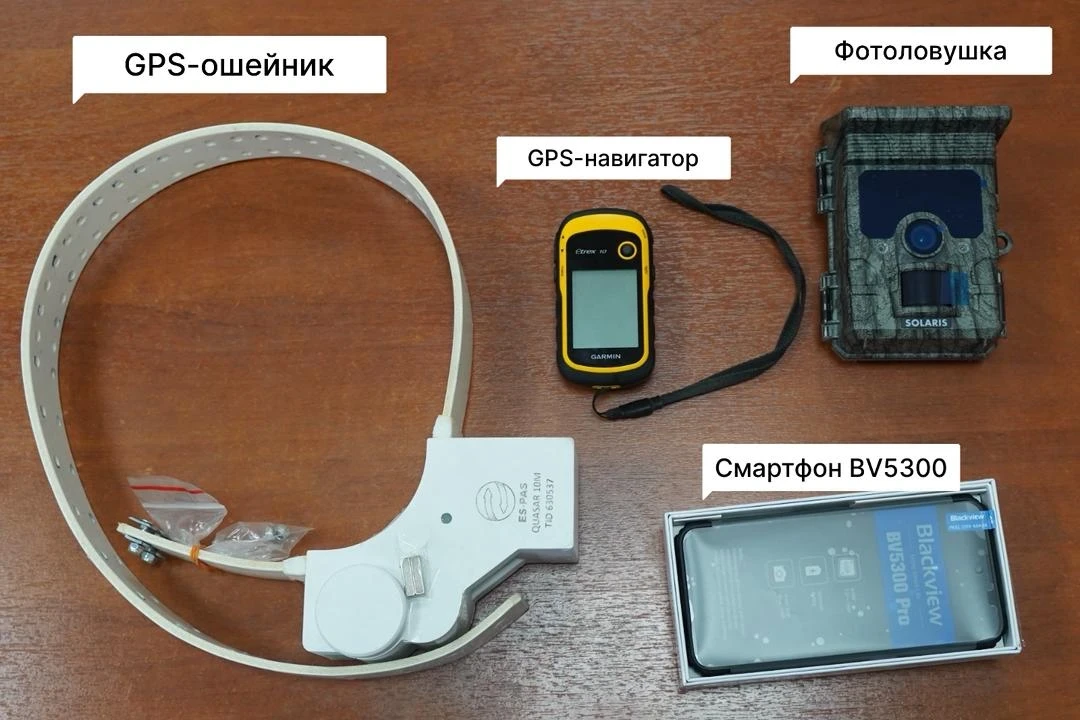
Photo from the press service of the Ministry of Natural Resources, Ecology, and Technical Supervision. Equipment for wildlife monitoring
According to reports from the agency, specialists use a range of innovative solutions to obtain accurate data. In particular, satellite collars provide tracking of animal migration routes, transmitting information about their location in real-time through navigation systems.
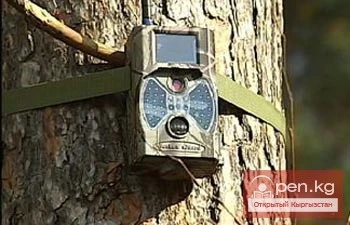
Camera traps also play an important role in monitoring. These automatic cameras capture the presence of wild animals and help study the population of rare and elusive species.
Additionally, GPS navigators are used for precise orientation in challenging conditions. They allow for the recording of coordinates of significant objects, such as trails and habitats, as well as points where equipment is installed.
In field conditions, rugged smartphones are used, which ensure quick data collection, photo documentation, and information transmission even in difficult natural conditions.
The collected data, according to ministry representatives, forms the basis for developing strategies for the protection of rare species and the rational use of natural resources. Analyzing animal migration, their feeding, and changes in habitats allows for timely measures to be taken to protect ecosystems.