New tourist routes are actively developing across the country, and sacred tourism is becoming a significant part of Kazakhstan's cultural image.
While the global tourism industry increasingly turns to spiritual and historical journeys, Kazakhstan occupies a leading position among Eastern countries. The country offers modern researchers what they seek: deep historical value, authenticity, and a connection to ancient Eastern civilizations. The recognition of several historical monuments by UNESCO underscores their significance, transforming Kazakhstan's cultural heritage into a foundational element of its tourism brand.
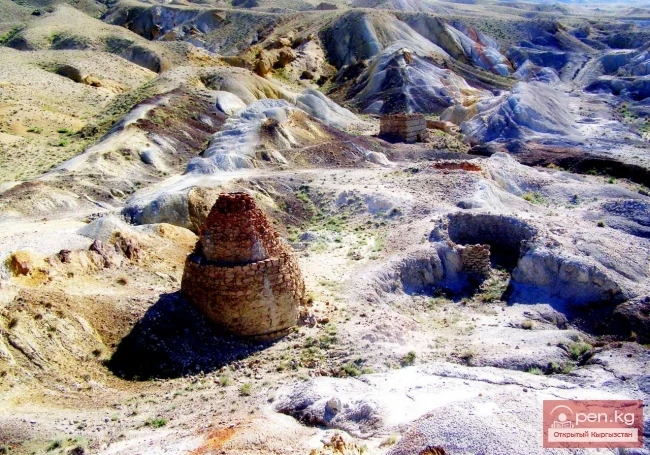
A View of the Eurasian Steppe
One might ask: what is "sacred tourism"? It is a form of travel where the main goal is not relaxation, but the search for profound meaning: spiritual experience, historical memory, and cultural identity. It is a journey to sacred places, powerful landscapes, and ancient cities that hold religious or symbolic significance. This type of tourism unites history, religion, culture, and nature, allowing a person not only to see but also to feel the place, connect with its energy and traditions.
Kazakhstan is ideally suited for sacred tourism due to its history. For millennia, it has served as a crossroads of civilizations—from the ancient Turkic khanates to the Golden Horde, from the Islamization of Central Asia to the flourishing of the Great Silk Road. Missionaries, scholars, Sufi sheikhs, and nomads traversed the Kazakh steppes, leaving behind sacred sites, legends, and routes.
Today, Kazakhstan attracts attention against the backdrop of global interest in spiritual travel and the trend of "slow tourism," where travelers seek a deeper understanding of places rather than a superficial sightseeing experience. For domestic tourism, sacred routes are becoming part of national identity, while for international tourists, they serve as a window into the little-known yet rich world of the Eurasian steppe.
Kazakhstan in the Light of Eternity: What UNESCO Sites Tell Us
The monuments of Kazakhstan included in the UNESCO World Heritage list form the cultural and sacred map of the country. Each of them reflects a unique aspect of history and spiritual experience, and together they create a holistic image of the region as a space of deep memory connected to ancient civilizations and the great paths of Eurasia.
This section presents key UNESCO sites, their historical significance, and their role in the tourist development of Kazakhstan.
Petroglyphs of Tamgaly
The petroglyphs of Tamgaly are considered one of the largest centers of rock art in Eurasia, preserved since the early Bronze Age.
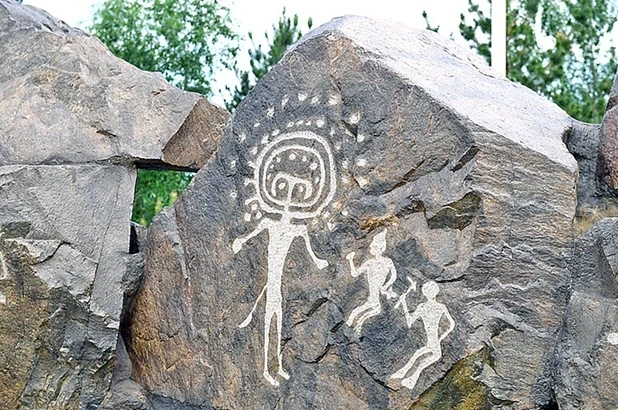
In a natural basin surrounded by hills, there are more than three thousand images created by ancient masters. These drawings form complex sacred compositions: scenes of worship, depictions of solar deities, shamanic rituals, and totemic figures. The structure of Tamgaly resembles an ancient open-air temple that has served as a place for rituals and spiritual practices for centuries.
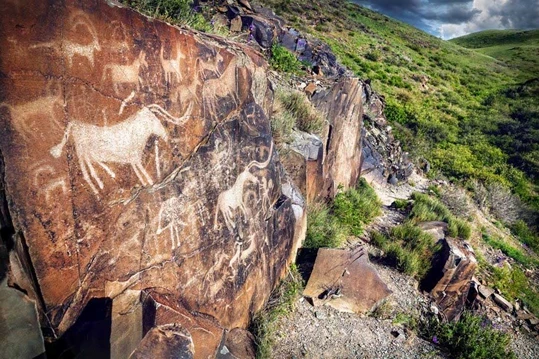
Today, Tamgaly attracts not only researchers of ancient history but also those seeking energetic places and wishing to understand the worldview of ancient civilizations. The unique atmosphere that combines the natural landscape and traces of ancient culture makes this site one of the most significant sacred places in Kazakhstan.
Mausoleum of Khoja Ahmed Yasawi in Turkestan
The mausoleum of Khoja Ahmed Yasawi occupies an exceptional place in the spiritual history of the Turkic world. This grand structure, built in the late 14th century on the orders of Emir Timur, has become a symbol of respect for the great Sufi, reformer, and poet who had a significant impact on the spiritual culture of the region. The architecture of the mausoleum is unique, combining elements of Persian, Turkic, and Central Asian traditions. Its imposing size, exquisite ceramics, and huge cauldron for sacred water create an unforgettable image of the spiritual center of the steppe.
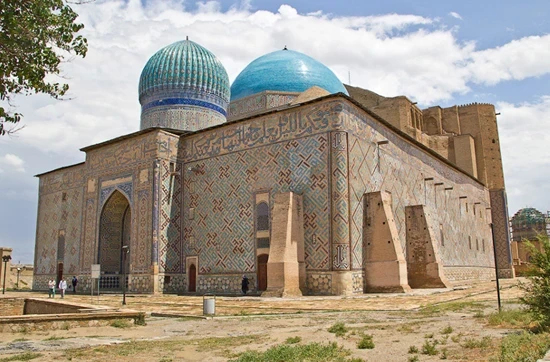
Today, Turkestan has become an important center for pilgrimage. The city has received new infrastructure with a modern airport, hotels, and cultural complexes. The mausoleum has become the heart of an extensive project to transform Turkestan into the tourist capital of Kazakhstan, where sacred tourism harmoniously combines with cultural events and historical reconstructions.
Saryarka: Steppes and Lakes of Northern Kazakhstan
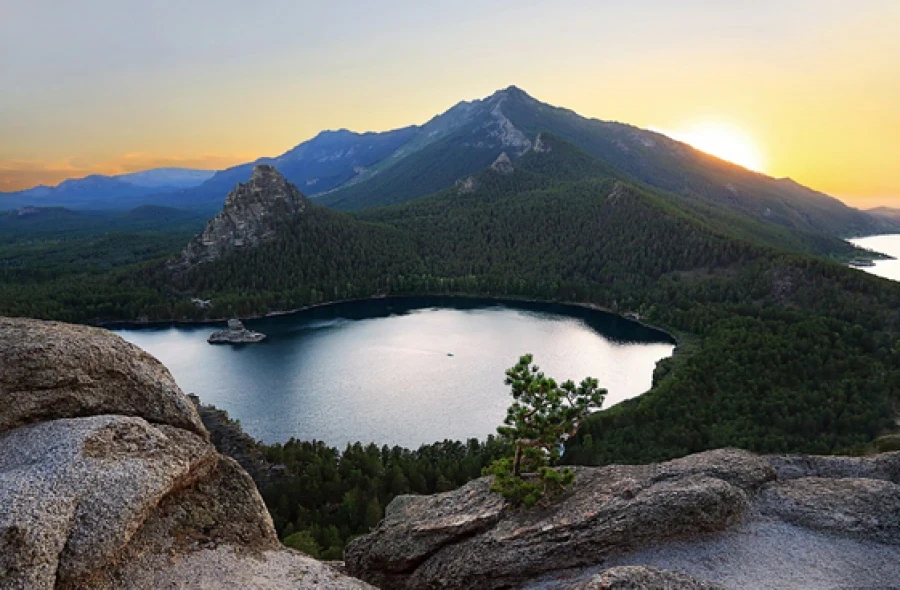
Saryarka represents a natural complex of exceptional significance, including unique steppe ecosystems and lakes that are key points on migratory routes for birds. This region can be called a sacred space where one feels the scale and depth of the steppe world. Saryarka preserves a rare ecology formed over millennia, making it an important site for scientific research, ecological, and spiritual tourism.
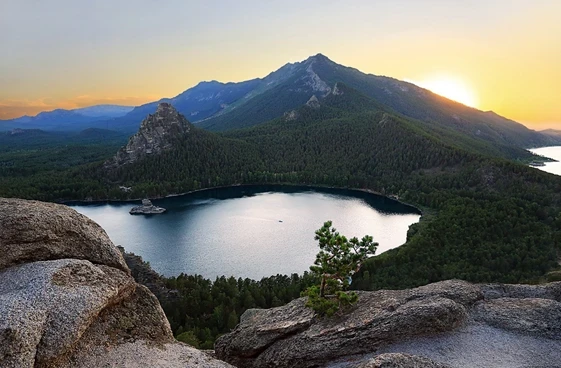
Today, Saryarka attracts travelers seeking silence and unity with nature, as well as fans of slow tourism and untouched steppe landscapes. Ecotourism, birdwatching, and expeditions related to natural heritage are actively developing here. Saryarka strengthens Kazakhstan's image as a country where nature itself becomes a cultural value.
Kazakh Monuments of the Great Silk Road
In the history of Kazakhstan, the Great Silk Road played a key role as the main trade and cultural artery of Eurasia, through which goods, religions, and technologies spread. The monuments of Kazakhstan included in the transnational UNESCO list reflect the diversity and richness of this historical period.
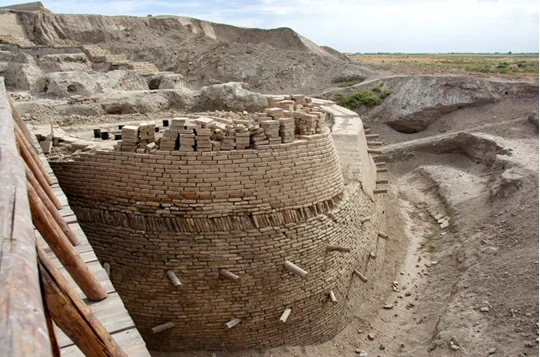
Key monuments include the Akyrtas complex, the settlements of Otrar, Sauran, and Kuiryktobe, as well as sections of caravan routes. Akyrtas is considered a mysterious architectural monument of the early Middle Ages that still sparks debate among researchers. Otrar was one of the central cities of the Silk Road and the capital of the region where Turkic, Persian, and Arab cultures intersected. Sauran has preserved a unique circular plan of fortifications and is considered one of the most studied settlements. Kuiryktobe and sections of caravan routes demonstrate the structure of nomadic civilization.
Pilgrimage Route: Yasawi - Arystan Bab - Otrar
One of the most promising directions is the pilgrimage route connecting three key points: Turkestan with the mausoleum of Yasawi, the mausoleum of Arystan Bab, and the settlement of Otrar. In the popular consciousness, these sites are interconnected, and pilgrimage is considered complete only after visiting all three places. This route combines spiritual, historical, and educational tourism, allowing tourists to follow a path that has been an important part of the region's cultural tradition for centuries.
The creation of a full-fledged pilgrimage cluster transforms these sites into a single tourist product accessible to international visitors. This enhances the region's appeal and forms a sustainable tourism model based on traditions, infrastructure, and modern service.
UNESCO World Heritage sites play a central role in shaping Kazakhstan's modern tourism brand. They help the country present itself on the international stage not only as a territory of natural wealth but also as a space with deep historical, cultural, and spiritual traditions. UNESCO creates an effect of international trust for Kazakhstan, and the monuments themselves become important points of attraction for tourists, researchers, and pilgrims.
The Sacred Map of Kazakhstan: A Living Geography of Sacred Places and Legends
In addition to the UNESCO sites, Kazakhstan also has an extensive National Map of Sacred Places. This project unites hundreds of monuments significant for history, spiritual culture, and folk memory. It has become an attempt to systematize points that have served as places of worship, meditation, and cultural heritage for centuries but did not have official international status. In this way, the country creates a second layer of its spiritual space, broader and more emotional.
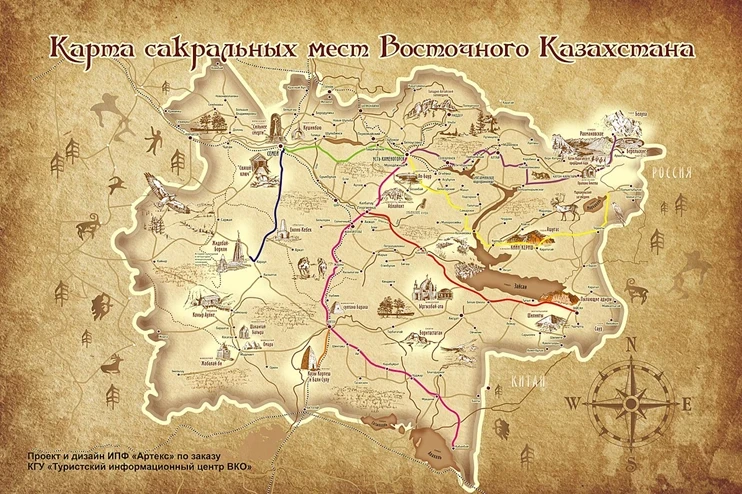
Among the national sacred sites, several of the most famous can be highlighted. The mausoleum of Arystan-Bab, according to legend, is the resting place of the mentor of Khoja Ahmed Yasawi and a key point of the pilgrimage route. The mausoleum of Domalak-Ana has been revered for centuries as a place associated with maternal grace. The Berel mounds in Eastern Kazakhstan open a window into the world of ancient nomads and their burial practices. The mausoleum of Karakhan reflects the early period of Islamic architecture in the country. The Ust-Kamenogorsk temples represent an example of a deeply rooted Orthodox tradition that developed at the intersection of various cultures.
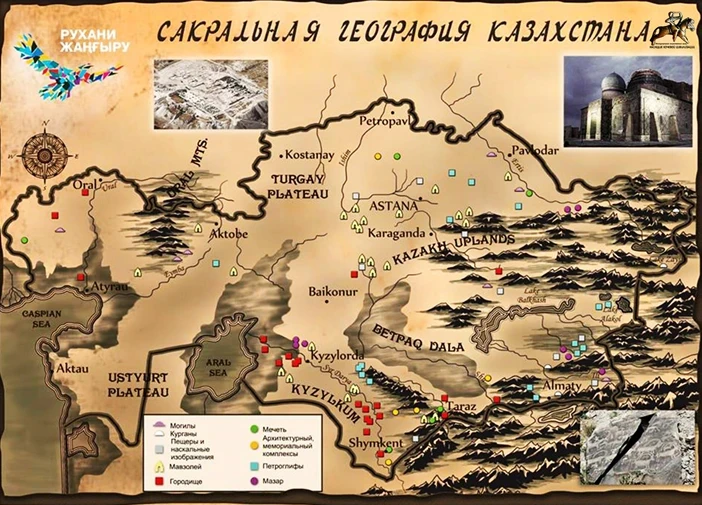
These places complement the UNESCO sites, creating an extensive network of routes that present Kazakhstan in a new light. While UNESCO monuments serve as major anchor points for the international brand, national sacred sites reveal the internal structure of the country's spiritual geography. Together, they create a holistic picture where officially recognized monuments are just the tip of the iceberg, and national sanctities represent the volume of cultural heritage that makes traveling through Kazakhstan deep and multilayered.
The combination of international status and local spiritual traditions allows Kazakhstan to create unique tourism products. Routes connecting UNESCO sites with local sacred points open up the opportunity to see not only individual monuments but also the cultural context, living tradition, and connection between generations. Thus, Kazakhstan can present itself not in fragments but as a whole, emphasizing the richness of its spiritual and historical map.
Conclusion
Kazakhstan is gradually forming its unique philosophy of travel, delving into history, steppe memory, and the spiritual energy that can be felt in every corner of the country. UNESCO sites have become beacons that show the world that significant heritage from various eras is concentrated here. They create the foundation for a national tourism brand and allow for the connection of modern infrastructure with sacred traditions.
Sacred tourism has long ceased to be a narrow niche; it has become part of national identity and a soft power capable of strengthening the country's international image. Through sacred routes, Kazakhstan opens its depths to the world, honestly, modernly, and multilayered. It is this complex structure that makes the country a new center of spiritual tourism in Central Asia.
Photo www