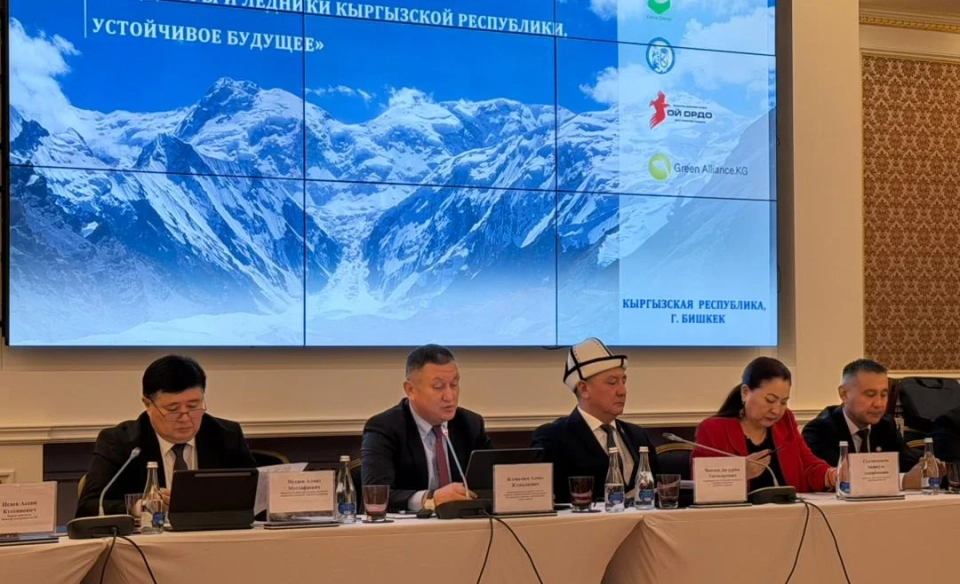
According to him, the Institute of Water Problems and Hydropower is actively working on forecasting, including studying the impact of climate change.
“The main focus is on water resource issues and the reduction of glaciers, as the quantity and size of glaciers directly affect water reserves. Research shows that the situation in the world is extremely alarming,” he noted.
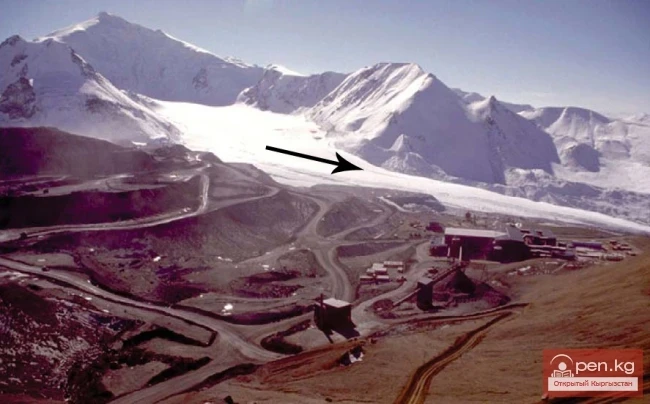
According to data, the average temperature on the planet has increased by 1.5 degrees due to global warming, while in our region this figure has reached 2-3 degrees. If such rates continue, in 30 years glaciers covering less than 1 square kilometer may disappear, and others will significantly shrink. There are currently no real solutions for preserving glaciers. Some suggest covering them, but with our 6,000 glaciers, there won't be enough funds for that. Therefore, we need to prepare for the consequences now.
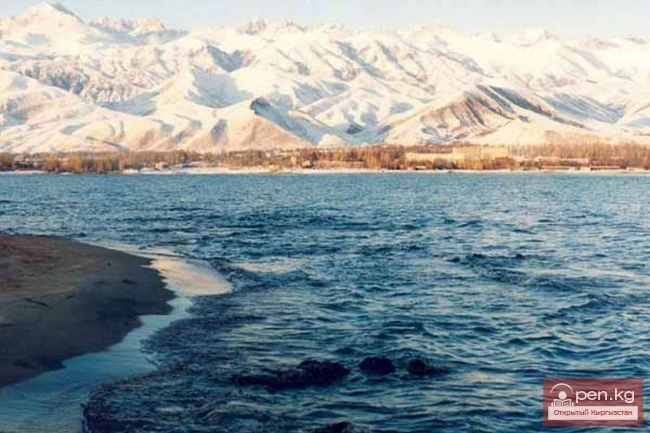
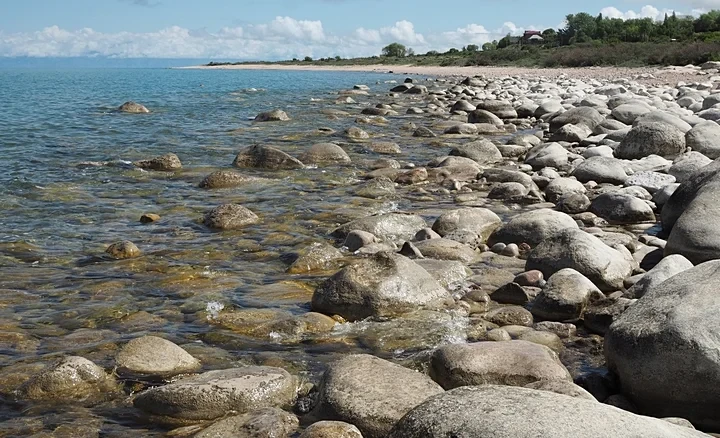
In recent days, the problems of Issyk-Kul have been discussed, which is a very relevant issue. The lake is not only shrinking in size but also suffering from significant anthropogenic pollution. Blue-green algae have begun to grow in catastrophic amounts, and, unfortunately, it seems that wastewater treatment facilities exist only in Cholpon-Ata and Balakchy. In other settlements, there are none, and all waste goes directly into the lake.
Issyk-Kul is a closed lake. Previously, about 88 rivers flowed into it, but now only 35, and none of them flow out. Everything that enters the lake either settles or is processed, which creates serious problems.
If the situation continues to develop at this pace, in a few decades we may witness a terrible picture: a putrid lake where swimming is impossible and there will be no fish. Rumors that it may dry up are not entirely true: Issyk-Kul has a unique structure with a depth of about 700 meters, like a large bowl. However, its condition may become critical.
There are concepts of ecological capacity. When people say, “Last year there were 3 million tourists — great!”, the question arises, how many can Issyk-Kul actually withstand? Three million or ten? This needs to be known to timely stop the influx of tourists.
We understand that people need to earn money; it is an important contribution to the economy, but Issyk-Kul is a unique ecosystem. Perhaps it is worth stopping the acceptance of tourists from the end of August. However, we do not have such a practice: instead, there is talk about winter sports.
I support development, but everything must be based on fundamental indicators: ecological capacity, the presence of wastewater treatment facilities, and the quality of water resources.
I was born on Issyk-Kul, in Kadji-Sai. I remember how in my childhood I crossed the full-flowing rivers, and now many of them have disappeared. The glaciers that fed them are also disappearing. The Kyzyl-Suu River, which once flowed abundantly, now barely flows.
This is a serious problem that must be addressed at the state level. A strict program is needed. We have a biosphere territory of Issyk-Kul, but officially only five people work there.
Previously, it was prohibited to park cars by the water in the biosphere territory, but now, especially in the south, temporary guesthouses are being built, with dozens of them. And where do the waste go?
The law on the biosphere territory seems to be unenforced. Until strict state regulation is introduced, the situation will not change. It shouldn’t be the case that everything starts working only when “the general arrives.”
The system must function independently. Like a mechanism in which large and small gears work in unison. That is what is called a system,” concluded Abdrakhmatov.