The 2026 Agricultural Census Will Expand Data Collection on Infrastructure and Ecology, - National Statistics Committee
According to Orozbaev, the first form of the questionnaire is aimed at rural municipalities and includes general information about populated areas. This form specifies the name and location of the rural municipality, the OKPO code, as well as the composition of populated areas and their codes according to the SOOT system.
“This questionnaire will also present data on agricultural land, redistributed land plots, and lands under the management of rural municipalities. In addition, it will contain information about the presence of infrastructure, such as paved roads, credit institutions, agricultural product markets, maintenance services, and medical facilities,” he added.
Questions regarding ecology and infrastructure will also be included in the questionnaires. This includes data on landfills, chemical storage sites, tailings storage facilities, and ongoing environmental protection activities. An important aspect will be the accounting of municipal enterprises and the availability of agricultural machinery and transport providing services to the population.
The second form is intended for legal entities engaged in agriculture, including state and collective farms, as well as subsidiary farms of educational institutions and logistics centers. It will reflect information about land and labor resources, farm infrastructure, as well as the availability of water supply, electricity supply, and autonomous energy sources such as solar panels and generators.
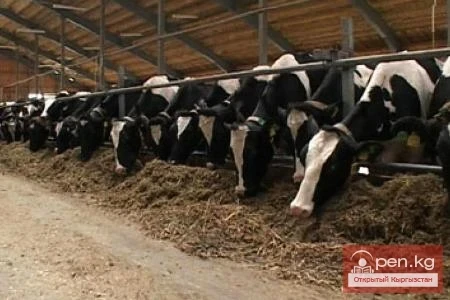
The census will also cover information about sown areas, orchards, berry fields, greenhouses, fertilizer use, as well as the livestock and poultry population.
“Special visual materials have been developed for the enumerators to help determine the breed composition of animals. Images of various breeds of horses, sheep, goats, and pigs will be presented in electronic format. This will allow the enumerator, together with the animal owner, to identify its breed. If the breed cannot be determined, it will be indicated that the animal is of mixed breed,” Orozbaev explained.
Read also:
In the 2026 Agricultural Census, questions about animal breeds, fish farms, product processing, and garden plots have been added, - National Statistics Committee
- As part of the agricultural census planned for 2026, new questions are set to be added regarding...
Agricultural Census in Kyrgyzstan: A survey of one respondent will take about 30 minutes, - National Statistics Committee
During the agricultural census, as reported by Baktybek Orozbaev, the chief specialist of the...
Agriculture
Grain farming is one of the main sectors of agriculture. Economic difficulties in agriculture over...
Cattle Breeding among the Kyrgyz before the 20th Century
Curl error: Operation timed out after 120001 milliseconds with 0 bytes received...
Water Management
In the system of water use and water consumption, intra-economic and inter-state water relations,...
Agriculture, Forestry, and Fishing
The gross output of agricultural products, forestry, and fishing in January-June 2014 amounted to...
Animal Husbandry
Curl error: Operation timed out after 120001 milliseconds with 0 bytes received...
Agriculture, Land Resources of Kyrgyzstan
Land Resources of Kyrgyzstan The climatic features dictate the development of agricultural sectors...
Annual Cycle of Nomadic Herding among the Kyrgyz
Ail before migration. Osh region, Alai valley. 1930. Annual Cycle of Pastoral Livestock Breeding...
Agriculture among the Kyrgyz
AGRICULTURE Agriculture was an important area of economic activity for the Kyrgyz, ranking second...
Methods of Hunting and Game Management by Kyrgyz Hunters in the 19th - Early 20th Century.
Hunting Dogs and Birds of Prey. Even in the early Middle Ages, specially trained dogs served as...
Cattle Breeding Among the Kyrgyz in the 20th to Early 21st Century
Migration near the village of Troitskoye. Kara-Kyrgyz. Syrdarya region. 1902. Animal Husbandry in...
Devices and Weapons for Hunting by the Kyrgyz in the 19th - Early 20th Century.
Hunting Tools and Weapons. Since ancient times, the Kyrgyz have used both "active" and...
Agriculture of the Southern Kyrgyz in the 19th - Early 20th Centuries.
The second half of the 19th century and the beginning of the 20th century were filled with...
Production of Livestock Products as of March 1, 2015
Meat Production. During the reporting period of 2015, economic entities of all categories in the...
Development of Agriculture among the Kyrgyz in the 20th - Early 21st Century
Annual Cycle of Agricultural Work The most common practice was crop rotation with two-year and...
Kyrgyz Irrigation Technique - Irrigation
Irrigation The Kyrgyz used techniques and methods of irrigation developed over many centuries,...
Composition of the Kyrgyz Herd
Composition of the Herd Kyrgyz people raised horses, sheep, yaks, goats, camels, and cattle. For...
Commercial Animals of Kyrgyzstan in the Early 20th Century.
Commercial Animals. Sources from the 19th to early 20th centuries contain information about wild...
Hunting - An Important Component of the Kyrgyz Economy from Ancient Times to the Early 20th Century.
Hunters with Golden Eagles. Mountain Semirechye, Kyrgyzstan. 1926. HUNTING Hunting has been an...
Agriculture Minister Akunbekov instructed to prevent unjustified price increases for meat
The Minister of Water Resources, Agriculture, and Processing Industry Erlis Akunbekov, during his...
Cattle Breeding among the Kyrgyz
Migration in the Alai Range. Early 20th century. Kyrgyz SSR HERDING The leading sector of the...
Hunting Techniques and Division of Spoils among the Kyrgyz from Ancient Times to the Early 20th Century.
Hunting Techniques and Division of Game. The Kyrgyz hunted both on horseback and on foot. In deep...
Cattle Breeding Cults of the Kyrgyz in the Early 20th Century.
Forage Preparation Forage preparation became widespread in the late 19th century due to a lack of...