The development of brain-computer interfaces (BCI) in China is reaching a new level, becoming a crucial direction in the fields of medicine and technology, reports Kazinform citing Xinhua.
In recent years, the country has significantly increased the pace of research in this area. By 2025, several developments are expected to move beyond laboratory walls and begin practical applications, showing tangible results in patient treatment.
One of the outstanding successes has been the "Beinao-1" and "Beinao-2" systems. Specialist Zhao Jizong reported that the semi-invasive "Beinao-1" system has already been successfully implanted in seven patients, who were able to restore their motor and speech functions. At the same time, "Beinao-2" is preparing for clinical trials.
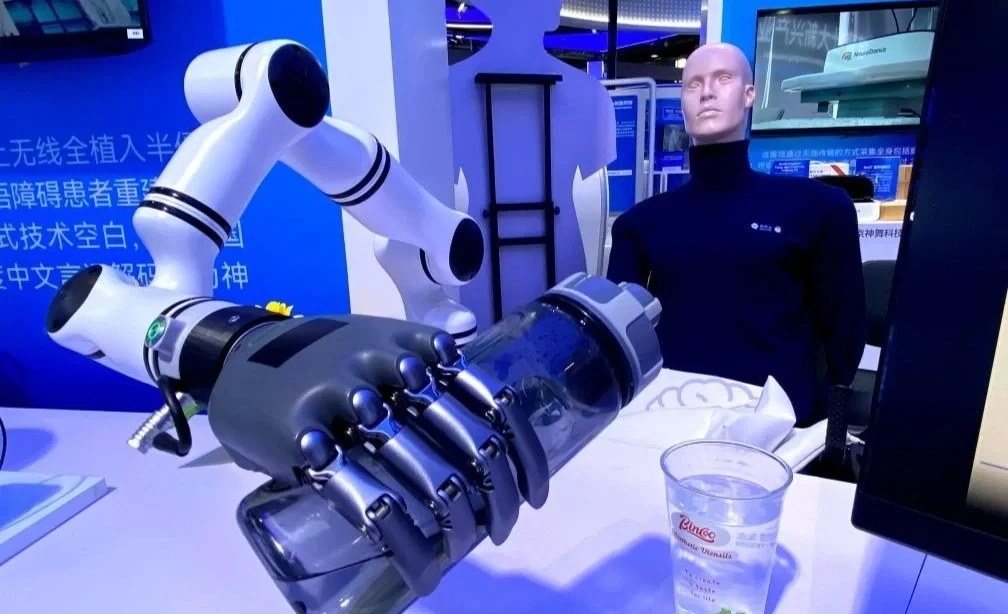
Brain-computer interfaces create a direct connection between the human brain and electronic devices. They read and interpret brain signals, allowing patients to control prosthetics and computers, which is extremely important for people with severe motor impairments.
Government support for the development of BCIs is also significant. This technology has been highlighted as a priority direction at two sessions, where it was identified as a promising industry of the future. Simultaneously, specialized clinics and research institutions are being established in cities such as Beijing, Tianjin, Guangzhou, Wuhan, and Nanjing.
A key moment was the approval of the world's first invasive medical device based on BCI, designed for patients with tetraplegia caused by neck injuries. This device helps restore the functionality of hands and fingers.
The need for such technologies is explained by the scale of the problem. Experts report that there are over 3.7 million patients with spinal cord injuries in China. Additionally, BCI is considered a promising means for treating Parkinson's disease, epilepsy, strokes, and amyotrophic lateral sclerosis.
Thus, China is focusing on BCI as a strategic direction capable of changing the approach to the therapy of neurological diseases and elevating human interaction with technology to a completely new level.