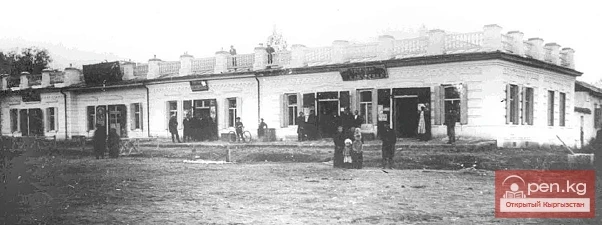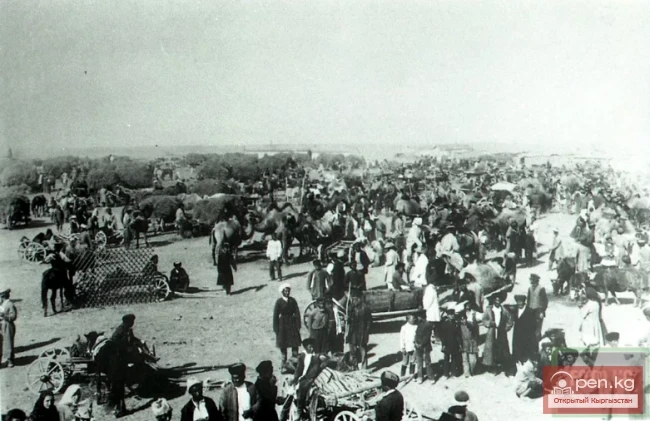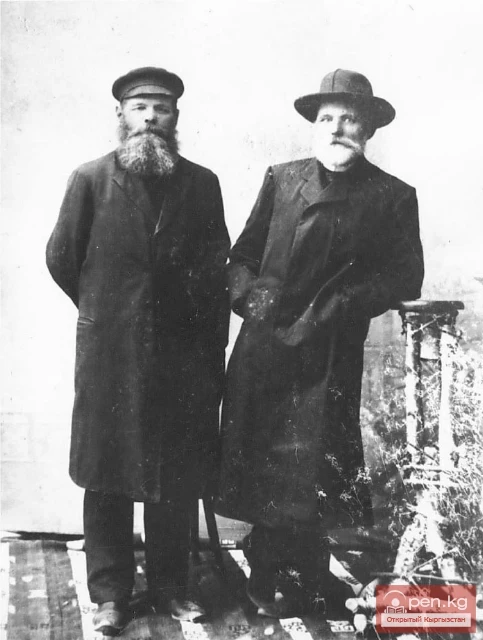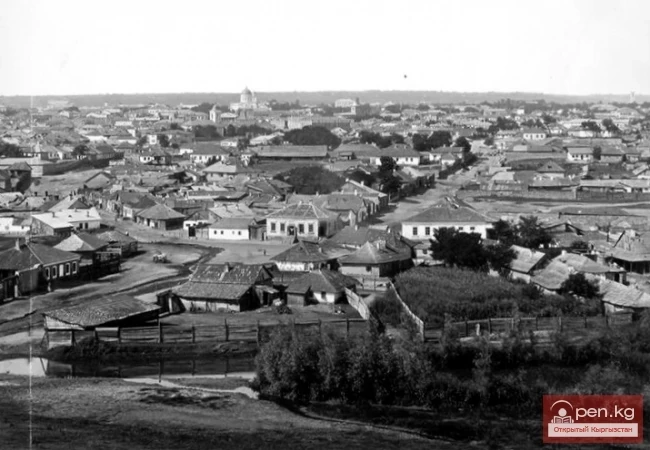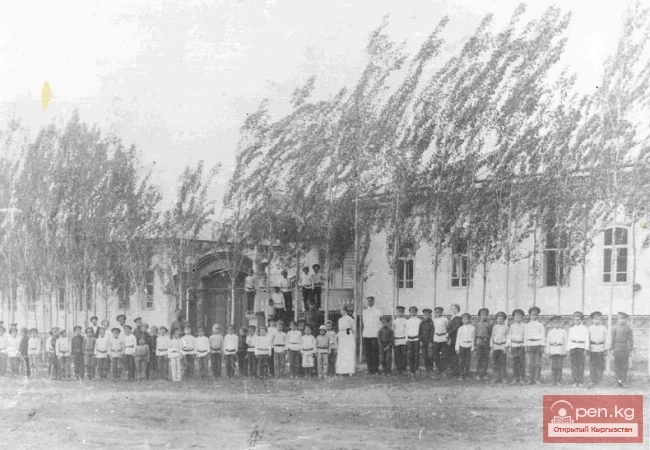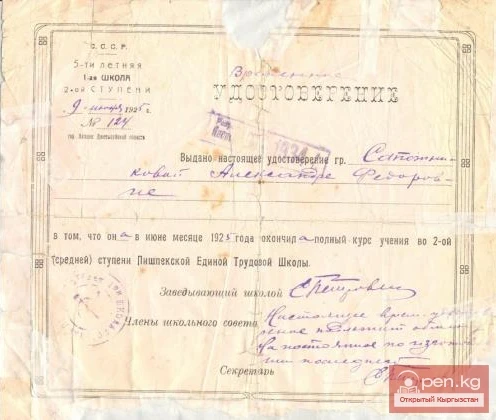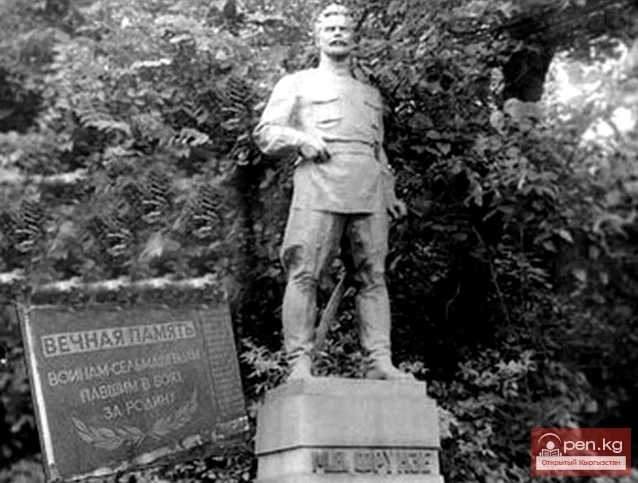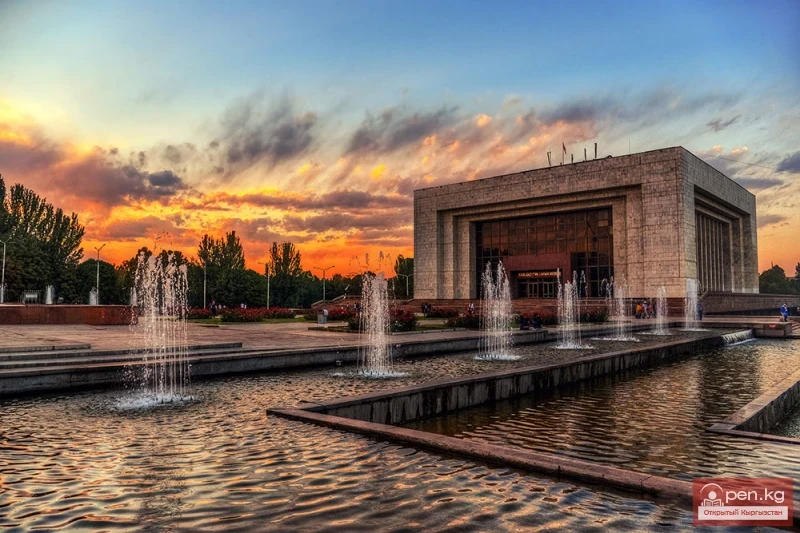
The capital of Kyrgyzstan sprawls in the central part of the Chui Valley at the northern foothills of the Kyrgyz Range, at an altitude of 750–900 meters above sea level. The city emerged in the second half of the 19th century near the Pishpek fortress and initially bore its name. In 1897, the population was only 6,600 residents. Only a few wooden and brick buildings were located in the center, while pre-revolutionary Pishpek resembled a dusty village with adobe houses. The city's intensive development began with the establishment of Soviet power. In 1926, Pishpek was renamed in honor of the prominent revolutionary, military leader, and statesman Mikhail Vasilyevich Frunze, who was born here (the word "Frunze" translates from Moldovan as "Green Leaf"), and in 1991, the city was returned to its name Bishkek.
Today, it is the administrative, economic, cultural, and scientific center of Kyrgyzstan, with a population of over 600,000 people.
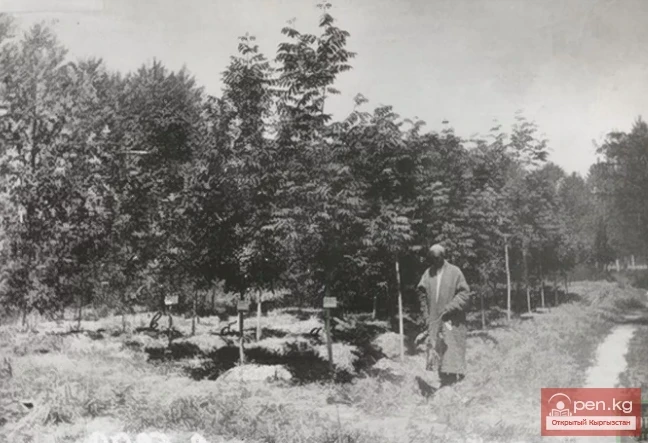
If we take a map of the city, we will see that it easily divides into rectangles. This historically established rectangular structure contributes to good nighttime ventilation of the streets by cool southern winds flowing down from the mountains. In 1879, botanist A. M. Fetisov was invited here from St. Petersburg, and his name is associated with the establishment of green areas such as the Karagach Grove, Oak Park, Erkindik Boulevard, and the park named after I. V. Panfilov.
Tourists arriving in Bishkek by plane are greeted by the spacious, richly decorated building of the Manas Airport. The modern bus station welcomes tourists arriving by bus. The city has many original buildings and architectural ensembles that give the capital of the republic a unique and distinctive appearance. Notable structures include the Kyrgyz State Philharmonic with the monumental sculpture complex "Manas," the Central Department Store (TsUM), the Kyrgyz State Museum of Fine Arts, the covered market "Alamedin," and the complexes of the Osh and Orto-Sai markets. A central square has been formed with a complex of new administrative and public buildings. A striking example of the synthesis of architecture and visual art is the complex of the "Southern Gates of the City". A whole block in the center of Bishkek houses a circus building with beautifully landscaped grounds around it.
The main higher educational institutions of the republic are concentrated in the city. The Academy of Sciences of the Republic of Kyrgyzstan is well represented, having an extensive network of research institutes.
The Kyrgyz State Academic Theater of Opera and Ballet named after A. Maldybaev, the Kyrgyz Academic Drama Theater, and the Russian Academic Theater named after Ch. Aitmatov are located in the central park area in such a way that they can all be visited in a short time. Oak Park, where the Russian Theater is located, has become a kind of open-air sculpture museum. Works by masters from various cities of the CIS and different countries are exhibited along the alleys and on the green lawns.
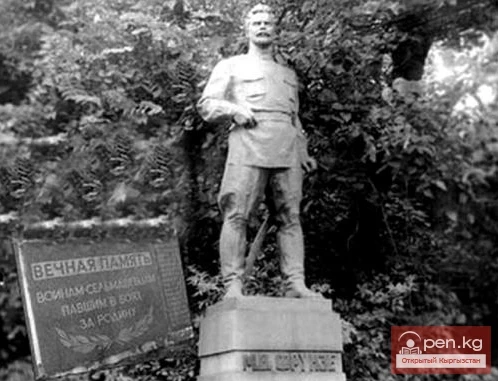
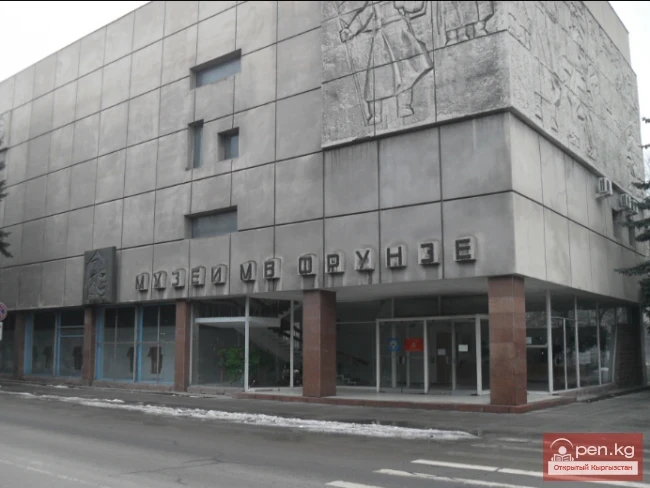
Among the museums, the House-Museum of Mikhail Vasilyevich Frunze holds a special place. It is a four-story building that contains a small house where our outstanding compatriot was born and spent his childhood. Tourists show great interest in the exhibits of the Kyrgyz State Historical Museum.
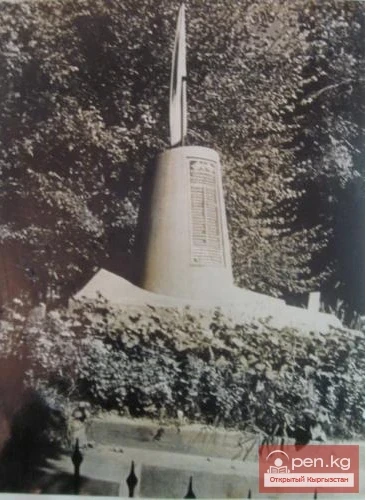
The architectural appearance of the city is inseparable from the monuments and memorials to the Fighters of the Revolution, Friendship, and Labor Glory. A majestic monumental ensemble with an Eternal Flame has been erected in the new Victory Square.
There is much of interest awaiting tourists in the surroundings of Bishkek. Its southern outskirts meet a range of hill ridges, behind which lies the Baytyk Valley. It is named after the manap of the Kyrgyz tribe Baytyk Kanaev. Part of the slopes is planted with pistachios, while the other remains in its natural state. There are many birds here.
Southwest of the Republic's VDNH rises the mountain Boz-Belteke (1395 m), which can be reached by city buses. From its summit, the city will appear before you like a palm. At the foot of this mountain lies the Kyrgyz cemetery known as "Khan's Graves." Here lies the former lord of the Baytyk Valley and his son Uzbek, over whose grave a magnificent wrought-iron tower with a dome has been erected.
Among the historical landmarks, the Krasnorechenskoye settlement, located 38 km east of Bishkek, can be noted. Archaeologists have found residential complexes from the 10th–12th centuries, excavated rich decorations, pottery, and lamps. Here, a sculpture of a Bodhisattva cast in silver and bronze was also found, which made its way to these lands from distant India in the eighth century. The Krasnorechenskoye settlement is an example of a sedentary culture that existed alongside nomadic culture before the Mongol-Tatar conquest (5th–10th centuries). The early medieval city of the Chui Valley represented a shahristan — an urban core. It differed from the southern settlements in that the shahristan included a citadel. The shahristan itself was surrounded by walls with towers and encompassed an area that was also fortified with an additional earthen embankment ring of walls.
It is at the Krasnorechenskoye settlement that a Sogdian fortress from the 4th–5th centuries has been excavated. The centuries have brought us fragments of Buddhist painting and sculpture, a huge 12-meter statue of Buddha made of molded clay and painted in multiple colors. Experts claim that Alexander the Great visited this place.
Cognitive tourism can be diversified by including additional tourist attractions. One such attraction could be the hippodrome in Bishkek, which, after necessary renovations, could offer a multitude of additional services. The organizing core of the entire work of the hippodrome could be a hall for theatrical national performances, in which tourists would become direct participants. These include the military-sporting competitions celebrated in the legendary epic "Manas," sayish — a fight of horsemen on spears, or oodarysh — wrestling on horseback. These are beloved national sports: at chabysh — horse racing, jorgo samysh — a competition in running on pacers, ulak tartysh — goat dragging, kyzy kuumai — catch the girl, alaman baiga — racing on different horses, and others.
A significant number of vacationers will also be attracted by the totalizator and equestrian school, equestrian competitions for tourists, entertaining food outlets, and souvenir kiosks. The advantage of organizing such a complex is that it can operate year-round, and the services offered will attract not only city residents but also tourists from all over our country and foreign tourists.
Very close to the capital of the republic are the tourist zones of Alamedin and Ala-Archa. In winter, the zones of Chon-Tash and — for lovers of skiing — Chunkurchak, Noorus, and Toguz-Bulak are particularly attractive. Lovers of ancient architecture must visit the tourist zone of Burana, located fifty kilometers from Bishkek.