The document from the Ministry of Defense of Vietnam, titled "Plan for the Second U.S. Intervention," considers Washington's promotion of "freedom and democracy" as a mechanism for maintaining its influence in the region. The text asserts that the U.S. is prepared to resort to military actions against countries that "deviate from their orbit," including a possible attack on Vietnam if it refuses to participate in the American anti-China coalition.
According to The 88 Project, the document emphasizes: "Although the likelihood of war with Vietnam is currently low, due to the aggressive U.S. policy, we must be cautious not to give a reason for military intervention to begin." The report also mentions that the U.S. Navy could exploit the geographical features of the Vietnamese seas for military operations, as well as the possibility of the U.S. using biochemical and nuclear weapons in the event of an invasion failure.
According to Vietnamese military analysts, the U.S. views Vietnam as an important partner in its Indo-Pacific strategy and as an ally for containing China. The strategy, developed during Joe Biden's presidency, is described as an attempt to create a liberalized economic bloc that will serve as a market for American high-tech products and weapons.
The authors of the document note that the Donald Trump administration took a more aggressive stance, aiming to expand military power and the export of military equipment.
In September 2023, during a visit by the Vietnamese leader to the U.S., an agreement was reached on bilateral relations between Washington and Hanoi, elevating the status of the U.S. to that of a comprehensive strategic partner for Vietnam. This agreement placed the U.S. alongside China, India, Russia, and South Korea in the hierarchy of diplomatic relations.
Thus, the document highlights the duality of Vietnam's approach to the U.S. and deep fears of external forces capable of inciting an uprising against the communist regime, reminiscent of "color revolutions" such as the Orange Revolution in Ukraine or the Yellow Revolution in the Philippines.
Other internal documents mentioned by The 88 Project confirm similar concerns regarding U.S. intentions towards Vietnam.
“There is a consensus among state structures on this issue,” noted Ben Swanton, co-director of The 88 Project and author of the report. “These are not just paranoid ideas within the government.”
The original document, completed in August 2024, asserts that in order to "strengthen the containment of China," the U.S. and its allies are ready to employ unconventional methods of warfare and military intervention, including large-scale invasions.
Vietnamese military experts observe a trend that has persisted through three U.S. administrations — from Barack Obama to Trump to Biden — where Washington actively develops military relations with Asian countries to form a front against China.
In 2023, Joe Biden signed an agreement on "comprehensive strategic partnership" with Vietnam, elevating relations between the two countries to the highest diplomatic level, comparable to that with Russia and China, and based on mutual respect.
However, in the 2024 document, Vietnamese military strategists indicate that while the U.S. views Vietnam as a partner, it also seeks to impose its values, including freedom and democracy, which could threaten the country's socialist government.
Swanton, in his analysis, notes that the "Second U.S. Invasion Plan" clearly demonstrates that Hanoi perceives Washington not as a strategic partner, but as an existential threat, refusing to join the anti-China alliance.
Nguyen Khac Giang from the Singapore ISEAS-Yusof Ishak Institute emphasizes that these plans reflect internal contradictions within Vietnam's political leadership, where conservative military factions have long harbored fears of external threats.
“The military has always been cautious within the Comprehensive Strategic Partnership with the U.S.,” Giang added.
The escalation of internal tensions became evident in the public sphere in June 2024, when the Fulbright University, linked to the U.S., was accused of inciting a "color revolution" according to army television. The Ministry of Foreign Affairs defended the university, which had become a focus for both American and Vietnamese officials in the context of strengthening relations between the countries.
Zakari Abouza, a professor at the National War College in Washington, noted that Vietnamese military officials remember well the war with the U.S., which ended in 1975. He believes that while Western diplomats emphasize possible Chinese aggression, in reality, Vietnamese leaders are most afraid of "color revolutions."
The reduction of funding for the U.S. Agency for International Development during the Trump era also undermined trust between Washington and Hanoi, affecting projects aimed at cleaning up contaminated land caused by "Agent Orange" and unexploded ordnance.
“The uncertainty regarding color revolutions is puzzling, as it is unclear why the Communist Party is so insecure,” said Abouza, the author of a book on the People's Army of Vietnam.
Although there are disputes between China and Vietnam over territorial claims in the South China Sea, documents show that China is perceived more as a regional rival than as a threat akin to the U.S.
“China does not pose an existential threat to the Communist Party of Vietnam,” Abouza added. “The Chinese understand that they can only pressure Vietnam up to a certain point, as they fear that Vietnam's weakness could lead to mass unrest.”
China is Vietnam's largest trading partner, while the U.S. occupies the position of the largest export market, placing Hanoi in the position of needing to balance between maintaining diplomatic and economic relations and potential risks.
“Some of the most progressive Vietnamese leaders look at the U.S. and say: ‘Yes, they are our partners, but if a color revolution arises, they will support it,’” Abouza added.
Under the leadership of To Lam, who became the General Secretary of the Communist Party around the time this document was written, Vietnam began to strengthen ties with the U.S., especially during Trump's administration.
Recently, Lam was re-elected as General Secretary and is expected to also take the position of President, making him one of the most influential figures in the country in recent decades.
Under his leadership, Trump’s family business began construction of a golf resort and elite real estate in Vietnam. Lam quickly accepted Trump's offer to participate in the Council of Peace, which, according to Giang, was an unusual step considering the cautiousness of Vietnamese authorities in international affairs.
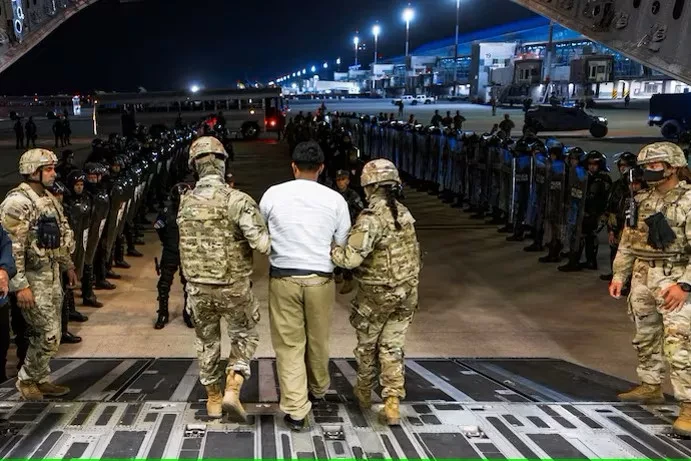
However, Trump's military actions in Venezuela added new concerns for Vietnamese conservatives regarding rapprochement with Washington. Any U.S. military actions related to Cuba could disrupt the strategic balance for Vietnam, Giang noted.
“Cuba is a sensitive country, and if something happens there, it will cause shock in the political elite of Vietnam,” he emphasized.
According to Abouza, the first year of Trump's second term may have left the Vietnamese feeling that U.S. attention was focused on the Western Hemisphere, but questions remain about other events.
“Vietnamese will be puzzled by the actions of the Trump administration, which ignored human rights but was ready to intervene in the affairs of states,” he concluded.