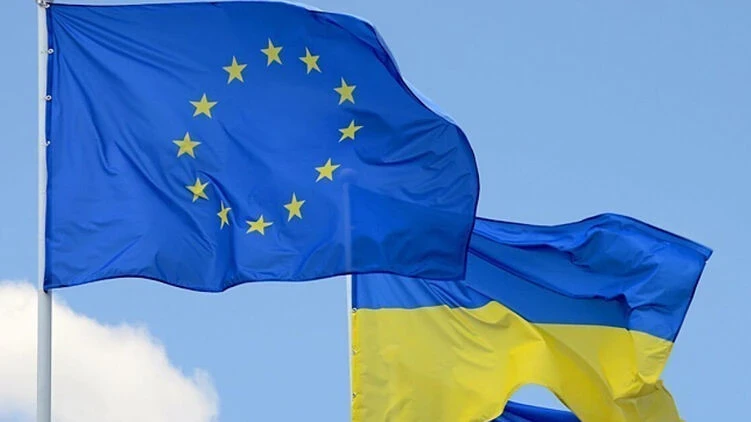
The document, consisting of 30 pages, describes European countries as declining powers that have ceded part of their sovereignty to the European Union and are governed by administrations that suppress democratic processes. This shift in tone, according to experts, highlights how radically the Trump administration is rethinking traditional approaches to foreign policy.
A new report claims that the continent faces a threat of "civilizational erasure" due to immigration, which could make it "unrecognizable" in two decades and lead to several NATO countries having a predominantly "non-European" population. As a result, these regions may struggle to remain "reliable allies" for the US.
Analysts like Katya Bego from Chatham House believe this document is a blow to European capitals. She stated that European leaders should realize that traditional transatlantic relations no longer exist.
British historian Timothy Garton Ash characterized the new report as "the mother of all alarm signals for Europe." He emphasizes that the US continues to be an ally of Europe; however, the existing perception of the relationship is changing, especially in the context of the Trump administration.
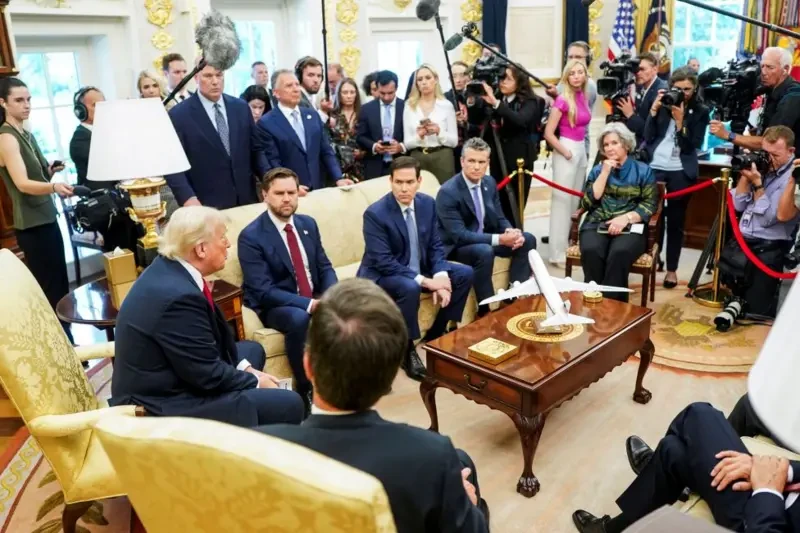
Since Trump took office in January, many European leaders have tried to allay his concerns, seeking dialogue. Despite this, some members of his team show antipathy towards European decisions.
The criticism outlined in the National Security Strategy resonates with statements made by Vice President J.D. Vance earlier at the Munich Security Conference. This creates additional discord in transatlantic relations.
Garton Ash noted that the document can be seen as an open disagreement with the EU, highlighting that many European governments "undermine democratic processes," although specific examples are not provided.
Nevertheless, despite the criticism, Europe remains an important partner for the US in the global context, supporting capitalism and democracy. According to Freedom House, Western European countries rank higher in freedom and democracy than the US.
The section dedicated to Europe begins with the address "Promoting European Greatness," demonstrating an almost paternalistic approach to criticism. The tone of the document sharply contrasts with the description of traditional US adversaries, such as Russia, which is not mentioned as a threat.
The document also emphasizes disagreements regarding the war in Ukraine and accusations of European officials having "unrealistic expectations." The US is portrayed as an arbiter rather than an ally of Europe against Russia, as it was previously.
Phillips O'Brien, a professor of strategic studies, noted that the document appears to be a call for renewed cooperation with Russia, which could lead to the dismantling of current Europe and its transformation into MAGA.
Katya Bego also emphasizes that the Trump administration intends to actively change Europe rather than simply adhering to an isolationist approach. The strategy states that the goal is to "cultivate resistance to the current path of Europe." This is perceived as interference in European politics and support for right-wing parties.
Nathalie Tocci, director of the Institute of International Relations, agreed that the administration views Europe as an object of colonial influence. She questions when Europeans will realize this.
A representative of the European Commission declined to comment on the document but refuted claims that Europe supports harmful migration policies. He emphasized that the new US security policy contradicts the traditional ties between Europe and America.
Vance and his colleagues criticized democracy in countries like Germany and France, where major parties avoid coalitions with the far-right due to historical context. However, as analysts note, Europe, unlike Russia and China, supports freedom of speech, including criticism of politicians.