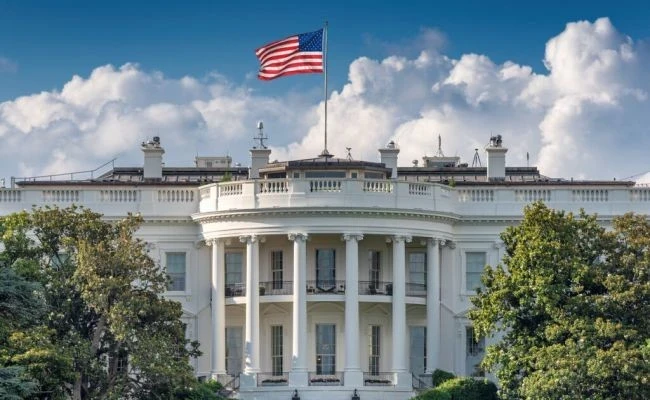
The document, consisting of 29 pages and posted on the official White House website, emphasizes key domestic and international priorities, the country's economic goals, and the global tasks of the administration.
This strategy reaffirms the importance of military, diplomatic, and economic power, aligning with the principle of "peace through strength." The document states that "strength is a key element of deterrence." The main slogan of the strategy becomes "America First," demonstrating a departure from traditional ideological frameworks.
It notes that "the days when the USA supported the world order are over," and now allies must take on greater responsibility by increasing their contributions to collective defense.
The strategy also raises the issue of the "Monroe Doctrine," a foreign policy concept named after President James Monroe, who served from 1817 to 1825 and opposed European colonial influence in the Western Hemisphere.
Border Protection and Defense
The goal of the strategy is to protect the USA from military threats and external hostile influences. This includes the creation of one of the most powerful nuclear deterrent systems in the world and the development of a new generation of missile defense systems, including the "Iron Dome" system. "Border security is a fundamental element of national security," the document emphasizes.
Additionally, the USA plans to strengthen its military presence in the Western Hemisphere to combat migration, drug trafficking, and the rise of "hostile forces" in the region.
Europe and NATO
The document states that if current political trends continue, Europe "could become unrecognizable within 20 years or even sooner." The economic downturn occurs "against the backdrop of an even more serious threat — the disappearance of civilization."
The strategy also questions the ability of several European countries to maintain sufficiently strong economies and militaries to remain reliable allies. The European Union and some transnational organizations are accused of "undermining political freedom and sovereignty," while migration policy is viewed as "a source of conflict."
Among the challenges facing Europe are censorship, suppression of political opposition, declining birth rates, and loss of national identity. The document also notes the rise of influence from "patriotic European parties."
Attention is given to the future of the NATO alliance, emphasizing that "in the coming decades, most of its members may cease to be European." The need to revise the perception of NATO as "a continuously expanding bloc" is highlighted.
According to the authors of the strategy, European states "are unable to adapt in a political crisis," but it is emphasized that "Europe has strategic and cultural significance for the USA," and Washington "cannot ignore Europe."
The Conflict in Ukraine and Russia
The section dedicated to the Russia-Ukraine conflict states that most Europeans desire peace, but this wish is not realized due to "the undermining of democratic processes by governments."
It also notes the need to restore strategic stability in relations with Russia and to ensure that Europe functions as a group of sovereign states free from the influence of "hostile forces."
The Indo-Pacific Region and the South China Sea
The document emphasizes the importance of the Quad dialogue, which includes the USA, India, Australia, and Japan, as a means of ensuring security in the Indo-Pacific region. "We must develop relations with India to encourage its participation in ensuring security in this region," the document states.
A third of the world's maritime traffic passes through the South China Sea, so effective measures against potential "rival" control over this region must be developed.
Preventing conflict over Taiwan becomes a priority, preferably by establishing military superiority. Washington has reaffirmed its long-term policy regarding Taiwan, emphasizing that it does not support unilateral changes to the status quo in the Taiwan Strait.
“We will create armed forces capable of stopping an attack at any point in the First Island Chain. However, the American military cannot and should not act alone. Our allies must begin to act and significantly increase spending on collective defense,” the document states.
This approach, it is emphasized, will enhance the USA's ability to prevent attempts to seize Taiwan or alter the balance of power that would make the island's defense impossible. Support from Japan and South Korea in increasing their defense budgets is also necessary.
“We will strengthen and enhance our military presence in the Western Pacific and continue active efforts to increase defense spending in partnership with Taiwan and Australia,” the document concludes.
The Situation in the Middle East
The document asserts that "the conflict remains a key challenge for the Middle East," and emphasizes that Iran's nuclear program, labeled "the main destabilizing force in the region," has been significantly weakened.
Trump, referred to in the strategy as "the president of peace," claims that he "ended the war in the Gaza Strip," where Israel is accused of genocide, ensuring "the return of all living hostages" to their families. It is also emphasized that preventing conflicts from escalating into global wars is "a priority for the Trump administration."
The Israeli-Palestinian conflict remains complex; however, progress towards a more sustainable peace has been achieved thanks to a ceasefire agreement "brokered by Trump," while Hamas "has retreated."
Syria also continues to be a potential problem, but with the support of the USA, Arab countries, Israel, and Turkey, it could achieve stability and take "its rightful place as a positive player" in the region.
The document highlights the desire to avoid endless wars that lead to stalemates with significant losses in the region.
“The key to successful relations with the Middle East is cooperation in areas of common interest,” the document notes.
“America will always have core interests in ensuring that the energy resources of the Persian Gulf do not fall into the hands of an overt enemy, that the Strait of Hormuz remains open, the Red Sea accessible for navigation, and Israel's security guaranteed,” the document concludes.